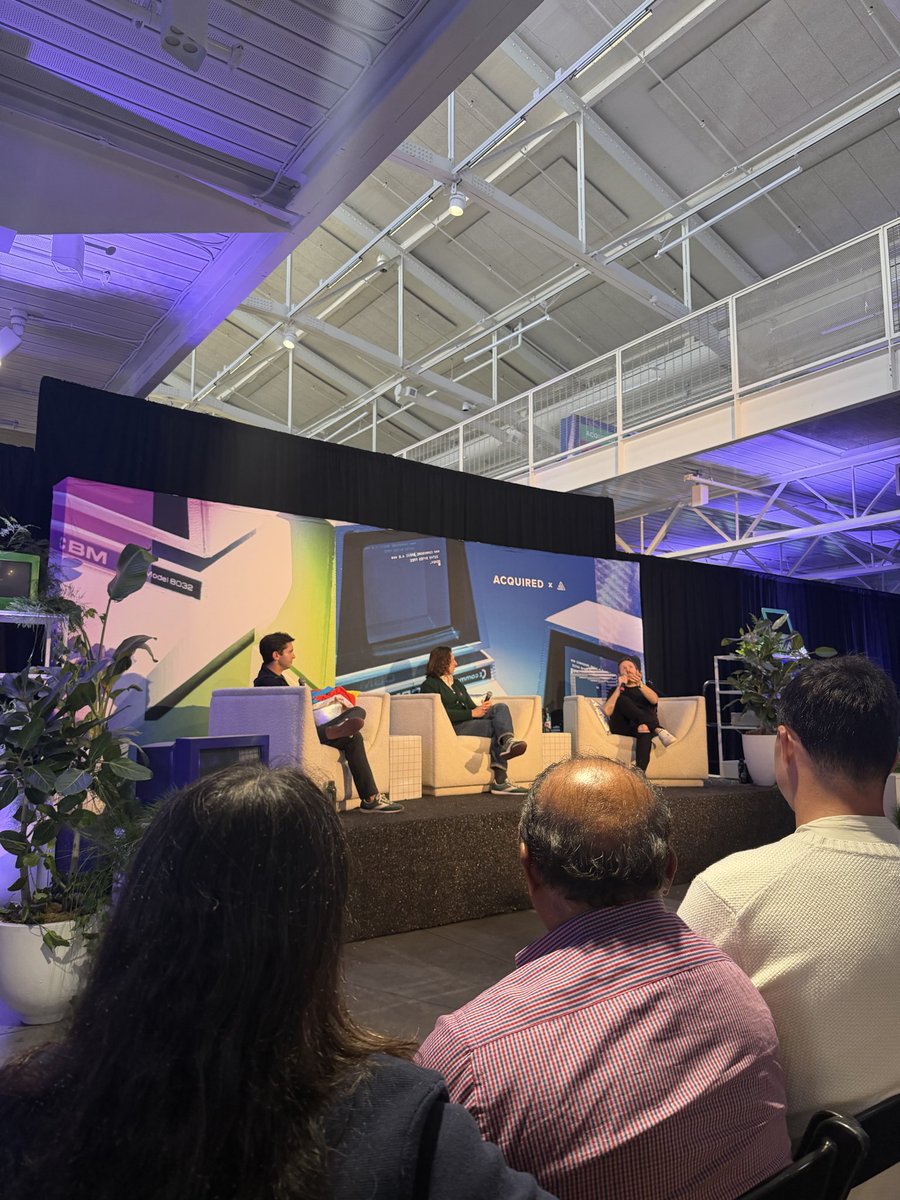
Had a great time at the @AcquiredFM event in SF! Thanks @gilbert@djrosent@sentry@zeeg for hosting!
Wasn’t able to ask my question at the event but I’ll try here: What companies/institutions have you almost made episodes on but pulled the plug on mid-research? I think you said once that you almost did an episode on the Fed but decided against it
Also, some companies I would love to see episodes on: GE, Citadel, McKinsey, YC
Indeed is hiring an investments and M&A associate!
We invest in and partner with companies defining the future of work. In addition to HR and future of work, we have been looking/investing in AI data and general purpose robotics companies.
Portfolio companies include @ashbyhq@turingcom, @trycompa, @branch and more, with previous investments exiting to companies like @Workday and @checkr
@yrechtman How likely are you to invest in a company you have little long-term conviction in, but it is a hot deal / in a hot space and likely to get marked up quickly?
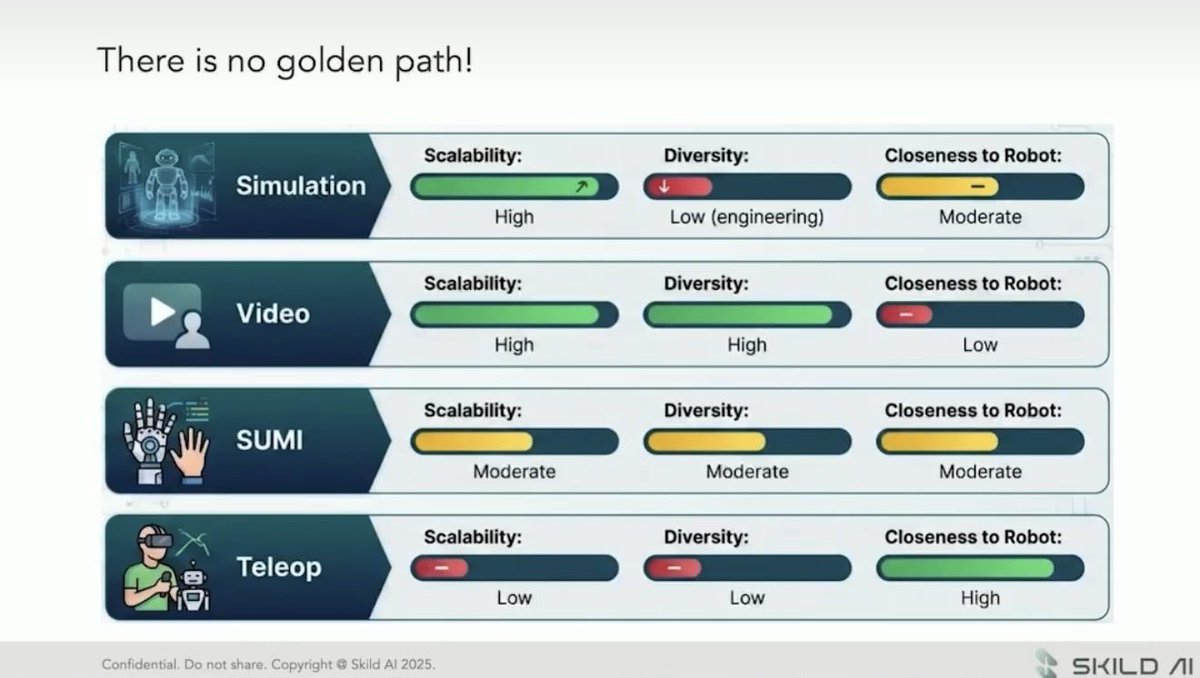
Have seen a few people (myself included) try to present data needs for physical AI as a pyramid, but this framework from @deepakpathak does a much better job at showing the pros and cons of each
Paraphrasing Deepak: “You cannot rely on one data source to scale contribution… A combination is what will solve the data robotics problem”
Congrats on the $100M ARR announcement @SkildAI !
How did a $100m ARR robotics company solve scale?
"Unlike language models, speech or video, in robotics there are three axis to evaluate data quality. One is how scalable you are, how diverse it is, and how close it is to robot."
Robotics has four ways to collect training data. Each one comes with its own fault.
Robots collecting their own data produces the best-targeted data and scales slowest, because the physical world will not run faster than real time. Teleoperation is the industry default and produces almost no diversity. Simulation runs far faster than real time, but every new task needs an environment built by hand. Human video is the most abundant and the furthest from a robot, since a person has a different body and you cannot see the forces they apply.
There is not one "Golden path" as @deepakpathak put it on stage at AUTONOMOUS earlier this year.
@SkildAI
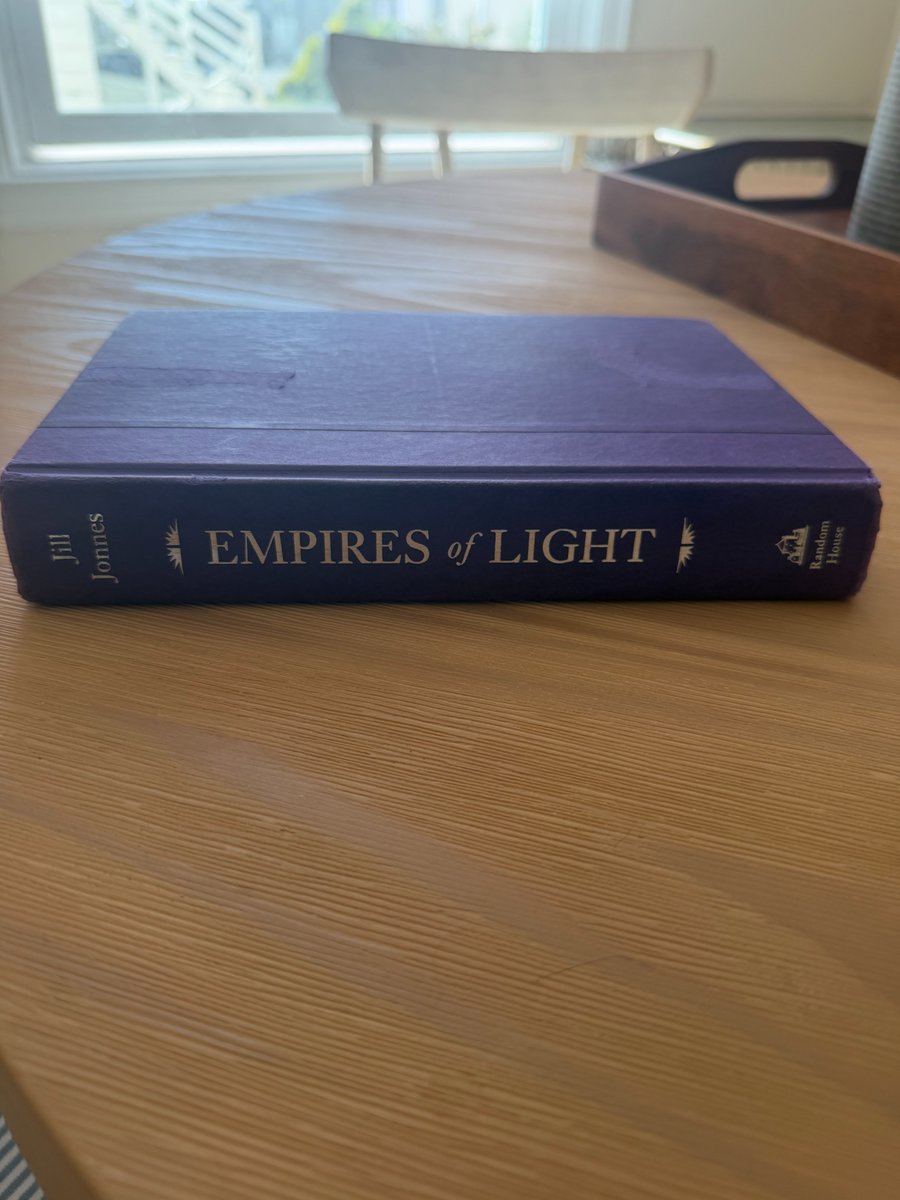
@djrosent@gilbert Would love to see you guys do a 2-part episode on GE. Empires of Light would be great source material for part 1 and @WilliamCohan's book Power Failure (also a great book!) would be good source material for part 2.
Iconic American company and a great excuse to talk about Thomas Edison, J.P. Morgan, and Jack Welch.
Just finished reading Empires of Light by Jill Jonnes, a book about electricity and the "War of Currents" in the late 1800s. The book centered around three men: Thomas Edison, Nikola Tesla, and George Westinghouse.
Despite their contributions to modern electricity and technology, they all lost control of their companies.
Edison committed to direct current (DC) and actively campaigned against alternating current (AC), which most of our modern electrical grid is built on. His companies were consolidated into Edison General Electric in 1889, then merged with Thomson-Houston in 1892, a firm that sold AC. The merged entity became General Electric and Edison ended up with just 10%.
Westinghouse committed to AC with Tesla, won the Chicago World's Fair and Niagara Falls contracts, but his company went into receivership after the 1907 panic.
Tesla sold his patents, tore up his royalty agreement with Westinghouse, and died broke.
J.P. Morgan, the man, crossed paths with all three. He was one of Edison's first investors and orchestrated the merger that made GE. He funded Tesla at Wardenclyffe and then cut him off. He organized the rescue of the American economy in 1907 but chose not to rescue Westinghouse.
Westinghouse was the best businessman of the three. He made his first fortune in the railroad industry before buying up AC patents and entering the electricity industry. He was also ahead of the times in workers' rights (half-day Saturdays, offering pensions, and never facing a major strike qualified as ahead of the times in the 1870s). When bank runs froze credit, Westinghouse Electric could not refinance its short-term debt. There was no Fed - J.P. Morgan was the effective lender of last resort and he decided who to save.
Great book! Any suggestions on what I should read next?
We just hit 100M ARR within 10 months of starting deployments.
We are in factory lines. On construction sites. In kitchens. In data centers.
Cleaning. Welding. Building. Cooking.
Deploying.
Probably few barriers building and more barriers selling and implementing; Enterprises are locked into 5+ year deals and paid consultants 7+ figures just to install the SoR.
SoRs are important core software, so the barries to build are probably resource allocation: How many top engineers do you take off the core product and move onto the SoR build out?
Custom-built harnesses increase AI model performance!
If max performance requires pairing models with domain-tuned architectural harnesses, value will accrue to vertical platforms that own the end-to-end workflow layer, not the general-purpose model providers.
Seems very bullish for vertical and function-specific harnesses like @harvey@WeAreLegora@RogoAI@cursor_ai
Possibly bullish for legacy systems of record too; Many of them can probably build a decent harness before agentic companies build a decent SoR and convince their customers to replace their existing one
If Figma builds workflows and architectures that are highly customized for design, they would have a better design module that whatever Claude or ChatGPT builds, since they will be focused on broad-based applications.
I just don’t think every corporate employee will log into Claude/Chat and do everything; Finance teams will have a harness that is custom for their workflows, and the same will be true for sales teams, HR, product, and so on
Imperfect analogy but expedia and booking are great businesses despite Google Flights and Indeed is a great business despite Google Jobs
10 minutes is a long time!
S1 can learn long-horizon tasks after just 1 example with zero fine-tuning. 66% success on unseen tasks, 96% on seen tasks.
I thought this quote from their paper really captured their approach with S1:
"Once a task becomes delicate, nuanced, or long-horizon, we stop describing and start showing. We don't learn from a sentence how to fold a fitted sheet, whisk egg whites to stiff peaks, or tie a knot."
Congrats to @deepakpathak and the whole @SkildAI team!
Introducing S1, our new foundation model that learns from one example.
It can be taught 10-minute long tasks that it has never seen before, from one video prompt without any fine-tuning.
Watch S1 operate in real-time via in-context learning:
Thank you to @foxglove, @adrianmacneil and all of the speakers for putting on such a great conference! Looking forward to Actuate 2027 https://t.co/KklVdvHpKD