Physician Scientist in drug development | Alum of Adult BMT/ Cell Therapy/ Med Oncology Fellowship Memorial Sloan Kettering Cancer Center | IM Residency MSSM
Armed guards at the door. Opioids offered on repeat. Apple Pay at my bedside. Welcome to the American Emergency Room.
The French think it bankrupts you. Americans think France does it for free. I’ve been to the ER in both. Both are wrong.
Mountain bike crash, dislocated and fractured shoulder. I’m French, I live in San Francisco, and I take slightly too many risks. Let’s compare.
Security
🇺🇸 Kaiser in Marin. Three armed guards and a metal detector. My phone set it off, so with my shoulder out of its socket I walked through again. And again. Then a pat-down.
🇫🇷 A couple of unarmed guys with walkie-talkies. Still not sure what they’re for.
Wait
🇺🇸 Three people in the waiting room. Seen in 15 to 30 minutes.
🇫🇷 Broken hand: packed room, 4 hours before anyone touched me.
Records
🇺🇸 Kaiser is vertically integrated. Insurer, hospital, doctors: one system. They had my file before I sat down.
🇫🇷 Every new doctor is a fresh context window. Zero history, maybe a printout from last time.
Infrastructure
🇺🇸 Small hospital, serious kit. Straight to the trauma bay: real bed, IV, vitals monitoring, ready for surgery if needed. All imaging on the spot.
🇫🇷 Broken hand: a plastic chair and a Doliprane.
Drugs
🇺🇸 Strong opioids were the default offer. I said no. They insisted. The doctor came in personally, confused why someone in that much pain would refuse. I stuck to Tylenol, an anti-inflammatory, to put the shoulder back in.
Yes, it hurt. No, I didn’t tap out. My mom is proud of me.
🇫🇷 Broken hand: Doliprane, opioids never mentioned. I have friends who got their shoulder popped back in with nothing at all.
US default: opioids. French default: Doliprane.
Bill
🇺🇸 Every nurse warned me: “You’re French, this bill is going to traumatize you.”
Before discharge, someone came to my bed to collect payment. Apple Pay, from the hospital bed. $300. For everything. On a ~$500/month Kaiser plan.
🇫🇷 A flat ~€20 ER fee, usually reimbursed by your mutuelle. The real bill shows up later, on your payslip (see below)
followup
🇺🇸 Kaiser called me right after to set up follow-up and physio, all in their system. So far, so good.
🇫🇷 Broken hand: discharged, figure it out yourself. A friend dislocated her finger. They put it back in wrong, sent her home with bad instructions, it locked up, and she needed surgery months later. Still not fixed.
“Free healthcare” in France
It’s not free when your marginal tax rate nears 70% with social charges. And if you want quality care fast, more and more people pay for private clinics anyway.
Verdict
One person, one data point. But the care was 10x better than anything I’ve had in France, for a price that’s completely fine.
France has a lot to learn.
And yes, I refused the narcotics to stay sharp enough to launch a NanoCorp from my hospital bed. Launch your first company run by an AI agent: nanocorp .so
1/9 PARP inhibitors have transformed cancer treatment, but have also been linked to the development of Clonal hematopoiesis (CH) and therapy-related leukemia. How do prior chemotherapy and inherited genetics influence this?
Our new work in @NatureGenet:
https://t.co/84gb7UCCkS
My salute to the Indian pilot Captain Smit Machchhar for his extraordinary bravery.
Despite being stabbed and seriously injured, he fought back, resisted, opened the cockpit door, and enabled passengers and crew to overpower the attacker — preventing a catastrophic mid-air disaster.
He saved the lives of 174 people, including Israeli citizens and other nationals.
I wish Captain Machchhar a speedy and full recovery.
He is a true hero.
I’m honored to be selected for the 2026 @SimonsFdn Fellows-to-Faculty Award to support my research on #RNA regulation in the #Aging brain @RockefellerUniv and beyond. I’m excited to join the Simons Foundation community!
We're pleased to announce the 2026 class of our Fellows-to-Faculty program!
This fellowship supports talented early-career scientists as they transition into tenure-track faculty positions in autism and #neuroscience research.
See the new class: https://t.co/gLGWMTleoW
#science #autismresearch
🚨 “I could never have become CEO in India. America's meritocratic system rewards talent, regardless of gender or ethnicity. They just want the best brains to rise to the top.”
— Indra Nooyi, former Chairperson and CEO of PepsiCo.
@SantoshVardhana Just to be clear, I am not saying trainees shouldn’t peer review but the peer reviewers focus should be to try to give a constructive critique and the review shouldn’t be a catharsis of personal outrage
@SantoshVardhana Sucks!!. I think this is often driven by one-upmanship over trivial points and the lack of incentives for peer review. Reviews often get delegated to trainees trying to impress by being overly critical—and when those unfiltered critiques make it into reports, nobody really wins.
Anyone who has lost a friend or family member to pancreatic cancer knows that it has dismal outcomes. This progress is incredible.
It represents the best of America. Sloan Kettering is a world renowned research institution. And Dr. Balachandran is the son of Indian immigrants.
🚨 An experimental, personalized vaccine using #mRNA to prevent #pancreaticcancer from returning after surgery continues to show promise in a small, 16-person patient group.
New results from a phase 1 clinical trial, being presented at #AACR26, show that nearly 90% of people whose immune systems responded to the vaccine were still alive six years later.
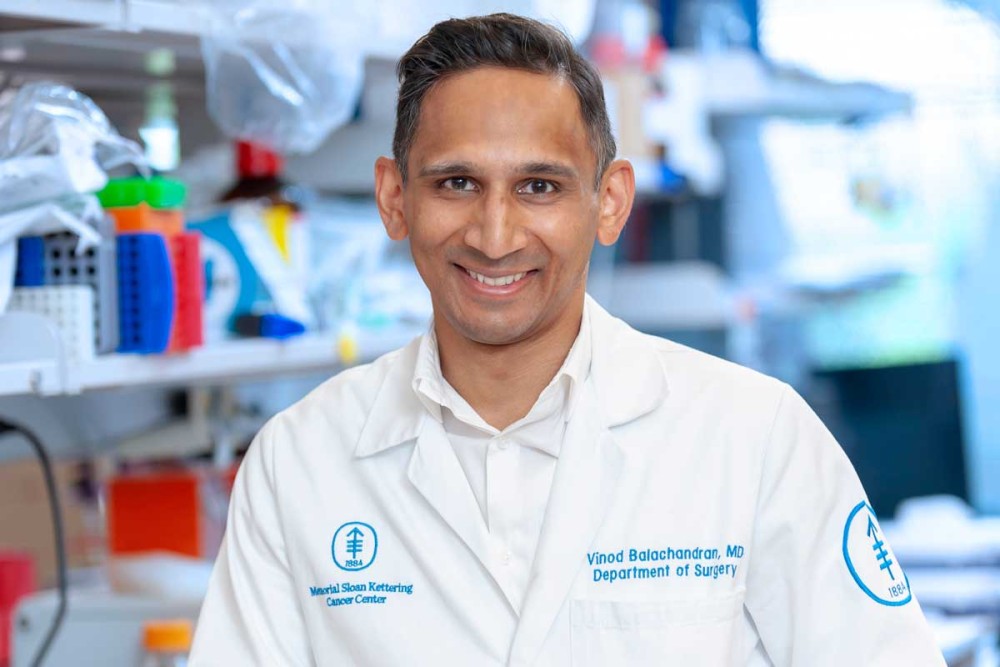
“These early results show this new immunotherapy approach has the potential to be groundbreaking for one of the deadliest cancers,” says MSK physician-scientist Dr. Vinod Balachandran (@TheVinodLab), the trial’s principal investigator and Director of The Olayan Center for Cancer Vaccines.
Learn more about these findings: https://t.co/C0IwK11OaA @AACR
Located in the Canadian High Arctic, Baffin Island is the fifth largest island in the world. In this land of the midnight sun and polar nights, where a handful of Inuit communities endure, you would find a hill named after a Bengali Major. Thread.
1/19
A new drug is showing promise in lung and pancreatic cancers (two of the most aggressive forms of cancer) by targeting one of the most common cancer-driving mutations.
Researchers at Memorial Sloan Kettering Cancer Center (MSK), including gastrointestinal medical oncologist @CentralParkWMD who led the global phase 1 clinical trial, shared results published in the @NEJM.
The trial tested setidegrasib, a drug that tags and destroys the cancer-causing protein produced by the KRAS G12D mutation. This new method for targeting a long-known mutation is called a KRAS degrader.
KRAS mutations are present in about 1 in 5 cancers. The G12D subtype drives about 40% of pancreatic cancers and 5% of non-small cell lung cancers.
“This drug’s potential is exciting,” says Dr. Park, “because the trial results suggest that setidegrasib can not only extend life for some patients with these aggressive cancers, it also has a very good safety profile, meaning the drug was well-tolerated with side effects that can be managed quite easily."
Learn more about this research: https://t.co/HCEVr2ltIj
@fvarmad@NEJM That said- I agree with you in that cumulative bleeding incidence should have been a primary endpoint. While dose reductions of chemo in CIT is a good endpoint, decreased inc of dangerous bleeding would be a more relevant endpoint.
@fvarmad@NEJM Excellent eg with G-CSF: In the original study of G-CSF with chemo in SCLC, the endpoints were febrile neutropenia, infections, the incidence and duration of grade IV neutropenia, and the need for IV abx and hospitalization. (N Engl J Med 1991;325:164–170). Not OS.
@fvarmad@NEJM The primary end point was the absence of CIT-induced modifications of the chemotherapy dose (reduction, delay, omission, or discontinuation) in both the second and third chemotherapy cycles. Not OS