In 1884, Ulysses S. Grant was dying of throat cancer and was dead broke.
His money was wiped out by a swindler who stole his fortune.
Desperate to leave something for his wife, he agreed to write his Civil War memoirs and was close to signing a contract for a meager 10% royalty.
Mark Twain stepped in, called the deal robbery and offered Grant 70% of the profits through his own publishing company.
Grant raced death to finish the book, completing it just days before he died in July 1885.
It became one of the greatest memoirs ever written.
The royalties left his widow nearly half a million dollars, about $16 million today, and the book has never gone out of print.
https://t.co/9gquFOl8mf
Is this seriously true? No brown vans, no brown uniforms? If so, it represents one of the most spectacular pieces of brand vandalism in the last 50 years.
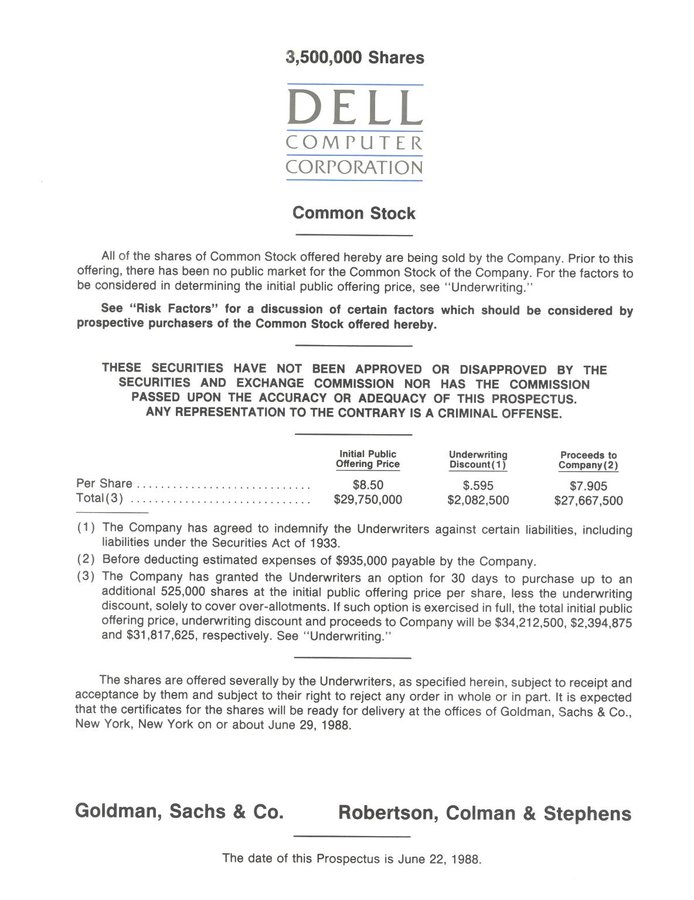
38 years ago today, Dell Computer went public.
We raised $30M at an $85M market cap.
IPO price: $8.50/share
Split-adjusted: about 9 cents
Grateful to every customer, partner, and team member past, present, and future who made it possible. 🙏
Keep building. Onward 🚀
#PlayNiceButWin
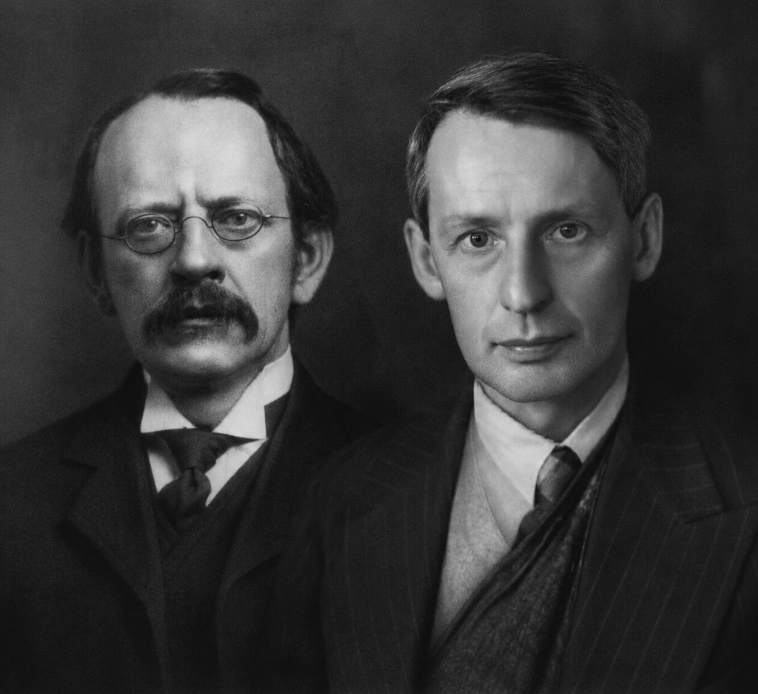
On this Father’s Day, here’s an intresting story of a father and son.
J. J. Thomson won the Nobel Prize in Physics in 1906 for establishing that electrons are particles.
His son, G. P. Thomson, went on to win the Nobel Prize in Physics in 1937 for establashing that electrons are waves.
In July 1985, over a billion people watched Live Aid.
Months earlier, Michael Jackson and Lionel Richie had written "We Are the World." All of it was a response to a famine in Ethiopia.
Almost nobody remembers who actually caused the famine. 🧵
This is Sumela Monastery, one of the oldest in the Christian world. Carved into a cliff in northern Turkey in AD 386, it has clung to this rock face for more than 1,600 years.
It’s older than the fall of the Roman Empire.
The World Cup begins tomorrow, and many will watch the matches. Soccer reminds us of something we must not forget: life is not a race to show off on our own, but a path we learn to walk together. Anyone who does not know how to pass the ball, even if they have talent, has not yet understood the game. Anyone who does not know how to live with and for others has not yet understood life. #ApostolicJourney
C. S. Lewis’s Letter to Tolkien upon First Reading The Lord of the Rings:
My dear Tollers—
Uton herian holbytlas indeed. I have drained the rich cup and satisfied a long thirst. Once it really gets under weigh the steady upward slope of grandeur and terror (not unrelieved by green dells, without which it would indeed be intolerable) is almost unequalled in the whole range of narrative art known to me. In two virtues I think it excels: sheer sub-creation—Bombadil, Barrow Wights, Elves, Ents—as if from inexhaustible resources, and construction—the construction Tasso aimed at (but did not equally achieve) which was to combine the variety of Ariosto with the unity of Virgil. Also, in gravitas. No romance can repell [sic] the charge of ‘escapism’ with such confidence. If it errs, it errs precisely in the opposite direction: the sickness of hope deferred and the merciless piling up of odds against the heroes are near to being too painful. And the long coda after the eucatastrophe, whether you intended it or no, has the effect of reminding us that victory is as transitory as conflict, that (as Byron says) ‘There’s no sterner moralist than pleasure’ and so leaving a final impression of profound melancholy.
No doubt this is increased for me by the circumstances in which I heard most of it for the first time: when there was great danger around us but, in me at any rate, a happier heart than now. But that only accounts for a small part of my total impression. I am sure it is in itself a great and hard and bitter book which, though I love it, I shall never open without a certain shrinking. It will rank, along with the Aeneid as one of what I call my ‘immediately sub-religious’ books.
Indeed (unexpectedly) the general aroma seems to me more like the Aeneid than anything else, in spite of your Northernness. This is partly because both (a.) Are so often sylvan (b.) Have strategy, as distinct from mere combat, (c.) Suggest an enormous past behind the action.
All the alliterative verse I liked.
Of course this is not the whole story. There are many passages I could wish you had written otherwise or omitted altogether. If I include more of my adverse criticism in this letter that is because you heard and rejected most of them already (rejected is perhaps too mild a word for your reaction on to least one occasion!) and even if I now convinced you on any point, the conviction would, I take it, be too late to bear fruit. And even if all my objections were just (which is of course unlikely) the faults I think I find could only delay and impair appreciation: the substantial splendour of the tale can carry them all. Ubi plura nitent in carmine non ego paucis offendo maculis.
I congratulate you. All the long years you have spent on it are justified. Morris and Eddison, in so far as they are comparable, are now mere ‘precursors’.
The mappemound [sic: mappemundo=”map of the world”] is, as you warn me, now inaccurate. But on a rather different point—do you mean the Shire to be so large?
I miss you very much
Yours
Jack Lewis
For the first time in 123 years, Argentina has achieved a sustained fiscal surplus without being in default. We are one of only 5 countries in the world in this position.
LONG LIVE FREEDOM, DAMN IT...!!!


![CLT_Exam's tweet photo. C. S. Lewis’s Letter to Tolkien upon First Reading The Lord of the Rings:
My dear Tollers—
Uton herian holbytlas indeed. I have drained the rich cup and satisfied a long thirst. Once it really gets under weigh the steady upward slope of grandeur and terror (not unrelieved by green dells, without which it would indeed be intolerable) is almost unequalled in the whole range of narrative art known to me. In two virtues I think it excels: sheer sub-creation—Bombadil, Barrow Wights, Elves, Ents—as if from inexhaustible resources, and construction—the construction Tasso aimed at (but did not equally achieve) which was to combine the variety of Ariosto with the unity of Virgil. Also, in gravitas. No romance can repell [sic] the charge of ‘escapism’ with such confidence. If it errs, it errs precisely in the opposite direction: the sickness of hope deferred and the merciless piling up of odds against the heroes are near to being too painful. And the long coda after the eucatastrophe, whether you intended it or no, has the effect of reminding us that victory is as transitory as conflict, that (as Byron says) ‘There’s no sterner moralist than pleasure’ and so leaving a final impression of profound melancholy.
No doubt this is increased for me by the circumstances in which I heard most of it for the first time: when there was great danger around us but, in me at any rate, a happier heart than now. But that only accounts for a small part of my total impression. I am sure it is in itself a great and hard and bitter book which, though I love it, I shall never open without a certain shrinking. It will rank, along with the Aeneid as one of what I call my ‘immediately sub-religious’ books.
Indeed (unexpectedly) the general aroma seems to me more like the Aeneid than anything else, in spite of your Northernness. This is partly because both (a.) Are so often sylvan (b.) Have strategy, as distinct from mere combat, (c.) Suggest an enormous past behind the action.
All the alliterative verse I liked.
Of course this is not the whole story. There are many passages I could wish you had written otherwise or omitted altogether. If I include more of my adverse criticism in this letter that is because you heard and rejected most of them already (rejected is perhaps too mild a word for your reaction on to least one occasion!) and even if I now convinced you on any point, the conviction would, I take it, be too late to bear fruit. And even if all my objections were just (which is of course unlikely) the faults I think I find could only delay and impair appreciation: the substantial splendour of the tale can carry them all. Ubi plura nitent in carmine non ego paucis offendo maculis.
I congratulate you. All the long years you have spent on it are justified. Morris and Eddison, in so far as they are comparable, are now mere ‘precursors’.
The mappemound [sic: mappemundo=”map of the world”] is, as you warn me, now inaccurate. But on a rather different point—do you mean the Shire to be so large?
I miss you very much
Yours
Jack Lewis](https://pbs.twimg.com/media/HKcwMsaWIAA-yf7.jpg)










![CLT_Exam's tweet photo. C. S. Lewis’s Letter to Tolkien upon First Reading The Lord of the Rings:
My dear Tollers—
Uton herian holbytlas indeed. I have drained the rich cup and satisfied a long thirst. Once it really gets under weigh the steady upward slope of grandeur and terror (not unrelieved by green dells, without which it would indeed be intolerable) is almost unequalled in the whole range of narrative art known to me. In two virtues I think it excels: sheer sub-creation—Bombadil, Barrow Wights, Elves, Ents—as if from inexhaustible resources, and construction—the construction Tasso aimed at (but did not equally achieve) which was to combine the variety of Ariosto with the unity of Virgil. Also, in gravitas. No romance can repell [sic] the charge of ‘escapism’ with such confidence. If it errs, it errs precisely in the opposite direction: the sickness of hope deferred and the merciless piling up of odds against the heroes are near to being too painful. And the long coda after the eucatastrophe, whether you intended it or no, has the effect of reminding us that victory is as transitory as conflict, that (as Byron says) ‘There’s no sterner moralist than pleasure’ and so leaving a final impression of profound melancholy.
No doubt this is increased for me by the circumstances in which I heard most of it for the first time: when there was great danger around us but, in me at any rate, a happier heart than now. But that only accounts for a small part of my total impression. I am sure it is in itself a great and hard and bitter book which, though I love it, I shall never open without a certain shrinking. It will rank, along with the Aeneid as one of what I call my ‘immediately sub-religious’ books.
Indeed (unexpectedly) the general aroma seems to me more like the Aeneid than anything else, in spite of your Northernness. This is partly because both (a.) Are so often sylvan (b.) Have strategy, as distinct from mere combat, (c.) Suggest an enormous past behind the action.
All the alliterative verse I liked.
Of course this is not the whole story. There are many passages I could wish you had written otherwise or omitted altogether. If I include more of my adverse criticism in this letter that is because you heard and rejected most of them already (rejected is perhaps too mild a word for your reaction on to least one occasion!) and even if I now convinced you on any point, the conviction would, I take it, be too late to bear fruit. And even if all my objections were just (which is of course unlikely) the faults I think I find could only delay and impair appreciation: the substantial splendour of the tale can carry them all. Ubi plura nitent in carmine non ego paucis offendo maculis.
I congratulate you. All the long years you have spent on it are justified. Morris and Eddison, in so far as they are comparable, are now mere ‘precursors’.
The mappemound [sic: mappemundo=”map of the world”] is, as you warn me, now inaccurate. But on a rather different point—do you mean the Shire to be so large?
I miss you very much
Yours
Jack Lewis](https://pbs.twimg.com/media/HKcwQSCWIAAfK0i.png)


