'To start, press any key.' Where's the 'any' key?! I see Kuh-tor-ull, Esc, and Pig-Up, but I don't see the "Any" key!
Analista Desarrollador en NET y Angular
The best career advice I can give to SWEs looking at a bleak job market right now:
1. Get a Claude Code Max subscription, today, and start using it. Be intentional about trying to use it to make yourself better - there is skill involved in using LLMs well. IDE integration is not a thing you should be reaching for if you want to be Claude maxxxing.
2. Concurrently with working your job application pipeline, start working on a side project that has a prayer of making $. Making $ from it will be a nice side benefit, but that's not the primary goal.
The primary goal is to close your skill and experience gaps without bureaucratic or political headwinds and learning how to use AI to help you do it.
I'll give an example: one of the developers in my org is brilliant at debugging all sorts of brutal systems programming problems, but struggles mightily with greenfield development. Handing him a blank sheet of paper and saying "build something that does X" is the worst way to use him - in his words, it's "analysis paralysis" that kills him.
AI has been a massive help to him there, because now he can use it get options, evaluate their trade-offs, write proposals, and do all of that privately where he feels most comfortable before he presents plans + options to us.
You need to honestly assess your own skill gaps and ask "where can AI help me grow?" - the goal should not be to have the AI do 100% of the thinking for you, but to help you gain experience + confidence by actually doing things.
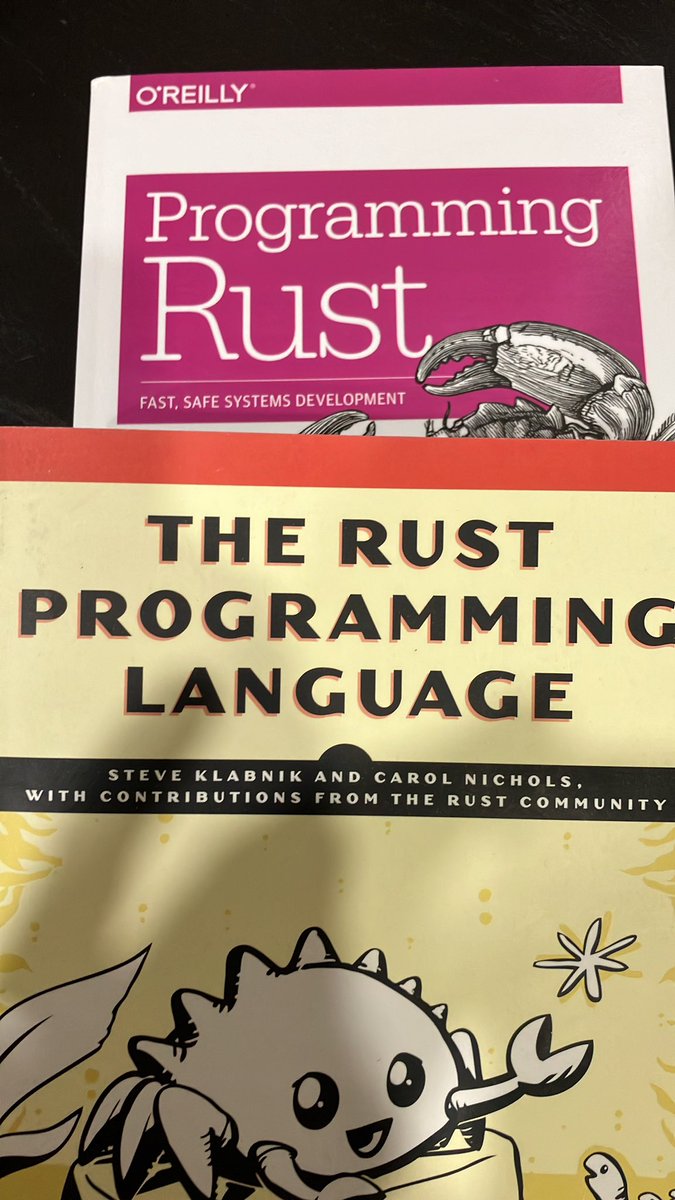
Want to learn Rust? Have LLMs help you learn the idioms, package ecosystem, and toolchain. This also means you personally having to step in, be critical of the LLM's output, and do things manually as part of your own growth process. Having the LLM work with you, not for you.
3. Ship your side project - this is not optional. If you can't ship, free from constraints of "other people" AND with the help of cheap LLM labor, then you are at best a mediocre candidate and deserve to struggle in the job market.
Don't skimp on this - actually ship; try to get users; monitor for errors; listen to them bitch at you about how bad your work product is; improve it; and continuously deploy updates. Learning things the hard way is something LLMs will never be able to do - but you can.
If you've been hiding in BigCo bureaucracy all these years and have never taken full ownership end-to-end for a product launch, it's time to step up for the sake of your own career. The era of JIRA jockeys making $400k pushing tickets around is over.
4. Write publicly about your learning and experiences as you do them - if you haven't landed a job after putting in significant effort, it's for one or more of the following reasons:
a. You don't have any remarkable or valuable experience
b. You don't have a network of people who would recommend you
c. You are bad at marketing yourself and what makes you special / valuable / worthy of belief
This step solves all 3 of those, provided that you are actually doing the work for real. And if you own a distribution channel - like even just your LinkedIn or X account - all you need is a small audience of people who get it to start finding jobs through the backdoor.
All of this, all of this - hinges on you running at full speed to ship things, being willing to get criticized online for your mistakes, and being willing to be uncomfortable doing all of it for the sake of growth.
If you can do that, you will be on a great trajectory for 2026.
As a software engineer you don’t become strong by passively learning tech. You become strong by taking on concrete projects that force decisions. Build a service, break it under load, fix it, refactor it, ship it. Real projects create real constraints, and constraints are what turn theory into skill.
Learning on demand instead of memorizing frameworks is the key, you hit a wall and ask a precise question: How do I make this faster? How do I make this safe? How do I deploy this without downtime? That kind of learning sticks because it’s attached to pain and context.
The advice about teaching in your own words is one of the best to learn software development because it compounds everything. Try writing a short post, explain a bug to a teammate, record a video, or document a design decision. If you can’t explain it simply, you don’t own it yet. Teaching turns fuzzy understanding into sharp mental models.
And last but not the least, the most important part: compete only with your past self. Not Twitter engineers, not big-tech resumes. Measure progress by how much more clearly you reason, how much less guidance you need, and how much bigger problems you can handle compared to six months ago.
That’s how you build a real software career, that you can be proud of.
No les preocupa la salud mental; les jode que alguien se esfuerce más de lo que ellos pueden y quedarse atrás estancados en su mediocridad, por eso se ponen tan violentos. Hay que dejar vivir gente.
Educar al usuario a que lea un simple texto de no más de 10 palabras es cada vez más difícil, la UX de las apps cada vez va a tender a ser más sencilla, con los patrones más sencillos posibles y sin vueltas, botones grandes y claros y nada más. Nos está liquidando TikTok y Reels.
Honorable diputada @lilialemoine: lo de si el contrato era clickeable es irrelevante; entre nos, una BOLUDEZ.
¿Tenía Ud. razón, señorita? Sí, en una boludez irrelevante. Sí la escuché, mi estimada, MENTIR en 13 cosas relevantes.
¿Las repasamos? ¿Me acompañás?
Dale, copate👇
for anyone with high enough attention span, I just re-watched 2 lectures by @cmuratori which I believe are probably the best educational content on Software Architecture out there. (and it's freely available)
In order, they are 🧵
Será que me está contagiando el pesimismo en tuiter. Pero me estresa tanto la idea de que todo se vaya a la mierda otra vez y tener que pasar, otra vez, por un proceso de estabilización macro. Fumarse otra vez 200% de inflación, salarios en dólares en niveles africanos, etc.
Cómo persona que vive exclusivamente de su salario, lo único que quiero es inflación a la baja y que termine el subi-baja esquizofrénico que caracteriza a este país hace 80 años. Poder proyectar un futuro medianamente razonable en esta tierra.
In #SpringBoot applications, the Method-level (@)Transactional annotation attributes replaces the Class-level (@)Transactional annotation, not merged.
Some may get confused that the (@)Transactional attributes might be merged similar to (@)RequestMapping class-level and method-level attributes.
Qué le recomendarían a alguien que no tiene NADA DE IDEA de inteligencia artificial y quiere aprender? por donde empezarían?
Me están haciendo bastante seguido esa pregunta y quiero que este tweet sea mi lugar de consulta
Ayer mi sobrino (15) hizo su primer asado, para sus amigos. Tiraron picaña, colita de cuadril, vacío, bife de chorizo, chorizo. Eran 9. Ninguno concibió la idea de comprar lechuga o tomate para acompañar ni con la más básica de las ensaladas. Joaqui, el tío está orgulloso de vos.
Spring MVC now ships with support for rendering more than one fragment view (this is for you, @htmx_org enjoyers!) in the same HTTP response
two different styles, each of which is viable:
- List<ModelAndView>
- FragmentsRendering
Here's the same controller implemented twice, using each style. I like how FragmentsRendering also lets me pass headers
I wrote a series of posts looking at my some of favorite features available with @SpringBoot 3.4
I couldn't possibly list them all.. #SpringBoot34
start here.. https://t.co/CUnWCAU1s8
As a Microservices developer,
Please learn :
1. Microservices Architecture Basics: Monolithic vs. Microservices, characteristics (independence, scalability, resilience), and designing microservices boundaries (DDD - Domain-Driven Design).
2. Service Communication: Synchronous (REST, gRPC) vs. Asynchronous (Message Queues), API design and versioning, event-driven architecture, and event sourcing.
3. Data Management: Database per service, distributed data management (saga pattern, 2PC, CQRS), and handling data consistency across services.
4. Deployment Strategies: Containerization (Docker), orchestration (Kubernetes), and service discovery and registry (Eureka, Consul).
5. Frameworks and Tools: Spring Boot (Spring Cloud for microservices), Micronaut, Quarkus, or Dropwizard as alternatives.
6. Communication Protocols: RESTful APIs and gRPC, messaging systems (Kafka, RabbitMQ).
7. Databases: SQL (PostgreSQL, MySQL), NoSQL (MongoDB, Cassandra), and distributed caching (Redis, Memcached).
8. CI/CD Pipelines: Tools like Jenkins, GitHub Actions, GitLab CI, and deployment strategies like Blue-Green and Canary deployments.
9. Infrastructure as Code: Terraform, Ansible, or AWS CloudFormation.
10. Logging and Monitoring: Centralized logging (ELK Stack, Splunk) and monitoring tools (Prometheus, Grafana).
11. Resilience and Fault Tolerance: Circuit Breaker (Hystrix, Resilience4j), Bulkhead pattern, and retries.
12. Security: OAuth2, OpenID Connect, and API Gateways (Zuul, Spring Cloud Gateway, Kong).
13. Testing Microservices: Unit and integration testing, contract testing (Pact), and end-to-end testing.
14. Scalability Patterns: Horizontal and vertical scaling, load balancing (HAProxy, NGINX).
15. Distributed Tracing: Tools like Jaeger and Zipkin.
16. Anti-Patterns: Avoiding distributed monoliths and over-engineering microservices.