🌍 Healthcare in a Changing Climate - Online event open to all
📅 11 June | ⏰ 17:00–18:30 BST
🎤 Mahmood Bhutta | Nina Wertholz | Fawzia Rasheed | Collins Iwuji
💡 Featuring leaders in climate & health
👉 https://t.co/t00Qr2imJ1
#GlobalHealth#ClimateHealth
📢Today on Zoom
🌍 Drop-in session to find out more about Global Health Postgraduate study @BSMSMedSchool as well as Employability and global health careers
❓Your questions answered
📅1 June 17:00-17:30 BST
Register here ⏬
https://t.co/pIOW51qYu3
How can health systems adapt to climate pressures while tackling inequality & building resilience?
Nina Wertholz - Sustainable supply chains
Fawzia Rasheed - Decarbonising healthcare
💬 Open to all
👉 https://t.co/t00Qr2imJ1 #GlobalHealth#ClimateAction
Learn how to read the room, handle difficult questions and stay composed when things don't go to plan during a presentation or talk.
Our toolkit will help you discover techniques to draw on before, during and after and enable you to present with greater authenticity, credibility and impact.
Find out more on NIHR Learn:
https://t.co/WniaGWkA9a
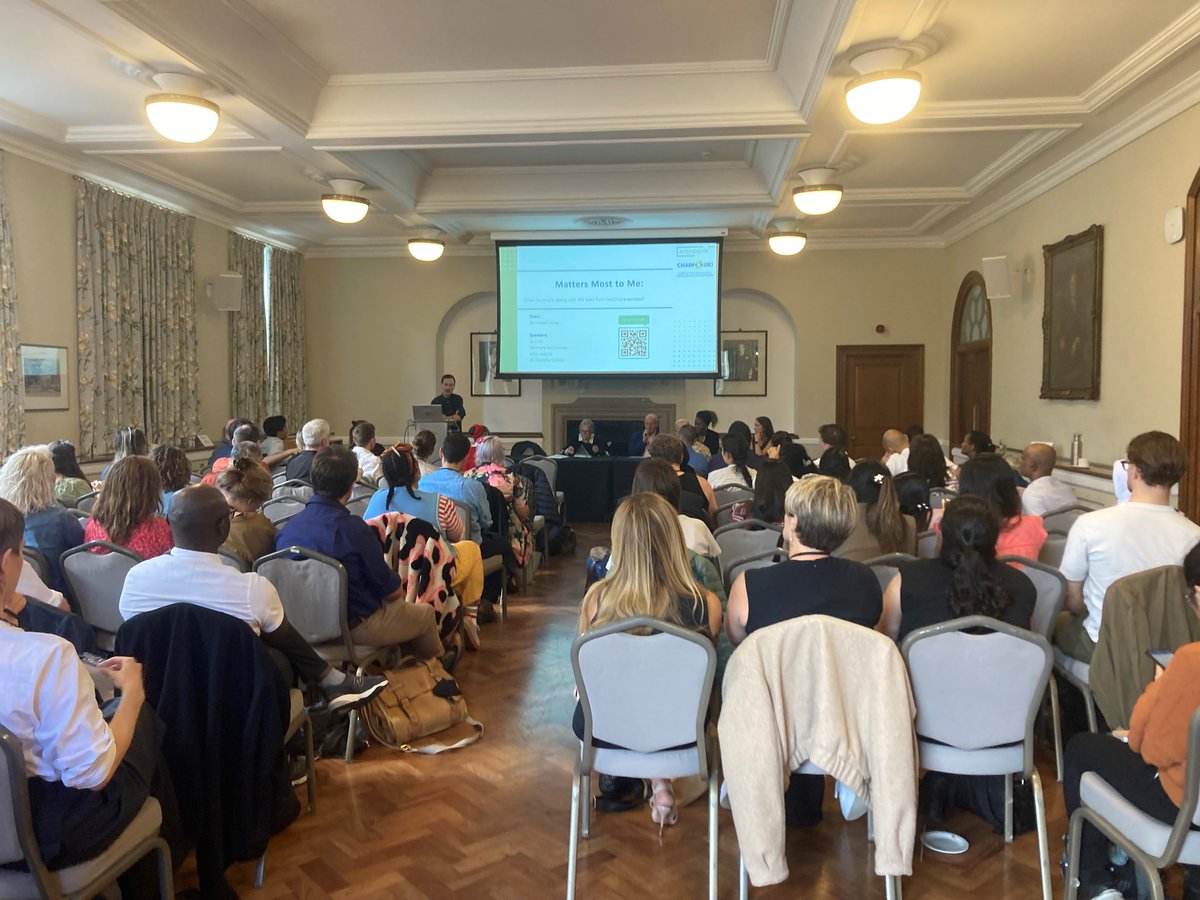
📢 Ageing&HIV: A multidisciplinary meeting on HIV and Ageing
📅 2 Oct 2026
📍 Midland Hotel, Manchester
A flagship CHAIN UKI event exploring the evolving challenges of ageing with HIV through multidisciplinary collaboration.
More info and book 🔗 https://t.co/l3Ag9nybFU
📢 Don't miss our next Current Stories in Global Health event!
🌏 All welcome!
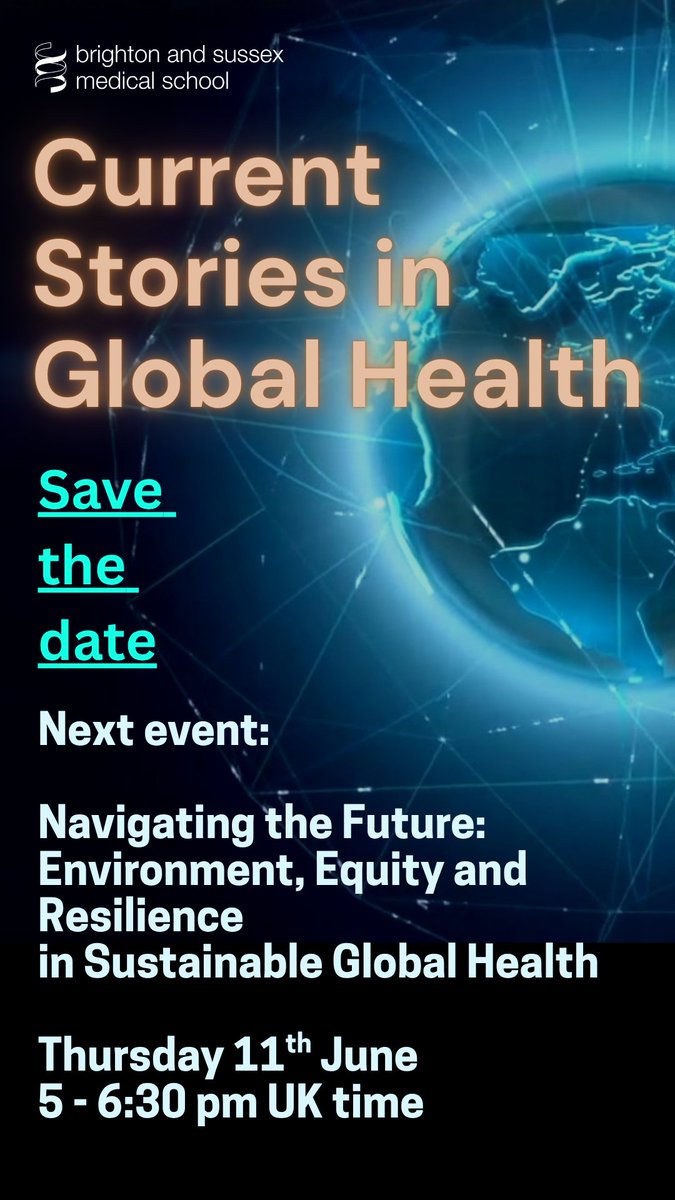
Navigating the Future: Environment, Equity and Resilience in Sustainable Global Health
🗓️ Thursday 11 June 2026
⏰ 17.00-18.30 BST (UK time) on Zoom
⏬ More info and register at the link below
🌍 Healthcare for a sustainable future
Join us 11 June, 5–6:30pm (Zoom) to explore how health systems can tackle climate challenges, reduce inequalities & build resilience 🌱
Hear from experts across policy, research & practice.
👉 Register: https://t.co/t00Qr2imJ1
📢Today on Zoom
🌍 Drop-in session to find out more about Global Health Postgraduate study
@BSMSMedSchool as well as Employability and global health careers
❓Your questions answered
📅14 May 17:00-17:30 GMT
Sign up ⏬ https://t.co/vY2rQSoUQh
📣 Register now for SimNet 2026 hosted by BSMS (Thu 25 June).
The event brings together educators, clinicians & leaders to explore innovation, workforce development & patient safety.
🎓 4.5 CPD credits
📝 Poster submissions by Fri 5 June
Register🔗 https://t.co/57v3LPjViS
🌏 Interested in #globalhealth and #sustainability?
Don't miss this on line event! All welcome
Navigating the Future: Environment, Equity & Resilience in Sustainable Global Health @BSMSMedSchool
📅11 June 2026
⏰ 17.00-18.30 BST (on Zoom)
Sign up & info⏬
https://t.co/NMfwf0EaDx
✍️ New article: “Childhood stunting fell dramatically over the 20th century”
One in four children in the world today suffers from “stunting”. That’s 150 *million* children under five.
A stunted child is too short for their age due to poor nutrition and frequent infections. Stunting suggests that their physical and cognitive development have been hindered, and the effects can last a lifetime.
In many countries, stunting was once prevalent but has now been nearly eliminated. Japan is one such success story that has particularly high-quality data.
But there are still many countries, especially in Asia and Africa, where stunting affects more than a third of all children. You can see this in the chart.
How have some countries made so much progress against stunting? And what can other countries where rates are still high learn from this?
In a new article, @_HannahRitchie and Tuna Acisu answer these questions by zooming in on Japan. Their analysis is made possible by a crucial new dataset published by Eric Schneider and colleagues.
Before World War II, Japan focused on tackling infectious disease, particularly through the expansion of clean, piped water. Stunting declined at a moderate pace.
After the war, they tackled both disease *and* diet, with diversified foods, school lunch programs, and more. This multifaceted approach made progress nearly three times faster.
Over 1 billion people depend on forests for their livelihoods.
Protecting life on land is crucial for a sustainable future.
It's time to #ActNow to conserve and restore our ecosystems for a greener and healthier planet.
#UNFF21
✨ STAFF SPOTLIGHT ✨
Meet Charlotte Street 👋
💬"I get real fulfilment from helping people and enjoy working with others to collaborate on ideas."
In her spotlight, she shares more about her career path and why she enjoys her role at BSMS.
Read here🔗 https://t.co/2ErzYWBdfd
Current Stories In Global Health event: Environment, Equity & Resilience in Sustainable Global Health
11 June 17.00-18.30 BST (UK time) on Zoom
Join critical conversations on how climate, equity & resilience intersect to shape the future of global health.
https://t.co/NMfwf0EaDx
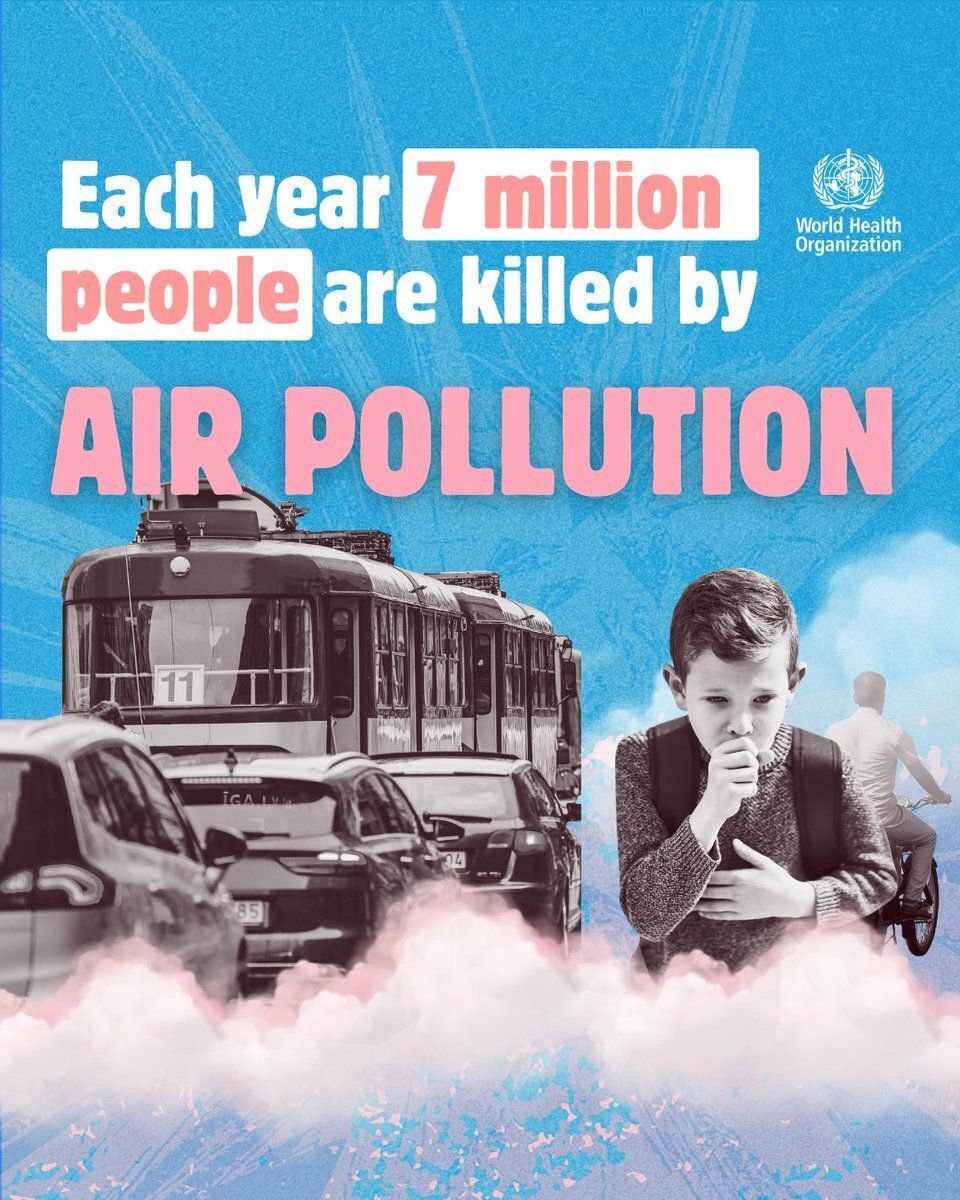
99% of the world breathes air that exceeds @WHO pollution limits.
We need urgent action:
🔸 cleaner energy
🔸 sustainable transport
🔸 better waste management
🔸 stricter industrial regulations
#AirPollution knows no borders and requires a global solution.
https://t.co/a614SoonAw
📽️ Watch April’s monthly lecture!
Healing Thyself: Medics, Stories & Looking After Yourself with BSMS Student Adviser (& professional storyteller) @jonmase. Discover how stories shape our expectations & how medics get it right when they ask for help 💬📖
https://t.co/MeAoEUuRnL
📆 Save the date!
🌍 Next Current Stories in Global Health:
Environment, Equity & Resilience in Sustainable Global Health
🎤 Inspiring speakers
💡 Fresh insights
👥 Open to all
Stay tuned for details! #GlobalHealth#HealthEquity#Sustainability
🩺 Explore key health metrics for your country
We’ve published new country profiles on health for every country in the world.
Each profile tells the story of a single country: how long people typically live, what they die from, what progress is being made against major diseases & risk factors, what share of children receive key vaccinations, and much more — all in one place.
The image here is a snippet from the United States’ profile showing estimates for how many people die prematurely as a result of various risk factors, such as high blood pressure, obesity, and smoking.
Many charts in each profile automatically include comparisons to other countries — e.g., in the same geographic region or at a similar income level — so you can understand each country in context.
✨Early Career Researchers (ECRs) are at the heart of our research community—bringing fresh ideas, collaboration & innovation.
Explore our updated ECR webpage for the latest news, events, achievements & opportunities 👇
https://t.co/aO9GQ7qnQt
#ECR#Research#AcademicCareers
NIHR has today announced a new global health funding opportunity to tackle antimicrobial resistance (AMR), a growing problem where medicines stop working against infections.
Read more: https://t.co/LxY8ZmkOmx