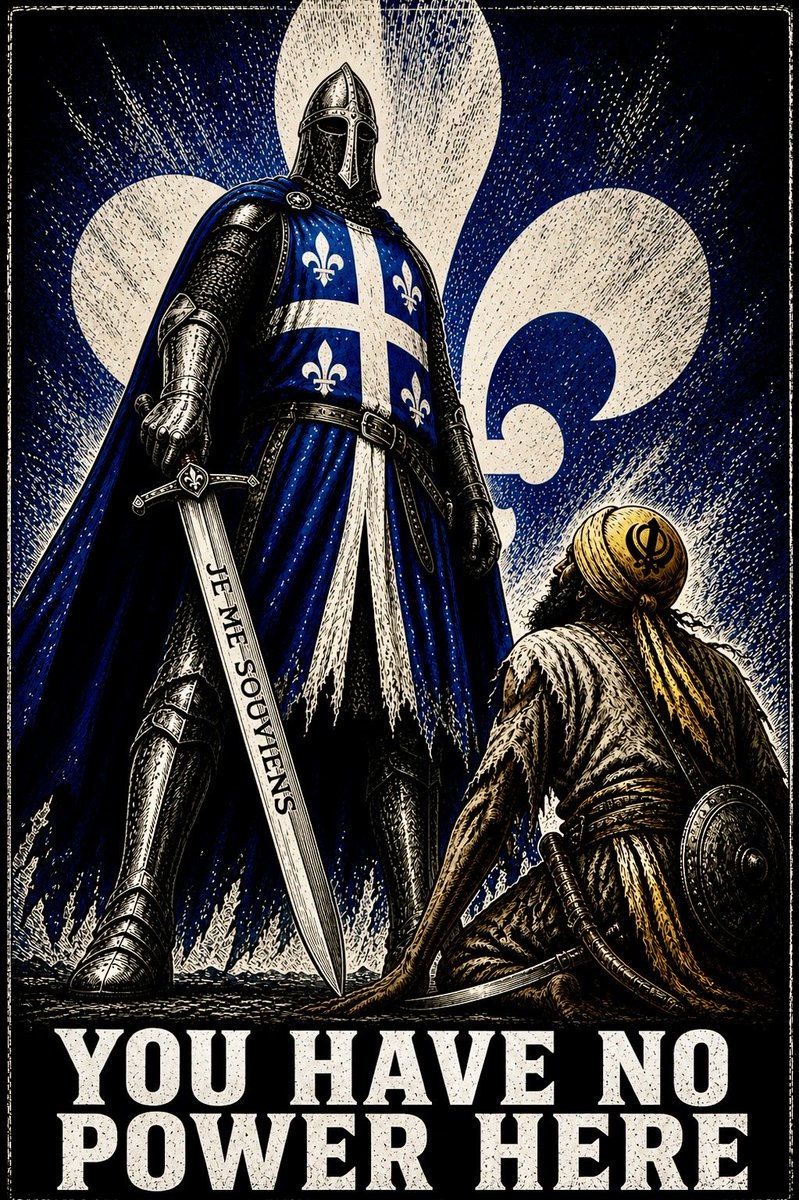
Had a fun time talking with some White Nationalist pagan critics of Christianity for about an hour and a half yesterday on @CQPirateRadio
I think there are some good parts of the discussion so if you're interested check it out and let me know how you think I did 😎👍✝️ ⚔️🔥
Nikocado Avocado says he feels “burned alive every day” and is facing permanent pain for life after a complication from his excess skin removal surgery
He says the money he made from mukbang content was not worth the suffering he’s now enduring
To roast @JoelWebbon@piersmorgan knew he had to get back up from other guys to get the job done (getting other men to help make up for his inadequacies being something he's known for 😂)
Fortunately, Joel is the GOAT and handled the roundtable interrogation great 😎👍✝️⚔️🔥
“It’s none of your business, dude!”
Piers Morgan puts Joel Webbon on the spot over how much money he’s made this year, as he denies accusations of being a “God grifter.”
📺https://t.co/6F0RYQt7aJ
@piersmorgan | @JoelWebbon
Anti-immigration was originally a leftist position on worker protection grounds. It was always understood that legal immigration lowered wages and increased competition for Americans.
The left's recent obsession with immigration is largely a reaction to Trump's rhetoric.
@btbsoco This is actually the result of discriminating against White men in academia and denying them the same opportunities that non Whites and women are getting access to.
These immigrants are not more intelligent or hardworking (if they were their countries wouldn't be dumps).
@jasonwhitlock Thank you for wanting a mature discussion with Joel and the Christian Nationalist perspective.
Very few have been capable of this.
God bless.
These numbers seem to align with the initial growth of early Christianity in Rome as well.
10-20% adoption of an idea serves as a tipping point that will rapidly spread through the population.
Just 10-20% of the population needs to think Christian Nationalism is cool and then we win. 😎✝️
Grok: Sociologist Rodney Stark estimated that steady growth of ~40% per decade (comparable to groups like the Mormons) took Christianity from ~1,000 people around 40 AD to roughly 6 million (~10% of the Roman Empire) by 300 AD. Absolute numbers then surged due to compounding, helping it reach majority status later in the fourth century.
This aligns with diffusion-of-innovations theory (Everett Rogers), which treats ~10–20% adoption as a critical mass or tipping point after which spread becomes self-sustaining and hard to reverse. Christianity is often described as hitting that threshold in the third century, making it too large to ignore and setting the stage for Constantine’s accommodation and later official status.
A town where everyone uses “word A” for something, say what to call a street. Now add a few people who use “word B” and never change, whatever anyone says.
Does the town change its word?
With 5% stubborn people, word B ends at only 6%. With 16%, it reaches 100%. Repeated runs put the tipping point near 10%, and the closer the stubborn share is to it, the longer the crowd takes to decide.
This is the naming game, studied by physicists and linguists as a model of how conventions form.
The surprise is how small the minority can be: nobody has to be persuaded by argument. They only have to be certain, and let everyone else's habits do the rest.