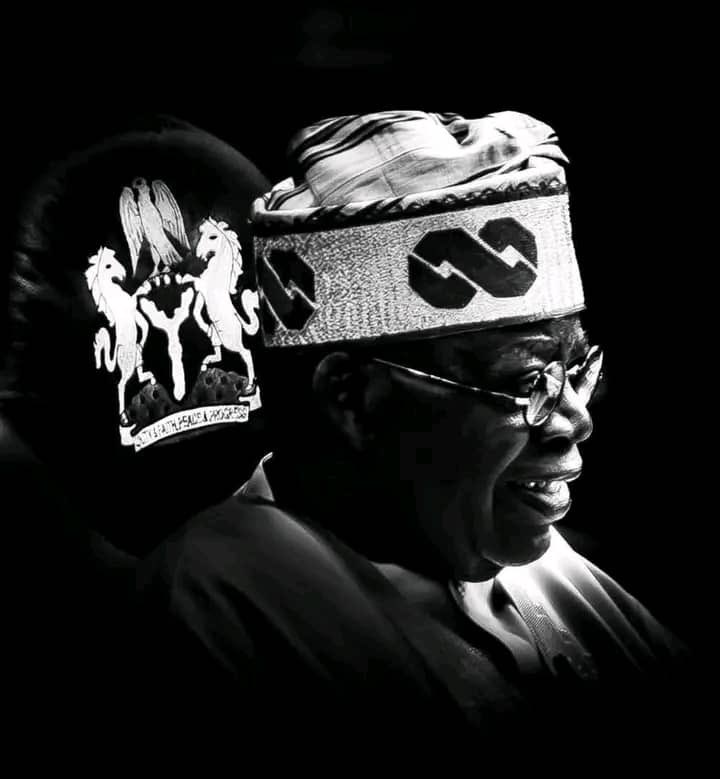
PAID IN FULL!
₦25.05 billion. A 35-month pension liability. 9,675 former NITEL/MTEL workers who had waited long enough.
In August 2025, President Bola Ahmed Tinubu approved the funds to clear this inherited obligation. The funding was provided under the 2026 Appropriation Act. Today, that debt is being fully settled.
And that is not all.
Another ₦9.48 billion has been paid as the initial 50% of Back End Computation arrears to 3,959 eligible PHCN pensioners, while ₦5.09 billion has cleared the final 50% balance of the 10.66% and 12.95% pension increment arrears owed to 11,180 eligible pensioners of Assurance Bank, NICON, NITEL and People’s Bank.
Total: ₦39.63 billion.
There is, of course, an irony too delicious to ignore.
One of the loudest men now auditioning to rescue Nigeria, Alhaji Atiku Abubakar @atiku of the ADC, once chaired the National Council on Privatisation in the years when NITEL was dragged through one botched sale after another, one failed arrangement after another, one management fiasco after another, including the infamous Pentascope management contract.
The arrangements collapsed. NITEL collapsed. Workers were left with the consequences.
Even Alhaji Atiku Abubakar has publicly acknowledged the succession of failed NITEL sales and turnaround arrangements.
The deals failed. The company died. The workers waited.
Now, more than two decades later, President Bola Ahmed Tinubu is paying the human bill left behind, including a ₦25.05 billion, 35-month pension liability owed to the people who had waited long enough.
That is the difference between selling an asset and settling a debt. Between making arrangements and taking responsibility.
Some people sold the future and left the workers a bill.
President Tinubu is paying the bill.
Promises are easy. Pensions are not.
Paid. Settled. Closed.
@PeterObi There is a genuine attention to education in Nigeria under the new minister.
We are closing down miracle centers all over the country. Your result must be your result.
Your idea of education is to be #1 in WAEC with miracle centers. No more.
PRESS RELEASE
FIRST LADY HANDS OVER BOOKS ON GIRL CHILD DEVELOPMENT TO FEDERAL MINISTRY OF EDUCATION
Says she will continue to do all within her capacity to make life better for the ordinary Nigerian
First Lady of Nigeria, Senator Oluremi Tinubu says she is committed to strengthening the hands of young girls to shape a future that matches their dreams
She stated this while handing over 140,000 copies of seven different story books on girl child development published by Merck Foundation, which she wrote its forward and reproduced by her office to the Federal Ministry of Education.
The books with different subject matters and offering life lessons., according to the First Lady would benefit both boys and girls by helping them develop confidence, empathy, healthy habits, and an appreciation for equity and social responsibility.
"It gladdens my heart that I am able to partner with the Merck Foundation on this, they are quite small but meaningful compare to our population size, they have been working with a other African nations”.
"We now use them as RHI international partners and they are committed to improving health care, education and social development across Africa”.
"Through our partnership, the foundation has provided 91 medical scholarships that are helping to strengthen health sector in Nigeria”.
Handing over the books to the Minister of Education, Dr Tunji Alausa for onward distribution to public school libraries nationwide, the First Lady notes that adequate incentives must be provided to help the girl child navigate her complex pathway to development, especially through functional education.
Their acquisition is one of the many fruits borne by Nigeria's First Lady's collaboration with Merck Foundation, targeting the promotion of girl child education in the country.
"I am confident that the ministry will facilitate the effective distribution of the books to public school libraries across the country, ensuring that children from diverse backgrounds can benefit from their lessons,"
While reviewing the seven story books, the Minister of Education, Tunji Alausa noted that the book exposes fundamental issues around girl child development, including gender discrimination and sexual violence while also capturing an attempt by the First Lady and Merck Foundation to strengthen needed values in girls, through the provision of the books.
Dr Tunji Alausa commended the First Lady for supporting education in the country and for her continuous support to citizens irrespective of misinformation.
He further acknowledged that the ministry is also following her footsteps for instance with "One Day Minister" they had during the last Children’s Day celebration which was copied from her precedence when she was the wife of Lagos State Governor in 2007.
"I promise you that we will use these books and decimate it across the country”.
With the official handing over, the distribution of the books to public school libraries across the country has commenced.
SIGNED
Busola Kukoyi
SSA Media to the First Lady of the Federal Republic of Nigeria
Thursday 2nd July, 2026
BREAKING AND BREAKDOWN:
Federal government has reduced import levy on new vehicles 🚗 into Nigeria 🇳🇬 from 20% to 10% and that of used vehicles from 15% to 5% in order to ease cost of vehicle importation.
The reduction takes effect today.
Now Learn - The Breakdown;
Beyond the obvious of you and me finally able to own a new or tokunbo car as this will crash price of imported vehicles, the benefits extends far beyond...
1. Lower transport fares (over time):
Commercial drivers, especially Danfo and Cab owners usually factor in the cost of wear and tear in their fares. If my car breaks, what does it cost to replace it?
With cheaper cars, commercial drivers can replace aging vehicles more easily and there will be noticeable crash in the prices of their spare parts too, reducing maintenance cost.
If Nigerians choose to be less Nigerian, that should considerably impact transport fare.
2. Reduced cost of doing business:
Many SMES depend on delivery vans, pick-up trucks or even school buses. If they can acquire them more cheaply, logistics costs will also reduce and that leads to overall ease in business activity.
3. Job creation: Some schools should have more than 1 bus but they can't due to cost. Now they can easily acquire more with the expected crash in the price of vehicles and that means fresh vacancies for drivers and conductors. More private individuals with no car at all can now buy. With more vehicles plying our road mean higher demand for mechanics, panel beaters, auto-electricians etc.
4. Lower Inflationary Pressure:
Since transportation costs affect the prices of food and other goods, cheaper vehicle acquisition could, over time, help ease inflation if transport costs decline.
5. Boost for agriculture:
Our Farmers and agro-processors benefit too for they may now acquire pickups and light trucks more affordably, reducing the cost of moving produce from farms to markets.
6. Higher government revenue:
Ironically, lower tarrifs will not necessarily lead to low revenue for the government. I predict huge rise in import volumes and this will significantly offset the revenue loss from lower tariffs. And with more vehicles come a rise in need for licensing and who gets the payment from vehicle papers?
This policy can not be more timely.
Congratulations Nigerians - Asiwaju still fixing our challenges one layer at a time.
We shouldn’t encourage this behavior of using school children to make contents, we shouldn’t go this low as a people
See the mics on his collar, you will know that this is full blown clout chasing
ASIWAJU - RESTRUCTURING NIGERIA ONE LAYER AT A TIME.
First of all, "Don't go down low", just flow with me.
How did we get here?
Shall I Begin?
On the 24th of May, 1966, the then Head of State of Nigeria, Johnson Aguiyi Ironsi promulgated the infamous Unification Decree (Decree No. 34 of 1966).
The Decree has remained the most unfortunate constitutional detour in our national odyssey. And I am not counting merely from Independence in 1960, but from the foundational amalgamation of 1914. It stands as the most tragic chapter in our Nation's reform compendium - the day the stream began to flow backward.
Why?
The decree replaced Nigeria's fluid Federal System with a rigid Unitary System.
What it means?
This simply meant that Nigeria ceased to be a true Federation. Powers that traditionally belonged to the regions and sub-nationals were withdrawn and concentrated at the monolithic Centre.
Powers such as:
1. STATE POLICING
The demand for State Policing had always been there since the fall of the 1st Republic but the debate grew into a deafening echo upon our return to Democracy in 1999.
"The current policing structure is incapable of meeting our security needs. State police is inevitable." - Bola Tinubu 2001.
Successive governments ignored, delayed, or were deaf to the request till Bola Tinubu answered himself in 2026, 25 years after - State Policing is finally here.
2. RESOURCE CONTROL/FISCAL FEDERALISM
The yearning for Sub-National Governments to have more control over the resources in their domain, and to hold a fairer share of the National pie, is an old wound that predates the Civil War. It was the core of Ojukwu's argument in Aburi, and it was the prophetic warning corroborated by Chief Obafemi Awolowo.
"True federalism is the only basis for Nigeria's unity and progress." - The Sage Awolowo, 1966.
Every leader since then, military and civilian alike paid no serious attention to this critical demand until Bola Tinubu responded to both Ojukwu and Awolowo 60 years with the definitive stroke of the Tax Reforms Act.
3. LOCAL GOVERNMENT AUTONOMY:
The local governments were stronger in the 1st Republic. politicians preferred the immediate impact of being Councilors and Chairmen to the distant allure of traveling to Lagos or Abuja as Lawmakers, but that culture had since died, leaving the grassroot to suffer.
"Local governments must be truly autonomous if democracy is to reach the grassroots." - Atiku Abubakar, 2002.
Atiku did not answer his own call while he held the reins as VP for 8 years. He had to wait for Asiwaju to deliver the response 23 years later. With the landmark Supreme Court victory, true Local Government Autonomy was secured, and today, the grassroots finally breathes again.
4. ELECTRICITY GENERATION
Lagos State single-handedly championed this energy revolution during its fierce historic dispute with the Federal Government over independent power projects in 2001. The visionary who led that gritty struggle as Governor is the exact same man who has ensured its grand manifestation as President. - Bola Ahmed Tinubu 24 years after.
5. FUEL SUBSIDY REMOVAL
The first major call for the removal of the corruption laden, cancerous fuel subsidy was made in 1986 under the Ibrahim Babangida Structural Adjustment Programme and had been repeated by successive administrations.
"Fuel subsidy is unsustainable and disproportionately benefits the rich." - Ngozi Okonjo Iweala 2012.
Yet, no leader had the stomach to face the entrenched oil cabals; no leader possessed the political will to risk temporary popularity; no leader had the statecraft to place the destiny of the nation above personal ambition, until Asiwaju emerged with the response to a 40 year old question. SUBSIDY IS GONE!
If you do not see it now, your eyes will open to it eventually. Asiwaju is the REFORMER GENERAL - painstakingly restructuring our Nation, one complex layer at a time... Without Noise too.
Good Afternoon Severally...