New in my best practice GenAI supported product dev workflow:
Now specifications can anchor features and plans. Also added more explicit acceptance criteria built into from the start of the workflow (/plan_feature). Check out the /create_spec command.
https://t.co/ipLoySbbBB
More and more people are reporting the same pattern: Fine-tuning of open weight models is worth the extra work when you have identified specific tasks that need to be scaled. Cursor started doing this in 2025.
I predict it will be quite common in most companies serious about AI.
We were able to fine tune an open weight model (Qwen3.5-9B) on proprietary internal data at @coinbase, and it out performed frontier models, at much lower cost and speed, for a specialized task (fraud prevention in this case).
I think we'll see more of this pattern inside companies. The frontier models are amazing generalists. But increasingly you'll see specialist models out perform on more narrow tasks, either working on teams, or by themselves.
We're making it easy to fine tune models internally for our employees. We even have a skill for it in our internal harness that makes it easy to spin these up and start training them:
"/fine-tune-and-serve-llm I want to fine-tune Qwen for payments risk review. help me get started"
I imagine we'll have some backend services that could be replaced entirely by this new architecture.
I've seen lots of very technical solutions to the problem @chamath mentions here, but none that actually is simple and intuitive. That's why I built https://t.co/WAmgHsO19b The whole idea is that you can refine the knowledge yourself over time!
This may be a dumb question but I’ll ask it here anyways:
I can’t find a good way for my various AI chats to automatically sync its conversation history into a structured knowledge base. So that as I update various chats from time to time and refine context, my knowledge base automatically grows with this new info.
@chamath I've seen lots of very technical solutions to this problem, but none that actually is simple and intuitive. That's why I built https://t.co/WAmgHsO19b The whole idea is that you can refine the knowledge yourself over time. Would love ideas for how to improve it!
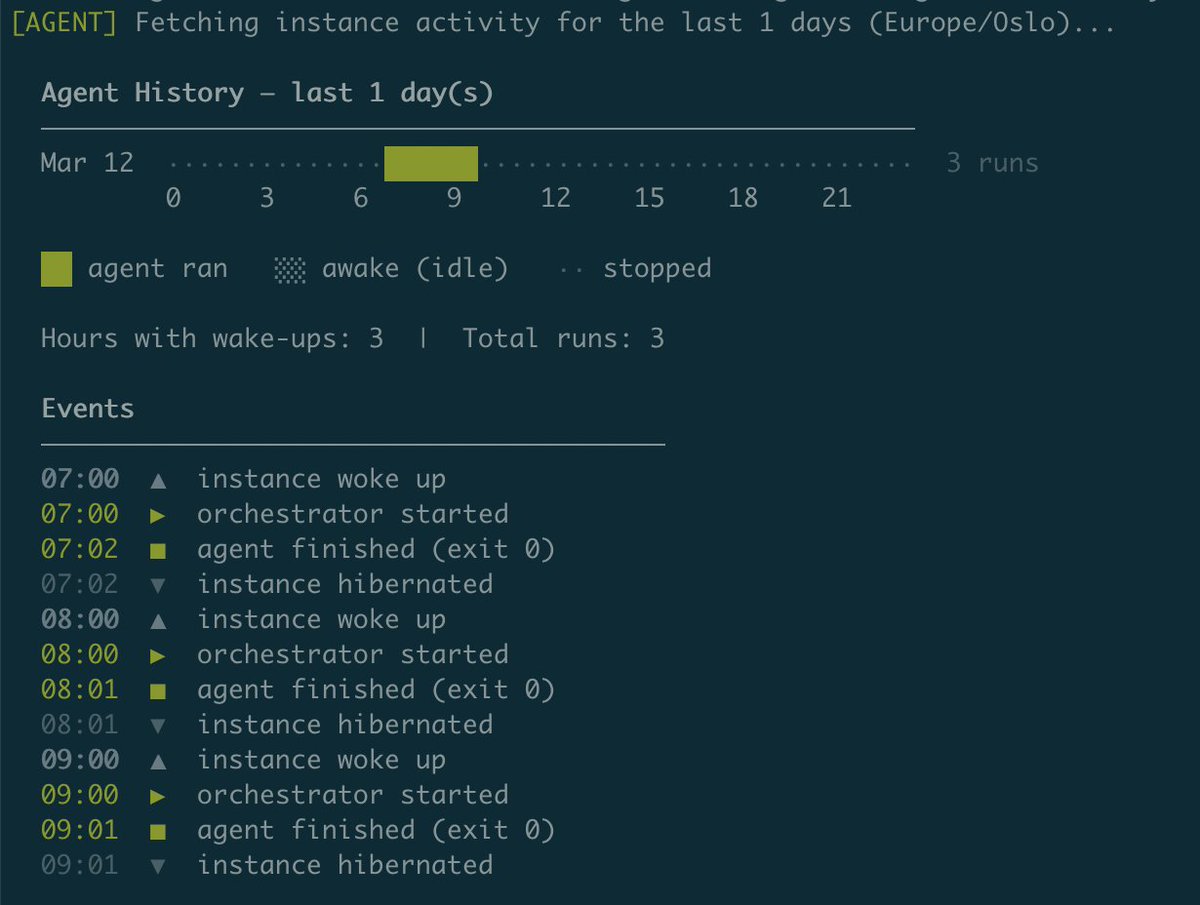
Can be installed by just asking Claude (Cowork or Code best): Follow the instructions in the https://t.co/HYyVpbWeaI repo gregertw/claude-code-agent to install an autonomous agent. Clone or download zip first.
@garrytan Thanks for sharing, @garrytan! Quite interesting approach, and it seems fairly complimentary to a workflow I have been experimenting with (https://t.co/ipLoySaDM3). It seems to not be enough to have a good plan to get everything done. Or is /review and /ship catching most?
This Claude version of OpenClaw shows you in 15 minutes the concepts and a very powerful OpenClaw-type agent. Use Claude Cowork and this prompt:
Clone the github repo gregertw/claude-code-agent and follow the instructions to install an autonomous agent.
#buildinpublic
@andrewchen Lots of cool things there! But it's hard to get accumulated value across projects. So I have been tinkering with a way to boost context sharing across projects: https://t.co/WAmgHsO19b - with MCP server and an openclaw skill as well
Claude and ChatGPT memory isn't powerful enough, and mem0 and other memory solutions are complex, built for developers. Regular people need a safe place to keep relevant context about themselves, their AI tasks, and decisions. That's why I built: https://t.co/WAmgHsO19b
Finally out! Read my latest post in the scaling product engineering series that ties everything together in six dimensions of a product operating model!
https://t.co/UITL2fyINA
Have a long flight so time to do a thread on a question I get in some form at least half dozen times a week
Where will value accrue in AI from here
Think: foundation models, apps, middleware, full-stack blah blah blah etc
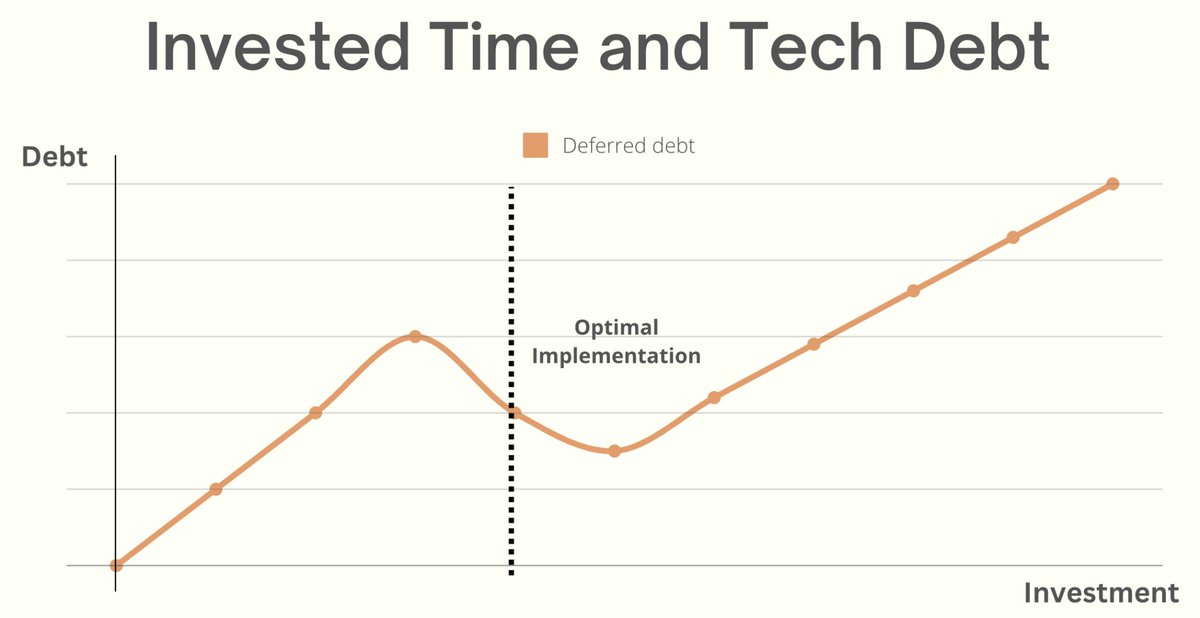
As you scale your product organisation, you will face some difficult hidden tradeoffs between near-term velocity and preparing for scale. They can be managed! Learn more in my next article in the series on learnings from scaling the @CogniteData product organisation.
In a recent post (https://t.co/LZI5MaDLLb), I wrote about the often seen break-down of the product management role and Brian Chesky's AirBnB organisational changes. In my latest article, https://t.co/qTPBfpATBy, I offer more context to how to grow organically an operating model without falling into the traps of pre-conceived ideas of specific roles or trying to cargo-cult another organisation's model. Enjoy!
Brian Chesky has apparently more or less ditched product management in a recent change at AirBnB. @cagan shared several posts warning about the potential consequences and the wrong signals this move is sending. While I do agree with Marty, I have myself experienced inefficient product organisations similar to what Brian Chesky is describing, and in my latest article, I share what I believe might be the root cause, at least outside Silicon Valley.
https://t.co/LZI5MaDLLb
Cannot remember last time I experienced a bigger ego boost 😂 Ask my GPT-alter ego about product and engineering leadership based on years of my posts https://t.co/P4eFt5m7GH
Very strange anti-openness argument from Microsoft President Brad Smith in response to my open source AI platform advocacy.
I thought Microsoft had long abandoned its anti open source stance.
Doesn't Azure run on Linux?
@unclebobmartin A walk down memory lane... In 1991, when I started at the University of Oslo, it was clear that Simula would never become a mainstream tool for developers. However, it was still the language being taught in the introductory programming courses. Never used it after that.