Mexico is physically connecting itself to the AI economy 🇲🇽
For decades, cars were the king of Mexican exports to the United States. Today, that crown belongs to the servers powering AI data centers.
In fact, this year Mexico supplies 40% of the servers imported by the US, almost all assembled to run AI models.
Each rack is so valuable that a single trailer load is worth the equivalent of a thousand cars in export value.
When I read that news in the FT, I connected the dots with what is happening in Jalisco.
Foxconn is building one of its largest server manufacturing facilities, running on Nvidia chips, on the outskirts of Guadalajara.
Guadalajara already had a reputation as the birthplace of Mexican engineering talent. Now add a hardware layer on top and you have the perfect combination.
I believe that combination of technical talent and advanced manufacturing is what can move Mexico up the AI value chain.
There are still plenty of challenges to solve, but it's worth noting that the AI data center boom is fundamentally reshaping Mexico's economic model.
A Oxford PhD student got flagged for submitting AI-generated work.
His advisor called it the most sophisticated research process he had seen in 20 years.
The student had not used AI to write a single word.
Here is the workflow that got him reported.
He starts every essay with a diagnostic he calls brutal. He dumps his rough argument into Claude and asks one question: what are the three weakest logical jumps in this reasoning, and where would a hostile examiner attack first? The AI does not write his essay. It destroys his draft, and then he rebuilds from whatever survives.
Most students using AI are doing the opposite. They hand Claude a topic and ask it to write. He hands Claude his thinking and asks it to find every place where that thinking falls apart. The difference between those two approaches is the difference between outsourcing your brain and sharpening it.
The second step is the one that made his advisor go quiet. He uploads the five most important papers in his field alongside his draft and asks Claude what claims in his argument contradict or oversimplify what these authors actually found. Most PhD students cite papers they have skimmed once. He cites papers he has been forced to genuinely reckon with, because Claude keeps catching the places where he got them wrong.
The final move is almost unfair. Before he submits anything, he pastes his conclusion and runs one more prompt. He asks what a philosopher of science would say is missing from this argument and what assumptions he is making that he has not defended. His essays come back from reviewers with phrases like unusually rigorous and demonstrates rare critical depth, and his committee has no idea that the depth came from a machine asking him harder questions than any human in his department was willing to ask.
The academic integrity hearing lasted three hours. The panel asked him to rebuild his methodology from scratch in the room. He opened his laptop and showed them exactly how the workflow ran, prompt by prompt. They did not just clear him. They gave him the highest grade in the department's history and asked him to present the process to faculty.
Here is what that story actually means. What took most PhD candidates six months of back-and-forth with advisors, he was compressing into a single session because he had figured out something almost nobody else has. AI does not make your thinking better by replacing it. It makes your thinking better by attacking it faster than any human critic ever would.
He was not using AI to write. He was using it to think harder than he could alone.
The tool is the same one everyone has. The workflow is the part nobody is teaching.
This talk by an Anthropic engineer who actually builds Claude Code will teach you more about using it than anything else on YouTube
30 minutes. Real best practices.
Bookmark it now. Watch it today.
Experience the magic of our Moon mission wherever you go! ✨
Download free, mobile wallpapers and bring your device into the new era of exploration: https://t.co/494ZyUBtve
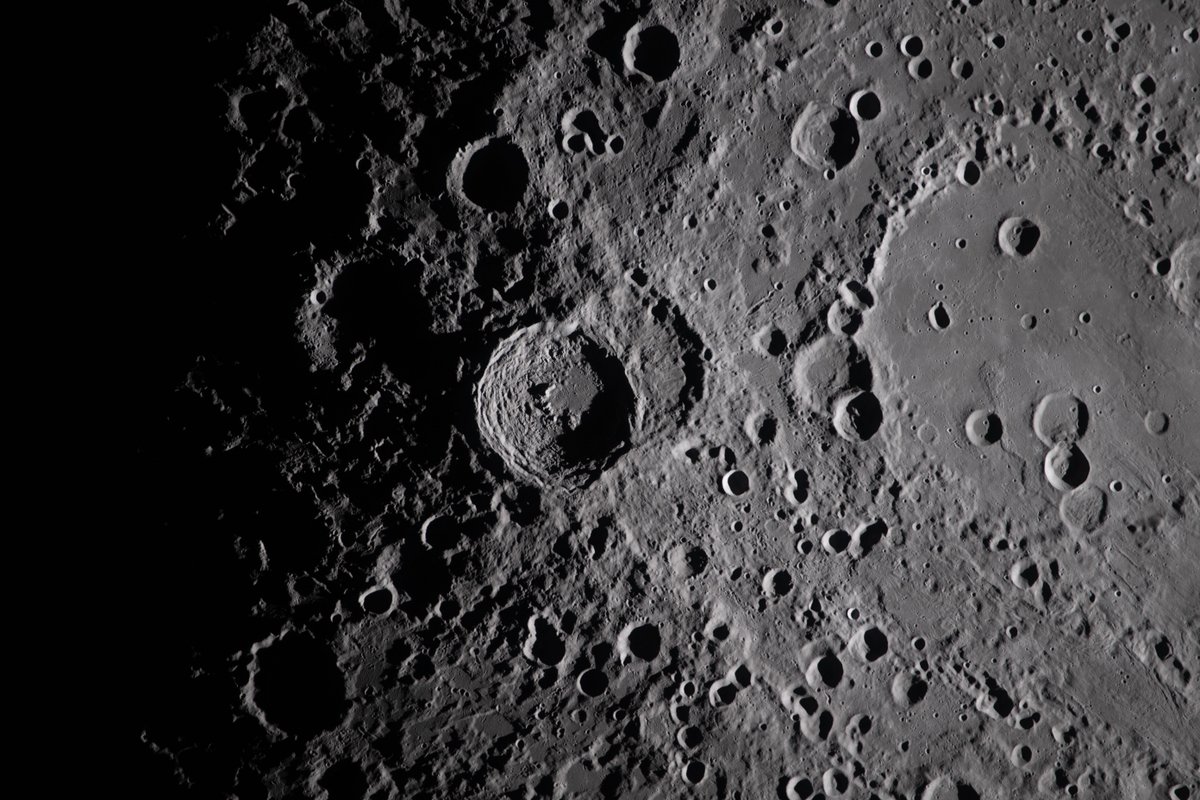
Hello, Moon. It’s great to be back.
Here’s a taste of what the Artemis II astronauts photographed during their flight around the Moon. Check out more photos from the mission: https://t.co/rzM1P0QbOl
@nmasforo@AnaOrdonana Gente sin idea de cómo manifestarse correctamente para hacer que las cosas sucedan, se van por la vía más sencilla que es bloquear una vía primaria, pobre gente sin inteligencia, ni conciencia, ni conocimiento. Que desafortunado que esas personas se reproduzcan…
Oracle just told every AI company on earth the same thing.
Your models are worthless.
Not the technology, talent or the billions spent training them.
But the data they were trained on.
Larry Ellison, the man who built Oracle into the backbone of global enterprise just dropped a bombshell.
He said ChatGPT, Gemini, Grok, and Llama, all of them are training on the exact same data.
The entire public internet, every Wikipedia page, Reddit thread and every news article.
That means they're all converging essentially becoming the same product with different logos.
Ellison's word for it is commodities.
But here's where it gets dangerous.
He says the real gold isn't public data, It's private data.
The medical records in hospital systems, the financial data in bank vaults.
The supply chain secrets of every Fortune 500 and guess where most of that data already lives.
Not Google, Amazon or Microsoft but inside Oracle.
Oracle databases hold most of the world's high value private enterprise data.
So Oracle just launched something called AI Database 26ai.
It lets the top AI models, ChatGPT, Gemini, Grok, Llama reason directly over a company's private data, without that data ever leaving the vault.
They're using a technique called RAG, Retrieval Augmented Generation.
The AI doesn't train on your data, it searches it in real time.
Think about what that means.
A bank could ask AI to analyze every loan it's ever made without exposing a single customer record.
A hospital could have AI diagnose patients using its full medical history without violating HIPAA.
A defense contractor could let AI reason across classified operations without data leaving a secure environment.
Ellison is betting this is bigger than the training market. Bigger than the GPU boom.
Bigger than the data center buildout.
He called it the largest and fastest growing market in history.
The numbers back the ambition.
Oracle's remaining performance obligations just hit $523 billion.
That's contracted revenue not yet delivered and $300 billion of it comes from OpenAI alone.
Cloud revenue hit $8 billion in a single quarter, OCI grew 66 percent and GPU revenue surged 177 percent.
But here's the part nobody's talking about.
If private data becomes the real AI moat, then whoever controls the database controls the future of AI.
And that's a level of power that should make everyone uncomfortable.
@lupita_hinojosa Esta vieja haciéndose la lista solo por decir que los chilangos no están preocupados, seguro su círculo cercano es quien no está preocupado y por eso dice que son los chilangos. Que se vaya a la chingada, aquí todos sufrimos por México, no se trata de provincianos vs chilangos!
@TagTeleVia no sirve la página de Mi Cuenta, no se puede hacer nada en la página, cada vez que le das click a algún botón te regresa a la sección de información personal
@Ticketmaster_Me tienen una experiencia de pago fatal, como que me hacen un cargo por envío de $35 pero la entrega es gratis?? Además gastos de envío de un boleto digital?? Tienen mucho que aprender sobre experiencia de usuario