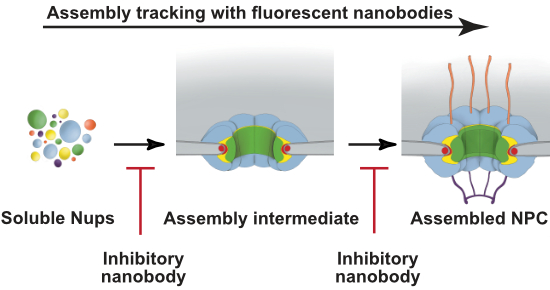
A nanobody toolkit for tracking or blocking nuclear pore complex (NPC) biogenesis identifies a checkpoint linking assembly of the NPC scaffold to formation of the Np98-dominated permeability barrier
Dirk Görlich and coworkers
@NPC_aficionado@mpi_nat
https://t.co/Ff0EU5MMBJ
@AndImaging@aaandmoore ....and heterochromatin exclusion zones (HEZs) are formed by so-called nuclear baskets, which keep the nuclear pores free (https://t.co/rnCpCW8jgz)
Congratulations to Janka Zsok and Elisa Dultz for their paper on the #nuclearpore basket in collaboration with @LucienWeissLab. The first preprint from the Dultz group!
"doRITE" and have a look at tracks of single NPCs.
https://t.co/U14i91BZRX
✍️The Doye Lab's (@DoyeValerie) new article "Y-complex nucleoporins independently contribute to nuclear pore assembly and gene regulation in neuronal progenitors" made the cover and the highlight of @J_Cell_Sci 👏
➡️https://t.co/f88bSJpqwH
⬇️https://t.co/3mk5Ppqckp
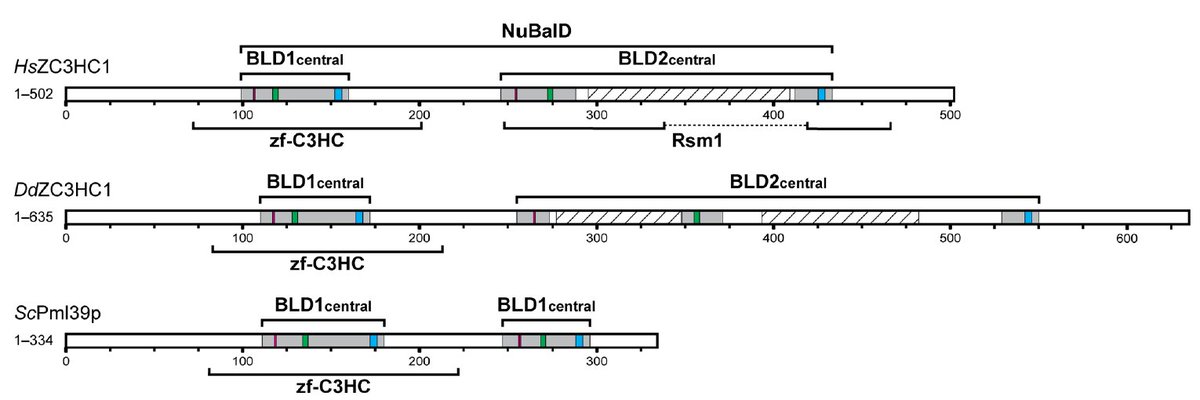
9/9 Finally, the ZC3HC1 structure predictions by AlphaFold2 illustrate an evolutionarily conserved NuBaID construction and enabled the redefinition of BLD boundaries. These predictions are consistent with the recent crystal structure of Pml39p by Hashimoto et al. @PalancadeLab.
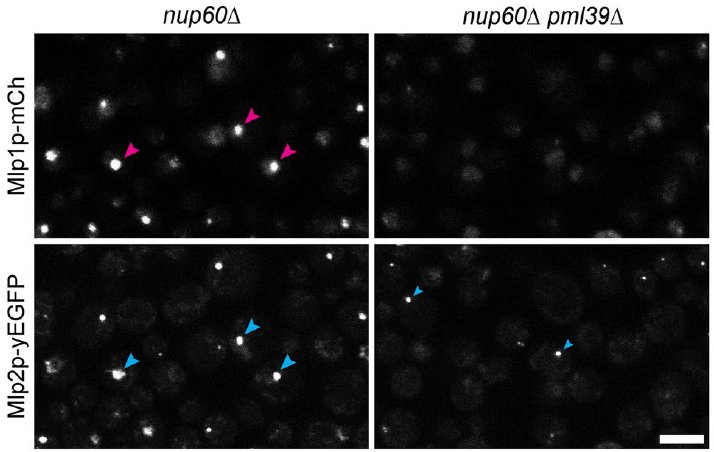
8/9 We have further demonstrated that Pml39p enables interlinkage of Mlp1 polypeptides in nuclear foci in the absence of Nup60p. These results for the budding yeast protein Pml39 are consistent with features that we previously described for human ZC3HC1 (https://t.co/F0BE8PjjvZ).
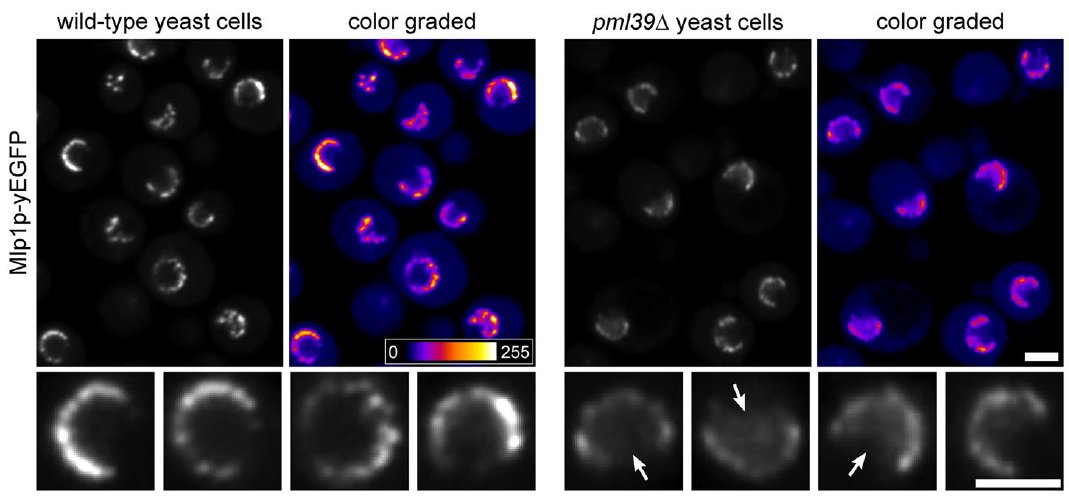
7/9 It was already known that Pml39p is a Mlp-interacting protein (Palancade et al. 2005 @DoyeValerie). We have now shown that Pml39p is required for positioning Mlp1p subpopulations at the NB, in line with a recent report by Bensidoun et al. @BensPierre4 @rnp_biology @zenklusd
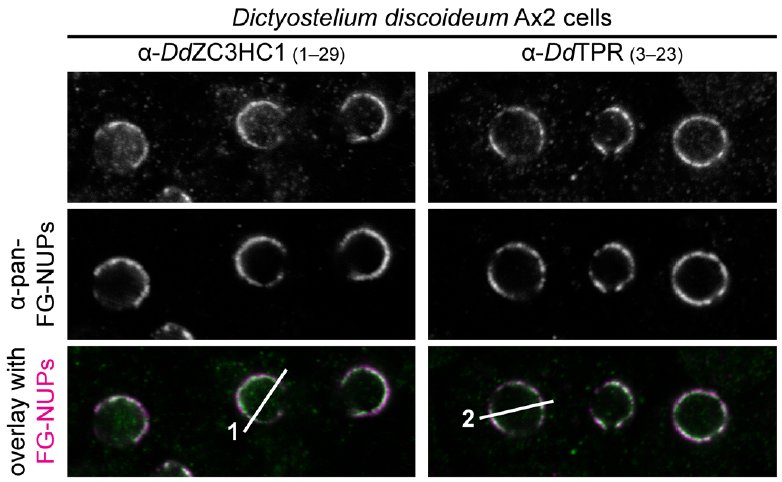
6/9 We found DdZC3HC1 colocalizing with DdTPR at the nuclear envelope of D. discoideum Ax2 cells with an offset toward the nuclear interior relative to the labelling of FG-nucleoporins.
5/9 We further investigated the identified ZC3HC1 homologues of Dictyostelium discoideum (DdZC3HC1) and Saccharomyces cerevisiae (ScPml39p; already mentioned in Gunkel et al, 2021), which share the same characteristic and unique bimodular NuBaID signature.
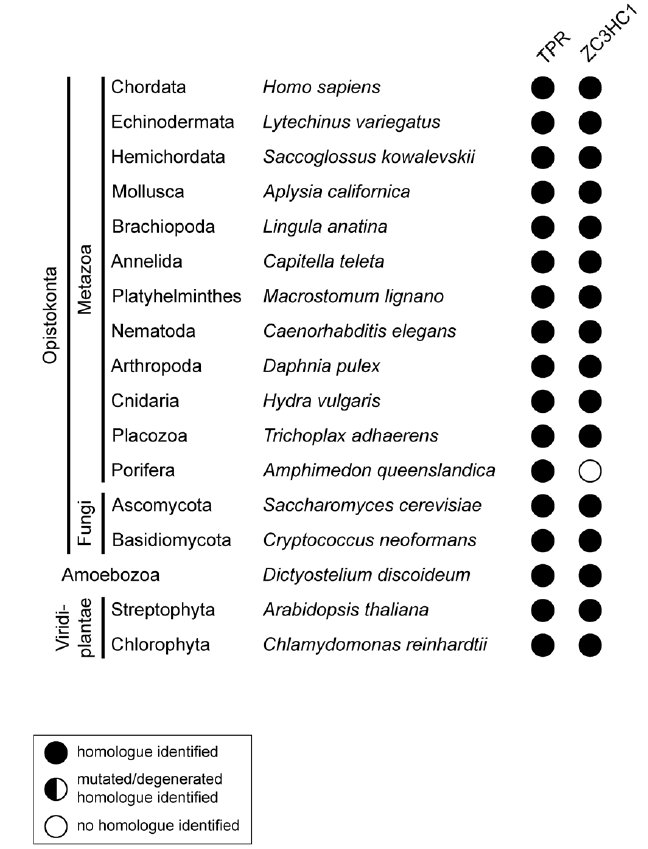
4/9 We show that such a bimodular construction is evolutionarily conserved and allows the identification of a ZC3HC1 homologue in most taxa of the eukaryotic realm. Interestingly, no homologue can be identified in the famous model organism Drosophila.
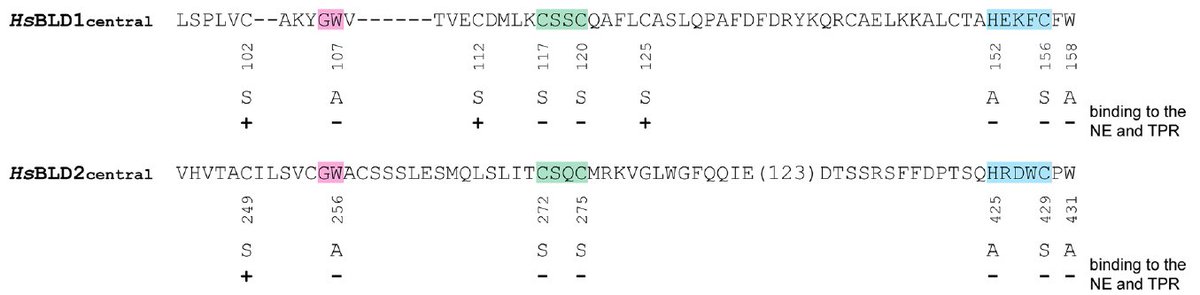
3/9 Both domains (called BLD1 and BLD2) are required to establish a functional TPR-binding interface. These two BLDs are zinc finger domains that form an experimentally validated functional unit, which we have named NuBaID (nuclear basket interaction domain).
2/9 We describe the molecular properties of ZC3HC1 that enable its initial binding to the nuclear basket (NB) and TPR. First, we mapped the minimal bimodular interaction domain of human ZC3HC1. Any further truncations resulted in loss of NB binding of such ZC3HC1 mutants.