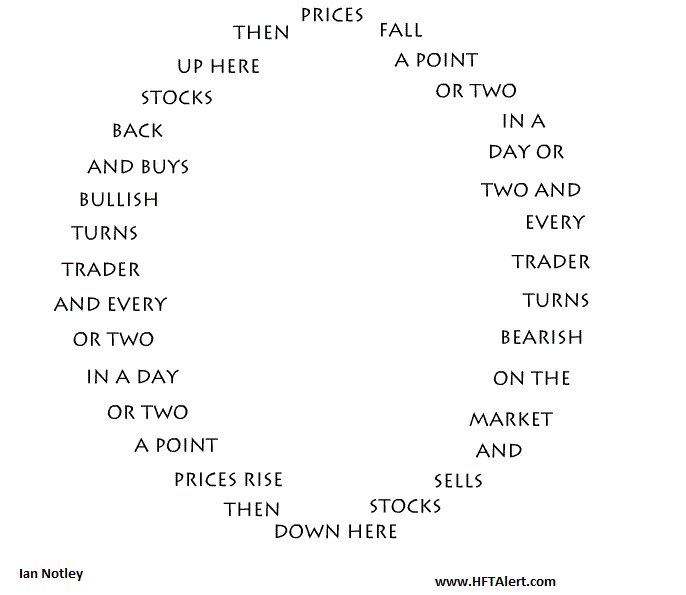
For growth companies, hold price constant and move time forward and they become undervalued, hence they're rigged in your favor. You just need to be PATIENT.
12,105 programs, 5545/6511 78 pure capper buys vs 76 sells. 862 large program buys, 1265 sells.
This is the largest single day of programs since we started tracking program activity.
10,550 programs so far today... 4780 buys, 5762 sells. 782 large buy programs vs 1178 sells.
Using Grok Ai, I had it scan through the /Burst_Data files in the Burst Monitor's file folders and since Jan 1, 2025, today is the largest number of programs...the prior number was 8351 on April 9th, 2025.
You can use any Ai program to sort through the data burst files the Monitor automatically archives and pick out the most active/least active/ symbols and discover many interesting internal trends that you would never be able to see by manually trying to watch the tape..there are simply too many transactions to do this manually.
Ai has brought a whole new dimension to the quality of the data you can mine out of the Burst Monitor.
$SPY $QQQ $TSLA $SPCX
@LexxFutures of course...they don't want you to have intelligent software that can read through their legislation. They don't want you to be able to use informational tools to leverage your brain the way physical tools leverage your strength.
The most attractive hyper growth company I know of that has yet to move, is CARLSMED $CARL. High double digit revenue growth, a strong and growing network of surgeons and support systems, strong balance sheet with plenty of working capital for several years, low float and of course really great products. Yet it continues to fly under the radar.
Check it out for yourself, here's their latest deck:
https://t.co/UcrK8YpCvN
Burst Monitor users saw the heaviest program count during the first 30 minutes of the market today...pretty much EVER that I can recall. Over 1000 buy and sell programs ran...pretty much tied neck and neck. $SPY $QQQ https://t.co/aPQy4HqPyU
Since it has come public, $SPCX has provided the opportunity to enter a long term investment due to a wonderful price decline. See image 1. We start establishing positions as the Liquidity Accumulator shows buying when the price either is flat or declining. Cost around $122.
The second image shows the recent run up and identified two vertical program driven ranges. We expect to see at least the first range retrace and would be a buyer or would add to positions. If we get the lower range, that would provide a better opportunity.
Note we are NOT trading $SPCX...this is a long term (5+ years) investment. Development stage growth companies take 5-7 years to reach their potential. Provided there is sufficient working capital, "the longer you wait the more you will make". The 48 years I have invested in this manner has proven itself 3000x fold.
It's the other way around...Kelvin waves create El Nino's they are not caused by El Nino's.
**Kelvin waves primarily help create and develop El Niño rather than being caused by it.** They are a key mechanism that redistributes heat and builds the conditions that define an El Niño event.
### How the relationship works
- Equatorial Kelvin waves are generated by wind changes—mainly weakened easterly trade winds or westerly wind bursts in the western/central Pacific. These winds are part of the onset process (often linked to the Madden-Julian Oscillation or other atmospheric variability).
- A downwelling Kelvin wave then propagates eastward, pushing warm water toward the eastern Pacific, depressing the thermocline, and often raising sea surface temperatures. This is one of the fundamental ways the ocean adjusts toward El Niño conditions. NOAA oceanographers describe them as “a key part of El Niño’s development” and “one of the fundamental building blocks” for understanding how El Niño evolves.
- A single wave does not automatically produce a full El Niño. The western Pacific needs sufficient stored heat (preconditioning), and the ocean–atmosphere system needs sustained coupling for the warming to grow and persist. Kelvin waves occur in many years that do not become El Niño events.
### Feedback once El Niño develops
Once eastern Pacific sea surface temperatures warm and the atmosphere responds (weaker trades, shifted convection), the altered conditions can generate or amplify further Kelvin waves. Waves also tend to be stronger and more energetic during El Niño than during La Niña. In that sense, the developing El Niño influences subsequent wave activity—it is a two-way coupled feedback, not pure one-way causation.
**In short:** Wind-driven Kelvin waves are a major driver that helps initiate and strengthen El Niño by moving heat eastward. The mature El Niño state then feeds back to affect further waves. They are more “builders” of El Niño than simple byproducts of it.