A young SpaceX employee asked Elon what happens if they fail to reach Mars in his lifetime. The room was full of engineers and the question landed heavier than anyone expected.
It was a simple question but it cut to the core of everything SpaceX exists for. The entire company, every late night, every exploded prototype, every engineer who missed their kid's birthday for a launch window, it all points at Mars. What if it doesn't happen in time?
Elon paused.
He said that the goal was never for him personally to walk on Mars. The goal was to build the infrastructure that makes it inevitable. That even if he dies before the first crew lands, the system he built would carry the mission forward without him.
He said the rockets, the factories, the team, the culture, all of it is designed to outlast any single person. Including him. Especially him.
Then he said something that reportedly moved people in the room.
He said that if he thought success depended on him being alive, he would have already failed. The whole point is building something that doesn't need its founder to keep going.
He compared it to a cathedral. The architects of medieval cathedrals knew they would die before the building was finished. They designed it anyway. They poured their life into something they would never see completed because the completion wasn't the point. The commitment was.
SpaceX is his cathedral. He may never set foot on Mars. But the road between here and there will exist because he refused to accept that nobody was building it.
The most ambitious man alive has already made peace with the possibility that his greatest achievement might happen after he's gone. That's not failure. That's faith in something bigger than yourself.
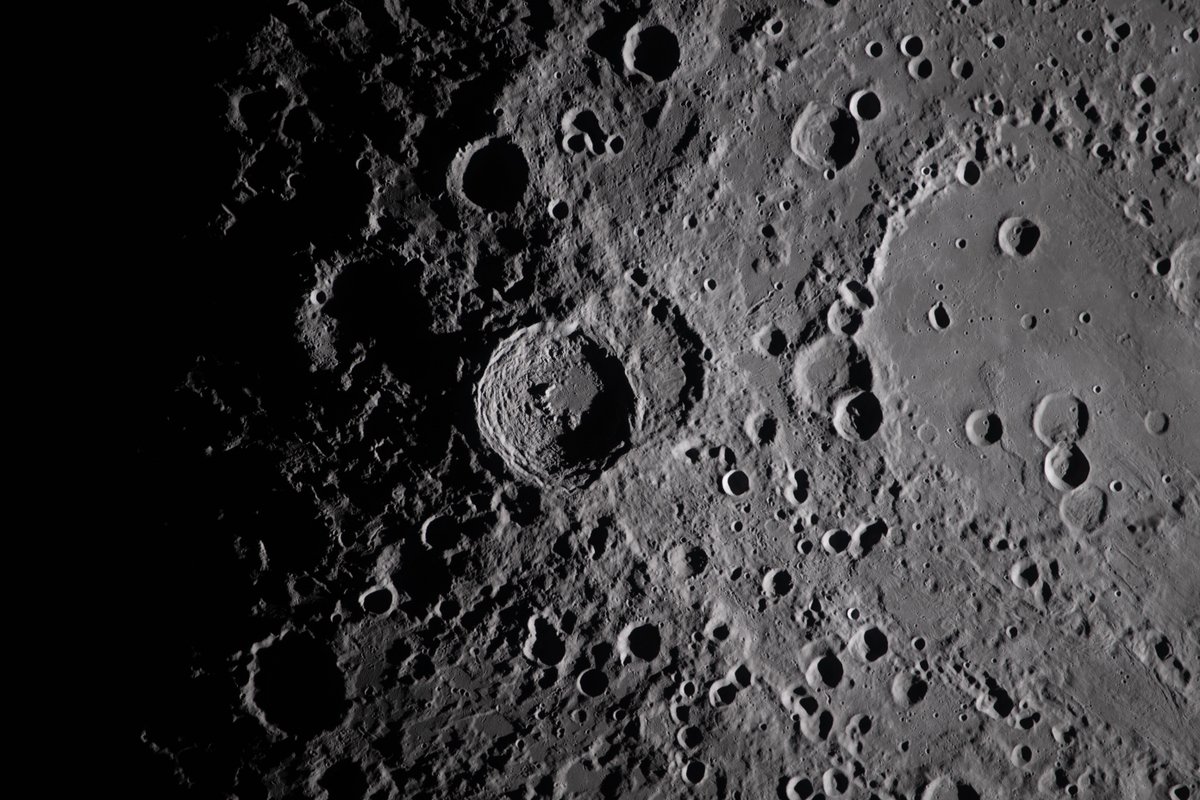
Hello, Moon. It’s great to be back.
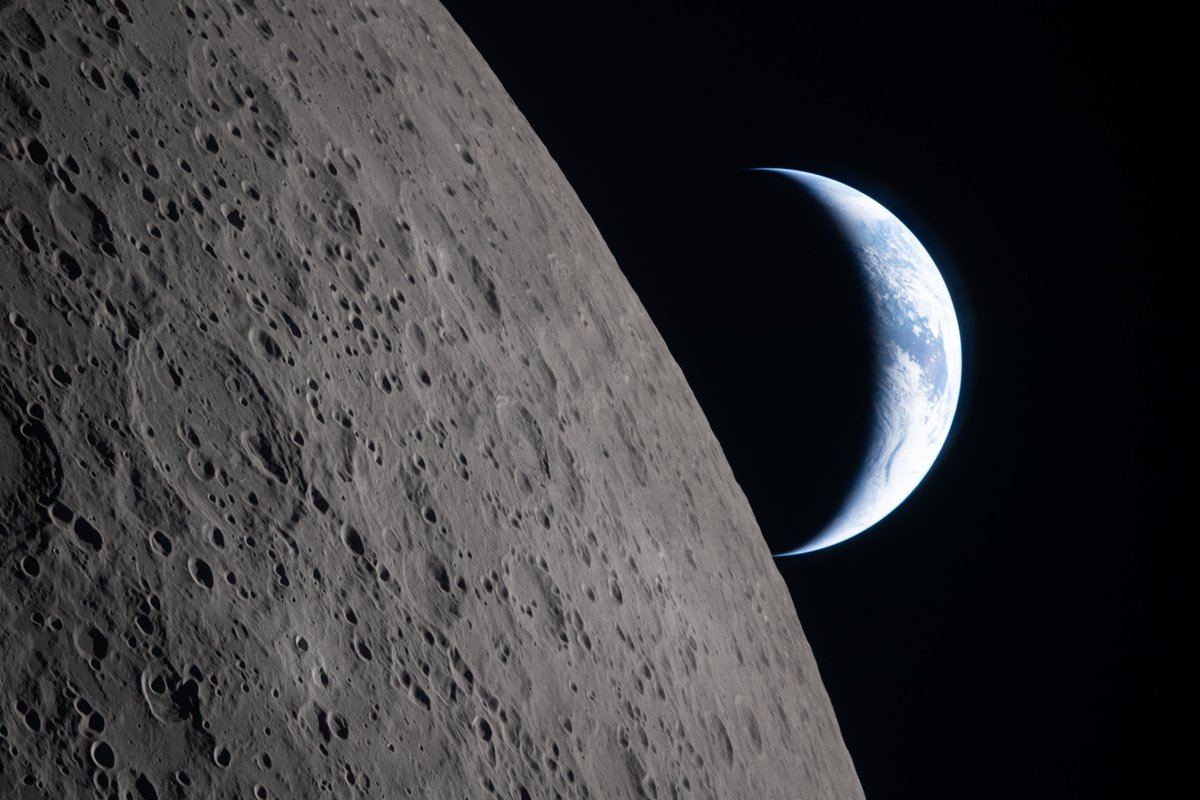
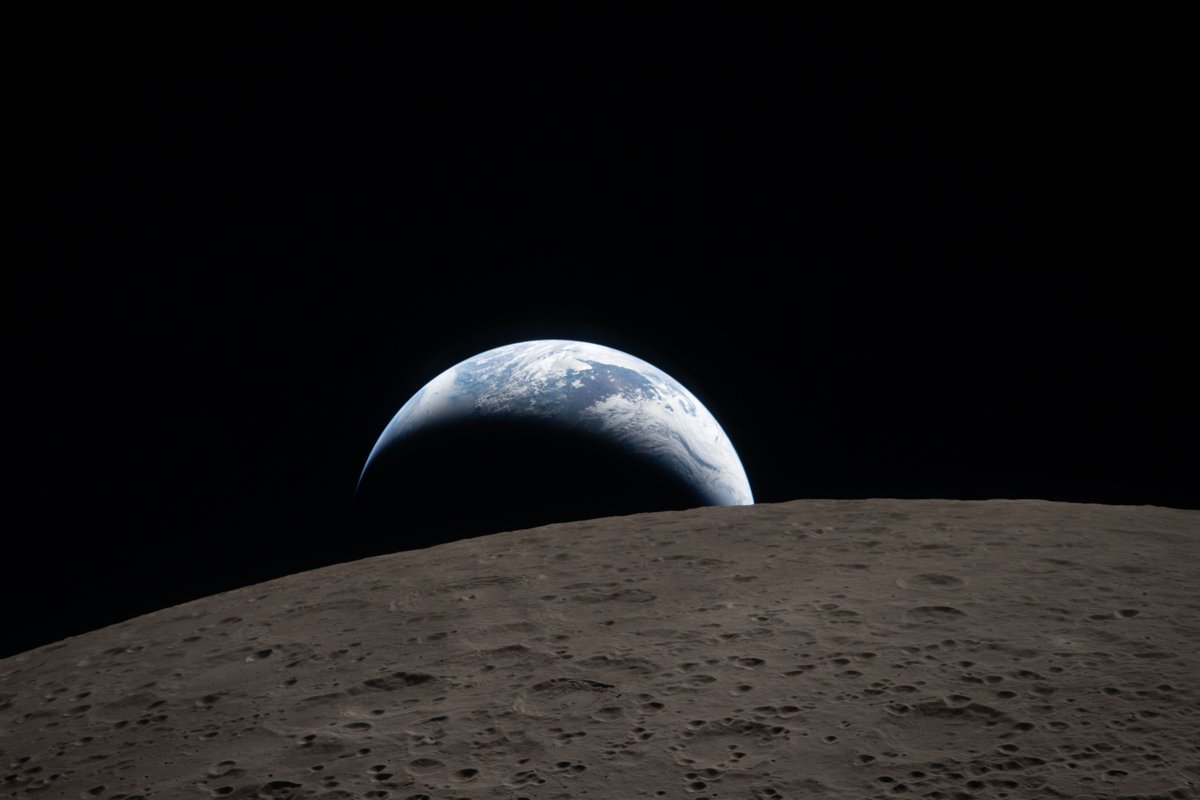
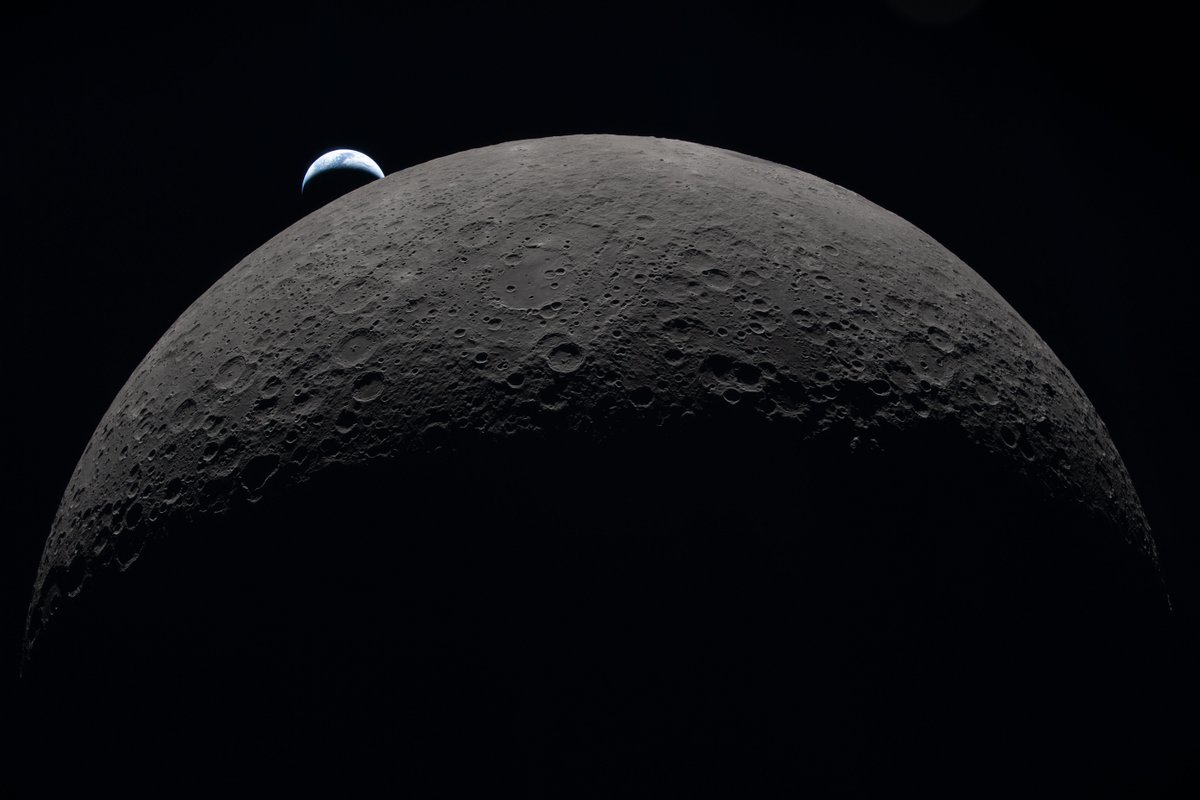
Here’s a taste of what the Artemis II astronauts photographed during their flight around the Moon. Check out more photos from the mission: https://t.co/rzM1P0QbOl
That's us! 🌍
The Artemis II crew captured beautiful, high-resolution images of our home planet during their journey to the Moon. As @Astro_Christina put it: "You guys look great."
Liftoff.
The Artemis II mission launched from @NASAKennedy at 6:35pm ET (2235 UTC), propelling four astronauts on a journey around the Moon.
Artemis II will pave the way for future Moon landings, as well as the next giant leap — astronauts on Mars.
@DannyLimanseta For the same reason we run simulations: to observe interesting outcomes.
That’s why the most interesting outcome, especially if ironically entertaining, is the most likely: all the boring simulations were terminated.
Life cannot just be about one sad thing after another.
There must also be things that make us super excited and inspired about the future. This is one of things. Bigtime.
For those unaware, SpaceX has already shifted focus to building a self-growing city on the Moon, as we can potentially achieve that in less than 10 years, whereas Mars would take 20+ years.
The mission of SpaceX remains the same: extend consciousness and life as we know it to the stars.
It is only possible to travel to Mars when the planets align every 26 months (six month trip time), whereas we can launch to the Moon every 10 days (2 day trip time). This means we can iterate much faster to complete a Moon city than a Mars city.
That said, SpaceX will also strive to build a Mars city and begin doing so in about 5 to 7 years, but the overriding priority is securing the future of civilization and the Moon is faster.
Excited to release new repo: nanochat!
(it's among the most unhinged I've written).
Unlike my earlier similar repo nanoGPT which only covered pretraining, nanochat is a minimal, from scratch, full-stack training/inference pipeline of a simple ChatGPT clone in a single, dependency-minimal codebase. You boot up a cloud GPU box, run a single script and in as little as 4 hours later you can talk to your own LLM in a ChatGPT-like web UI.
It weighs ~8,000 lines of imo quite clean code to:
- Train the tokenizer using a new Rust implementation
- Pretrain a Transformer LLM on FineWeb, evaluate CORE score across a number of metrics
- Midtrain on user-assistant conversations from SmolTalk, multiple choice questions, tool use.
- SFT, evaluate the chat model on world knowledge multiple choice (ARC-E/C, MMLU), math (GSM8K), code (HumanEval)
- RL the model optionally on GSM8K with "GRPO"
- Efficient inference the model in an Engine with KV cache, simple prefill/decode, tool use (Python interpreter in a lightweight sandbox), talk to it over CLI or ChatGPT-like WebUI.
- Write a single markdown report card, summarizing and gamifying the whole thing.
Even for as low as ~$100 in cost (~4 hours on an 8XH100 node), you can train a little ChatGPT clone that you can kind of talk to, and which can write stories/poems, answer simple questions. About ~12 hours surpasses GPT-2 CORE metric. As you further scale up towards ~$1000 (~41.6 hours of training), it quickly becomes a lot more coherent and can solve simple math/code problems and take multiple choice tests. E.g. a depth 30 model trained for 24 hours (this is about equal to FLOPs of GPT-3 Small 125M and 1/1000th of GPT-3) gets into 40s on MMLU and 70s on ARC-Easy, 20s on GSM8K, etc.
My goal is to get the full "strong baseline" stack into one cohesive, minimal, readable, hackable, maximally forkable repo. nanochat will be the capstone project of LLM101n (which is still being developed). I think it also has potential to grow into a research harness, or a benchmark, similar to nanoGPT before it. It is by no means finished, tuned or optimized (actually I think there's likely quite a bit of low-hanging fruit), but I think it's at a place where the overall skeleton is ok enough that it can go up on GitHub where all the parts of it can be improved.
Link to repo and a detailed walkthrough of the nanochat speedrun is in the reply.
@ravikeerthi22 Why bother with many small projects adding up to ₹26,000 crore when you can just take a nice percentage from one ₹26,000-crore project, right?