In our new paper in @NatureComms, we demonstrate RB’s role in regulating chromosome conformation independent of cell cycle control. Loss of RB prevented mitotic removal of cohesin, leading to topological insulation and reduced enhancer-promoter interaction
https://t.co/1weWbD76Up
In a new study, researchers from @MassGenBrigham and colleagues found that loss of RB protein disrupts DNA organization and gene control.
Read more, published in @NatureComms: https://t.co/GK2B3nuHWP https://t.co/KKjhHF2lVo @gsanid@Hanjun_Lee_@IGkotinakou
Excited to share the final version of the first paper from my lab, now in @NatureComms
We uncover a non-canonical role of RB in genome regulation, showing that RB is not just a cell cycle regulator but also a key organizer of 3D chromatin.
https://t.co/y01tUUj8vg
🧵👇
In our new paper in @NatureComms, we demonstrate RB’s role in regulating chromosome conformation independent of cell cycle control. Loss of RB prevented mitotic removal of cohesin, leading to topological insulation and reduced enhancer-promoter interaction
https://t.co/1weWbD76Up
It was a privilege to work with @Hanjun_Lee_ , @IGkotinakou, and the team on this exciting study, which reveals a new non-canonical role for RB as a transcriptional activator through the regulation of chromatin insulation and enhancer-promoter interactions.
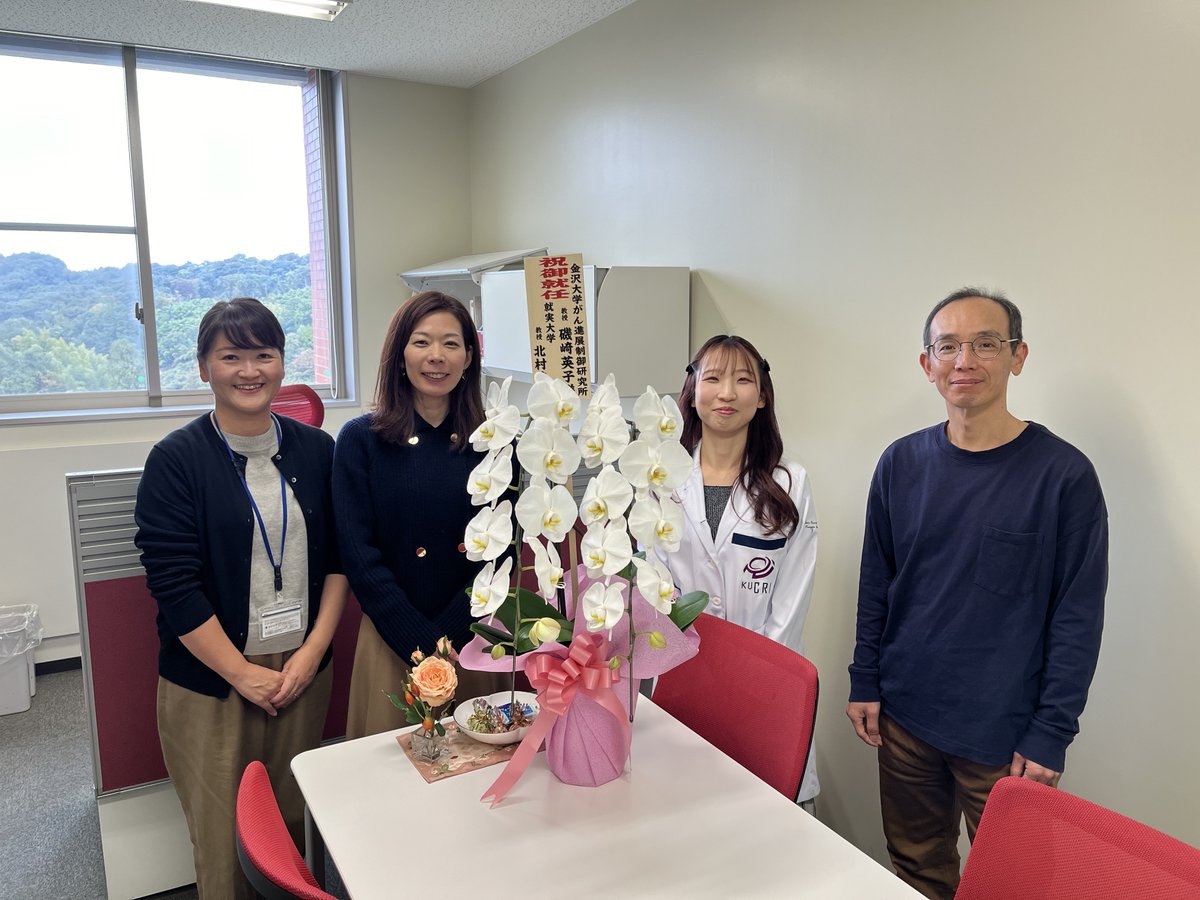
I'm pleased to announce I started my laboratory as a Professor at Kanazawa University Cancer Research Institute in Japan! My laboratory studies how cancers evolve and progress, especially focusing on innate immunity and genomic instability. We'er hiring an Assistant Professor!
🚨🚨Now online @NatureCancer, my postdoc work in @SawyersLabMSKCC with @dana_peer 🚨🚨 we establish a powerful organoid transplantation model of prostate cancer neuroendocrine transformation. Open access for all! @HHMINEWS
https://t.co/FJc0WSBvDQ
A 🧵... /1
The central dogma of molecular biology states that genetic information flows from DNA and RNA to protein, with reverse transcription converting RNA to DNA.
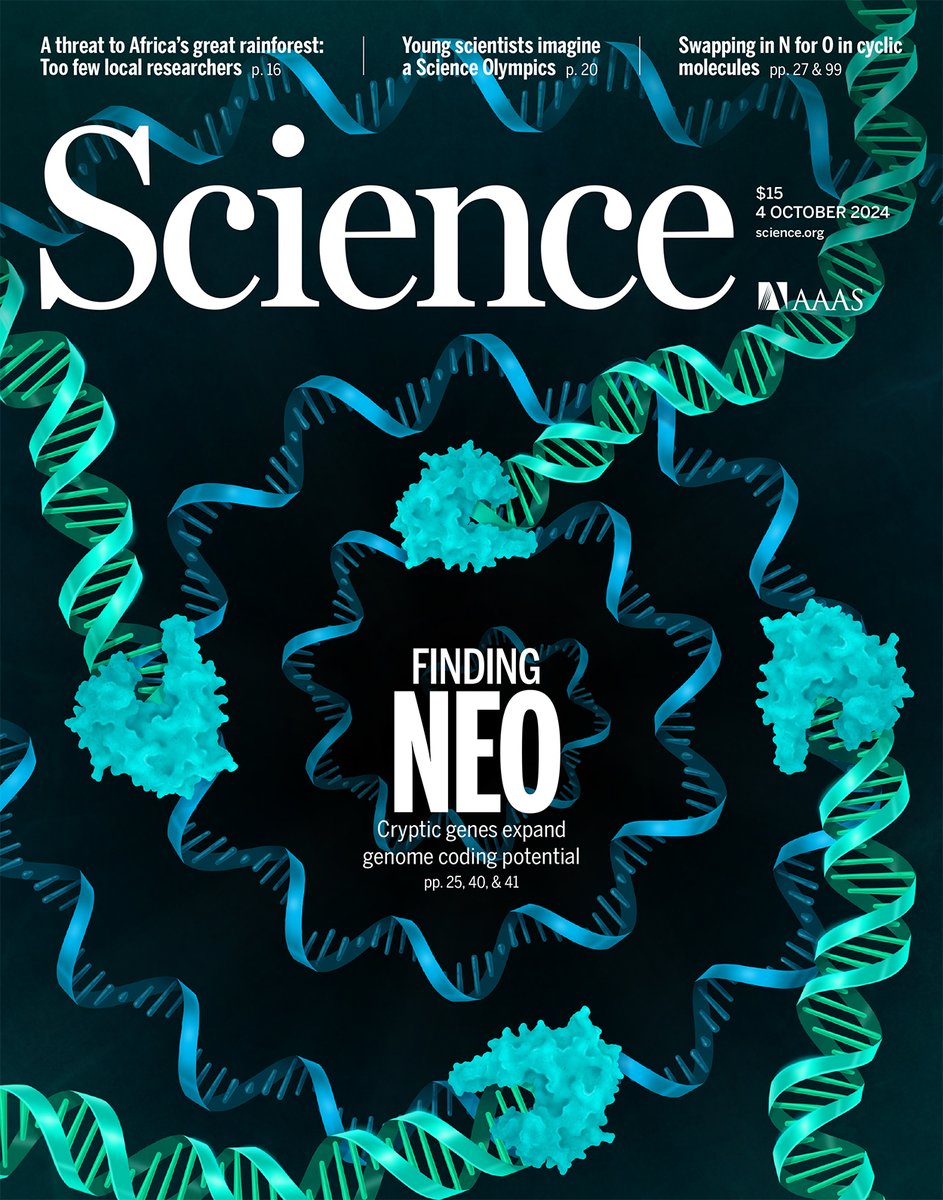
In the pursuit of understanding how bacteria defend themselves from viral infection, two groups have found alternative pathways to making genes from RNA that did not previously encode proteins. Learn more this week in Science: https://t.co/MT1Bhru2Ox
But here's a new twist!
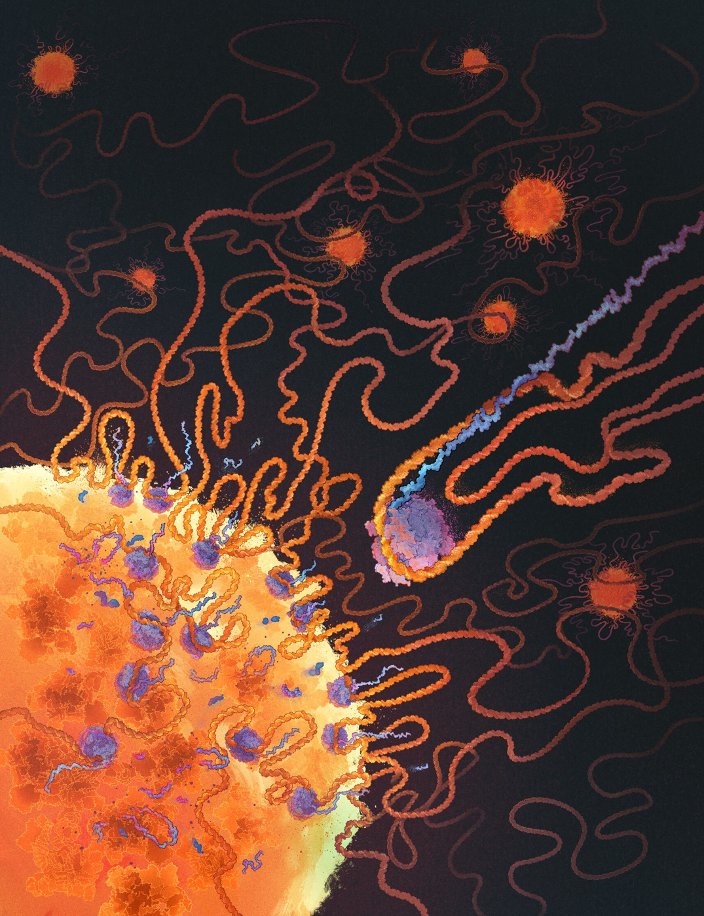
Today, we put a new #CDlab paper on @biorxivpreprint where we developed a new tweezer assay to directly measure how much supercoiling twist is induced into the extruded loop by an individual SMC in each loop-extrusion step!
https://t.co/nXwCEVKflF
1/
Out in @Nature today! We report that a CDK5-cyclin B1 complex maintains proper cell division. We discovered that CDK5, a long regarded non-cell cycle CDK functioning only in neurons, yet overexpressed in many cancers, does regulate mitosis!
Link: https://t.co/ovFZyOXVAM
Open2C, an international team of bioinformaticians including the group of Anton Goloborodko at IMBA, recently published three new open-source software tools for data analysis in 3D chromosome biology and genomics.
More about Open2C here: https://t.co/gBpB9pfvDI
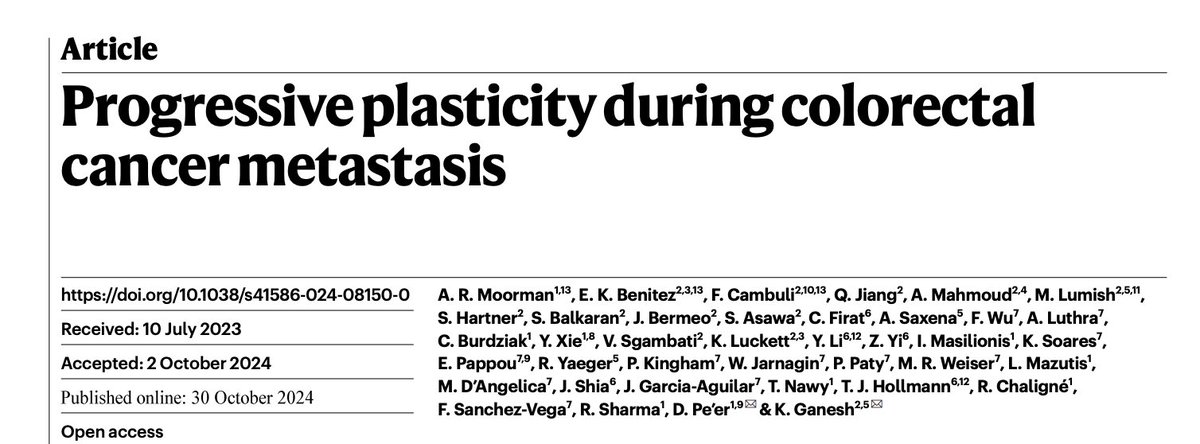
The phrase ‘metastasis accounts for 90% of cancer deaths’ is one of the most widely used in cancer research, yet it is overly simplistic, imprecise, and it is difficult to find any primary analysis supporting the statement. | → https://t.co/kiv5NQsUZL ← | 🧵(1/5)
Hanjun Lee, SB '24, planned to pursue chemistry at MIT. A course in genetics changed that. “I don’t think I’m a great scientist, yet, but I now have some sense of how to become one." @HanjunLee_MIT
https://t.co/utfxcc7fUT
What are the functional roles of 3D genome organization? Our paper in @Nature led by @_prashantbhat demonstrates how dynamic 3D genome organization around nuclear speckles plays a crucial role in regulating mRNA splicing efficiency. https://t.co/8KwfJHQWTt