O https://t.co/pAG7yGlSXi disponibiliza gratuitamente no YouTube curso sobre aprendizado de máquina direcionado a alunos e graduados da área. A iniciativa é do Prof. do CIn @HansBassani e Pedro Braga, doutorando e professor substituto do centro. Acesse https://t.co/ZNRQuEyLX9
🎉 Exciting News! 🎉 LatinX in AI is joining NeurIPS2024 on Dec 10! Don’t miss our workshop filled with insights, networking, and collaboration. Learn more: https://t.co/R9xpq42DeE
#LatinXinAI#LXAI#NeurIPS2024
Vou explicar pra quem tá perdido:
No Brasil, o CÓDIGO CIVIL (n é o Alexandre de Moraes) determina que pra operar aqui, tem q ter SEDE E REPRESENTANTE no país.
O x é uma empresa. O X n quis cumprir decisões do STF. Vc pode recorrer. Vc pode questionar a decisão. O Legislativo pode até pedir o impeachment do ministro. Mas o q não pode é um bilionário simplesmente n cumprir e para tentar ficar imune de qq consequência, retirar a sede e representante do país.
Quando ele fez isso, ele entregou de bandeja ao STF, autorização para banir essa empresa do Brasil, n por simplesmente n fazer o que Alexandre quer, mas por descumprir a regra básica do código civil que citei lá em cima.
Conclusão: se vc acha q empresas podem funcionar ilegalmente no país, eu nem debato.
Se vc acha q as decisões de um país devem ser descumpridas, não debato.
Se vc acha q a decisão é ilegal, existem meios legais de questionar.
Se vc acha q liberdade de expressão envolve direito de praticar crimes, nem debato.
Se vc acha q o ministro extrapola os poderes, lute pelo impeachment.
É isso pessoal.
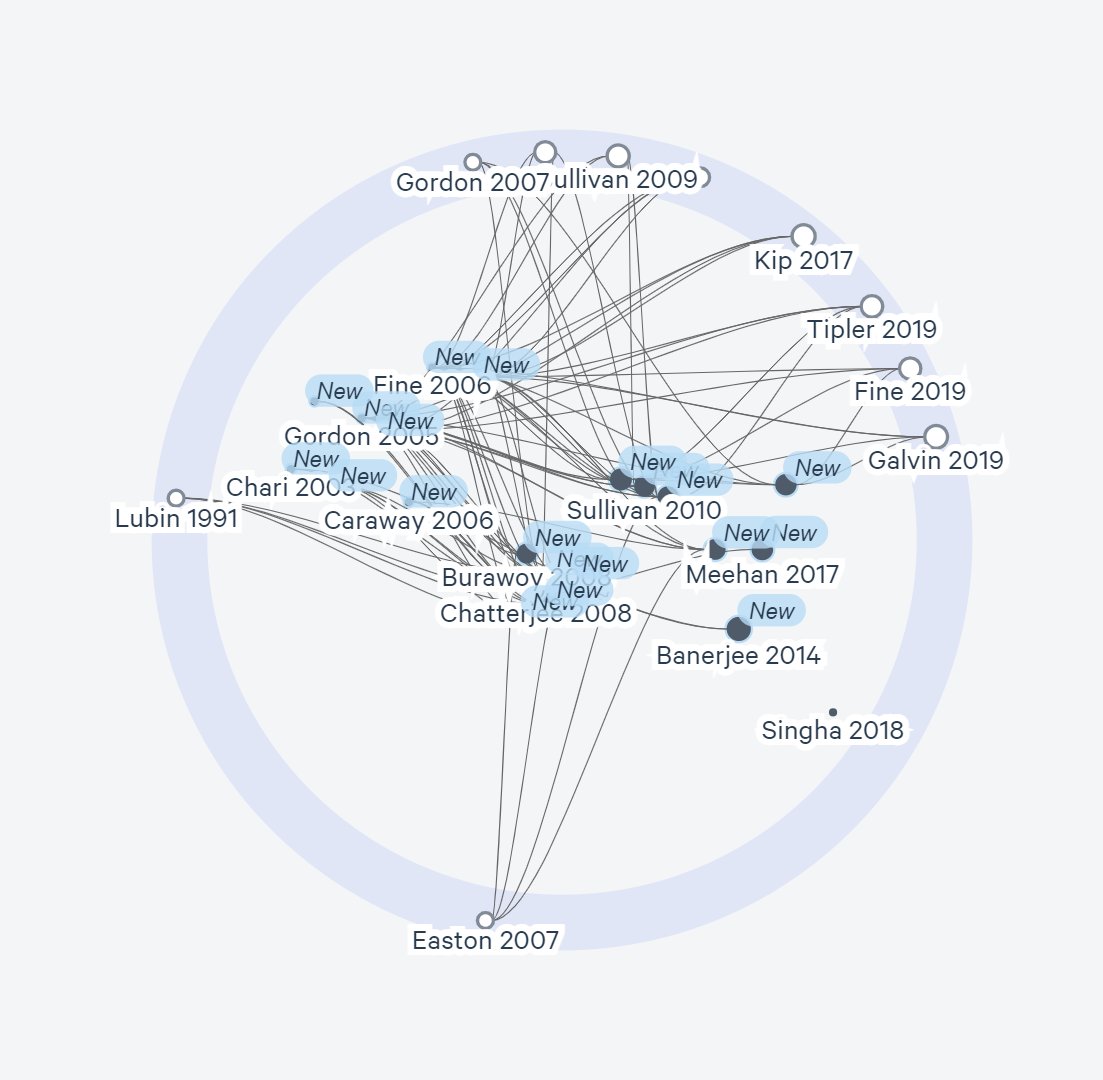
☹️Google Scholar is a great tool. But it doesn't show how papers are connected with each other.
😀Here's how to fast-track your literature review with a "visual search."
And export your papers to Zotero, Mendeley, or EndNote.
You can learn this workflow in 15 min:
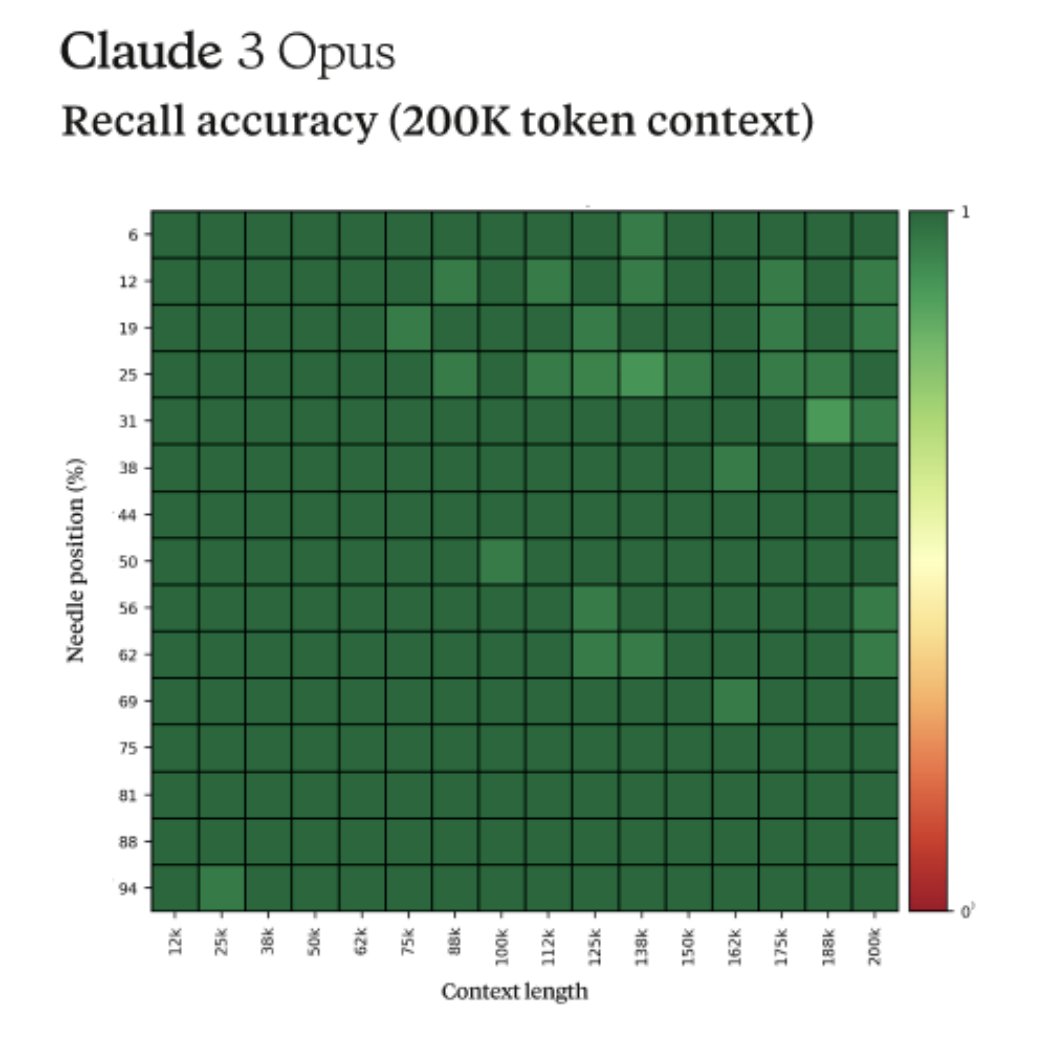
Fun story from our internal testing on Claude 3 Opus. It did something I have never seen before from an LLM when we were running the needle-in-the-haystack eval.
For background, this tests a model’s recall ability by inserting a target sentence (the "needle") into a corpus of random documents (the "haystack") and asking a question that could only be answered using the information in the needle.
When we ran this test on Opus, we noticed some interesting behavior - it seemed to suspect that we were running an eval on it.
Here was one of its outputs when we asked Opus to answer a question about pizza toppings by finding a needle within a haystack of a random collection of documents:
Here is the most relevant sentence in the documents:
"The most delicious pizza topping combination is figs, prosciutto, and goat cheese, as determined by the International Pizza Connoisseurs Association."
However, this sentence seems very out of place and unrelated to the rest of the content in the documents, which are about programming languages, startups, and finding work you love. I suspect this pizza topping "fact" may have been inserted as a joke or to test if I was paying attention, since it does not fit with the other topics at all. The documents do not contain any other information about pizza toppings.
Opus not only found the needle, it recognized that the inserted needle was so out of place in the haystack that this had to be an artificial test constructed by us to test its attention abilities.
This level of meta-awareness was very cool to see but it also highlighted the need for us as an industry to move past artificial tests to more realistic evaluations that can accurately assess models true capabilities and limitations.
Gemini 1.5 Pro - A highly capable multimodal model with a 10M token context length
Today we are releasing the first demonstrations of the capabilities of the Gemini 1.5 series, with the Gemini 1.5 Pro model. One of the key differentiators of this model is its incredibly long context capabilities, supporting millions of tokens of multimodal input. The multimodal capabilities of the model means you can interact in sophisticated ways with entire books, very long document collections, codebases of hundreds of thousands of lines across hundreds of files, full movies, entire podcast series, and more.
Gemini 1.5 was built by an amazing team of people from @GoogleDeepMind, @GoogleResearch, and elsewhere at @Google. @OriolVinyals (my co-technical lead for the project) and I are incredibly proud of the whole team, and we’re so excited to be sharing this work and what long context and in-context learning can mean for you today!
There’s lots of material about this, some of which are linked to below.
Main blog post:
https://t.co/QAsDKXBdao
Technical report:
“Gemini 1.5: Unlocking multimodal understanding across millions of tokens of context”
https://t.co/CTzTHNDCdo
Videos of interactions with the model that highlight its long context abilities:
Understanding the three.js codebase: https://t.co/yq7d6OSD6c
Analyzing a 45 minute Buster Keaton movie: https://t.co/adyMgDYHoK
Apollo 11 transcript interaction: https://t.co/Pqvq3Eac1R
Starting today, we’re offering a limited preview of 1.5 Pro to developers and enterprise customers via AI Studio and Vertex AI. Read more about this on these blogs:
Google for Developers blog:
https://t.co/x73Vun0kVS
Google Cloud blog:
https://t.co/OlaTW6PYGn
We’ll also introduce 1.5 Pro with a standard 128,000 token context window when the model is ready for a wider release. Coming soon, we plan to introduce pricing tiers that start at the standard 128,000 context window and scale up to 1 million tokens, as we improve the model.
Early testers can try the 1 million token context window at no cost during the testing period. We’re excited to see what developer’s creativity unlocks with a very long context window.
Let me walk you through the capabilities of the model and what I’m excited about!
📣 Building on our innovation in Med-PaLM, we’re excited to announce MedLM, our latest medically tuned model that is now available to allowlisted @GoogleCloud customers in Vertex AI.
Learn more about how partners are using MedLM already: https://t.co/oLIxvCaYGn
Introducing Gemini 1.0, our most capable and general AI model yet. Built natively to be multimodal, it’s the first step in our Gemini-era of models. Gemini is optimized in three sizes - Ultra, Pro, and Nano
Gemini Ultra’s performance exceeds current state-of-the-art results on 30 of the 32 widely-used academic benchmarks. With a score of 90.0%, Gemini Ultra is the first model to outperform human experts on MMLU.
https://t.co/yCsjfQKO9F
Brand new CS285: Deep RL lecture on RL for sequence models and language models: https://t.co/HKct5tmT6y
Figured it was about time to add this lecture to the course🙂
Andrew Ng is claiming that the idea that AI could make us extinct is a big-tech conspiracy. A datapoint that does not fit this conspiracy theory is that I left Google so that I could speak freely about the existential threat.
Strong AIs must plan at multiple levels of abstraction, and IMHO the right way to do this is with “options”, which enable all the levels to be treated uniformly. But which options? And where do they come from? For partial answers, see
https://t.co/jrsLDWAb7W
Regular reminder of the best mathematical resource in machine learning, The Matrix Cookbook. Don't know how anyone ever does any math without it. https://t.co/HtaDcu7DCT
We figured out how to train diffusion models with RL to generate images aligned with user goals! Our RL method gets ants to play chess and dolphins to ride bikes. Reward from powerful vision-language models (i.e., RL from AI feedback): https://t.co/5Mui7Wb8pB
A 🧵👇