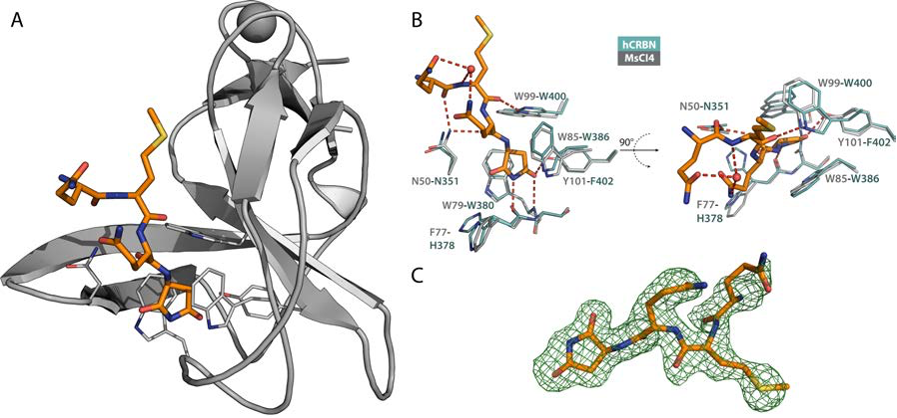
1/4 Very happy to share the short history about how we discovered a natural #degron of #cereblon@BBRCME.
We show how #CRBN specifically recognizes C-terminal cyclic imides as protein damage markers.
Shout-out to Chris @NanoTemper & the Schwarzer group!
https://t.co/enY63gsJZ7
Pleased to share our collaborative effort to develop anti-virulence agents. We unveiled a series of compounds targeting the transcriptional regulator HilD. Feedback is welcome!
We just released the "protein design toolkit", integrating tools from Damietta, ProteinMPNN and OpenMM.
An interactive tutorial is available at the server https://t.co/gmoCK0BbfV. Recommended usage is described in the paper: https://t.co/Uxghy5MO1U and feedback is most welcome!
😁🎉😄🌟#NobelPrize!🙃🙃🙃🙃🙃🙃🙃🙃🙃🙃🙃😊🏆😁#PhysicsNobelPrize2023 for Ferenc Krausz, Max Planck Institute of Quantum Optics! 🎊😃🥰😆🥳😁😃🎉🏅😊🎈😁🥳😄🎊😁🌟😃🥰🏆😁🎉🎇😊🥳😄🌟🎈😁😃🥰🎉🏆😁🎊😊😄🥳🌟🎇😁🥰😃🎉🎈😁🏆😊😄🎊🥳😁🌟😃🥰🎉🏅😁🎈😊🥳😄🎉😁😍😁🎉🎇😊🥳😄🌟🎈🏆
Sleeves up for infection research:
Our postdoc Joe Joiner researches anti-infectives to prevent #Salmonella infection. He’s not only appreciated as a talented researcher, but also as a great teacher by his students!
@PAW_Germany#PostDocAppreciationWeek @MPI_Bio
A press release about our recent paper in @PNASNews
https://t.co/VKkgJ9ains
Cyanobacterial protein integrates the circadian clock information
https://t.co/AUtTx5UvRi via @growkudos@uni_tue_exstra@CoE_CMFI @MPI_Bio
Fun fact: At 1.06 Å, this is the first-ever structure of any histone protein determined at atomic resolution - for what it's worth! 🤣
https://t.co/sx2mrB0KJo
Congrats, truly seminal work! Since our initial discovery of bacterial histones, we too worked on the very same histone protein & now present its crystal structure & DNA-binding properties. Great work by Yimin, Birte & collaborators @HartmannLab @MPI_Bio
https://t.co/sx2mrB0KJo
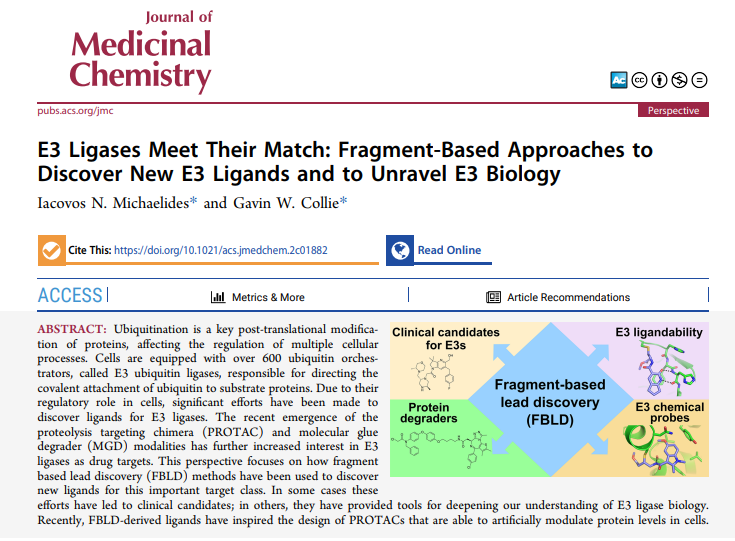
An excellent perspective by authors from @AstraZeneca about fragment-based approaches to identify ligands for E3 ligases. Of especially high relevance for the field of targeted protein degradation (#TPD). @ACSBioMed https://t.co/5lRasDVD5T
Check out our work on regulating #Salmonella virulence @biorxivpreprint!
Great job by Joe, Wieland, Thales, @BangeBalcony, @atposo & @samuwag:
HilE represses the activity of HilD via a mechanism distinct from that of intestinal long-chain fatty acids. https://t.co/NO14taX8tC
Happy to share the missing link between the action of #IMiDs & #CELMoDs and the natural #CRBN degron @BBRCME:
Neo-substrates mimic every single H-bond of cyclic imide #degron recognition, inevitably inheriting sequence-independence of natural #degrons
👇
https://t.co/VE9YbHe5yx
Synthesis of novel glutarimide ligands for the E3 ligase substrate receptor Cereblon (CRBN): Investigation of their binding mode and antiproliferative effects against myeloma cell lines https://t.co/niTRp2nIJT
🥳🥳 Congrats, great job! 🥳🥳
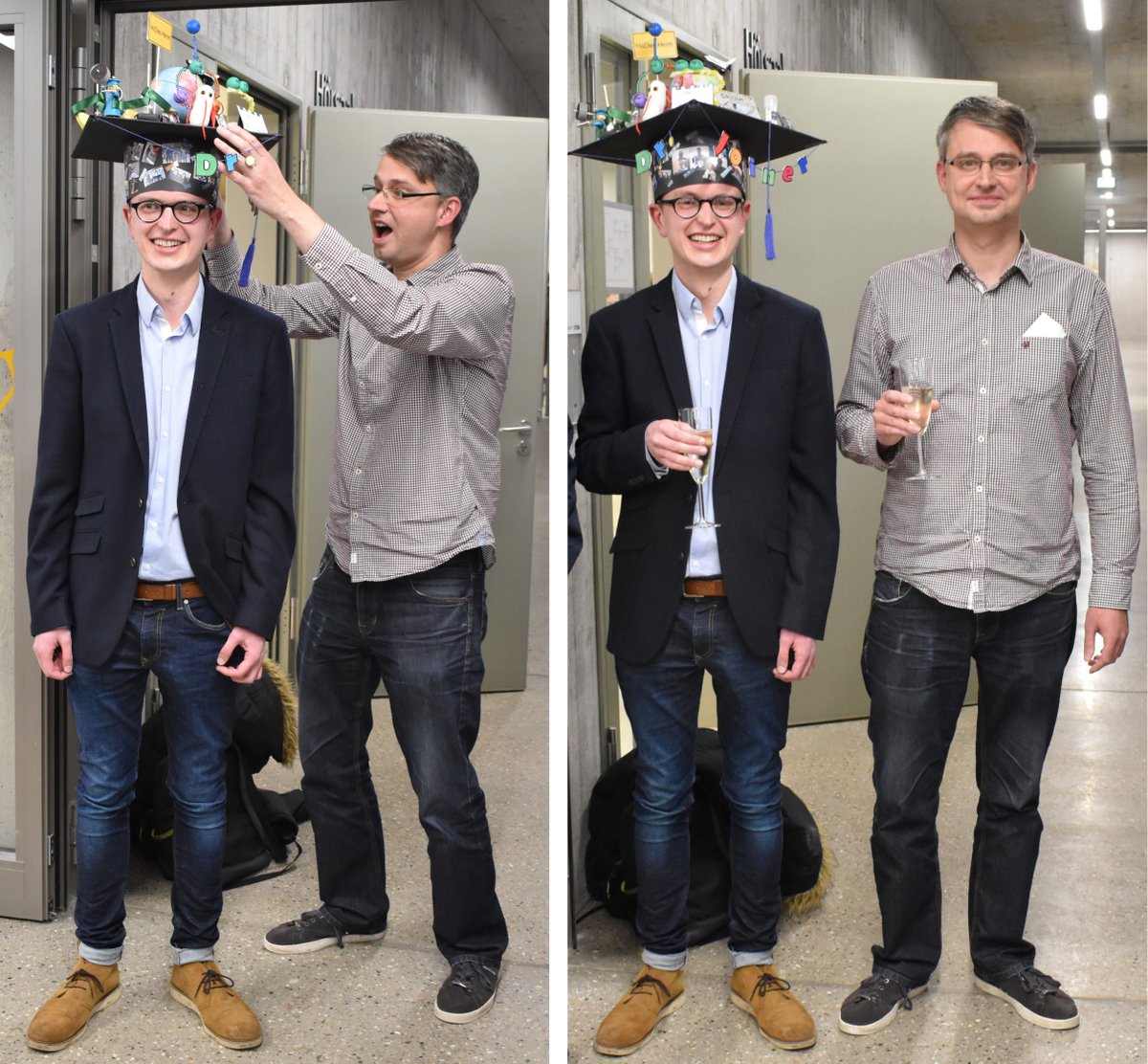
Fantastic PhD defense by Joe this week, showcasing great results from your collaborative salmonella anti-virulence project with @samuwag @atposo@BronstrupLab!
#Salmonella, beware of Joe! @phd_reps_MPI_DB
We couldn't agree more - this is a fascinating topic and we are more than happy to provide the structural basis for the recognition of the C-terminal cyclic imide #degron in our new communication @BBRCME:
https://t.co/enY63gbGX7
4/4 We are more than happy to finally reveal the structural basis 2 years after Chris defended his thesis & finally want to congratulate @drcmwoo, her team & collaborators for their fantastic & very thorough chemical biology work on the same topic @Nature!
#PROTACs#Thalidomide
1/4 Very happy to share the short history about how we discovered a natural #degron of #cereblon@BBRCME.
We show how #CRBN specifically recognizes C-terminal cyclic imides as protein damage markers.
Shout-out to Chris @NanoTemper & the Schwarzer group!
https://t.co/enY63gsJZ7
3/4 Strinkingly, the aspartimide degron recognition mode is exactly the same as the one we previously identified for aspartimide based #CELMoDs / #IMiDs@ACSBioMed:
https://t.co/OfajB9ILfr