Bio: "I don't want to over-hype this too much but our work might possibly someday contribute to improving the standard of care for a subset of lymphoma patients"
Tech: "AI will cure all diseases very soon"
Rubisco is (arguably) the most abundant protein on Earth. (LPP surely comes close, right?) It’s an enzyme that fixes CO₂ into sugars during photosynthesis.
Unfortunately, as most people learn in school, Rubisco is inefficient. Sometimes it confuses O₂ for CO₂ and wastes energy. Plants make up for this in raw concentration; up to half the soluble protein in a leaf is Rubisco.
People have been trying to engineer better Rubiscos for many decades, but it's not easy because the proteins are big, do not fold easily (they need chaperone proteins to help out), are made from 16 subunits in land plants.
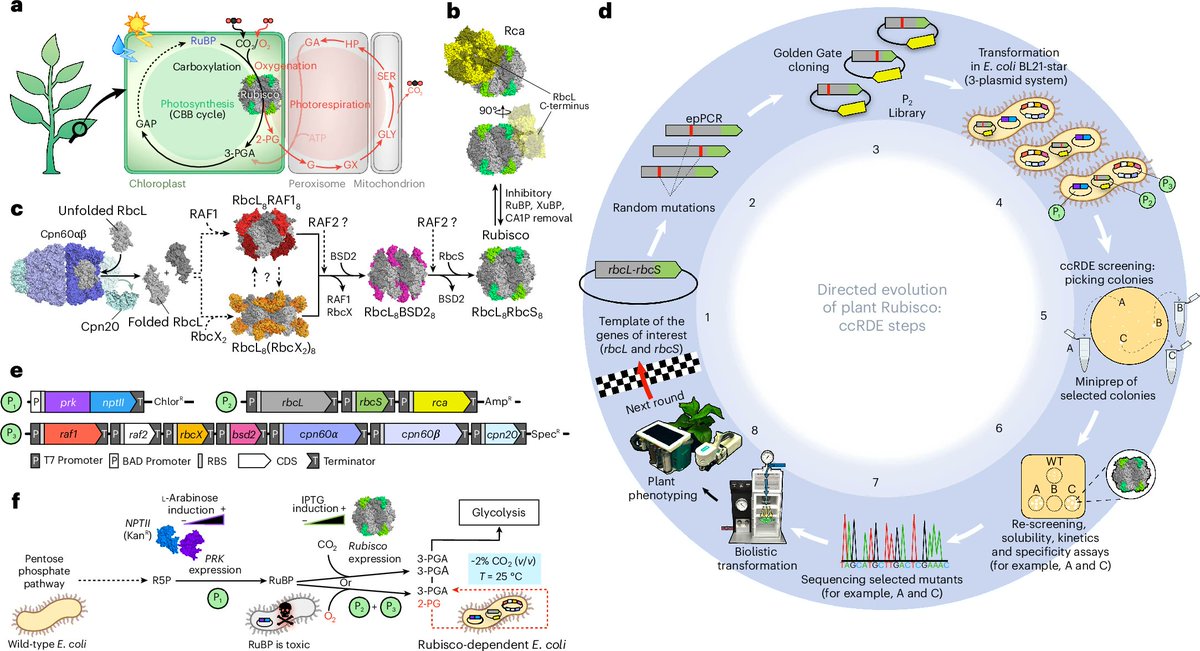
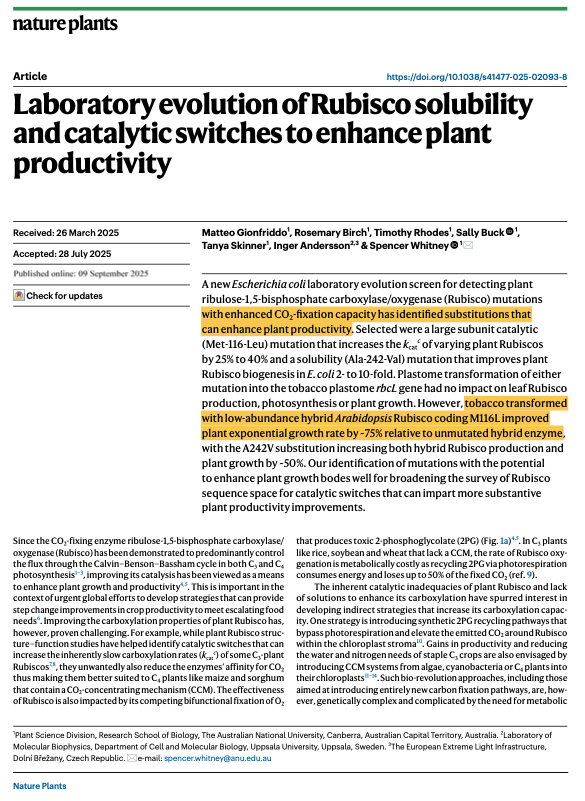
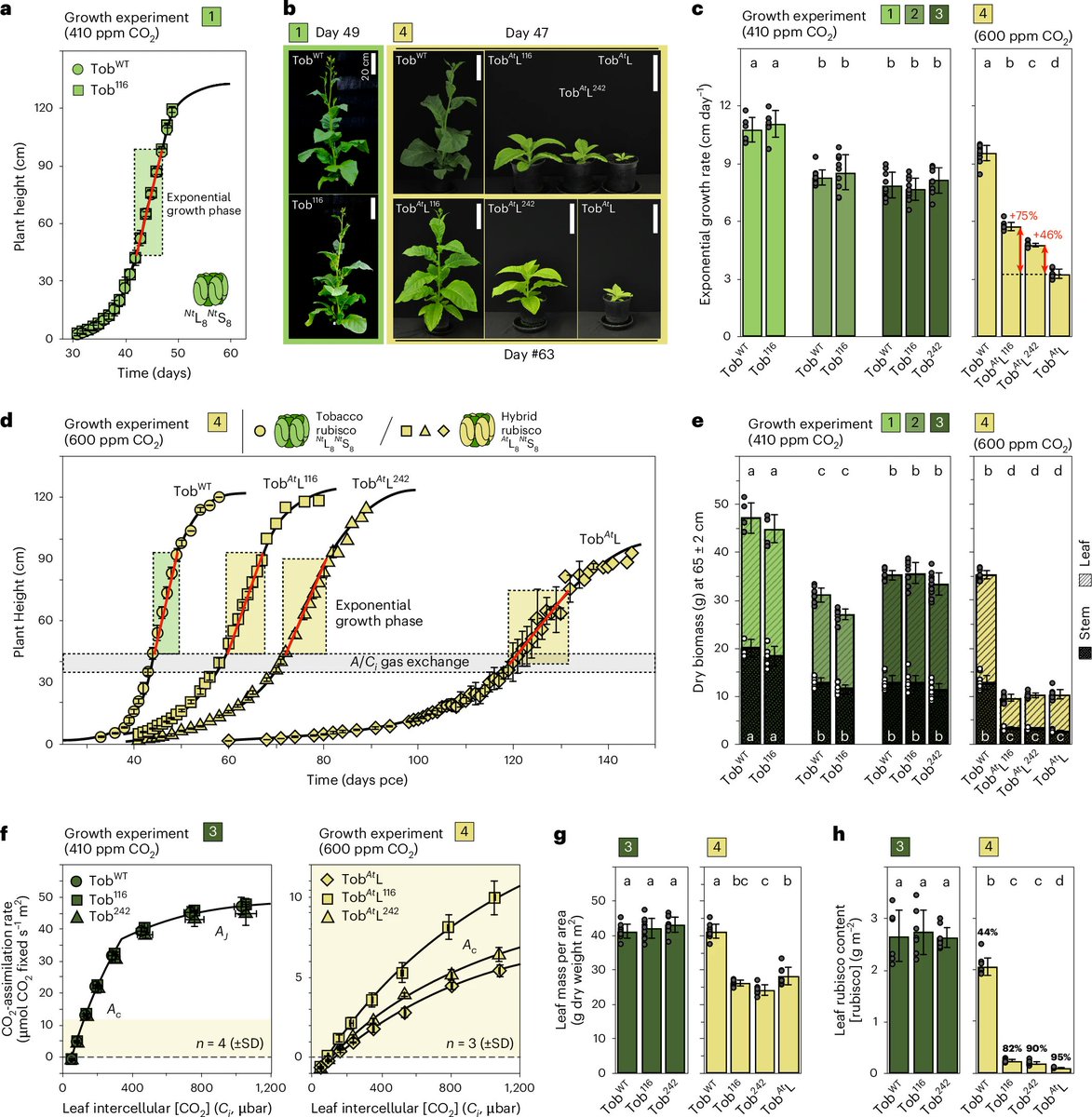
But there's a new paper in Nature Plants that looks really interesting. The TL;DR is that a group in Australia figured out how to express plant Rubiscos (and all SEVEN of their folding chaperones) using a set of 3 plasmids inside of E. coli cells. This enabled them to do "directed evolution" of Rubisco in bacterial cells, and quickly find Rubisco mutants that have higher enzymatic efficiency or that fold better.
In addition to the 3 plasmids, the researchers also coaxed E. coli to make ribulose-1,5-biphosphate, or RuBP, which is the 5-carbon sugar that Rubisco smashes into carbon dioxide to make molecules of 3-PGA for central metabolism.
Now, the clever bit is that you RANDOMLY MUTATE the three plasmids encoding the Rubisco to make millions of variants. Then, you transform those mutated plasmids into E. coli. If the E. coli do NOT make a functional Rubisco, RuBP levels build up and kill the cell; the molecule becomes toxic. But if the E. coli DO make a functional Rubisco, then they keep the RuBP levels in check and live just fine.
Using this "screening assay," the researchers found 46 fast-growing colonies of E. coli. Two of those colonies encoded really useful mutations. One mutation (M116L) makes Rubisco about 25–40% faster. The other (A242V) makes it fold and assemble much more efficiently.
They put this mutation into a "hybrid Arabidopsis–tobacco Rubisco," put that into tobacco plants, and measured growth. The plants with M116L grew 75% faster than wildtype.
No guarantees this will scale to more useful crops, like wheat and corn and soybeans etc. But it seems like a nice in vitro assay for faster prototyping!
Preprint from our collaboration with the labs of Gerry Wright and Shura Mankin @shuramankin identifying the first translation inhibitor binding to the E-site of the bacterial ribosome… https://t.co/gDSnWPSnsA
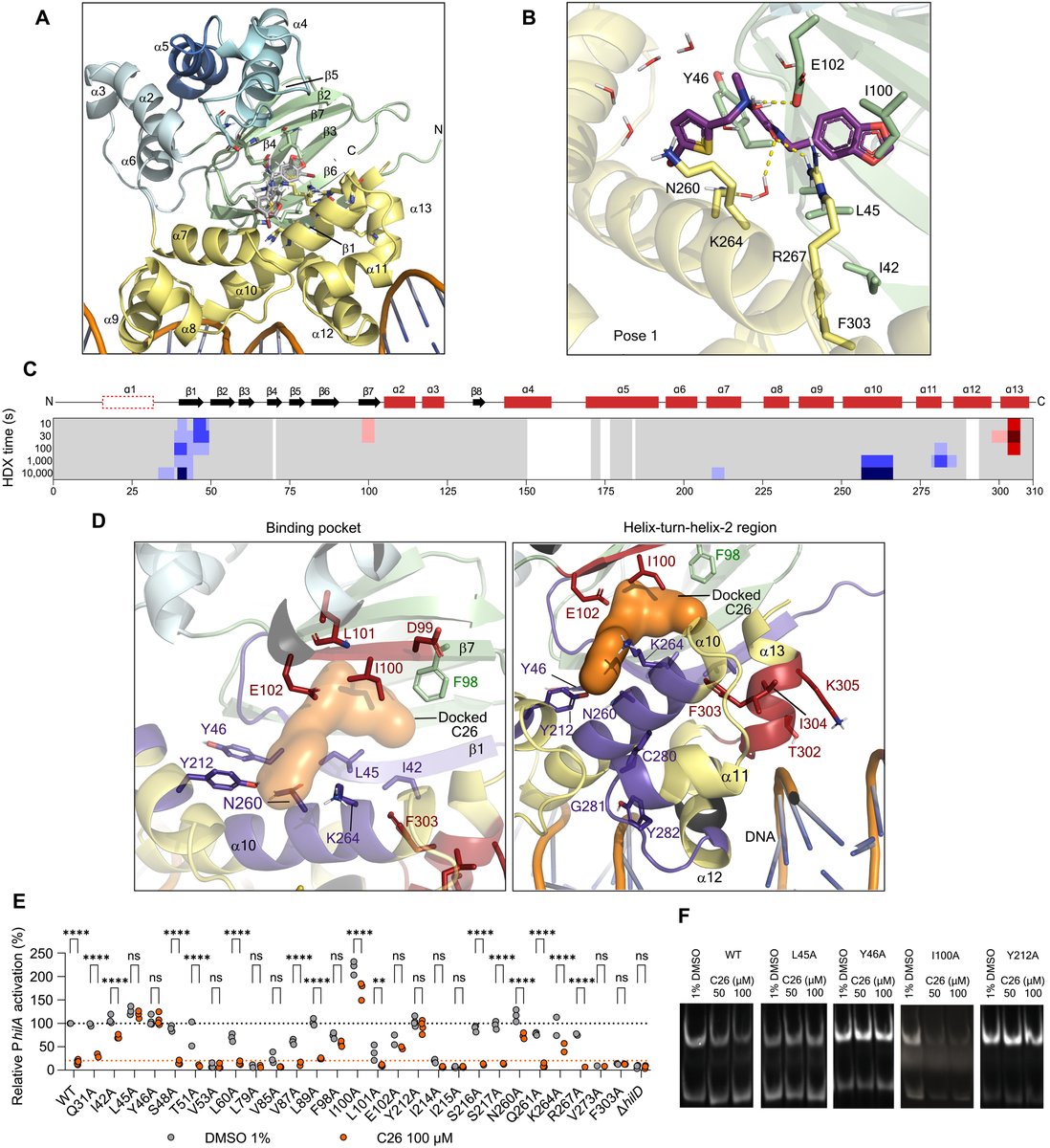
A synthetic small molecule, C26, inhibits Salmonella pathogenicity by targeting the disease’s major secretion systems, according to new research. https://t.co/BNjdMexRfu
New research findings!
In a collaborative effort, we report sythetic small molecules that target HilD, the central regulator of Salmonella pathogenicity.
https://t.co/fmeyQpyKdi
Longer life is within reach. But keeping people healthy at 120+ is a whole new challenge. How many of today's rare diseases would peak in the 100-120 age range? How many unknown dysfunctions would emerge at 120-140. Extending life will reveal more challenges than anticipated.
Science is on the verge of eradicating aging as just another disease, bringing humans into a new era of prolonged health, where biological limits will be moldable at will.
That's all.
🎥CMFI board member @lab_maier recently featured in documentary on bacteria.
She and her lab members provide insights into the current state of microbiome research and explain the work with bacteria in the laboratory.
https://t.co/shbyX5HSH9
@uni_tue@uni_tue_exstra @BR_Presse
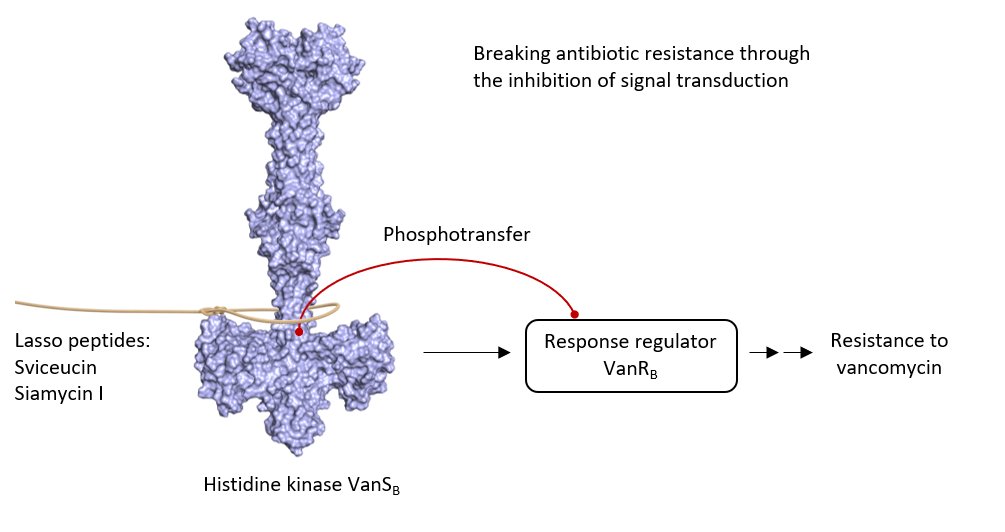
We discovered new antibiotic resistance breakers.
We report lasso peptides that target the histidine kinases VanS and VanSB in vancomycin-resistant enterococci and Staphylococcus aureus. Work done @Universite_Caen@CBSA_Lab. Collaboration with @Le_Museum@CNRS and @CermnUnicaen
Lasso peptides sviceucin and siamycin I have anti-virulence activity and restore vancomycin effectiveness in vancomycin-resistant ... https://t.co/f7vh4EL74I #biorxiv_micrbio