I had deactivated my X account two days ago. I was not feeling elated with my daily feeding Hindus who, in general, do NOT care about their Temples and Dharma - with victory news from Court actions or about the violations of Dharma and Law by the instrumentalities of the Government and the infamous @tnhrcedept
I did not want to be in Twitter for some time.
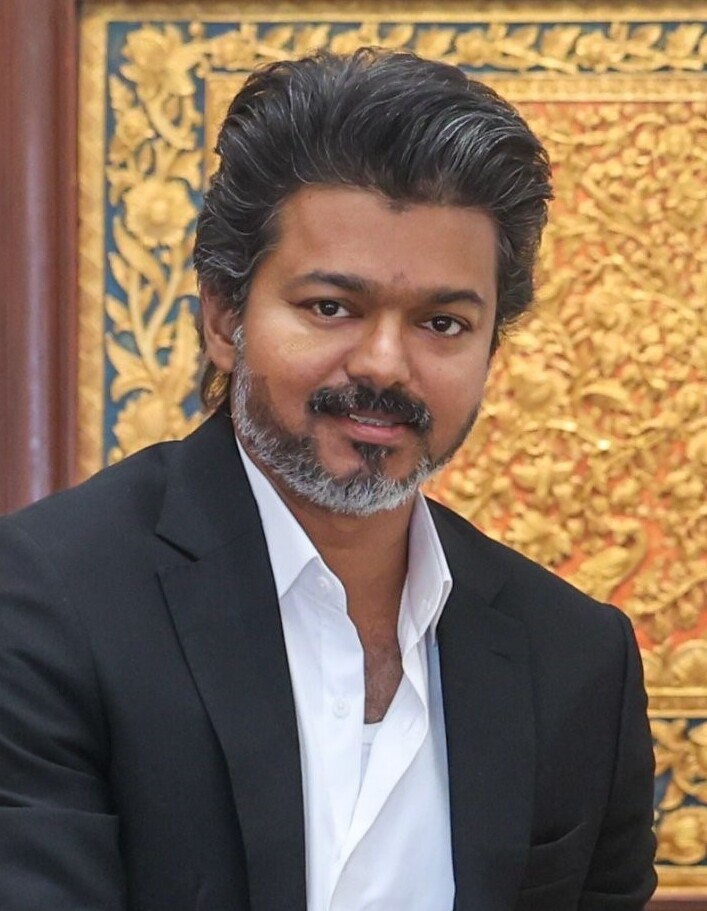
But Yesterday and Today - Hon'ble Chief Minister Shri Joseph Vijay @CMOTamilnadu and his Hon'ble Minister for the Hindu Religious Department @RameshOffcl have given me - and the Temple Worshipping Hindus in Tamil Nadu - very good news and great expectations! I activated my Twitter account to share the good news!
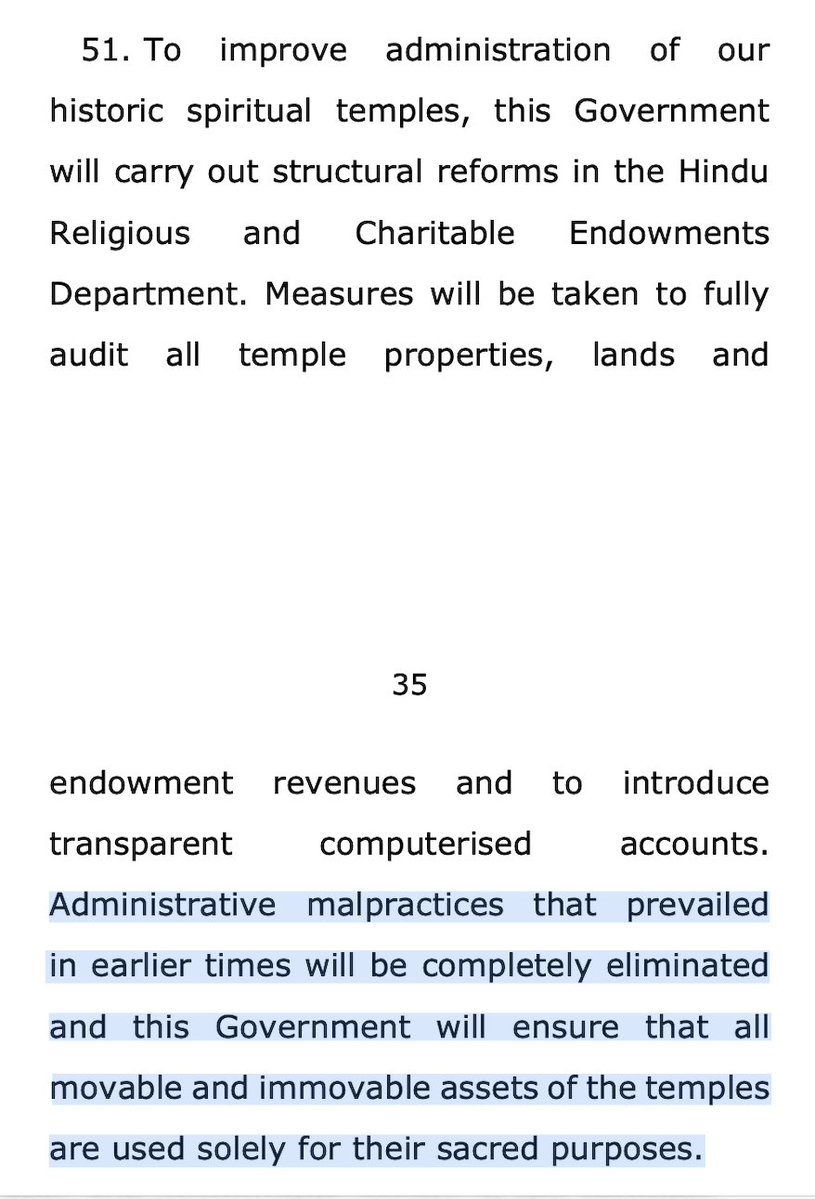
In the Governor's address in the Assembly yesterday - the intentions of the Chief Minister
- (1) that Temple Funds would henceforth be used only for the pious purposes of temples and
(2) the past instances of mismanagement in @tnhrcedept would be corrected
--- came out very clearly! Very positive developments !!!
As a follow up today Government has issued two G.O.s and has cancelled 46 projects of commercial wedding halls and commercial complexes using Temple lands and funds - which were announced in the previous DMK regime
Only a handful of us who took this matters to Court and struggled for the past 5 years to save the funds of Temples know what a great development this is. Incidentally - exactly one year ago on 19.06.2025 I got a massive stay order on commercial constructions using temple funds from the Hon'ble 1st Bench of Madras High Court, which the @tnhrcedept did not care to obey under DMK regime.
With deep anguish I had prayed for the welfare of our temples yesterday in Sri Koodal Azhagar Temple and in Sri Meenakshi Sundareswarar Temple, Madurai - Gods have blessed us with good news. !!!
In my opinion it takes a great leader to do more and talk less. @CMOTamilnadu Shri Vijay is action oriented and we, Temple Worshipping Hindus, appreciate the positive steps taken by him.
Thank You Sir !
Here's an interesting question:
What is the defining metric for the abolition of caste-based reservations? What is the exit threshold, beyond which the state does not interfere in society?
The contemporary debate on reservations in India reveals a profound structural contradiction within the republic, where a policy originally conceived as a temporary corrective mechanism for historical injustice has gradually hardened into a permanent feature of the political and institutional landscape. Reservations were envisioned, in the spirit articulated by B. R. Ambedkar, as a form of institutional band-aid, a necessary but provisional remedy applied to a deep civilizational wound, intended to stabilise society while more fundamental healing took place. However, a band-aid that is left in place indefinitely ceases to serve its purpose and instead risks aggravating the very condition it was meant to treat. In the Indian context, what was meant to be temporary has acquired permanence, transforming reservations from an instrument of justice into an embedded structure within the political economy of democracy. This transformation has far-reaching consequences because it alters political incentives, encouraging actors across ideological lines to treat caste identities not as social divisions to be dissolved but as electoral resources to be mobilised, thereby producing a system of caste-mediated competitive populism. Democratic competition in such a framework becomes less about universal policy articulation and more about the strategic consolidation of caste blocs, which entrenches caste consciousness within the functioning of the state itself and creates a paradox in which a constitutionally egalitarian republic operates through deeply stratified social logics that resemble feudal patterns of organisation in the persistence of inherited status, group loyalty, and ascriptive hierarchy as determinants of political power.
This structural condition is further reinforced by the failure of the post independence state to undertake the foundational transformations necessary to weaken caste as a social force. There has been a persistent lack of investment in universal public education, equitable urbanisation, labour-intensive industrialisation, and meaningful mechanisms of social integration, all of which are essential for dissolving entrenched social hierarchies. In the absence of such structural reforms, reservations have come to function as a relatively low-cost substitute for deeper socio-economic transformation, allowing the state to signal a commitment to social justice while avoiding the far more demanding task of dismantling the underlying conditions that reproduce inequality. Yet any argument that proposes to simply tear off this band-aid without first healing the wound is both analytically flawed and politically reckless. Caste remains a lived and materially consequential reality that continues to shape access to opportunity, social mobility, occupational patterns, and exposure to violence, particularly outside insulated urban environments. Removing reservations under such conditions would not produce a neutral or meritocratic order but would instead risk reopening the wound in a more severe form, exposing historically marginalised communities to the full force of structural inequality without institutional protection.
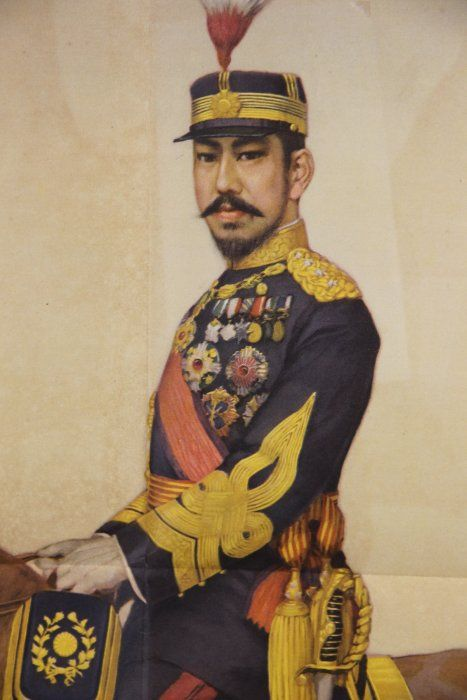
The debate must therefore move beyond the simplistic binary of retention versus abolition and instead confront the more rigorous and intellectually honest question of defining the conditions under which the band aid can be safely removed. This requires the articulation of clear and measurable criteria grounded in empirical reality, including parity in higher education representation, convergence in income and wealth across caste groups, the erosion of caste-based occupational segmentation, a sustained decline in caste-targeted violence, and tangible indicators of social integration such as inter-caste marriage and residential mixing. Without such benchmarks, the discourse on reservations remains politically charged but conceptually hollow, driven more by rhetoric than by a serious engagement with structural transformation. While proponents of rapid modernisation often invoke figures such as Vinayak Damodar Savarkar or historical transformations such as those led by Emperor Meiji during the Meiji Restoration to argue that industrialisation and urbanisation can dissolve traditional hierarchies, such comparisons must be approached with caution because economic transformation, while necessary, does not automatically eliminate deeply embedded social identities in a society as complex as India.
The most coherent position, therefore, is one that avoids both cynical reductionism and idealistic naivety by recognising that reservations are neither a permanent solution nor an expendable policy that can be discarded at will. They are a band-aid that has remained in place because the deeper surgery has not yet been performed. The real critique is not directed at the existence of reservations alone but at a state that has substituted the management of symptoms for the resolution of causes, thereby allowing a temporary remedy to become a permanent negotiation with an unresolved historical condition. The central and unavoidable question that must guide future policy is not simply whether reservations should continue or end, but what precise and measurable threshold of social equality must be achieved before the band-aid can be removed without tearing the fabric of the republic itself.
I have read the 18 page chapter on the Judiciary which was in the new NCERT textbook of class 8. I find it to be a balanced chapter about the structure, role & achievements of the Judiciary. In the last 2 pages it mentions Delays & Corruption as among the challenges faced by it.
This ham handed order by the SC is a self goal which has further highlighted the problem of corruption in the Judiciary
The Supreme Court's recent judgment directing the dissociation of Professor Michel Danino and his colleagues from all publicly funded educational roles is nothing short of a draconian overreach, a blatant assault on academic freedom, and a chilling attempt to sanitise the narrative of institutional flaws in India. As a Padma Shri awardee and a scholar who has dedicated his life to illuminating India's ancient civilisation, Danino has been unfairly vilified for daring to include a factual discussion on judicial corruption in a Class 8 NCERT textbook. This ruling not only undermines the principles of transparency and education but also exposes the judiciary's hypersensitivity to scrutiny, even as real corruption festers within its ranks. Let us dissect this travesty with the data it demands.
First, consider Michel Danino's impeccable credentials. Born in France in 1956, he relocated to India in 1977, becoming an Indian citizen and immersing himself in the study of its heritage. He has authored seminal works such as *The Lost River: On the Trail of the Sarasvati* (2010), which marshalled archaeological, hydrological, and satellite data to revive the Vedic Sarasvati River's historical significance, challenging colonial-era myths. Danino debunked the outdated Aryan Invasion Theory through rigorous evidence from sites like Dholavira and Lothal, demonstrating the continuity of the Indus Valley Civilisation with Vedic culture. As a guest professor at IIT Gandhinagar, he helped establish its Archaeological Sciences Centre, and in 2017, he was honoured with the Padma Shri for contributions to literature and education. He convened the International Forum for India's Heritage, boasting over 160 eminent members, and has published in journals like *Man and Environment* and *Puratattva*. To brand such a scholar as lacking "reasonable knowledge" or deliberately misrepresenting facts is an insult to intellectual integrity.
Now, turn to the offending chapter in the NCERT Class 8 Social Science textbook, titled "The Role of the Judiciary in Our Society." Far from being a sensationalist rant, it factually addressed systemic challenges, including "corruption at various levels" that delays justice. It highlighted the staggering backlog: approximately 81,000 pending cases in the Supreme Court, 6.24 million in High Courts, and 47 million in district and subordinate courts. The text linked these to structural issues like judge shortages, complex procedures, and weak infrastructure, echoing the maxim "justice delayed is justice denied." It noted that judges are bound by a code of conduct, yet corruption persists, impacting access to justice, especially for the economically disadvantaged. This is not "misrepresentation"—it is essential civic education for young minds to understand institutional realities and push for reforms.
The irony is palpable when juxtaposed against the data on actual judicial corruption in India. Between 2016 and 2025, over 8,600 complaints were filed against sitting judges, peaking at 1,170 in 2024. Transparency International's 2013 Global Corruption Barometer found that 45% of Indian households viewed the judiciary as corrupt, with an average corruption score of 3.3 out of 5. A 2026 India Today survey revealed that 85% of Indians perceive the judiciary as deeply or somewhat corrupt, with only 8% believing it is corruption-free. In 2013, 36% of citizens reported paying bribes to the judiciary, with 59% to lawyers, 5% to judges, and 30% to court officials for favourable outcomes. As of 2024, over 50 million cases remain pending, exacerbating vulnerabilities where litigants resort to bribes to expedite proceedings. Chief Justice B.R. Gavai himself acknowledged in 2025 that instances of corruption erode public confidence, citing cases like the Allahabad High Court's Justice Yashwant Varma, embroiled in a cash scandal. From 2017 to 2021, 1,631 complaints on judicial misconduct were forwarded via the Centralised Public Grievance Redress system. These figures, drawn from official and international sources, affirm that the chapter's content was grounded in reality, not malice.
This ruling reeks of institutional insecurity. By blacklisting Danino and his associates—Suparna Diwakar and Alok Prasanna Kumar—from any publicly funded work, the Court has effectively censored discourse on its own failings. It mocks the separation of powers, positioning the judiciary as untouchable while it lectures on accountability. Where was this zeal when former Law Minister Shanti Bhushan alleged that eight of sixteen former Chief Justices were corrupt? Or when the Press Information Bureau reported recurring complaints about judicial integrity? The Court's order to rework the chapter only with "domain experts", including a former judge, smacks of self-preservation, not pedagogy.
Education should foster critical thinking, not shield power from critique. By punishing scholars like Danino, who has enriched India's historical narrative, the judiciary risks alienating the very citizens it serves. This is not justice; it is judicial authoritarianism. We must demand a reversal, for the sake of our democracy and our children's right to truth. #StandWithDanino #JudicialOverreach #AcademicFreedom
what you're looking at is a fuel depot burning in the middle of a megacity of 9 m people & nobody is talking about what this smoke actually contains
when refined petroleum burns at this scale it releases a cocktail of particulate matter, polycyclic aromatic hydrocarbons, benzene, sulfur dioxide, nitrogen oxides, heavy metals & volatile organic compounds, these particles are small enough to bypass bypass your lungs entirely and enter your bloodstream directly…
we're talking PM2.5 concentrations that can spike to 50 to 100 times safe levels within a 20km radiu
right now in tehran people are breathing this in, eyes burning, throats closing, children coughing, asthmatics flooding emergency rooms & outside acid rain is falling on the water supply, the soil, the crops…everything that sustains daily life in a city of 9m
but the real damage comes later, years later, elevated cancer rates, leukemia clusters, respiratory disease, cardiovascular failure, neurological damage, reproductive issue
this is what happened after the Kuwait oil fires in 1991, after the mosul refinery burns in 2016, after every single conflict where fuel infrastructure was deliberately targeted, the medical literature on this is extensive & devastating
deliberately bombing fuel infrastructure insidde a civilian megacity knowing full well what the toxic fallout does to the population over decades is chemical warfare without the label, you achieve the same mass casualty outcome over a longer timeline and somehow it stays legal because the weapon is fire instead of sarin
these people are being sentenced to cancers they will develop in 2035 by bombs dropped in 2026 & they call it liberation
Just a few weeks ago, Mark Carney, Canada's liberal Prime Minister whom trump calls governor Carney, gave a rousing speech at Davos about the fading rules-based order. Invoking Thucydides, he rejected the rule of the mighty and urged a third way. Last month, at the Munich Security Conference, Germany's chancellor Merz, who was concerned about a US takeover of Greenland, repeated Carney's views on the rules-based order. For the past four years, European diplomats and leaders have been lecturing the rest about the primacy of international law and territorial sovereignty and the need to punish Russia over the Ukraine invasion.
Did you see at least one of them condemn this blatant aggression against a sovereign country in the South and the assassination of its head of state? (Zelensky by the way was one of the first leaders that welcomed the war on Iran).
in the pre-AI age yall dominated by flooding the media space. Stratagems never got called not because they were strong but because there was no one around (maybe 3-4) --
AI is very very good.. only in Non-English can the old regime survive.
see 2 mins..
"You cannot measure opportunity by outcomes and that's what the redistributionists insist on doing.."
Sowell gaaru has also written about India in his books. We are the OG redistributionist country. We do caste census of outcomes all the time to measure the efficacy of equal opportunity. The moment we see unequal caste representation immediately we pinpoint the blame on caste discrimination as the sole responsible cause. Soon after we unleash the only remedial measure we know - quota (which in practice invariably means standards get diluted to account for representational justice).
We follow the same model for fixing gender outcome disparities too.
OG redistributionist country.
A pujari at the Guruvayur Krishna temple was suspended on October 30, 2025. And the reason will surprise you!
He closed the sanctum (sreekovil/garbhagriha) door on time. His only mistake? There were some VIPs waiting outside to pray and they were offended that he closed the door and that too with a "loud noise."
The VIPs were reportedly connected to a temple board member. No points for guessing which party the board member is associated with! We all know who manages our temples right?
It's been over 100 days! Priest Raman Namboothiri is still under suspension for not being subservient.
When temples are managed by those with no regard for the deity, temple traditions or rituals, incidents like this become inevitable!
The BJP's highest ambition is a pat on the shoulder from their enemies, whom they treat as authority. W/ their casteist Hisāb Cuktā policies they've gone far in disowning their ideology & voters, & in sucking up to their enemies. Have these now rewarded the BJP's Woke policies?
There is nothing "holy" about any constitution. Indian constitution is a whale-sized artifact carefully crafted to suffocate nation's civilizational essence. It has gone through countless surgeries since its birth. What it needs is NOT reform, but total annihilation & rebirth
India is not in this conversation. Three things that has blackpilled me on this
1. Dharmendra Pradhan insistence on IITs IISERs to full quota seats of faculty before approving GC faculty appointments
2. Govt withdrawal of lateral hiring last year.
3. The UGC reframed guidelines.
India is not playing to be superpower. It is busy doing a soft cultural Revolution within itself.
Every social group in India is now a victim
- Upper Castes are victims of an apartheid state
- Backward Castes have been oppressed for thousands of years
- Muslims are victims of a Hindu-majoritarian state
- Hindus aren't getting their rights because 'system unka hai'
- Farmers, labourers and delivery guys are victims of evil capitalists
- Women are victims of a male-dominated society
- Men are victims of laws that favour women
- Taxpayer is victim of apathy and indifference from the system
If you add everyone up, 99% of Indian society sees itself as a victim in some form or another.
Politics in multiple states is about groups wanting to be classified as backward or OBCs. There are entire movements based around it. Victimhood "is" the aspiration. If I can get classified as a 'victim', it will give my group more rights, clout and electoral power.
It wasn't always like this. Victimhood wasn't seen as a virtue. People weren't encouraged to see themselves with pity. People were taught to work on themselves and improve their lives.
It is why groups like the Parsis flourished - they were refugees from a foreign land who came here with nothing. It was an insignificantly tiny population with no voting power or mass movements. They never asked for separate electorates, or reservations or special status.
They built schools, hospitals, businesses and institutions. Disadvantage was treated as a problem to be solved through competence, not as a badge to be weaponised. Suffering did not automatically translate into entitlement. Everyone in the country respects the Parsis for who they are, and what they managed to do as a group.
Never be a victim. Be like the Parsis.