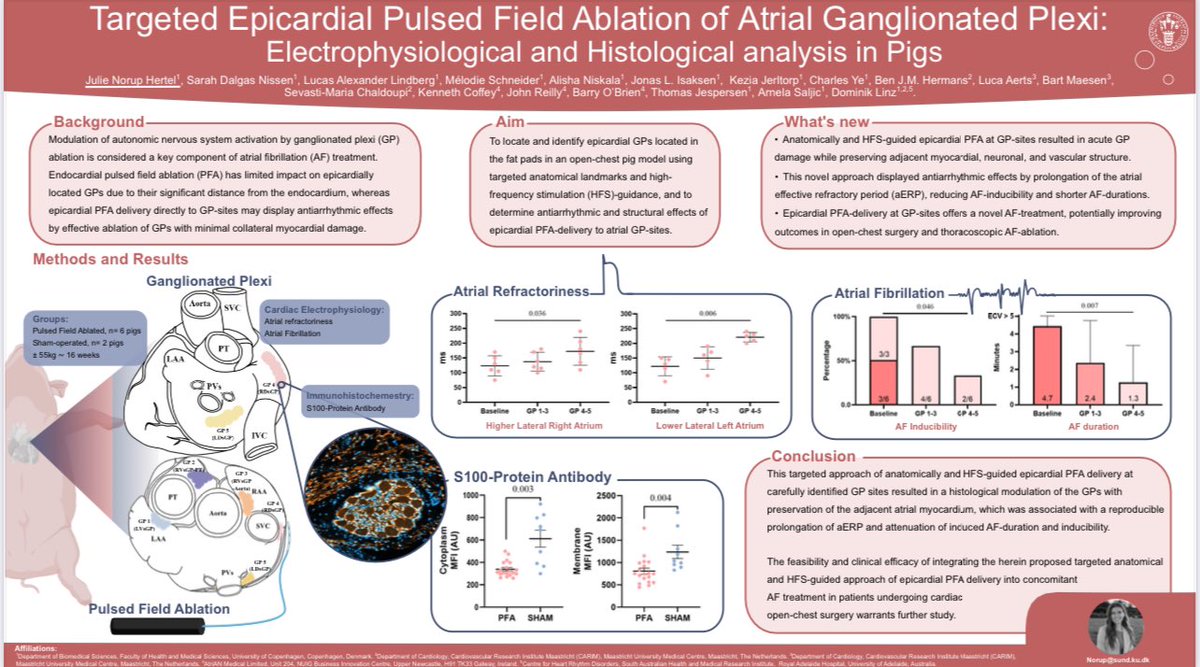
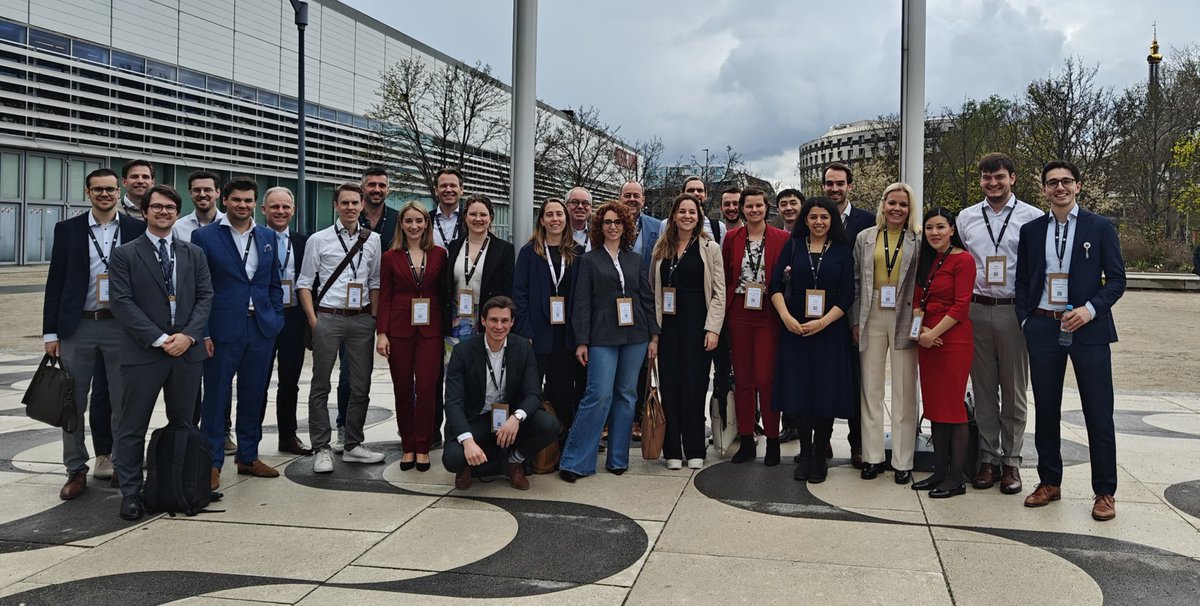
🍾🕺🏼 Happy to announce that our project has been awarded a CARIM PhD call!
Grateful for the incredible team that made this possible! @UliSchotten@Dominik_Linz@kvernooy @stefzeemering @hspronck Ed Eringa
The CARIM PhD call 2024 winners are announced by Constance Baaten, who chaired the committee: Ben Hermans, Judith Cosemans ans Stephane Heymans! #CARIM2024
🆕📰New paper online
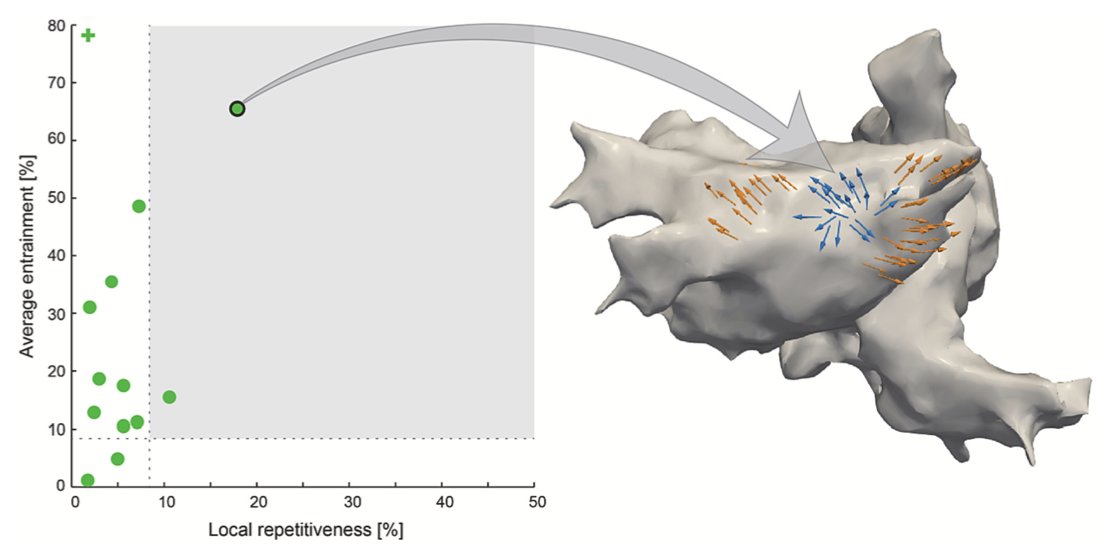
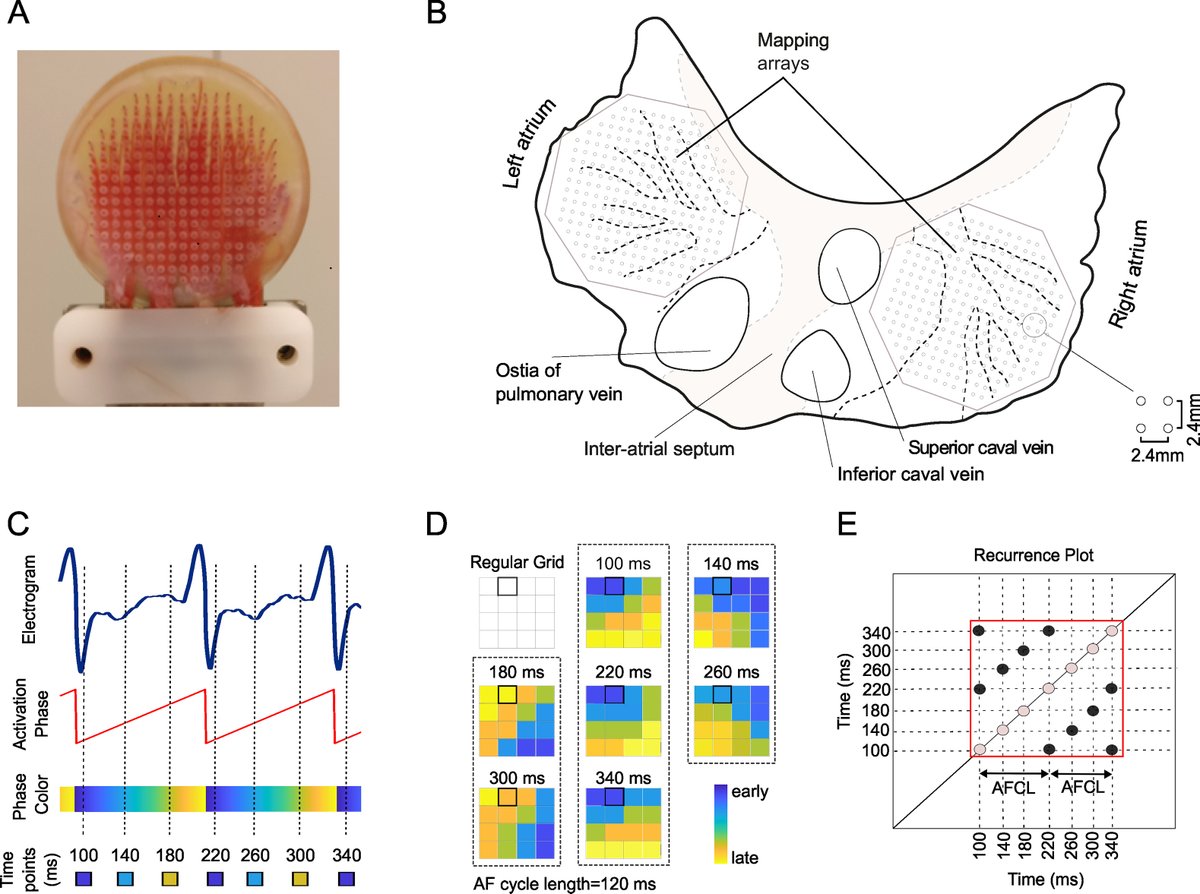
A novel algorithm to visualize repetitive atrial activation patterns during AF validated using detailed 3D modelling of AF.
🔜 Clinical feasibility with real world human data
https://t.co/lWggychK0M
@Dominik_Linz@CARIMMaastricht#EPeeps
Excited to share that our latest research has been published in IEEE Transactions on Biomedical Engineering! 🎉
Check it out: https://t.co/yViDuCNqcL
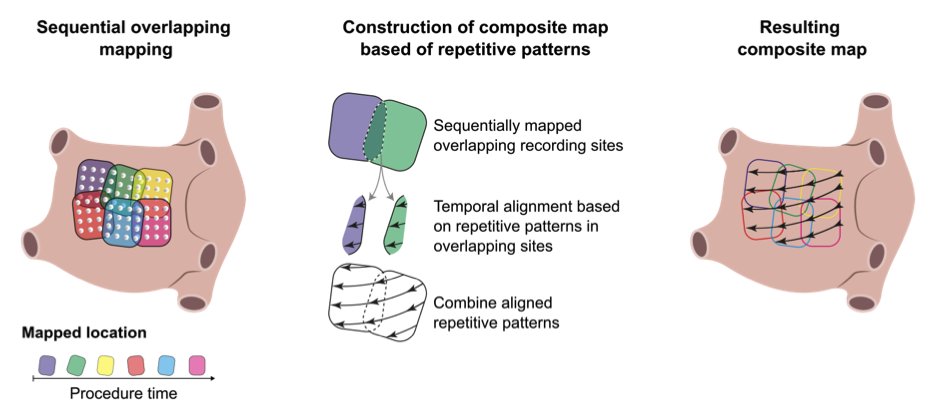
We introduce composite maps—a novel algorithm for visualizing atrial conduction activity, with a focus on #AFib. 💻🔬
#EPeeps
Patient with moderate to severe atrial cardiomyopathy…
(See #EHRA_ESC consensus statement:
https://t.co/oRcGUZ3R6X)
- LA dilatation
- Left atrial tachycardia and “pre-AF” (short runs of irregular atrial activation)
- low voltage areas anterior/septal
First:
Ablation of the focal atrial tachycardia (one application of focal PFA (Galaxy/Cardiofocus, 25A) -> non-inducible
Second:
WACA and anterior line (to prevent atypical flutter as a result of ATach and to prevent the progression to clinical #AFib) -> first pass.
True advantage of combining powerful focal monopolar biphasic PFA with state of the art mapping systems!
@MaastrichtUMC@CARIMMaastricht@kvernooy@JLuermans@Farnir_Florent
@BiomedUCPH
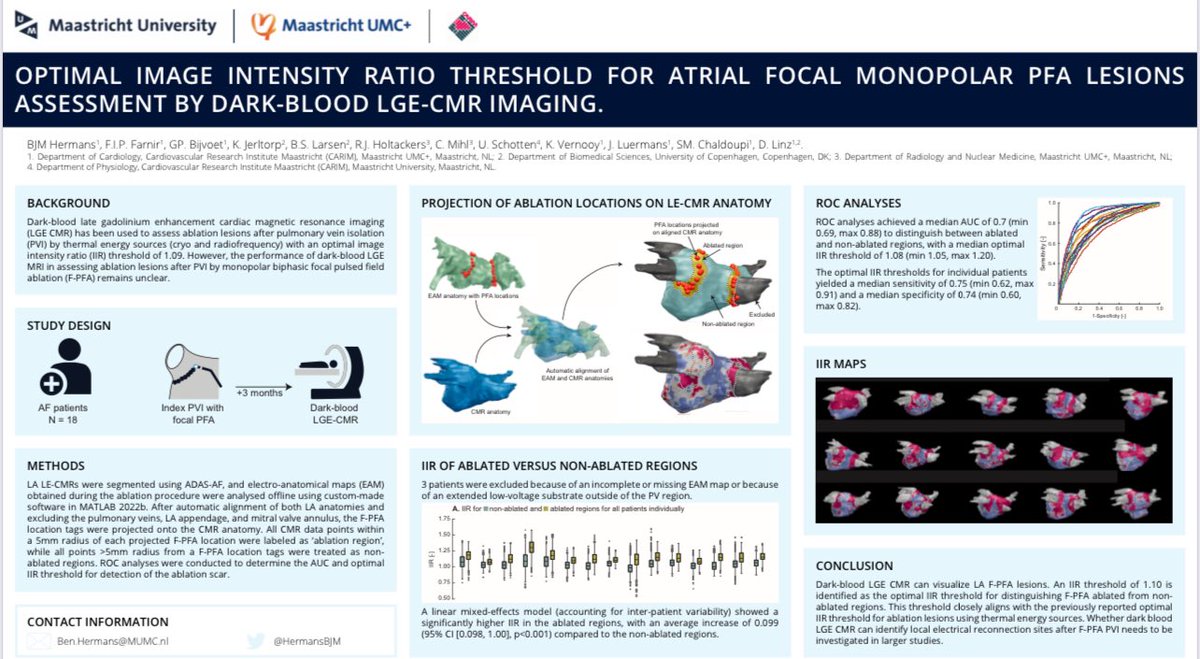
[3/3]‼️A considerable interpatient variability in optimal IIR thresholds introduces an underrecognized clinical challenge!
A 'one-size-fits-all' IIR threshold may not be feasible as it could lead to overestimation or ablation scars in some patients and underestimation in others.
[2/3] Bipolar voltage maps were compared with IIR.
ROC analyses were employed to determine the optimal IIR threshold for LA ablation scar (≤0.15 mV).
Median optimal IIR threshold was 1.09, with an average sensitivity of 0.73, specificity of 0.75, and accuracy of 0.71.
📢 Excited to share our latest paper! 📰 We used detailed in-silico models of atrial fibrillation to develop and test a novel mapping strategy focusing on finding functional targets for ablation beyond PVI
🔎https://t.co/ooohIYpz0E
#EPeeps#CardioTwitter@PersonalizeAF
#thesisdefence tomorrow 10:00 hours @UyenChauNguyen1 will defend the thesis 'Multi-modality imaging in Cardiac Resynchronization Therapy: In silico and in vivo analyses'.
📺https://t.co/E8OOOqcJeI
#phdlife
@MaastrichtU @kvernooy
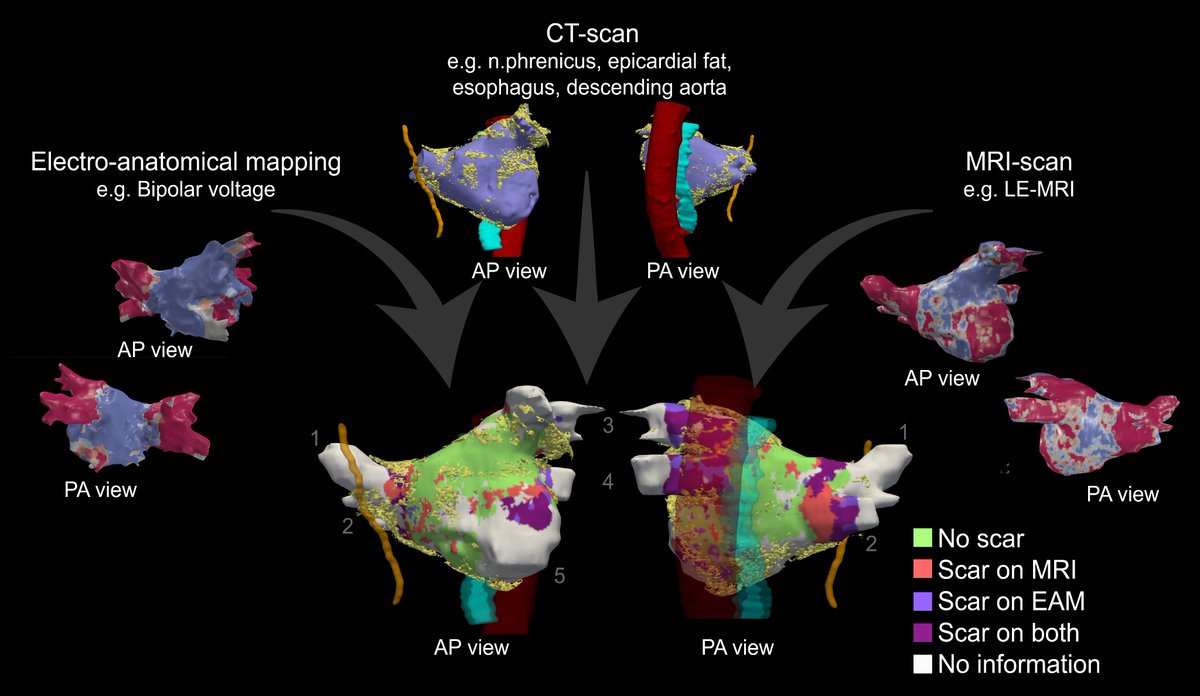
🆕📰Our algorithm can automatically and reliably align pre-procedural cardiac images (CT/MRI) with anatomies acquired during ablation procedures.
This enables multi-modal characterization of the LA🫀
@Dominik_Linz@UliSchotten@MirandaBijvoet@kvernooy
https://t.co/3j68iMdzdp
🆕📰 Online now!
Our study reveals that the supine-standing test does not outperform a baseline QTc in diagnosing LQTS.
However, it may still have value in arrhythmia risk assessment within individual patients.
🧐https://t.co/5maGGqt16b
@JAHA_AHA@Dominik_Linz#epeeps
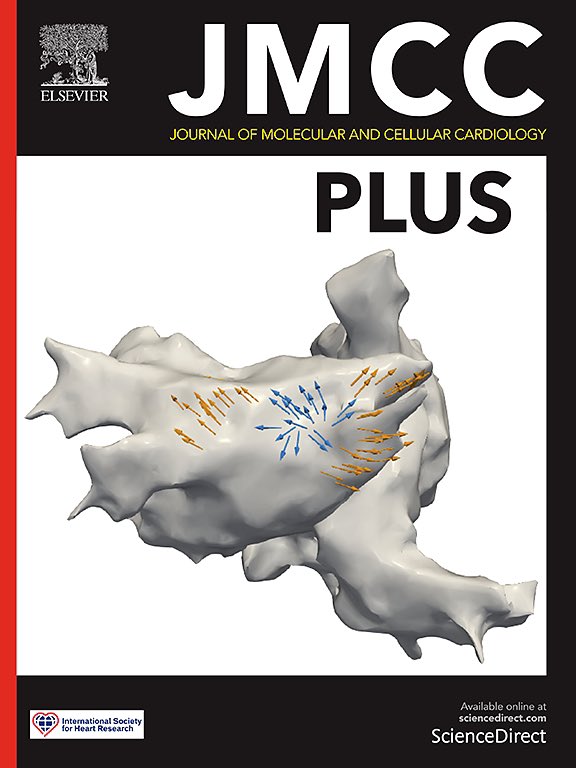
New paper! Composite Mapping of Repetitive Atrial Activation Patterns during #AF by @ozanozgul ESR5 of the consortium, et al.
This paper emphasizes the potential of composite maps in analyzing RAAPs, highlighting the role they play guiding ablation procedures for #AF management.








![HermansBJM's tweet photo. [3/3]‼️A considerable interpatient variability in optimal IIR thresholds introduces an underrecognized clinical challenge!
A 'one-size-fits-all' IIR threshold may not be feasible as it could lead to overestimation or ablation scars in some patients and underestimation in others. https://t.co/xjxpTeVw49](https://pbs.twimg.com/media/GSMiBxhWgAEPQro.jpg)
![HermansBJM's tweet photo. 🆕📰 Online now! 🧵 [1/3]
We systematically determined the optimal LGE threshold for detecting atrial ablation scar in dark-blood LGE CMR.
@MirandaBijvoet @Dominik_Linz @kvernooy @CARIMMaastricht @MaastrichtUMC
#EPeeps
https://t.co/hkU8plLcks https://t.co/cgGJ9BSxhm](https://pbs.twimg.com/media/GSMek_uXUAAZBKf.jpg)
![HermansBJM's tweet photo. [2/3] Bipolar voltage maps were compared with IIR.
ROC analyses were employed to determine the optimal IIR threshold for LA ablation scar (≤0.15 mV).
Median optimal IIR threshold was 1.09, with an average sensitivity of 0.73, specificity of 0.75, and accuracy of 0.71. https://t.co/uuKfzjk6Es](https://pbs.twimg.com/media/GSMhfswWgAAuzpW.jpg)