En relación con lo que propone la #UE en materia de #energia unos apuntes:
1. A corto plazo, el objetivo es reducir demanda (15% gas y 10% electricidad) y un nivel de inventarios de 80% en noviembre. Lo que tiene mucho sentido y el nivel de inventarios alcanzado es superior.
Several European governments are now learning — the hard way — why letting most of their national oil refining capacity to close was, how to put it, a bit of a mistake.
(Another example of why shapping demand first, rather than supply, is important for the energy transition)
Here’s the paradox I’m thinking of.
When commodity traders or analysts fire off countless warnings, most ppl bash them for exaggerating everything just to get some attention for once.
But that’s not it. They’re just doing their jobs. In fact by doing what they do, they actually help keep us from slamming into a brick wall.
When everyone knows a disaster is waiting at the end and it becomes the consensus, stakeholders and ppl with good intentions will put in the effort to stop it before we get there.
The louder the warnings ring out and the more ppl get on board, the more hands will reach out to try and slow things down—or even stop them entirely.
If we actually end up avoiding the disaster, all you’ll hear is, "See? Those oil traders were just full of crap," but hey what can you do? lol
I can't speak for everyone, but even most oil bulls—excluding the traders who are all in on the prompt—don't actually want to see prices spike too aggressively.
Since many of them own energy stocks, they’d prefer to sit in the sweet spot for a long time, and they know prices nobody ever imagined will only trigger a massive backlash.
But as the "nothing’s gonna happen" chant gets louder and prices stall making ppl think "this is manageable," the incentive to actually solve the root of the conflict just fades away.
Don't dismiss or mock the warning voices so lightly. The more those voices are muffled the more dangerous it gets. Once we actually hit the wall, it’ll be too late to regret it.
That’s the paradox.
#oott #iran
Great map from Patrick, and a good quick summary of why—if the Hormuz crisis continues—the Trump admin is going to get more and more tempted to start meddling with petroleum product trade.
This is the correct reading of the situation where I sit.
We are thus left with two paths forward, both likely leading to a long-duration interruption of energy markets:
a) Trump TACOs, only for markets to learn that he lost control of the Strait;
b) US & Israel go all-in to achieve regime change which means boots on the ground;
Adapt.
I agree that the SPR release is necessary. You have to do it just to slow down demand destruction even a little bit.
But even if they're considering a coordinated release of 300-400 million barrels like the FT reported, all that volume isn't hitting the market instantly.
After the US decided to release 180 million barrels of SPR in 2022, the most they ever released in a single week was 8.4 million barrels in the week ending 2022/9/4.
We've got a supply disruption of over 10mb/d in the Middle East, but the historical max release rate is only ~1.2mb/d.
The US, which holds the most SPR among Western nations, stores its oil in underground salt caverns, not regular surface tanks.
These salt caverns are spread across four major sites along the Gulf Coast of Texas and Louisiana: Bryan Mound, Big Hill, West Hackberry, and Bayou Choctaw.
They're artificial caves drilled into giant salt layers a thousand feet underground, and each cave is big enough to fit the Empire State Building.
To pull the oil up, they inject freshwater into the bottom of the cave. Since water is heavier than oil, it pushes the oil upward.
In theory, the max release capacity of the US SPR is estimated to be around ~4mb/d. In reality, there were several physical constraints that kept the weekly max at 8.4 million barrels.
Every time you inject water to push the oil out, the salt walls dissolve a little(Leaching). If you keep releasing at a large scale for a long time like in 2022, it can mess up the cavern's structural stability.
If the cave gets too big or the walls get too thin, there's a risk of collapse, so the DOE had to control the release speed to protect the caverns.
The oil pushed up from the caves has to travel through pipelines to nearby refineries or port terminals. At the time, the SPR volume overlapped with commercial oil flows, and pipeline capacity hit a saturation point.
Also, since the tanker berths and pump capacities for loading oil onto ships are limited, it takes physical time to handle all that volume pouring out at once.
Lastly, SPR releases happen through an auction process. No matter how much you want to release, the refiners or traders who buy it need to have the storage space or refining capacity to actually take it.
Given the current logistics network of the US oil industry, there’s bound to be a limit on how much the winners can take at their desired timing.
In conclusion, everyone could've predicted the SPR release. But what we need is oil that's available right now.
With refineries and petrochemical plants already declaring force majeure, if they don't get feedstock immediately, more of them will have to shut down.
So they're desperate to get feedstock somehow. You can't offset a loss of over 10mb/d with a supply rate of 1-2mb/d.
Without a solution to the fundamental problem (Strait of Hormuz), the upside pressure on the front end of the curve won't go away.
It’ll just let out a little steam, but it’ll still be hot.
#oott #com
Day 1 vs Iran was dramatic, but it didn’t destroy the enriched uranium for nuclear bombs — and the regime is far from collapsed. Day 1 was a strategic mirage, not resolution or off ramp, see: https://t.co/Zobjtd4ee8
CHART OF THE DAY: Buying in bullish Brent oil call options remains near record highs in February (after similar activity in January) as investors seek insurance against a U.S.-Iran war
Paper "Is Gold an Inflation Hedge?" demonstrates that "gold does not react to average inflation rates but to large inflation rates and shocks. Even stronger reactions are found for 1-year and 5-year inflation expectation shocks." https://t.co/Bp30f6O6J5
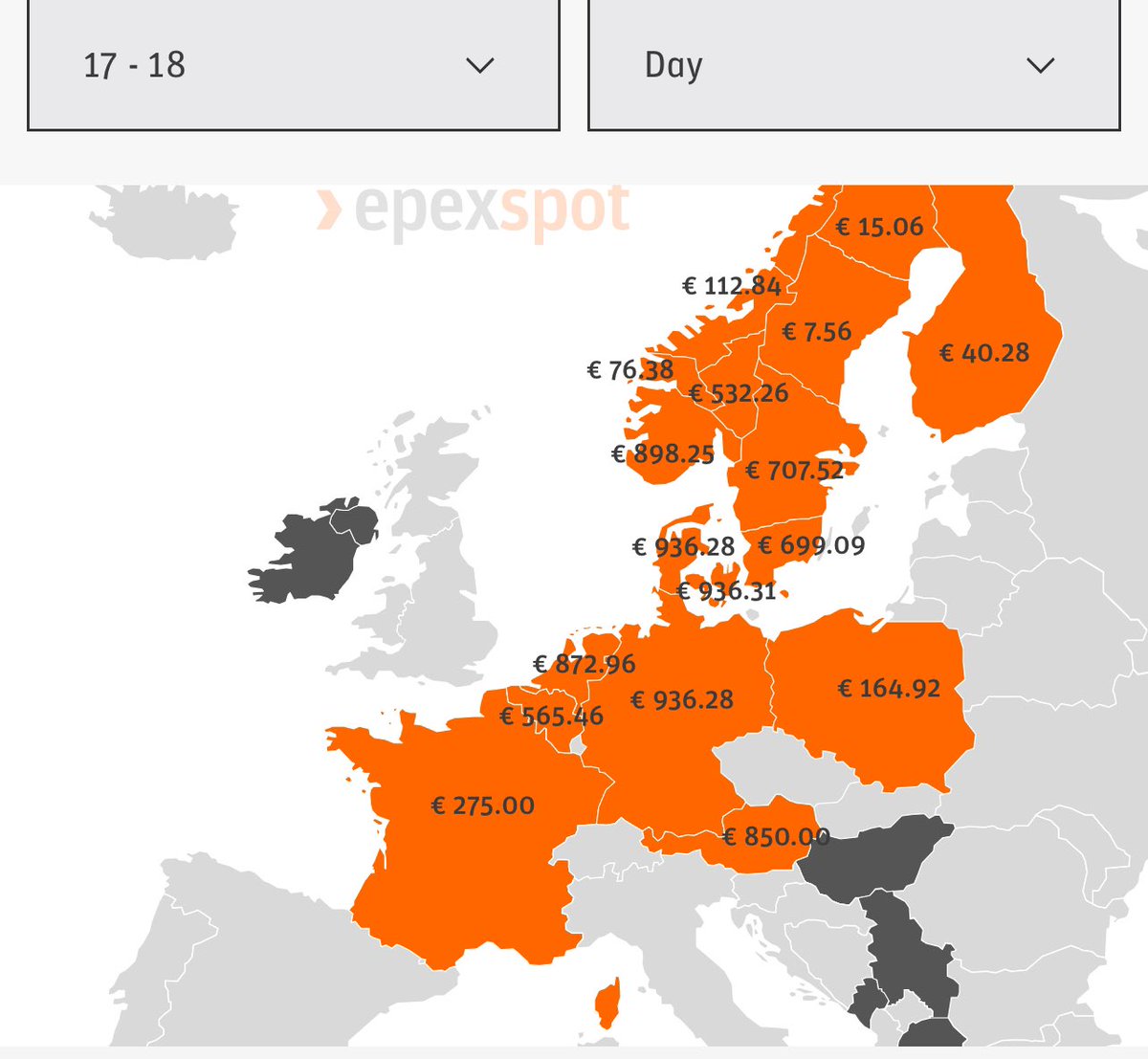
€936/MWh in 🇩🇪 !!!
Share this pls if you truly care about working class people.
This electricity price calamity for 5-6pm CET tomorrow due to a Dunkelflaute is the result of systematic lies about wind & solar as well as anti-nuclear propaganda by politicians & their lobbies in 🇩🇪, 🇳🇱, 🇧🇪, 🇬🇧 or 🇩🇰…
@roberthabeck@_FriedrichMerz
German Greens concealed a utility's offer to keep running nuclear plant during energy crisis, reveal newly released documents.
German parliament is now conducting an inquiry into how Green officials misled the German public in closing all the nuclear plants even after a dangerous energy crisis and the invasion of Ukraine began.
The Green-led energy ministry had claimed that utilities did not want to keep nuclear plants running. This was not true, documents just released to parliament show.
Why does this matter?
Germans still care about duty and honesty in government officials, and lies in order to damage German interests are still considered bad by German citizens when they come out of German ministries.
The nuclear plants can still be saved, and some of them only need fuel, some repairs, and to rehire staff. The Greens claim they can't restart, but they also know nothing about these power plants (intentional ignorance) and are being revealed as bad faith actors to the German people.
German utility execs also say they can't start them but they're quite transparently bullshitting and will do exactly as told by politicians, including restarting the plants, if ordered.
Now nuclear is more popular in Germany than the Green party is, with elections just two months away and the German economy declining quarter after quarter.
It will be interesting to keep watching the results of the inquiry as Germany and Europe burn through their winter gas supply at the fastest pace since the loss of Nord Stream in 2022.
Color me surprised!!!
An important (and largely hidden) message from the @IEA's 2024 WEO report is that **coal** demand will be **higher** than expected in the 2020-2030 period as electricity demand is rising faster than renewables output (not to be confused with capacity).
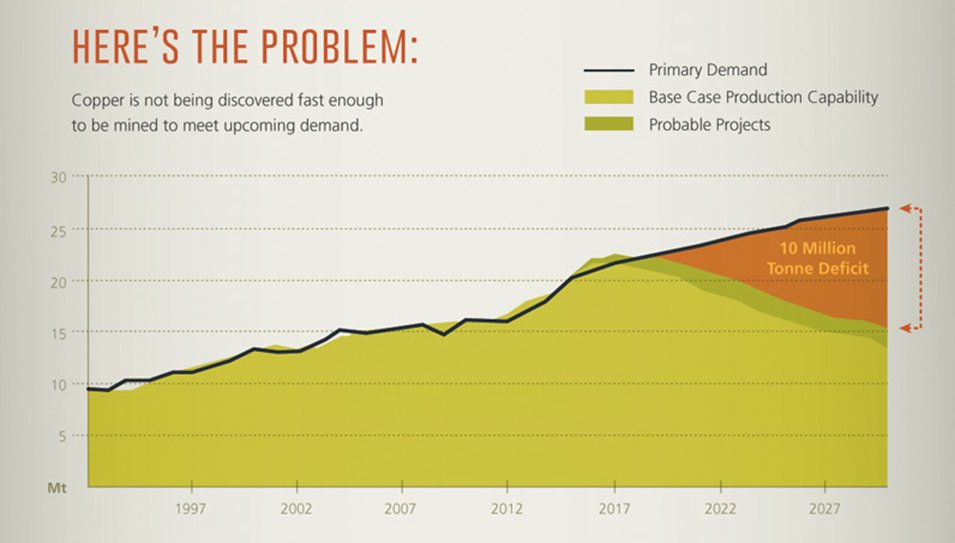
One topic I have thinking about this summer is how commodity price predictions are so unreliable. All look like this: demand growing, supply matching three years from now,and then a wide gap.
Why? Maybe the answer lie with spiders and the U.S. Department of Agriculture...
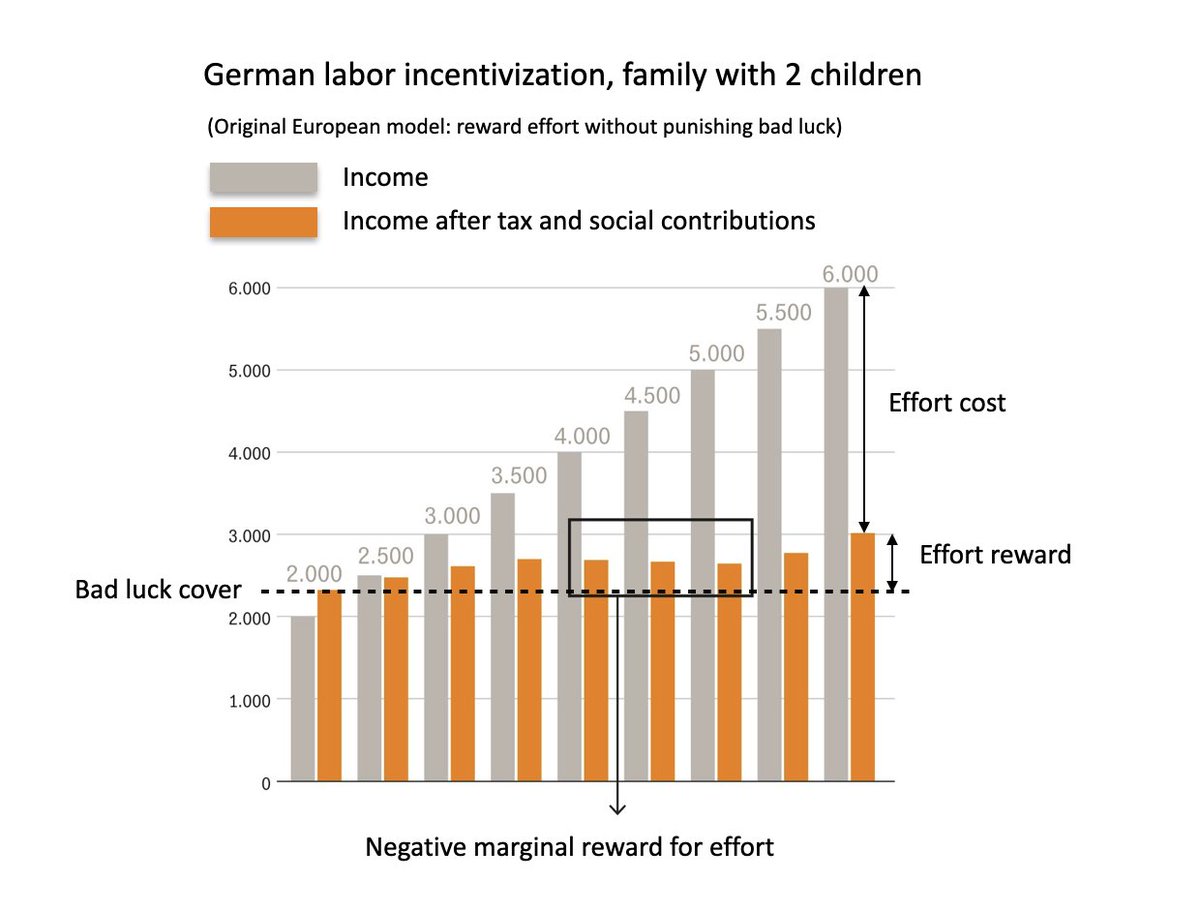
Why the European model is in danger of collapse. Originally it was a Goldilocks one, rewarding effort without punishing bad luck.
The issue now is that effort isn't rewarded enough to incentivise funding against bad luck, so the funding decreases. Meanwhile the cost of that funding is increasing because of demographic changes.
When you add to this a failure to transition from the industrial to information era, this creates a tipping point and that has happened post Covid.
You then have a misaligned incentive feedback loop and lack of growth that can cause economic collapse.
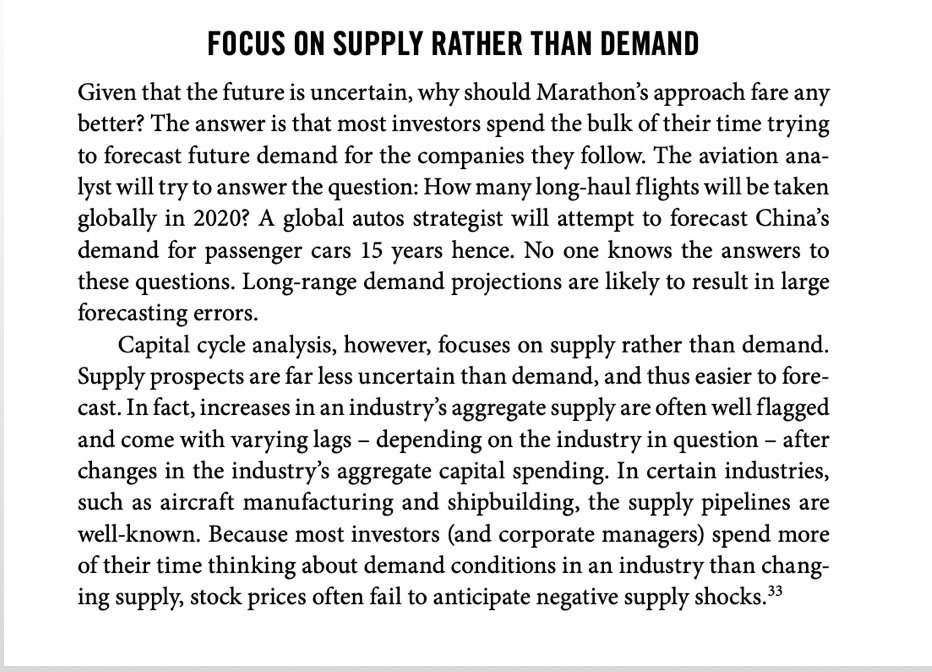
Focus on Supply Rather Than Demand
Anyone interested in commodity/hard asset investing should print this paragraph and frame it on their desk.
Source: Capital Returns