Statistics of week:
“More Americans pay for sports betting apps (5%) than pay for AI…
37% of consumers say none of AI's uses are helpful.
…
2.2% penetration nearly four years after ChatGPT launched. Netflix hit 25% household penetration in a similar timeframe.“
Interest rates have steadily risen since the start of the Iran War, and are an increasingly heavy burden on the economy. The 10-year Treasury yield, which had dipped below 4% prior to the start of the war, is now flirting with 4.7%. Borrowing costs have jumped, including the 30-year fixed-rate mortgage, which is up from under 6% to over 6.8%.
$1,000.
That's what the Iran war has cost the typical American household so far — at the pump, at the grocery store, in higher mortgage rates, and in what we're spending as taxpayers.
And the total keeps climbing.
Full piece in The Philadelphia Inquirer: https://t.co/1a8IN4EFOy
So, there is potential for incentivizing real-world decision-makers to increase their cooperation to boost #resilience, especially in the case of #civil#infrastructure networks.
Check out our paper recently published in Risk Analysis (with Leonardo Dueñas-Osorio) entitled "Interdependent network restoration games with incomplete information and bounded rationality":
https://t.co/FwARO1s4W4
Here, we show that when it comes to #decision_making for the #restoration of #interdependent_networks, not only is cooperation the key to gaining near-optimal decisions, but agents also have incentives to act cooperatively.
America’s top universities should abandon their long misadventure into politics, retrain their gaze on their core strengths and rebuild their reputations as centers of research and learning.
My take:
Check out our latest paper (with Leonardo Dueñas-Osorio) entitled "Auctions for Resource Allocation and Decentralized Restoration of Interdependent Networks":
https://t.co/NEcfOBv3ve
"The #insurance industry has to step up...and play our role in devising an insurance system which works for [uninsurable areas]."
Michael Steel talks to @iankmsmith at @FinancialTimes on the growing issue of ‘uninsurable’ areas.
Read the article here: https://t.co/pOFwVLtHlN
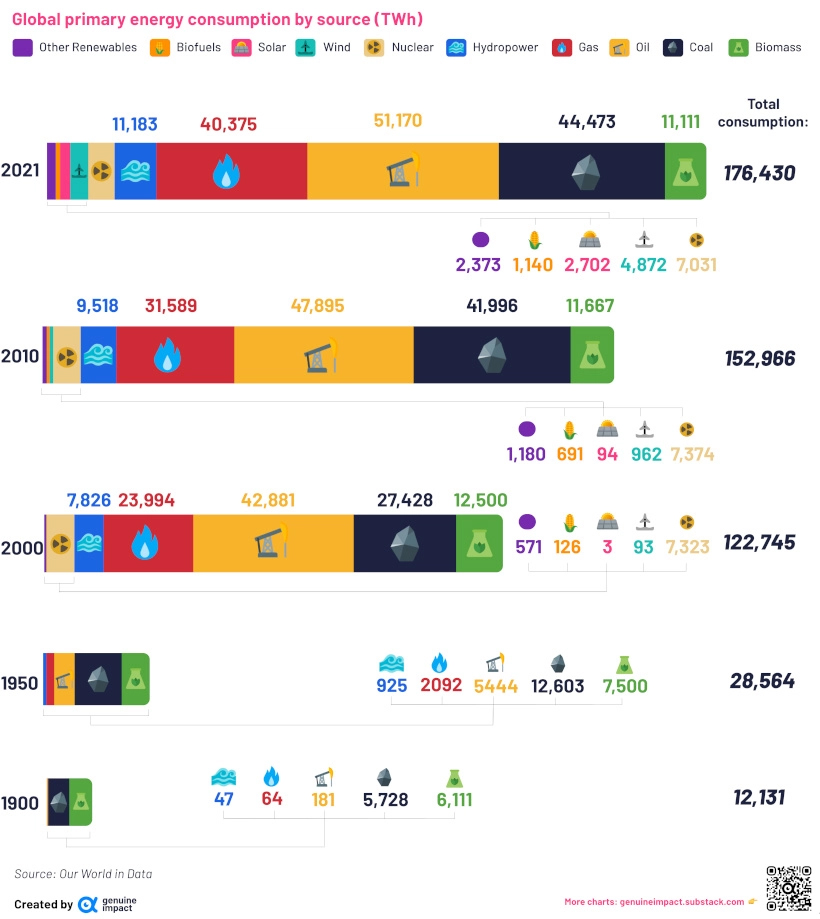
Global Energy Consumption by Source, and Carbon Emissions (1900-2021) 🏭
VC Creator Program's @genuine_impact examines the complex relationship between energy production, consumption, and related carbon emissions ✅
https://t.co/uldHgF1wEx
(1/4) The World’s Energy Mix 🌎
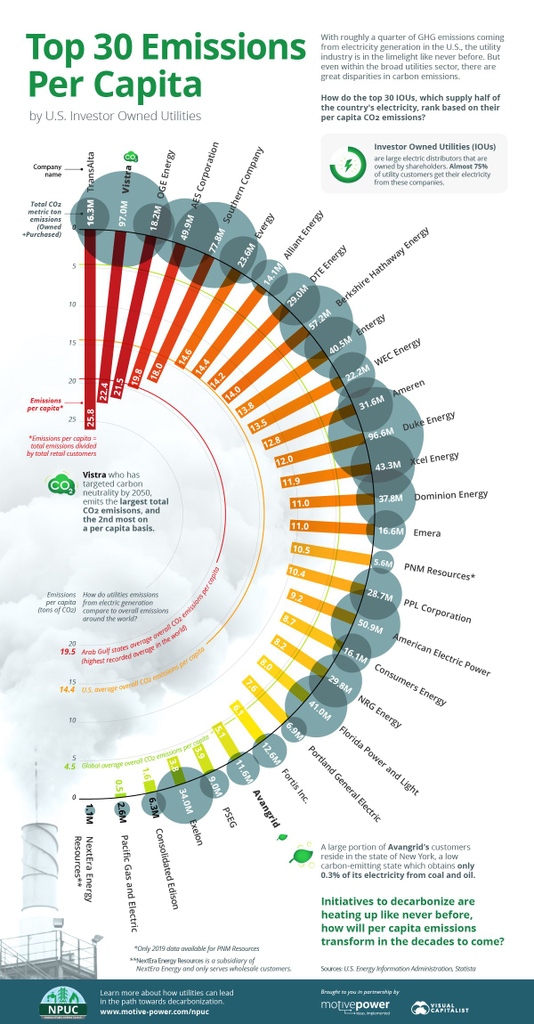
Did you know that approximately 25% of all U.S. greenhouse gas emissions come from electricity generation? ⚡️
This infographic from our sponsor @_NPUC ranks the largest investor-owned utilities by emissions per capita.
Find out more below:
https://t.co/YR1bRhhUX0
@MichaelEWebber I have no doubt that there were qualified female applicants. My point is that, given that more than %75 engineering Ph.D. students are men, it is entirely plausible that we see an outcome like this. And it becomes even more plausible if we factor in the externalities.
@MichaelEWebber Here is a crazy theory: given the current climate, male applicants feel they need more preparation to land an academic position. So, they pursue such opportunities more aggressively. I absolutely don't know if this is the case. But it is worth thinking about.
@MichaelEWebber First, this is a program to prepare grads/postdocs for the academic job market. So it is more about sending them out of Texas :)
Second, people apply for these fellowships. So, without knowing the number and credentials of applicants, we can say nothing about possible biases.