@luigidemeo Understood but I'm saying I don't know what that would look like because Morpho itself is only narrow lending infrastructure and unable to connect liquidity by design. Only curators can.
The difference is with the collateral. Arbing a rate with BTC collateral presents no connections between the markets.
Yield-bearing stablecoins are the equivalent to a special mechanism built into the protocol. The difference is only in control.
Morpho is not in control of anything. They delegate this to curators, and the curators connect the markets by onboarding YBS.
@luigidemeo Well that's just because Morpho is explicitly only infrastructure and doesn't compete at the liquidity provisioning level.
All major lending markets are all fairly well connected now and this will only intensify.
Tokenization is going to "consume the entire financial industry eventually."
@hexonaut, CEO of @sparkfinance, tells @RemyBlaireNews tokenized equity is the next step after stablecoins, with $HOOD and $COIN already launching it onchain, opening new lending and financing opportunities.
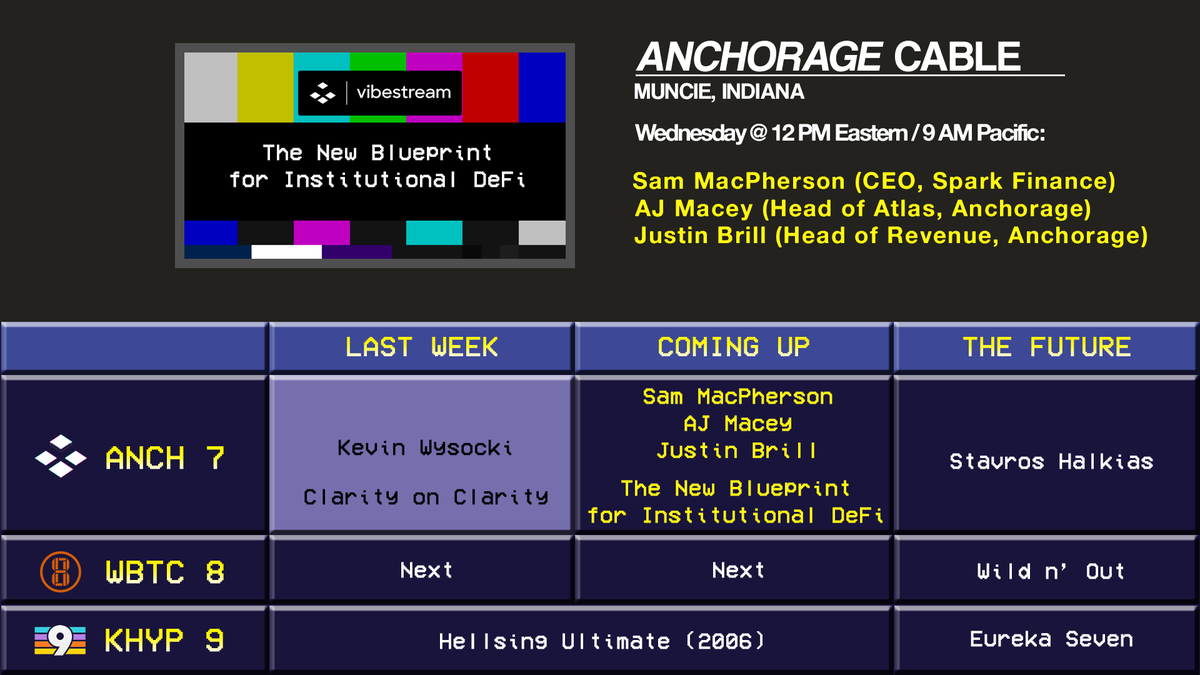
On tomorrow's episode of the Vibestream: Anchorage Digital and @sparkfinance are working together so institutions can borrow through Spark's lending book while collateral stays in qualified custody.
Dive into the new blueprint for institutional DeFi with Sam MacPherson (@hexonaut), Co-Founder and CEO at @sparkfinance, Anchorage Digital's Head of Atlas @maceyaj, and Global Head of Revenue Justin Brill.
I tracked 98 ETH whales for six months. Their direct wallet holdings fell 19.2%—but that does not mean 19.2% was sold.
Here’s where 1.37M ETH went across exchanges, staking, Sky, SparkLend, and Aave. https://t.co/6CLVBIXKUz
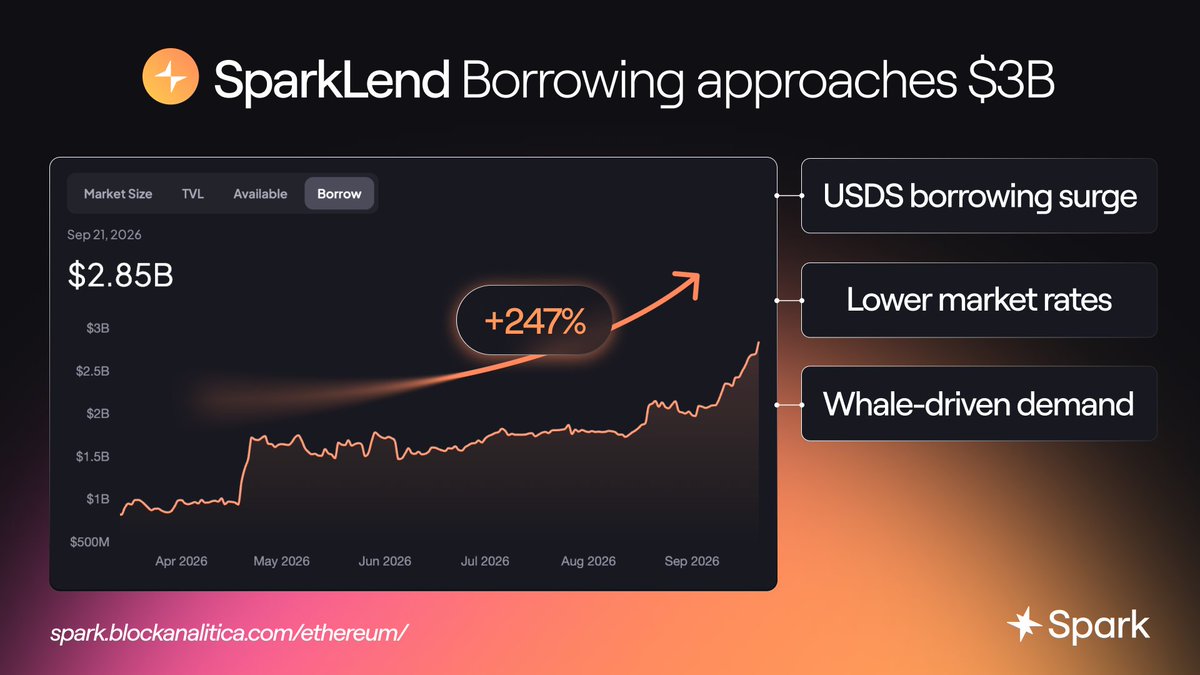
SparkLend's borrowing on Ethereum has grown 247% since March, approaching $3B.
USDS led the growth. USDS borrowing rose from $188M to $917M, accounting for nearly half the $1.5B increase in total borrowing.
Competitive borrowing rates are helping drive that demand.
Over the last 30 days, USDS borrowing averaged 3.9%, while USDT averaged 4.07% and USDC 4.3%, all below comparable rates across other major pooled lending markets.
USDS also gives borrowers another advantage: through @SkyEcosystem's LitePSM, borrowed USDS can be converted into USDC while the debt remains denominated in USDS.
We've seen it used to refinance across lending markets already. In one transaction, a borrower drew approximately $1M USDS from SparkLend, converted it into USDC and used it to repay debt elsewhere, moving the WBTC collateral to SparkLend.
Collateral supply has grown alongside borrowing. Supplied WETH increased 18.6% and cbBTC 44.7% over the last 30 days, with asset repricing accounting for only around 10% of the $550M increase.
SparkLend is lending at greater scale against a larger collateral base than other major lending protocols, and probably has the best rates in the market.
SparkLend rates: https://t.co/2NqMjCerWS
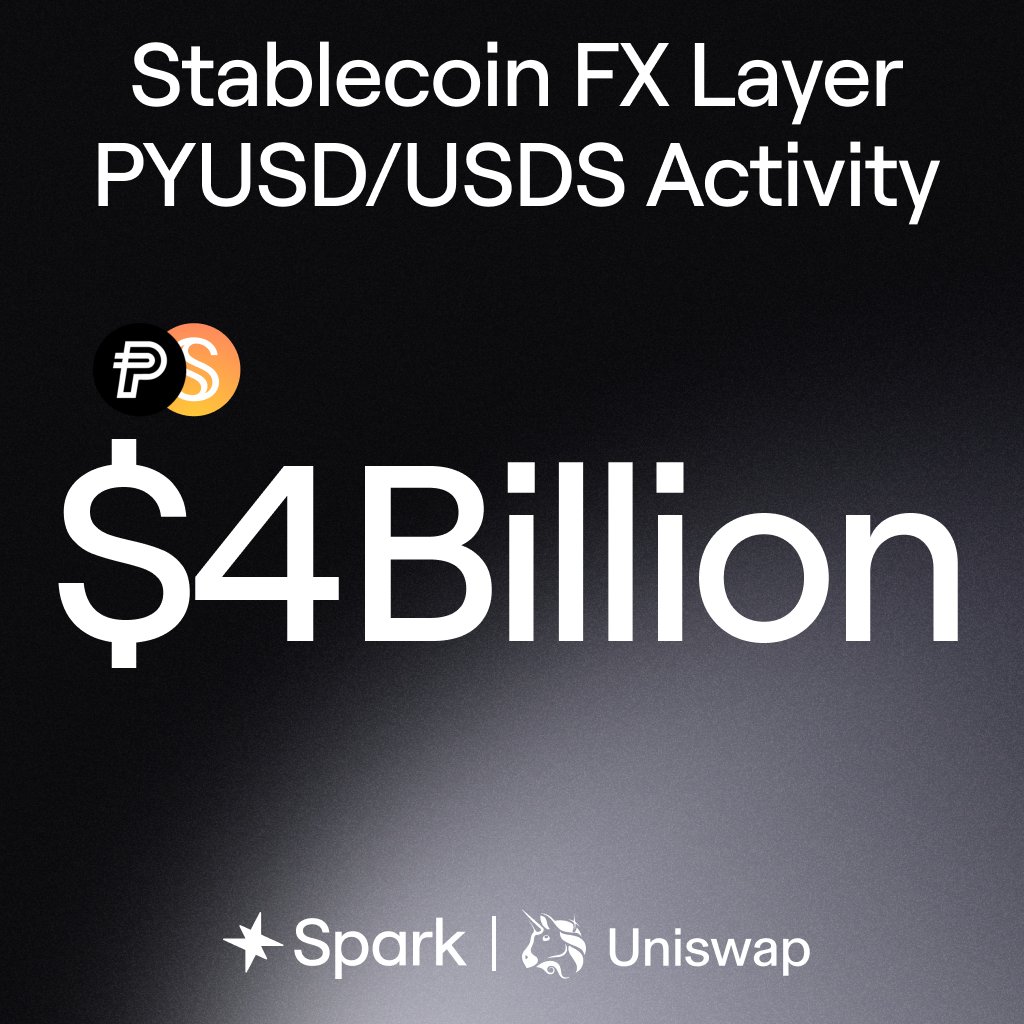
Update: PYUSD/USDS pool activity on The Spark Stablecoin FX Layer has surpassed $4B!
The pool runs on @Uniswap v4 deploying liquidity on demand at scale.
Spark coordinates that depth through the FX Layer's shared liquidity network, keeping capital productive between swaps.
@andrewhong5297@sonyasunkim@arkisxyz There hasn't been any losses to date, and ideally we keep it this way for senior lenders with conservative risk parameters.
For most savers, yield matters, but so does the volatility you have to take to earn it
If you held the 10Y since the beginning of the year, you’d be down 3%: 6% price loss offset by 3% income. Not ideal
This is why I find overcollateralized lending in DeFi so high potential for tradfi investors
With sound underwriting, you can earn:
- yield in real time (thank you blockchains)
- take basically no interest rate duration
- have instant liquidity (up to 10%)
- earn 100bps+ over SOFR
There’s a reason AAA CLOs have become so popular in TradFi which give investors a similar profile: floating rate, low duration, low volatility, and a spread over cash
I think onchain yields will be very loved by tradfi once we get them comfortable with onboarding, smart contract risk, etc.
With 10-year yields reaching 5%, I've been hearing some funny comparisons with on-chain yield products.
"Why should I go into product XYZ if I can get 5% risk-free?"
Well yes you will earn 5% risk-free in USD, but let me know how valuable that USD is in 10 years.