If we want to defend “agency” against its critics, what we need is not to hedge it, but to rethink its full meaning and scope.
Human agency is NOT fundamentally about “just doing things”. It’s about taking conscious ownership of your life.
This includes taking ownership over the ends you choose, no less than the means by which you enact them.
Someone who “successfully” wreaks revenge upon all who have ever slighted him, at the cost of actually building a flourishing life for himself, is strictly lower-agency than someone who chooses the latter.
Same goes for “successfully” starving yourself to death as a show of martyrdom, or blowing up your life savings for the sake of a momentary thrill, or propping up a dictator who then makes life unlivable for everyone including you. All lower-agency than even a quiet and unremarkable life spent on constructive, personally fulfilling pursuits.
The hardest and most important way we exercise our agency (or fail to) is in architecting our lives: that is, designing the latticework of interconnected ends to which we want our life to add up.
“Should I optimize for impact, or enjoyment, or financial security?”
“What do I want in a life partner?”
“Will my life be better or worse if I have kids?”
There are more and less agentic ways to think through such design decisions, and the vast majority of people default to the less agentic ways.
That’s why so much of my writing focuses on how to approach your life design agentically (cf the builder’s mindset).
The #1 way for most people to increase their agency is to put more honest, independent thought into architecting their own ends, versus 1) executing on some prefabricated blueprint of a great life (whether supplied by the do-gooder EA movement, or Silicon Valley, or the bible, or one’s drill-sergeant parents) or 2) haphazardly piling on bricks and girders with no view to the overall design.
Instead, most of the current discourse on “high agency” just presents another prefabricated blueprint, loosely based on the cultural archetype of a Silicon Valley tech founder: “you can just do things,” “move fast and break things,” “permissionless action,” etc.
Sometimes it’s indeed high-agency to behave in these ways. Other times it’s higher-agency to plan ahead and think things through, or move slowly and demand perfection, or consult with experts.
The key question is: are you doing what you honestly judge best, by your own lights, given the full context of the life you are consciously building?
@alyssaleann "The point" of video games might be to give your brain a sense of completion and accomplishment while you are working on projects that may not give you feedback immediately. Or, fun for its own sake.
@Nikos_17 There must be a better way to frame this that gives more agency to the refugees. If myself and my friends saw @PNikmand as having "nothing to offer", we would not have helped him and he'd be dead right now. Instead, he's here and thriving.
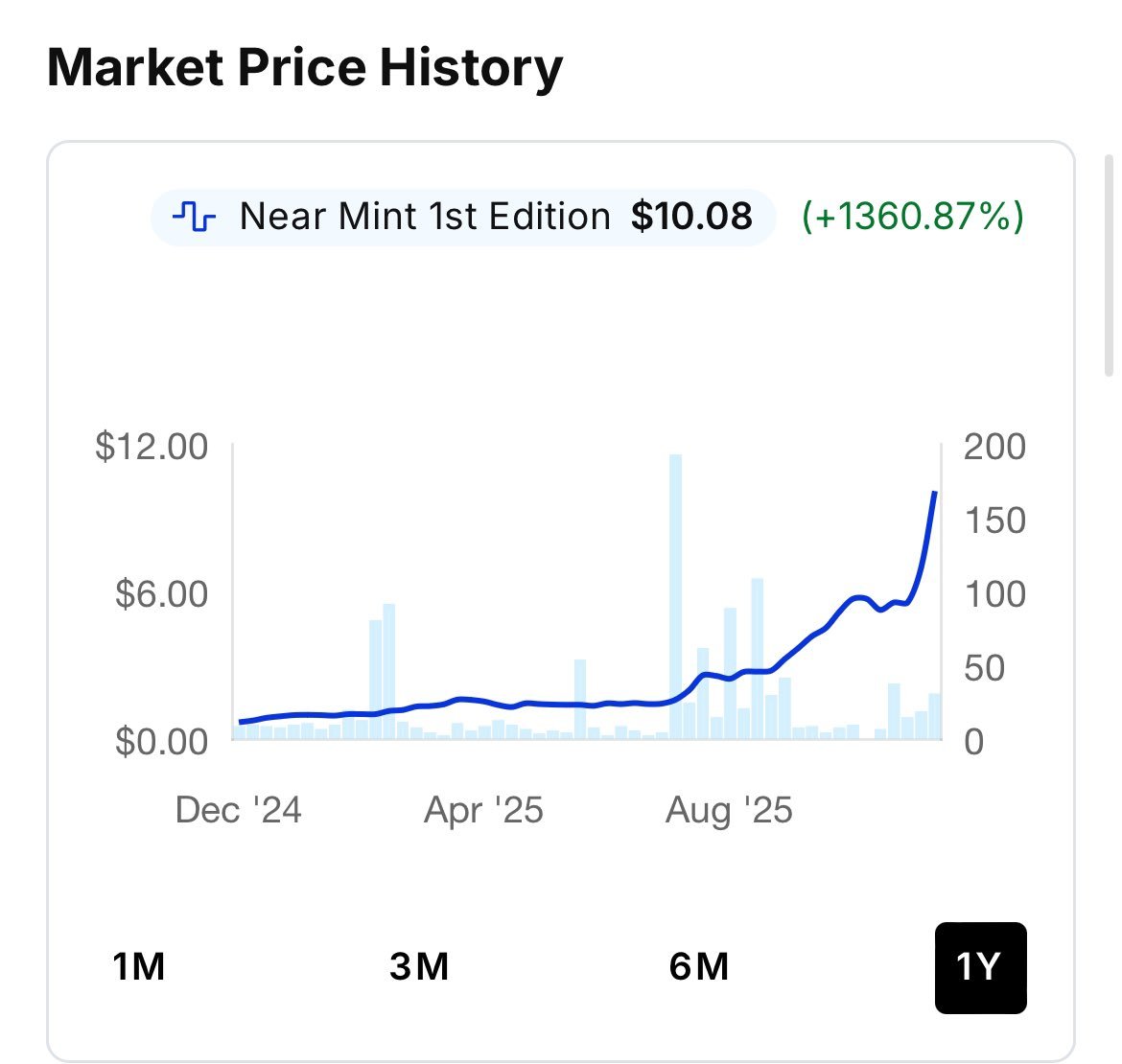
🚨FUN FACT: Today we learned that there is an autist (@KabutoKing_ ) currently collecting every first edition Pokemon Kabuto card in an attempt to gain complete dominance over the Kabuto market. He currently has 1700+ Kabutos and has pumped the market price to over $10 a Kabuto.
@RealKeithWeiner I was at a small business conference this week, and there was a booth that said, "Dollars go down, Bitcoin goes up. It's that simple."
@tafokints 4- for m2k's rizz. And I think Wizzy would turn him into a social butterfly. Or they would just be 100% quiet for the entire flight, which I'm down for as well.
7 or 8 next. They seem the most approachable/dte.