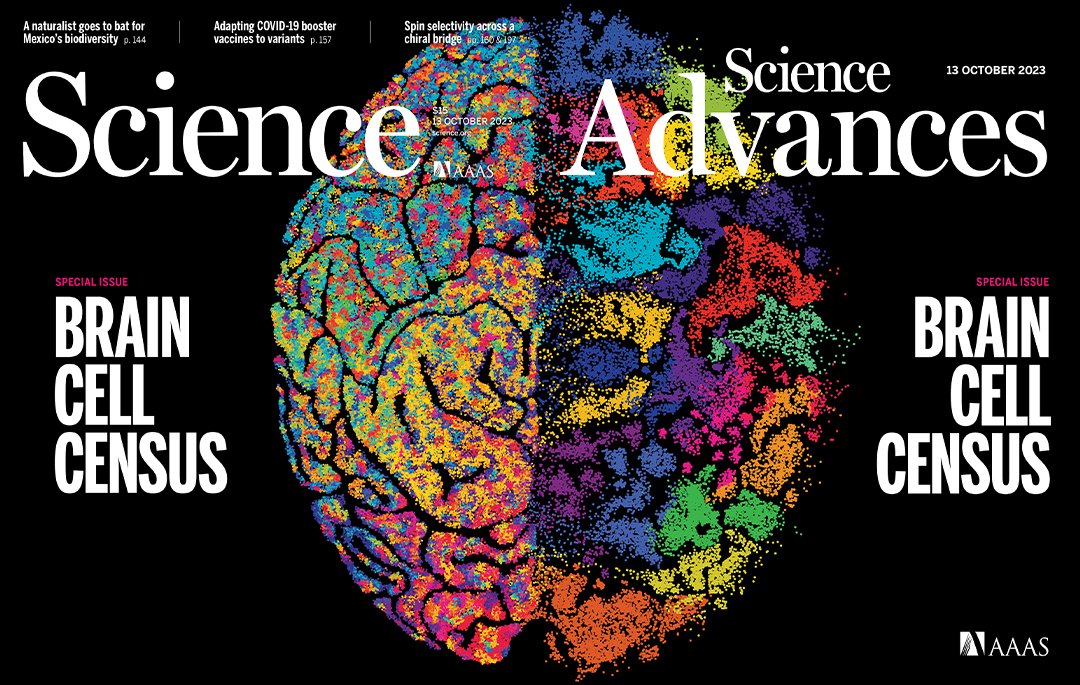
In 21 papers across Science, @ScienceAdvances, and @ScienceTM, researchers with the #BICCN consortium present an atlas of the human and nonhuman primate brain in unprecedented detail.
The results uncover the genetic organization of the human brain. https://t.co/K3ePBMRzli
I'm presenting two posters at SfN this year!
On Monday morning, I'll be discussing analysis of intrinsic timescales across mice, macaques, and humans (OO21)
And on Tuesday morning, I'll be presenting results of amygdala MAPseq comparing projections from macaques and mice (WW30)
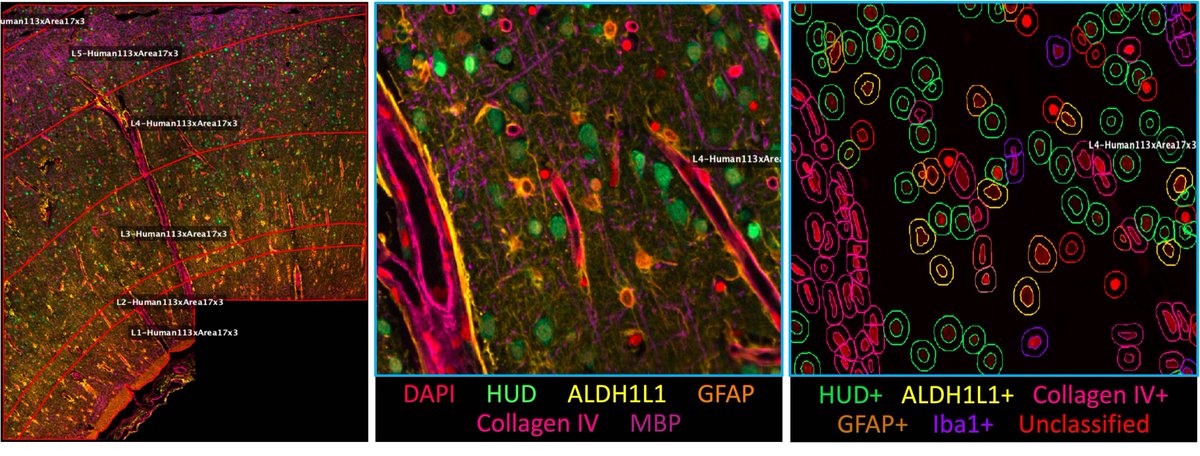
Finally, our work on Brain Cell Census is published on Science Advances!
A cellular resolution atlas of Broca’s area | Science Advances https://t.co/R9b4X7PSgK
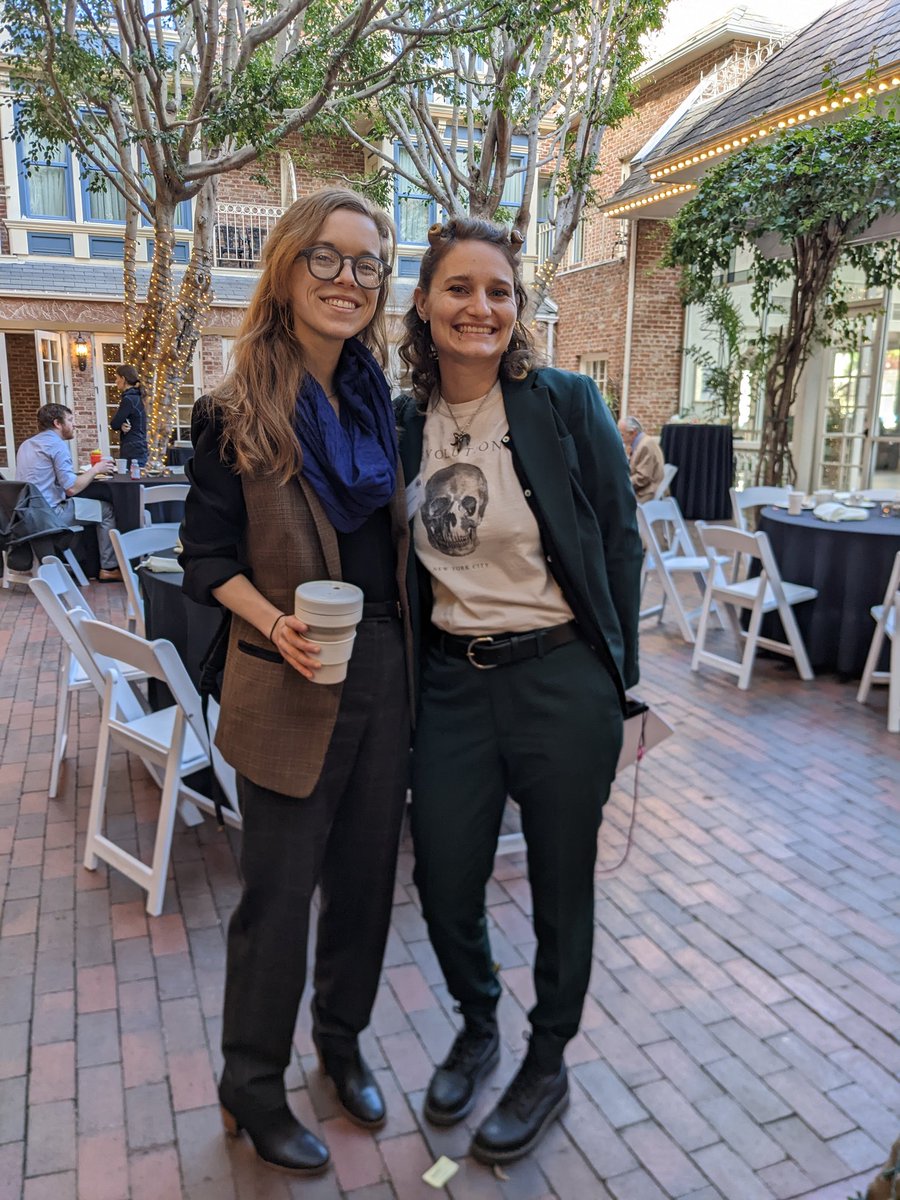
Such a pleasure meeting our fantastic collaborator @CostantiniIrene at #SfN23! Check out her poster describing our recently published work today afternoon at WW79 (PSTR 443.10)
Come speak with #AlecMcKendell (Board E30 PSTR325.20) from 11 am-12 pm today about neocortical glial and vascular changes in Alzheimer's disease. Thanks to @HofLab and @GEResearch for the collaboration behind this first #SfN2023 poster from the #VargheseLab! #FBIatSfN
Fresh new work from the @HofLab! Multimodal assessment of auditory nuclei in the dolphin brain.
Main finding? They may have a neurochemical buffer against hypoxia! 🐬
https://t.co/9rscGEXC0Z
VIRTUAL #SfN22! Working on primate models of human #Aging to investigate sex & age-related #CognitiveDecline, here Dr. Carmen Freire Cobo seeks to establish the relationships btwn pathological hallmarks of AD & #CognitiveAging in marmosets. #FBIatSfN👉https://t.co/XvlysN9Nuq
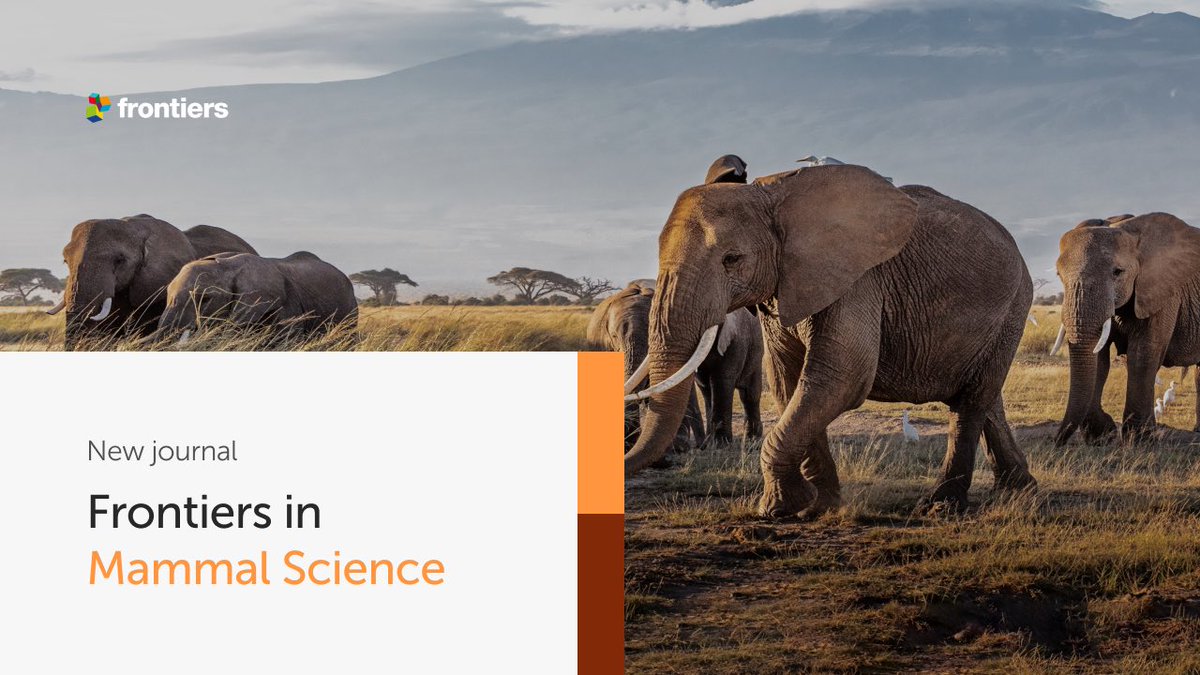
Pleased to join the editorial board of @FrontiersIn Mammal Science as Associate Editor. This new journal will help drive innovation in its field through high-quality research. Find out more: https://t.co/e5jmccw9uj
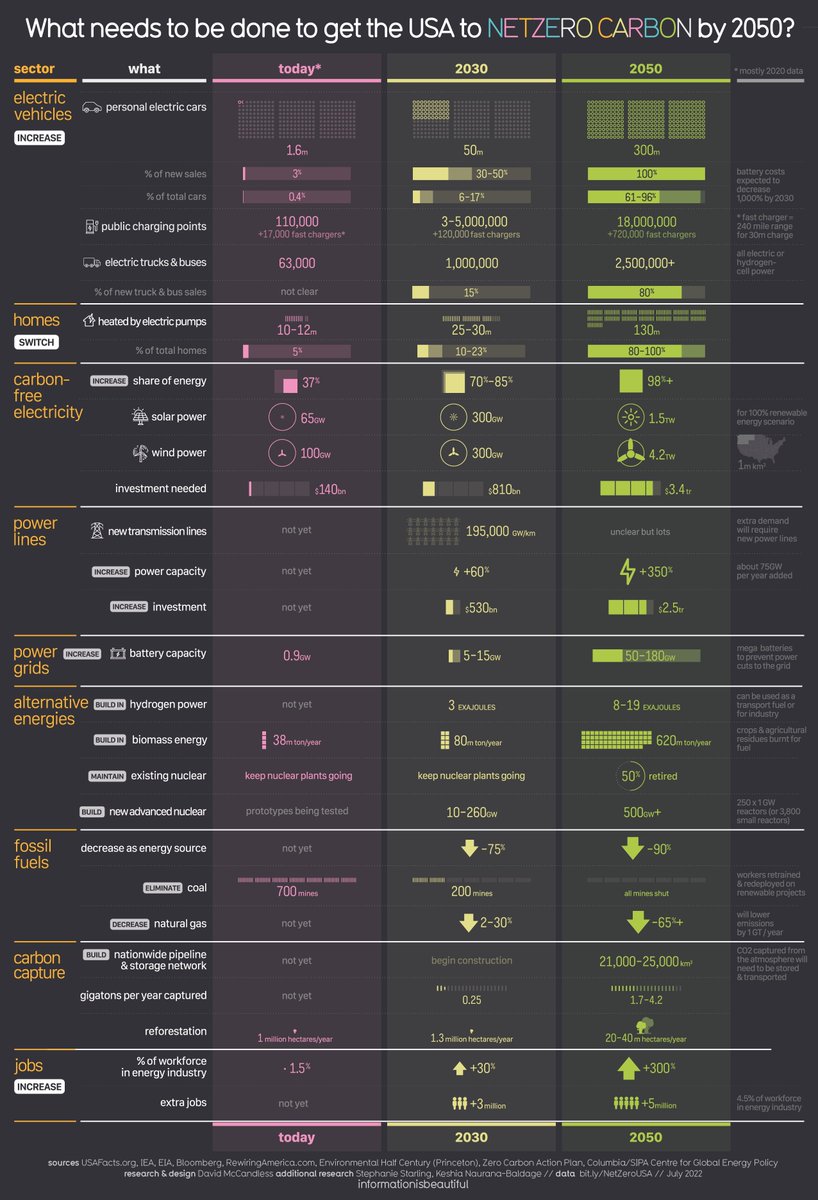
I used to think tables are boring.
But they can be beautiful & engaging.
Here's a nice example from @infobeautiful.
It uses many eye-catching elements.
But you don't need catchy visuals to create a great table. Here are a couple of guidelines that will help you 🧵
Some chart types are used all the time. Think:
Box plots
Pie charts
Heat maps
Paired bar charts
Correlation matrix
But just because a chart is used all the time doesn't mean it's good for your use case.
Let's explore some alternatives that may work better for you.
I have created a HUGE list aggregating all the #AcademicTwitter and #NewPI resources I have saved over time!
It includes grants, organization, supervision, teaching, mental health, budgeting, presentations, job applications...
Suggestions & input welcome!
https://t.co/ntPtrs9PV0
PhD student in Neuroscience at U Alabama. Sheep model for CTE and TBI with @AckermansNicole
University of Alabama, Tuscaloosa, USA
https://t.co/YiO2lDH3p3
#ScienceJobs
Today's discussion on 'No one way'
TL;DR
Your personality and identity are incredibly powerful tools for communicating your work.
There is no one way to do it.
Don't let the system force you into the same old mould.