Extracting Arbitrary State Information from Analog Quantum Simulators
⛰ The challenge: Can we extract interesting properties from analog quantum simulators without fine-tuning? Furthermore, could we leverage a single Hamiltonian to achieve "randomized measurements"? 🧵[1]
Today, we introduce Oratomic.
We are on a focused mission to build the world’s first fault-tolerant quantum computers and unlock their transformative applications. Quantum computers offer a fundamentally new way of understanding and interacting with the physical world.
Our recent scientific advance finds that Shor’s algorithm is possible with as few as 10,000 reconfigurable atomic qubits: https://t.co/VS6Ste00fC
Our team integrates world-class expertise in quantum error correction, neutral atom systems, artificial intelligence, and optical engineering. We are working together to make fault-tolerant quantum computing a reality.
To learn more about Oratomic and our team, visit https://t.co/Pjtg9n2R2P
The arXiv is becoming a nonprofit separate from Cornell, and they're looking for a CEO. Please repost to let good candidates know!
@quantum_aram@michael_nielsen
https://t.co/bXj2m9ozqJ
In this thoughtful essay, Garnet Chan reflects on recent progress using classical heuristics in computational quantum chemistry—and what it means for quantum computing. The lessons he draws can help to steer both classical and quantum approaches in scientifically productive directions.
https://t.co/XSXMNQTy3b
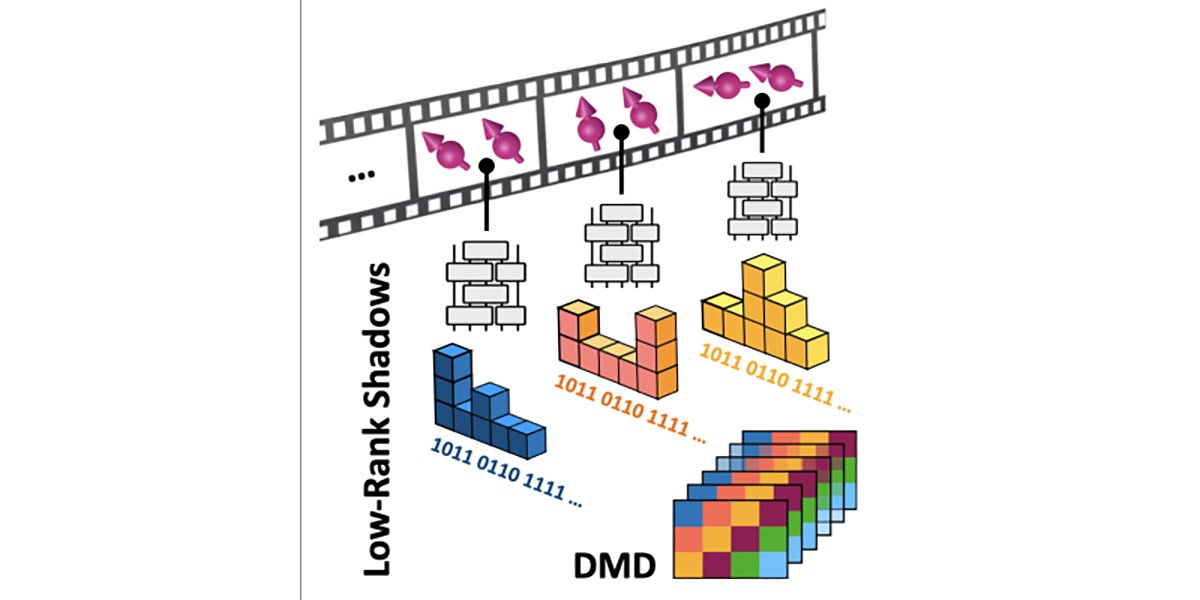
A multi-observable dynamic mode decomposition approach is shown to extract the ground- and excited-state properties of many-body systems with reduced resource requirements while maintaining accuracy.
Learn more: https://t.co/XU79ty8fA7
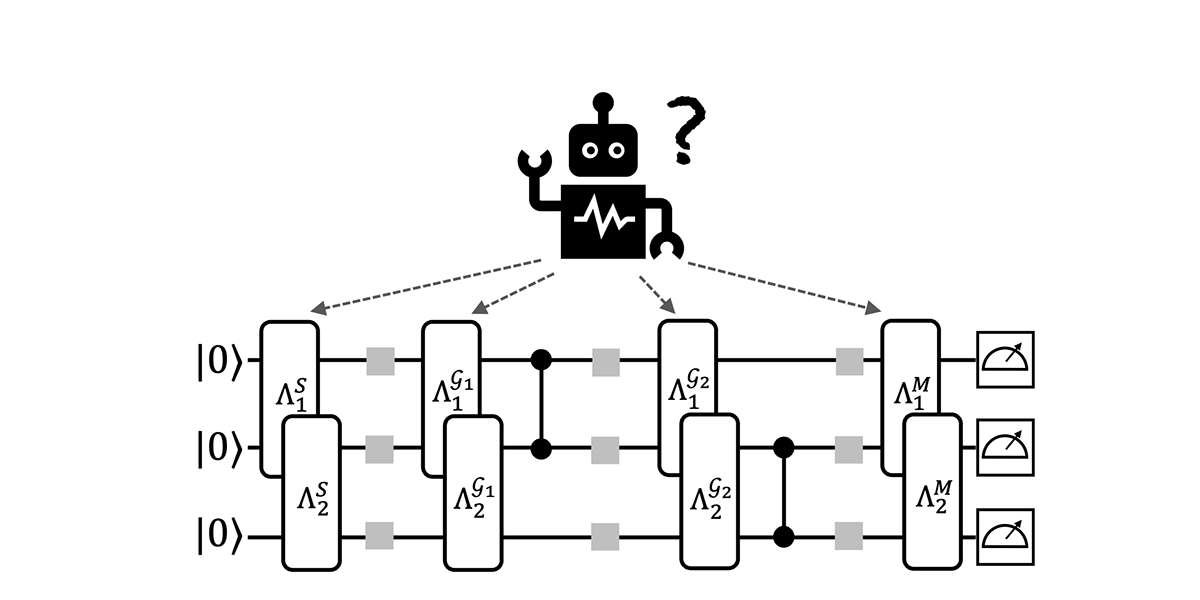
Combining concepts from gate set tomography and Pauli noise learning yields a new protocol for noise characterization that is self-consistent and experimentally practical. @csenrui@S_Flammia
🔗 https://t.co/CzzzLchA8C
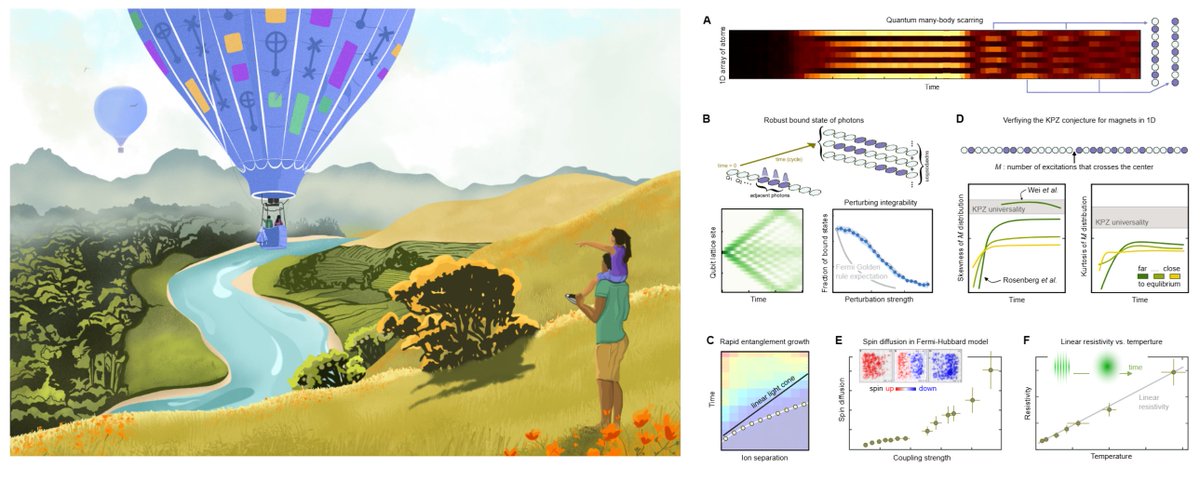
Our @ScienceMagazine perspective : have quantum simulators already found new physics ?
Think hot-air balloons: tricky to fly, not very steerable, but once aloft can drift into unexplored territory and make real “discoverinos.”
https://t.co/tOyC3KETBU
https://t.co/DtKT4ds5nR
It’s really an honor our recent work with @Muzhou_Ma, @gong_weiyuan, Qi Ye, @YT59529321, @S_Flammia and Susanne Yelin has been featured on APS Physics. In this work, we explored ansatz-free Hamiltonian learning and find it can also achieve the optimal Heisenberg-limited scaling!
Researchers have demonstrated an algorithm that characterizes quantum systems of any size with optimal efficiency and precision without needing prior information or assumptions about the system’s structure. https://t.co/kkdK5k65mo
A Hamiltonian learning algorithm reaches Heisenberg-limited precision without
structural assumptions, treating the system as a black box and exposing a
trade-off between evolution time and controllability.
Article: https://t.co/74UXtZ7vaa
Viewpoint: https://t.co/ZWJMYJ8pna
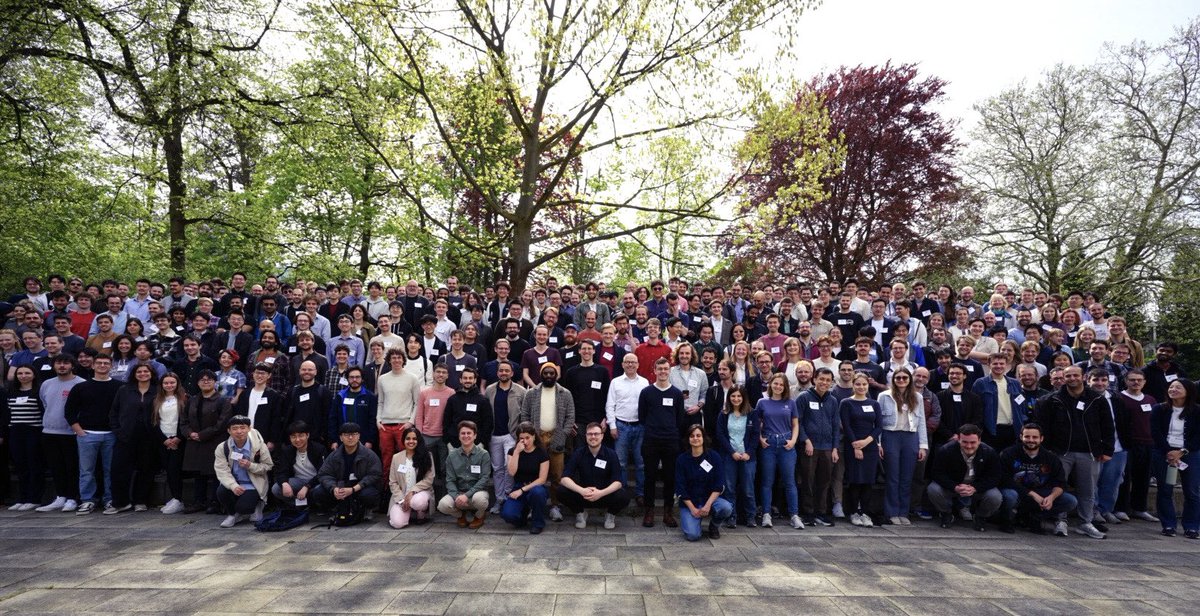
The second to last afternoon session of #QCTIP2025 features wonderful talks on classical shadows to estimate properties of quantum systems by @HongYeHu1, Katherine van Kirk, and You Zhou.
If you are interested in quantum computing, I strongly recommend this insightful article by @Caltech student @robbieking1000 calling for a "scrappier approach" to finding new applications.
https://t.co/mXvGK0YJ7f
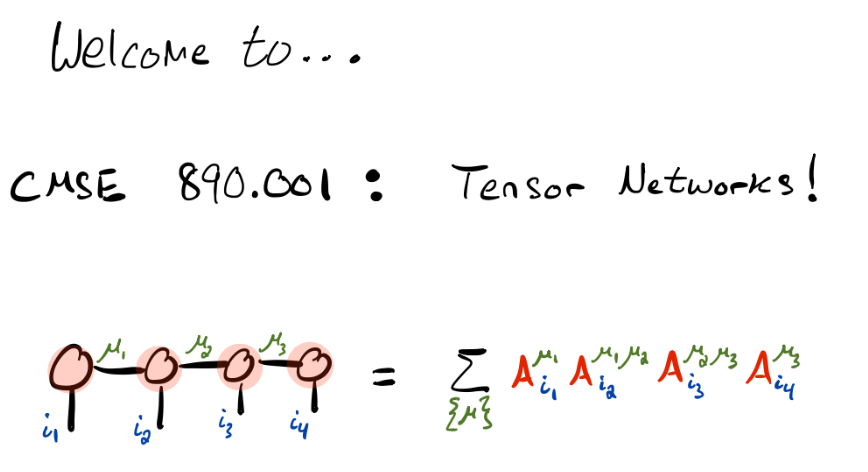
I really enjoyed teaching a new graduate course on tensor networks this semester - I just made the course syllabus with readings, (handwritten) lecture notes, and coding assignments available on my website in case they are useful to anyone: https://t.co/JKG6Heexdf


![HongYeHu1's tweet photo. Extracting Arbitrary State Information from Analog Quantum Simulators
⛰ The challenge: Can we extract interesting properties from analog quantum simulators without fine-tuning? Furthermore, could we leverage a single Hamiltonian to achieve "randomized measurements"? 🧵[1] https://t.co/hSf7u4y8d2](https://pbs.twimg.com/media/F-B2O78a8AAhDId.jpg)