New paper w/ @_LeeJaeJoong_ in Nat Neurosci!🧠 We developed personalized fMRI predictive models tracking ongoing spontaneous pain in chronic pain patients, trained on 6+ mo. of densely sampled data. A true team effort. Deeply grateful to our participants! https://t.co/MZK4qv9qHx
New paper out! Revisiting the DMN's self-related processing from an embodied view🧠💪 Huge thanks to @choongwanwoo and @choninn_x for enriching my internal model with great insights and fun discussions along the way!
Our new paper is out in Current Opinion in Behavioral Sciences; a perspective paper on the DMN, titled "Embodying the default mode network: self-related processing from an embodied perspective"
https://t.co/xMCCtWkofM
Our new paper is out in Current Opinion in Behavioral Sciences; a perspective paper on the DMN, titled "Embodying the default mode network: self-related processing from an embodied perspective"
https://t.co/xMCCtWkofM
✨ Thrilled to Host PREMIER's Inaugural Seminar! ✨
What an honor to welcome @choongwanwoo@bn_becker@FengZhou_ and their brilliant teams for the very first PREMIER: Predictive Modeling in Emotion & Cognition Research seminar at ISTBI, Fudan University! 🧠💡
#COGNIZELab
(1/10) How do brain networks and cognition co-evolve as children enter adolescence?
While valuable, cross-sectional studies offer only a single snapshot of brain–cognition relationships, missing the dynamic changes that longitudinal designs can reveal.
We hypothesize that cross-sectional and longitudinal estimates may diverge, echoing classical Simpson’s paradox.
As illustrated below:
To test this, we analyzed longitudinal fMRI and cognitive data at baseline and Year 2 in ~3,000 individuals (ages 8.9–13.5) from the ABCD Study, spanning the transition from childhood to adolescence.
[Read the full paper here: https://t.co/0NShR7O6l8]
OHBM Lunch with Mentors will be happening in Brisbane! Fill out the registration form below to enter a lottery draw. Registration closes May 25th 12pm AEST.
Register here: https://t.co/sa6v1fpvS6
Information on this year's Mentors is available here: https://t.co/VUVBYgXKux"
Going to #OHBM2025 in Brisbane?
We're accepting entries for two in-person science communication competitions:
📊 Best Figure Competition
🗣️ 3-Minute Chalk Talk Competition
⭐ See here for more details, or to sign up for one or both competitions:
https://t.co/OaQOuvE2Ew
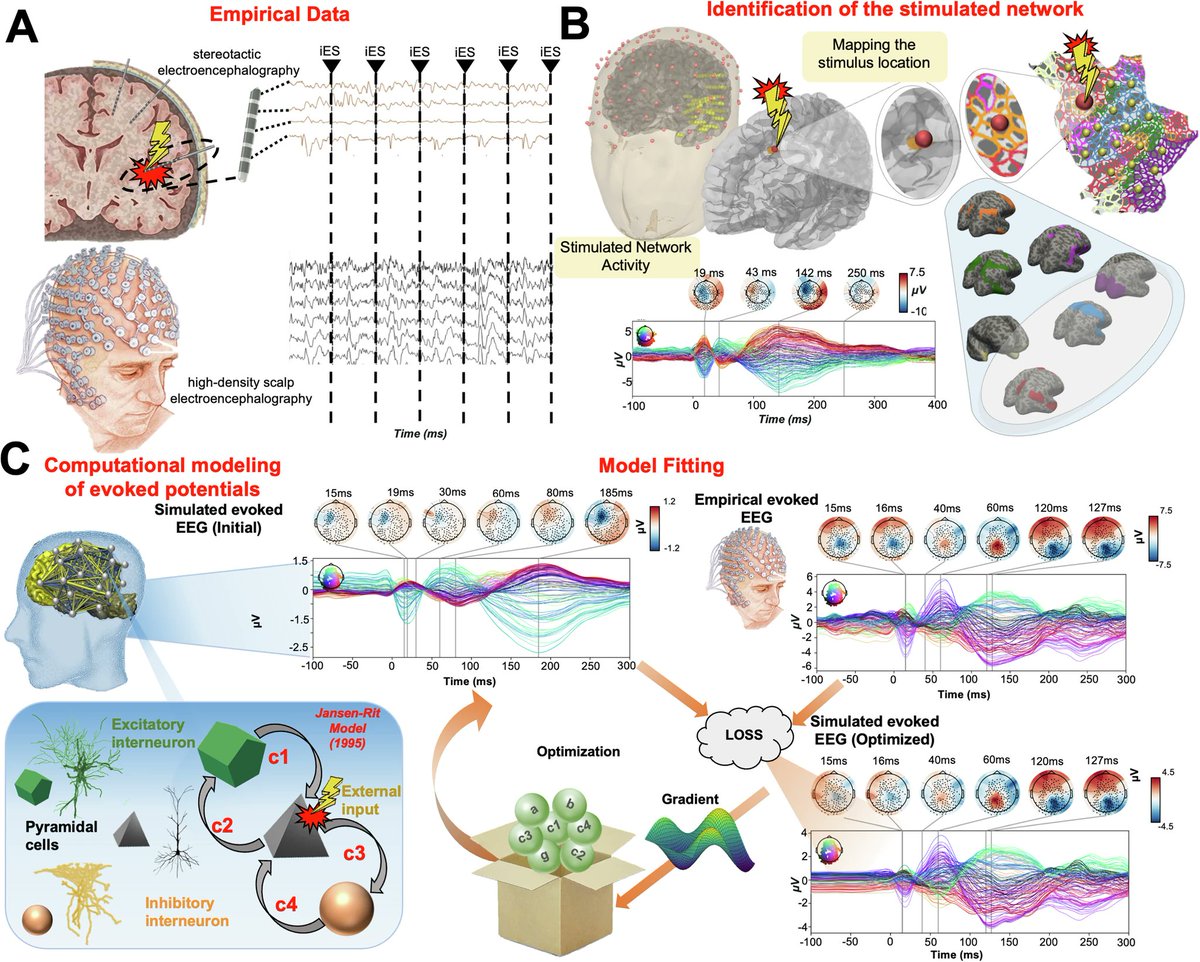
1/11 How does our brain's hierarchical organization impact its response to stimulation? We found striking differences between "high-order" networks (involved in complex cognition) vs "low-order" networks (handling sensory/motor functions) @NatureComms
https://t.co/LyjzKhEbju
New preprint out! 🚀
Our latest work on Motion-Corrected Eye Tracking (MoCET) is now available on bioRxiv! We introduce a method to improve gaze accuracy in fMRI experiments using head motion correction.
Check it out here: https://t.co/6wrI95ZBIy
#EyeTracking#fMRI
New paper in Imaging Neuroscience by Ting Xu, Michael P. Milham, et al:
Challenges in measuring individual differences of brain function
https://t.co/mEZfc70gRO
Due to the continuous technical issues, the Call for Content deadline will be extended until December 18, 2024 at 11:59 pm EST, USA. We're aware of the site issues and are working with developers to resolve them. We apologize for any inconvenience this has caused.
In our first workshop will focus on
connectome-based predictive modelling (CPM) lead by the brilliant Xilin Shen from Yale Medical School!
Date: December 11th 9am EST, 2pm GMT, 10pm CST
Register below! https://t.co/uGaoFRRM1o
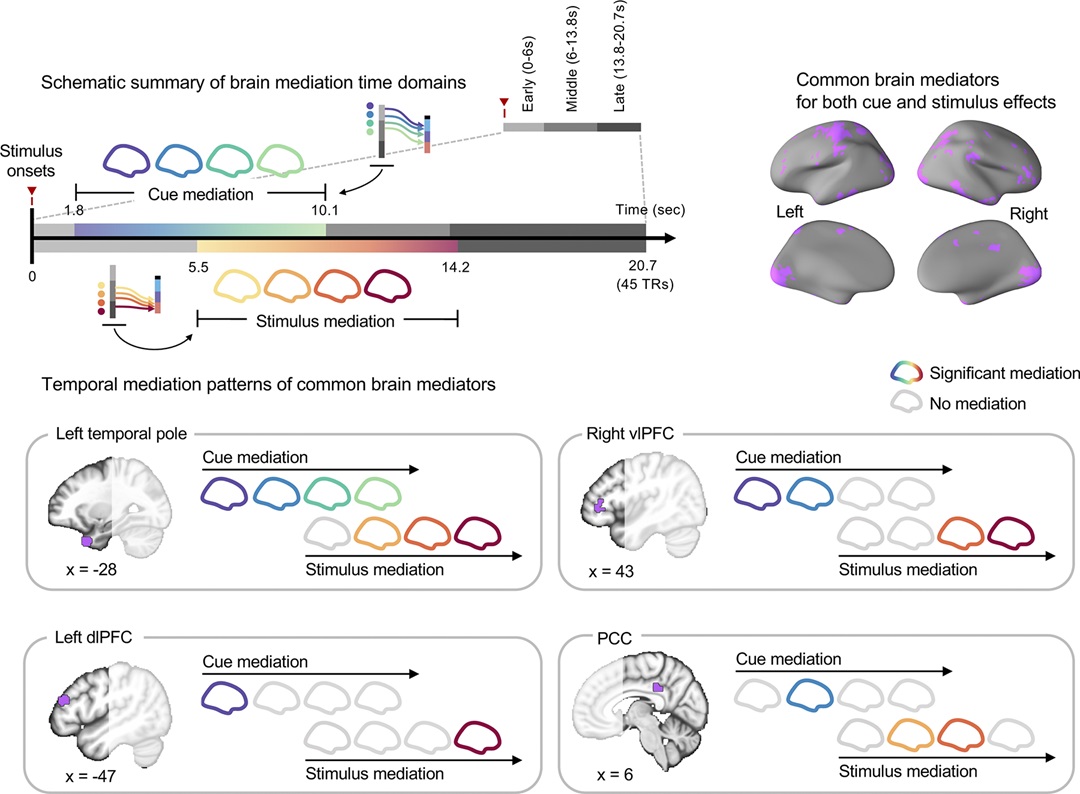
During #pain, the sensory input is modulated by contextual information. @SuhwanGim@choongwanwoo &co show how expectation & sensory input are integrated in the human brain during #PainPerception, revealing its spatiotemporal architecture #PLOSBiology https://t.co/VwvZLtzgTc
Our lab (https://t.co/gvM6S5RjVo) is excited to review PhD applications this cycle! Check us out if you wanna do interesting stuff with brains and behavior in the woods 🌲🧠🌲Apply to Dartmouth Psych&Brain Sciences via Guarini Grad School (https://t.co/IWXBshZdw2...) by Dec 1!
I am absolutely stoked to share our new study on multiscale neural dynamics across species and behaviour + network simulations exploring their benefits! The best lab going around! Captained by THE @jmacshine 🙌
I'm pleased to share our lab’s collective effort: ‘Pain Neuroimager Manifesto: Towards Person-Centered Neuroscience of Pain.’ This manifesto reflects our commitment to a person-centered, pluralistic, and nuanced approach to pain neuroimaging research. https://t.co/H19dc5tT2L
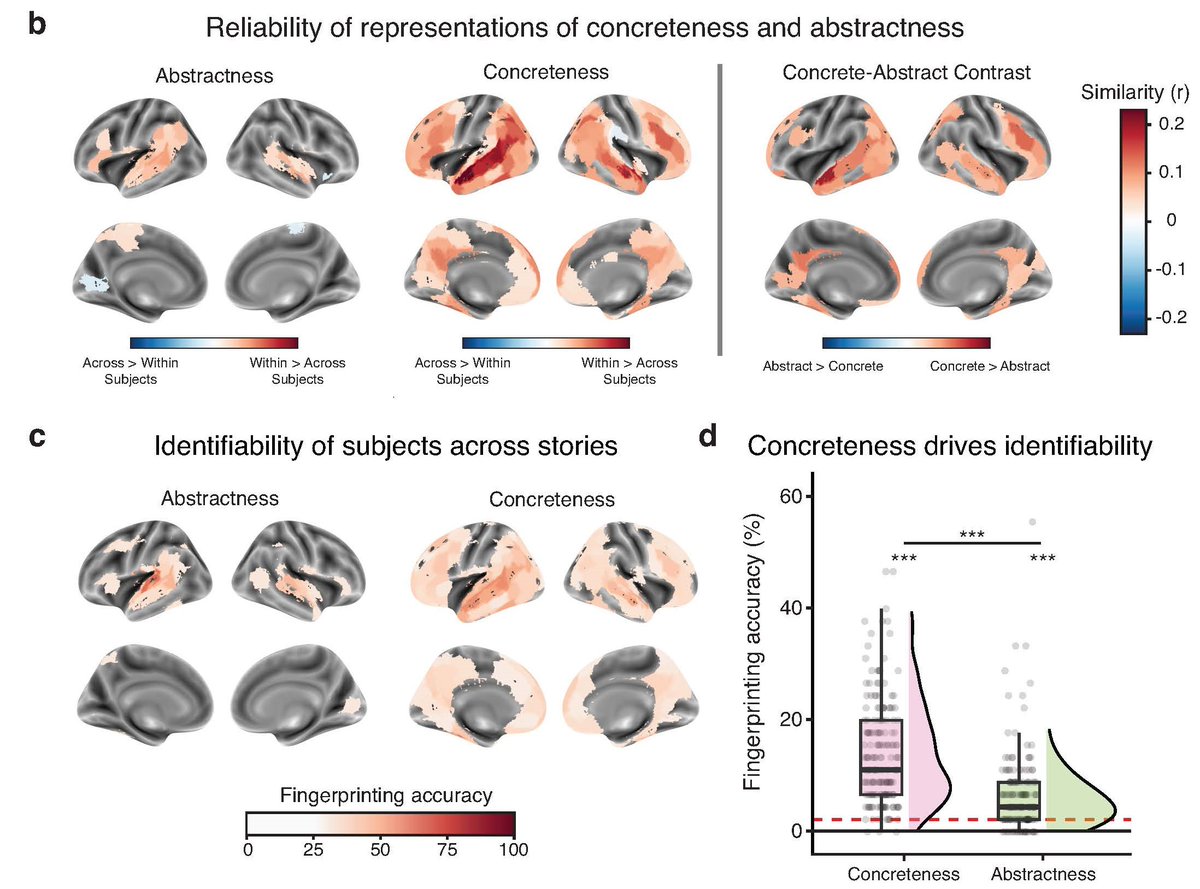
New in #JNeurosci from @tommy_botch and @esfinn: Stable neural patterns that underly how we interpret words grounded in sensory experiences are as unique to us as our fingerprints. @FINNLab_neuro@dartmouth
https://t.co/6P2kp517XQ
🚨‼️Are you interested in joining the Student Postdoc SIG 2025? ‼️🚨
Applications are open NOW —> https://t.co/YXi312THiw
Come and join our team to help promote early career researchers within the OHBM community! 🧠⭐️
How do people track information flow through social networks? New research finds that extended periods of rest, like sleep, help people build abstract cognitive maps for efficient navigation of social networks. @marclluis@orielf@apaxon
https://t.co/9bRr1NMaZ4


![XieYapei's tweet photo. (1/10) How do brain networks and cognition co-evolve as children enter adolescence?
While valuable, cross-sectional studies offer only a single snapshot of brain–cognition relationships, missing the dynamic changes that longitudinal designs can reveal.
We hypothesize that cross-sectional and longitudinal estimates may diverge, echoing classical Simpson’s paradox.
As illustrated below:
To test this, we analyzed longitudinal fMRI and cognitive data at baseline and Year 2 in ~3,000 individuals (ages 8.9–13.5) from the ABCD Study, spanning the transition from childhood to adolescence.
[Read the full paper here: https://t.co/0NShR7O6l8]](https://pbs.twimg.com/media/Gs7Aqlla4AAUdup.jpg)