Global food price inflation is accelerating:
Thailand's white rice prices surged +20% in May, the biggest monthly increase in data going back to 2008.
This benchmark used for Asian rice prices has surged +26% since April, to ~$480 per ton, while Chicago rice futures prices jumped +15% last month.
Rice is a staple food for over half the global population, estimated at 3.5 to 4 billion people.
Prices are expected to rise even further with fertilizer prices experiencing more pressure, as rice is a fertilizer-intensive grain.
Nitrogen fertilizer prices in Thailand, Cambodia, and the Philippines have soared up to +50% since the start of the Iran War in February.
Food price pressures are intensifying globally.
IMAGINE A FUTURE WHERE THE CIA SITS ON THE FACT THAT THEY INVENTED BITCOIN UNTIL 1 BTC IS WORTH $100,000,000.
THEN THEY SELL SATOSHI’S STASH ($110T), WIPE OUT THE NATIONAL DEBT, AND CEMENT THEIR PLACE IN HISTORY AS THE GREATEST DEEP STATE OPERATION EVER.
ART BERMAN'S BASE CASE: OIL SPIKES TO $160 THEN STABILIZES PERMANENTLY AT $110
Petroleum geologist Art Berman built a probability model for the current oil crisis that rejects political theater and quick deals. He treats every forecast as a distribution of outcomes because the situation has no historical precedent. His base case carries the highest weight and it points to a permanent break from the energy world of 2025.
ART BERMAN'S PROBABILITY MODEL
➡️ He maps best case, base case, and worst case scenarios instead of offering single predictions because no one can know the exact path through unprecedented disruption.
➡️ The best case assumes a perfect deal by early June yet still delivers only 50 percent of normal flows by the end of 2026 due to demining, insurance delays, and weeks of tanker queuing.
➡️ Even that optimistic path leaves three quarters of 2026 operating under severely reduced energy supplies with catastrophic economic consequences.
THE BASE CASE THAT DRIVES EVERYTHING
➡️ Iran has no incentive to ever fully reopen the Strait of Hormuz and will likely maintain control indefinitely.
➡️ Restarting shut-in production faces massive lags from damaged reservoirs, lost investment confidence, and infrastructure that may never fully recover.
➡️ The global system faces irreversible change with no realistic path back to 2025 economic conditions.
THE OIL PRICE PROJECTION
➡️ In the realistic base case oil prices will almost certainly spike into the 150 to 160 dollar per barrel range by summer.
➡️ Extreme prices trigger demand destruction that pulls Brent back down to around 100 to 105 dollars.
➡️ Prices then slowly rise and stabilize in the 105 to 115 dollar per barrel range through 2027 and likely beyond.
WHY THIS SHOCK IS 60 TO 99 TIMES FASTER
➡️ The rate of supply loss is 60 to 99 times faster than the greatest previous oil shocks in recorded history.
➡️ No rapid solutions like vaccines or policy reversals exist this time to cushion the blow.
➡️ Inventories have masked the crisis so far but those savings are running out fast and the full impact is coming.
THE BOTTOM LINE
Art Berman's model shows the world just suffered its greatest energy blunder in modern history by jeopardizing the entire global economy with one move.
Oil will spike hard then settle into a permanently higher range because the old supply system is broken beyond repair.
#OilPrices #ArtBerman #EnergyCrisis #OilShock #HormuzBlockade #DemandDestruction #NewOilNormal
HT: YouTube @PalisadesRadio@aeberman12
🚨 THERE IS VERY LITTLE DIFFERENCE BETWEEN THE AI BUBBLE AND THE DOT-COM BUBBLE.
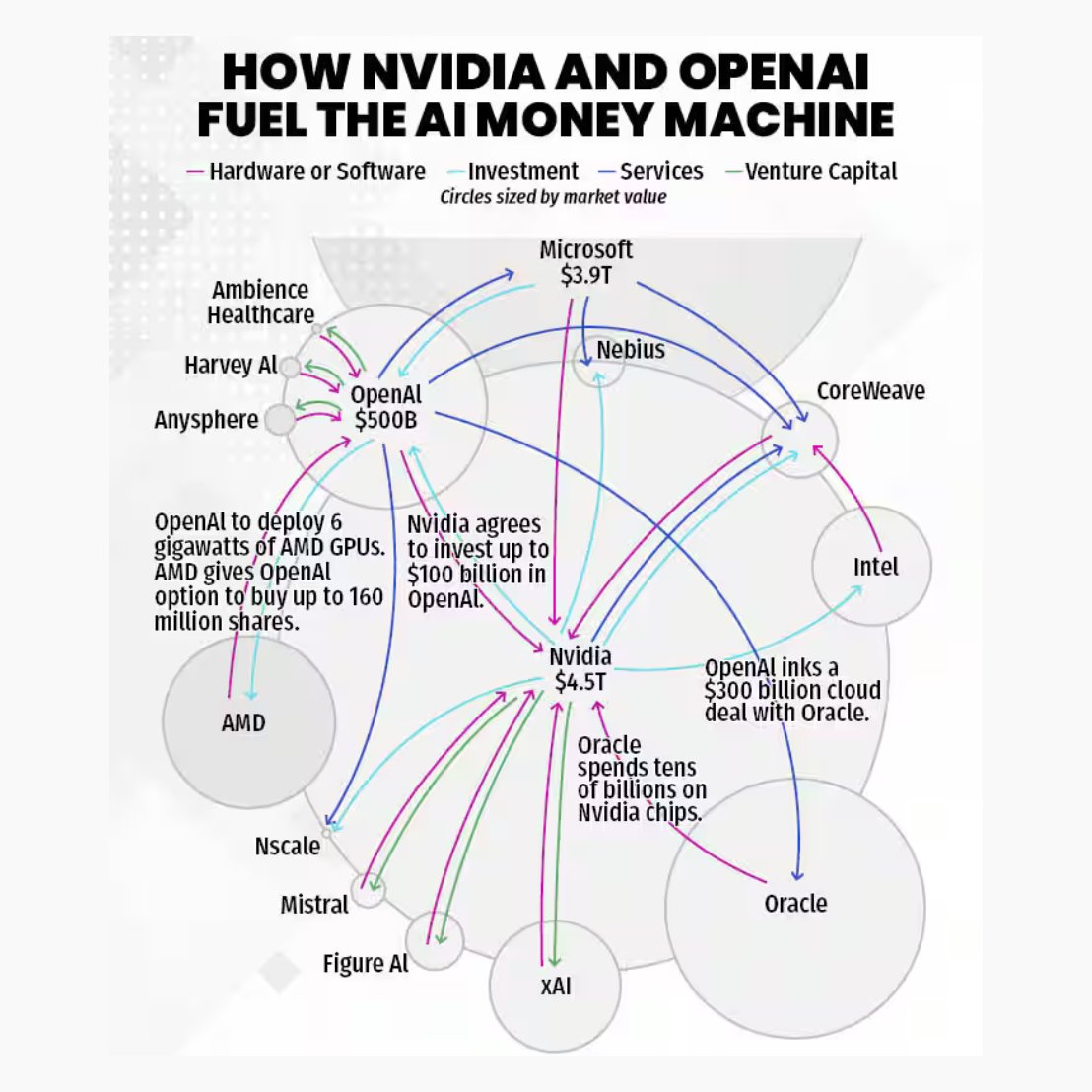
Microsoft invested $13 BILLION into OpenAI, OpenAI then spent that money back on Microsoft Azure servers, and Microsoft booked it as cloud revenue.
Amazon and Google are running similar loops with Anthropic while reporting massive paper gains from rising AI valuations.
OpenAI reportedly burns over $60 BILLION annually on compute while generating only $25 BILLION in revenue.
This is dangerously similar to the 2000 Dot-Com bubble, when telecom companies inflated revenues by selling assets and network capacity to each other before the entire system collapsed.
🚨 THIS IS HOW AI BUBBLE ENDS
The S&P 500 keeps hitting all-time highs.
But almost nobody sees the systemic crisis brewing.
Wall Street has built a giant debt pyramid.
Just like in 2000.
How the scam works:
Nvidia pours money into AI startups.
Those startups borrow billions from Apollo, Athene and Blackstone using Nvidia chips as collateral.
Then they give that money right back to Nvidia to buy more chips.
On paper, it's a masterpiece:
Nvidia reports record sales.
Startups show explosive growth.
Tech stocks skyrocket.
In reality, a big part of the demand is fake. It's a circular loop.
And it only works as long as the chip shortage lasts.
When Nvidia drops new chips, the old ones used as collateral will lose value fast.
Even worse: most companies still aren't making enough money from AI to justify these huge costs.
This is not "if". It's already starting.
Remember, I warned about the BTC $82k bull trap and Saylor's sell-off before it happened.
My next call will be the biggest one this cycle.
Turn on notifications. Most people will follow me too late.
🛢️ Oil up = 📉 Gold & Silver down.
Why this market "algorithm"?
Oil ↑ → Inflation ↑ → Central banks hike rates & yields → Gold suffers short-term (no yield + some countries sell reserves on energy shocks).
But gold rises when CBs cut rates to fight recession — not because inflation magically drops. That's when it shoots UP! 🚀
🚨US food prices are RE-ACCELERATING:
The CPI for food at home jumped +0.7% MoM in April, the largest monthly increase since August 2022, pushing the YoY rate to +2.9%, the highest since August 2023.
Since January 2020, grocery prices have risen +32% in total.
Ground beef spiked +18.9% YoY to a record $6.90 per pound, while uncooked steak surged +17.1% YoY to a record $13.02 per pound, with both up ~70% to 78% since January 2020.
Coffee prices soared +29% YoY to $9.72 per pound, up +133% since January 2020.
American grocery bills have never been this high.
Trump is not just trying to end the Iran crisis.
He is trying to repackage an Iran ceasefire as Abraham Accords 2.0: Saudi Arabia, Qatar, Pakistan, Turkey, Egypt and Jordan
pulled into a wider normalization framework around Israel.
A simple Iran deal is politically ugly. It sounds like concessions, sanctions relief, uranium negotiations, frozen funds, and “Obama 2.0.”
But an Iran deal wrapped inside the Abraham Accords becomes something else:
a historic regional coalition
a win for Israel
a containment structure around Iran
a reopening story for Hormuz
A market-positive de-risking event
This is where the macro side comes in:
If Hormuz de-risks, oil reprices first.
Then inflation expectations soften, Fed cuts become easier to price, Treasury yields react, and the move spills into equities, gold, Bitcoin and the dollar.
Now put that next to the U.S. debt problem:
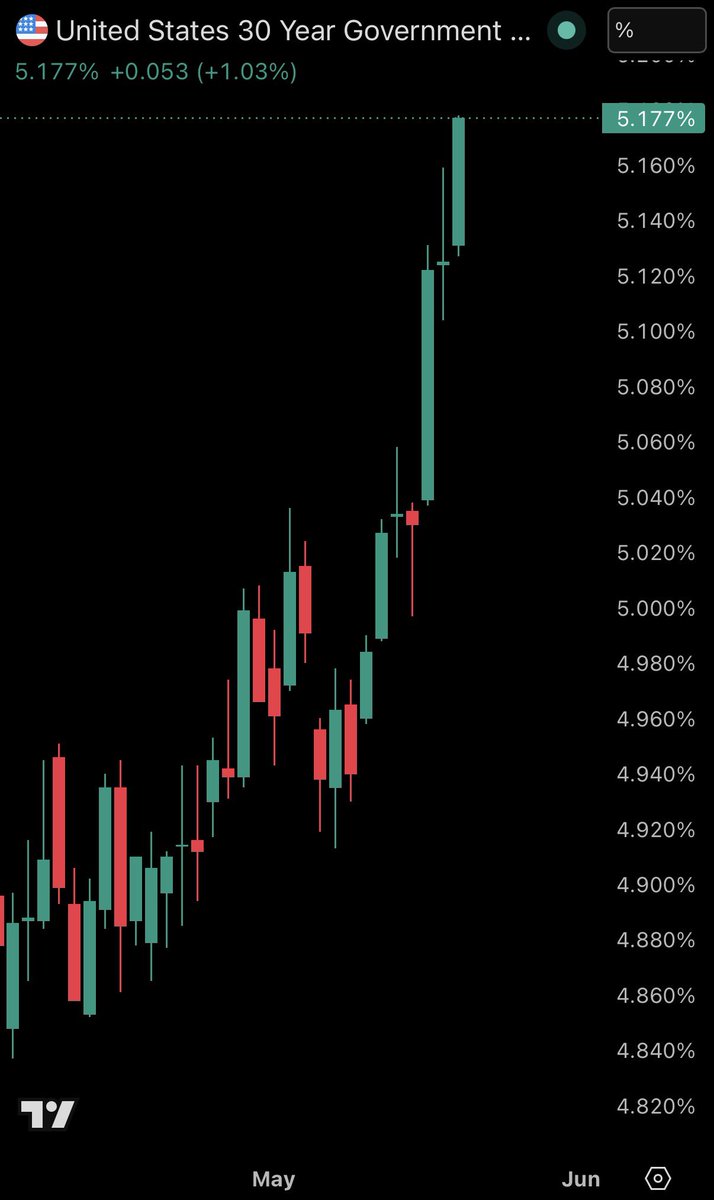
The U.S. is entering a massive refinancing cycle: Deloitte estimated another $9T of marketable U.S. debt maturing in 2026, after $9.2T by the end of 2025. Meanwhile, CBO projects net interest above $1T in 2026.
Treasury needs the market to keep absorbing issuance.
It needs:
- real demand for new debt
- yields not to spiral
- the Fed to have room to cut
- inflation not to be pushed higher by another oil shock
The Fed is already using Treasury bill purchases for reserve management — not classic QE, but the optics matter when Treasury is leaning heavily on the short end.
So a successful Iran/Hormuz de-escalation would do more than reduce geopolitical risk.
It could lower the oil risk premium, ease inflation pressure, make Fed cuts easier to price, support risk assets, and create a cleaner backdrop for Treasury refinancing.
Zoom out, and you can see an attempt to turn a crisis into a regional architecture.
Iran is the pressure point: sanctions, nuclear talks, Hormuz risk, oil pressure and regional escalation all start there.
Saudi Arabia is the deal that changes the scale. If Riyadh formally recognizes Israel and opens diplomatic, economic and security ties, the Abraham Accords stop being a limited project and start looking like a real regional architecture.
Israel is the anchor of that order, because the whole framework is built around its security, recognition and integration into the region.
And the U.S. is the broker trying to tie the whole package together: Iran de-escalation, Gulf security, Israeli recognition, oil stability and market confidence.
Reuters has already reported that Trump linked any Iran deal to a broader Abraham Accords push, asking Saudi Arabia, Qatar, Pakistan, Turkey, Egypt and Jordan to join or support the framework. Pakistan rejected the linkage, which tells you how fragile the package is.
Saudi Arabia cannot simply ignore the Palestinian question.
Gaza makes any public move toward Israel politically radioactive across much of the Muslim world.
And Iran can always take the tactical upside — sanctions relief, less pressure, a calmer Hormuz headline — without accepting the regional order Trump is trying to sell.
So the trade is powerful, but unstable:
If it works, markets price de-risking.
If it fails, markets reprice oil, inflation, Fed cuts and Treasury stress all at once.
This is absolutely INSANE
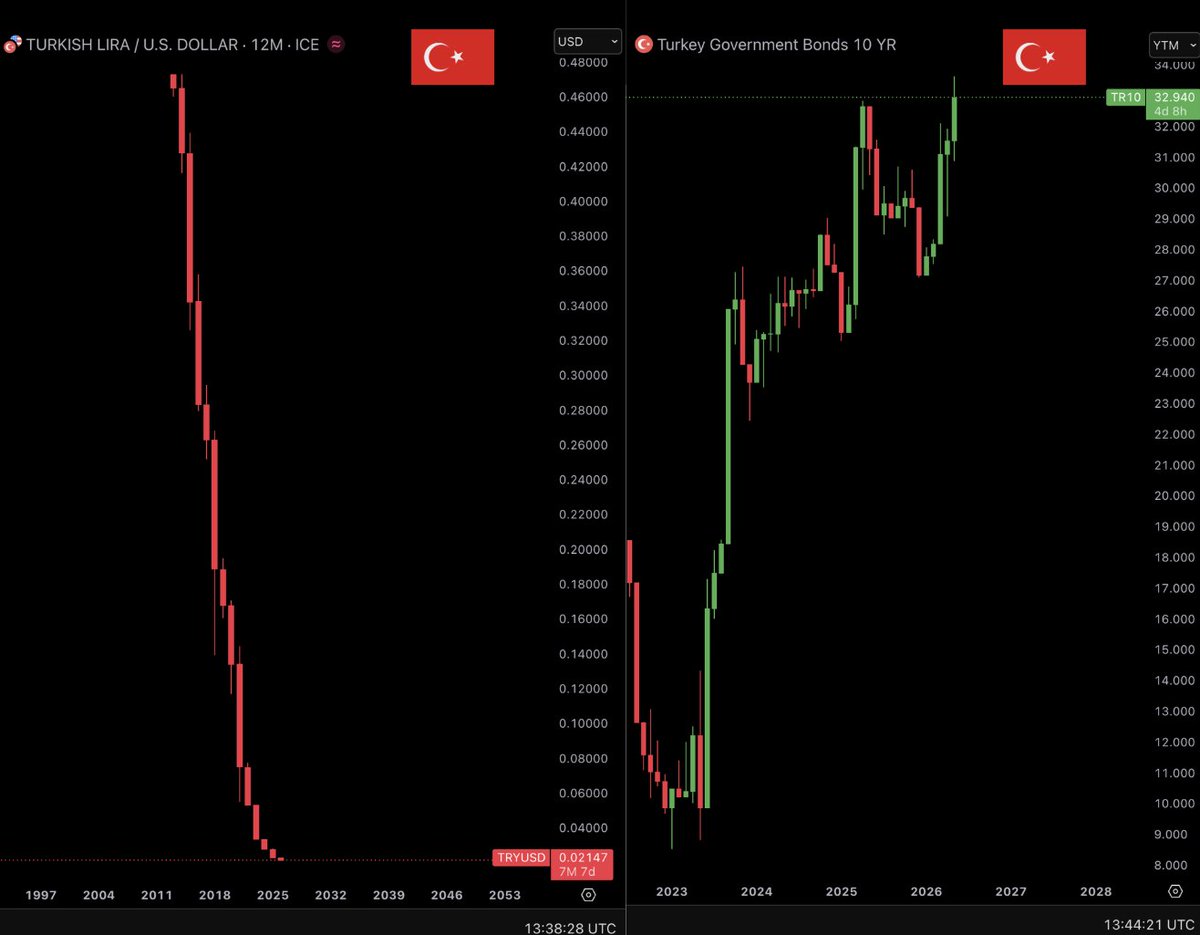
The Turkish lira has collapsed -99.99% against the USD, while its Government 10-year bond yield surged to 33.63%, the highest ever in HISTORY
This is an economy crisis unfolding in real time
US oil inventories are collapsing:
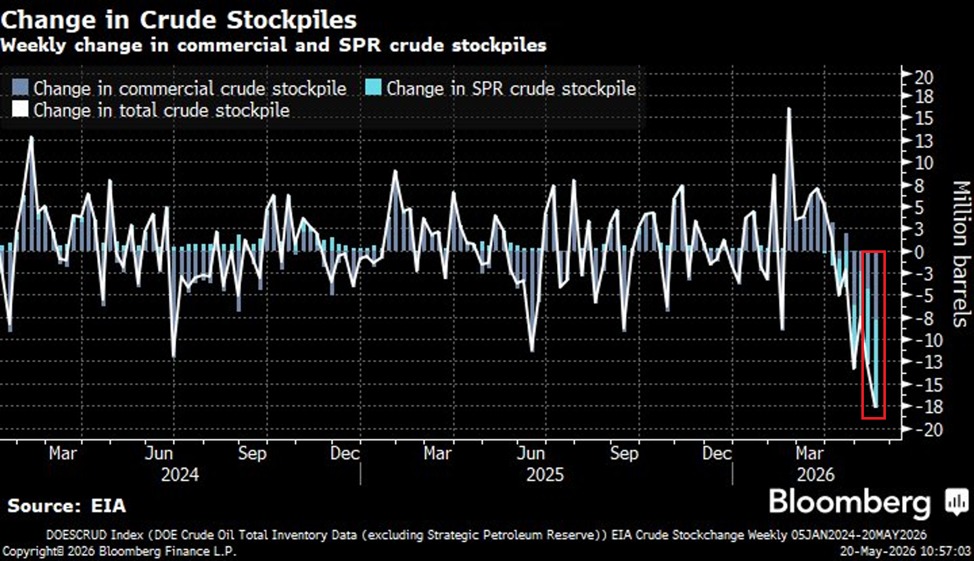
Total US crude inventories, including the Strategic Petroleum Reserve (SPR), fell by -17.8 million barrels last week, the largest weekly drawdown in history.
Commercial crude inventories fell -7.9 million barrels, the biggest decline since mid-February.
Furthermore, the SPR alone shed -9.9 million barrels, the largest weekly drain on record.
This marks the 8th consecutive weekly decline, the longest streak in 3 years.
Since the Iran War began, 42 million barrels, or 10% of the entire US SPR, have been drained, mostly via exports to Asia.
The SPR now stands at 374 million barrels, the lowest since July 2024, leaving the US with a significantly reduced buffer against future supply shocks.
The US emergency oil cushion is disappearing faster than at any point in history.
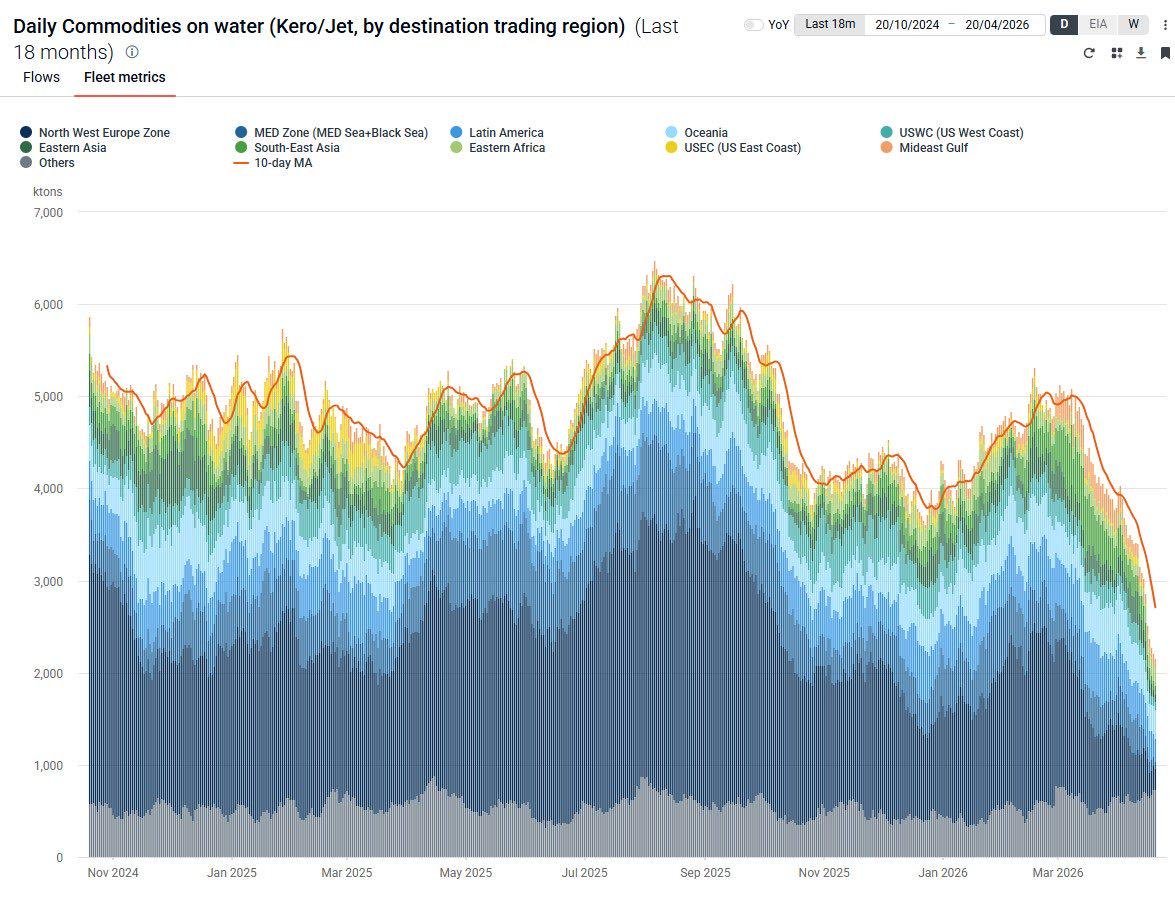
Global energy supply is now down an astounding 60% in the last 60 days!
We've never seen anything like this before.
I don't think people fully grasp the tsunami on its way. We're talking lockdowns, travel restrictions and grounded flights.
Not only that, the fertilizer situation is even worse! Expect food shortages in 3-4 months, Arab Spring 2.0 food riots globally, and introduction of a CBDC for food rationing.
A preview for Pro users: a new personal finance experience in ChatGPT.
Pro users in the U.S. can securely connect financial accounts, see where their money is going, and ask questions based on the information they choose to connect.
Your full financial picture, now in ChatGPT.
🚨The cheapest money in the world just got more expensive.
The entire global financial system borrowed it.
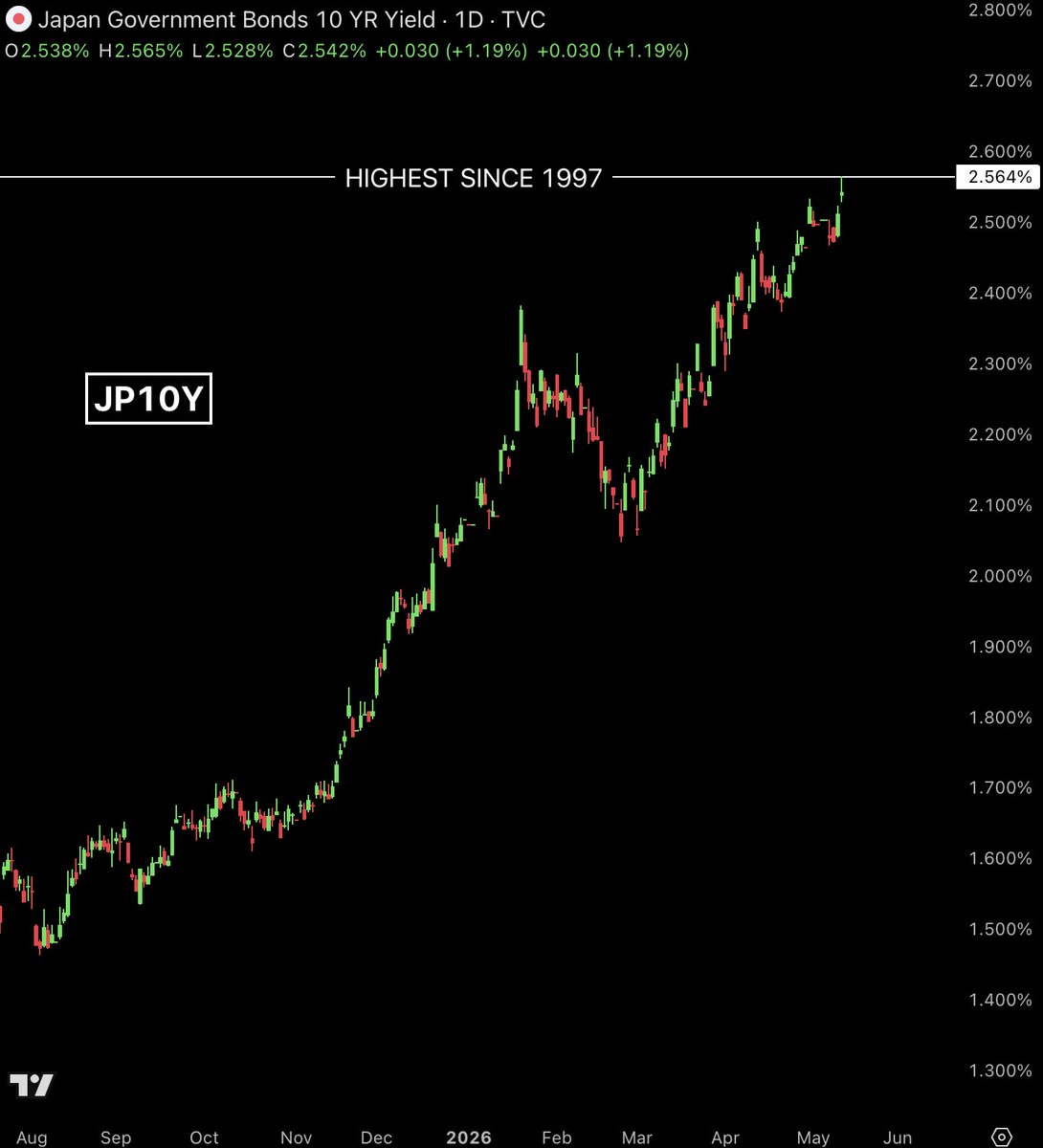
Japan's 10-year bond yield just hit 2.564%, for the first time this century.
Japan is one of the largest holders of U.S. Treasury bonds in the world. As Japanese yields rise and a BOJ rate hike gets closer, Japanese investors have less reason to keep buying U.S. debt.
If they start selling, U.S. borrowing costs go up for everyone.
Japan's government debt-to-GDP ratio exceeds 200%, the highest of any developed economy on earth.
Rising yields mean rising borrowing costs on that entire debt pile, pushing Japan closer to a fiscal crisis.
The BOJ has already raised its inflation outlook to 2.8% for 2026. But a hike is now being priced in as early as the next meeting.
If Japan's economy comes under serious pressure, it will not stay contained. The U.S. financial system is directly exposed.
People talk, listen, watch, think, and collaborate at the same time, in real time. We've designed an AI that works with people the same way.
We share our approach, early results, and a quick look at our model in action.
https://t.co/AFJZ5kH7Ku
Robert Friedland:
"In order to maintain our economic growth at 3%, we have to mine as much copper in the next 18 years as we have mined in the past 10,000 years."
If we want to do electrification, data centers, solar panels and all of the other new stuff, we need even more copper.
"you people have no idea what we are facing"
If you’re a wealthy European, soon you will need:
A plan b passport:
- El Salvador
- Sao Tome
- Vanuatu
A plan b residency:
- Dubai
- Paraguay
- Mauritius
- and a lot of Bitcoin in self-custody
Go into debt if you have to.