@normonics You might look at @MelMitchell1's SFI institute MOOC on Complexity for lectures, exercises and materials. And then in addition her book Intro to Complexity.
@ComplexExplorer
@naval Just restating what was posted below re: Canada.
Both US/Canada are better than Europe, if you ever want your kids to be accepted as 'from here'. And that means A LOT!
https://t.co/4CBrRsCluX
@stefanobernardi Probably Canada is better, but both are better than Europe for sure on the whole. Especially if you ever want your kids to be considered part of the place...
Here's my take on the difference between Europe and Canada (anf US) as a Canadian in Germany: https://t.co/F6cCQgIEBF
What future for international monetary system & financial globalization post #COVID19?
@ArminHaas3@JoeRini6 & I developed 4 scenarios. Out now in JOIE
Factors: Will @federalreserve swap lines hold in crisis? Will G-20 states cooperate or compete?
https://t.co/u21FX5jSUZ
1/n
Great to see our work on the International Monetary System being discussed by @adam_tooze!
Check out below for the full tweet thread by @steffenmurau with links to our JOIE paper
@arminhaas3
@IASS_Potsdam
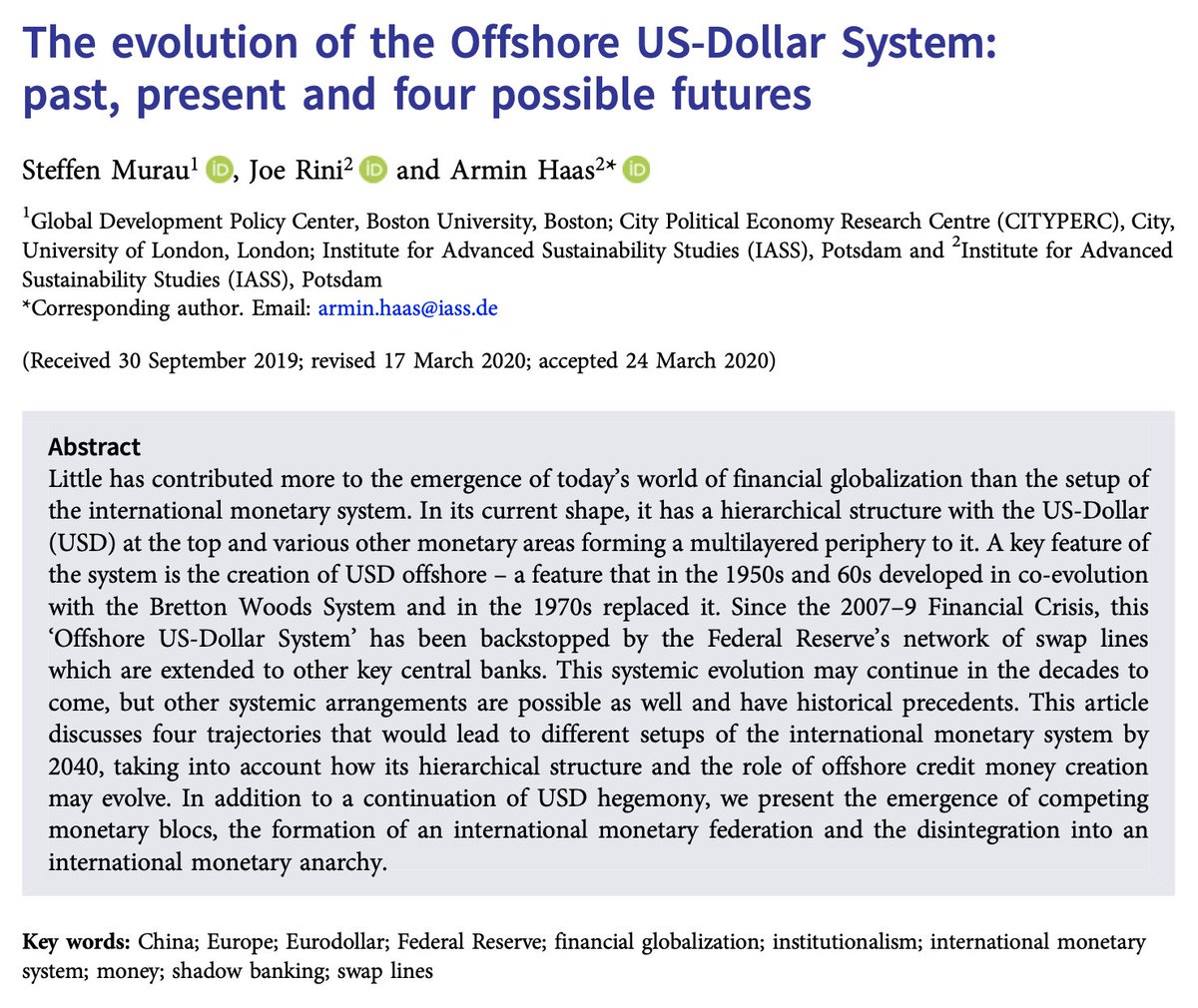
The evolution of the Offshore US-Dollar System:
past, present and four possible futures
By
@steffenmurau@ArminHaas3@JoeRini6
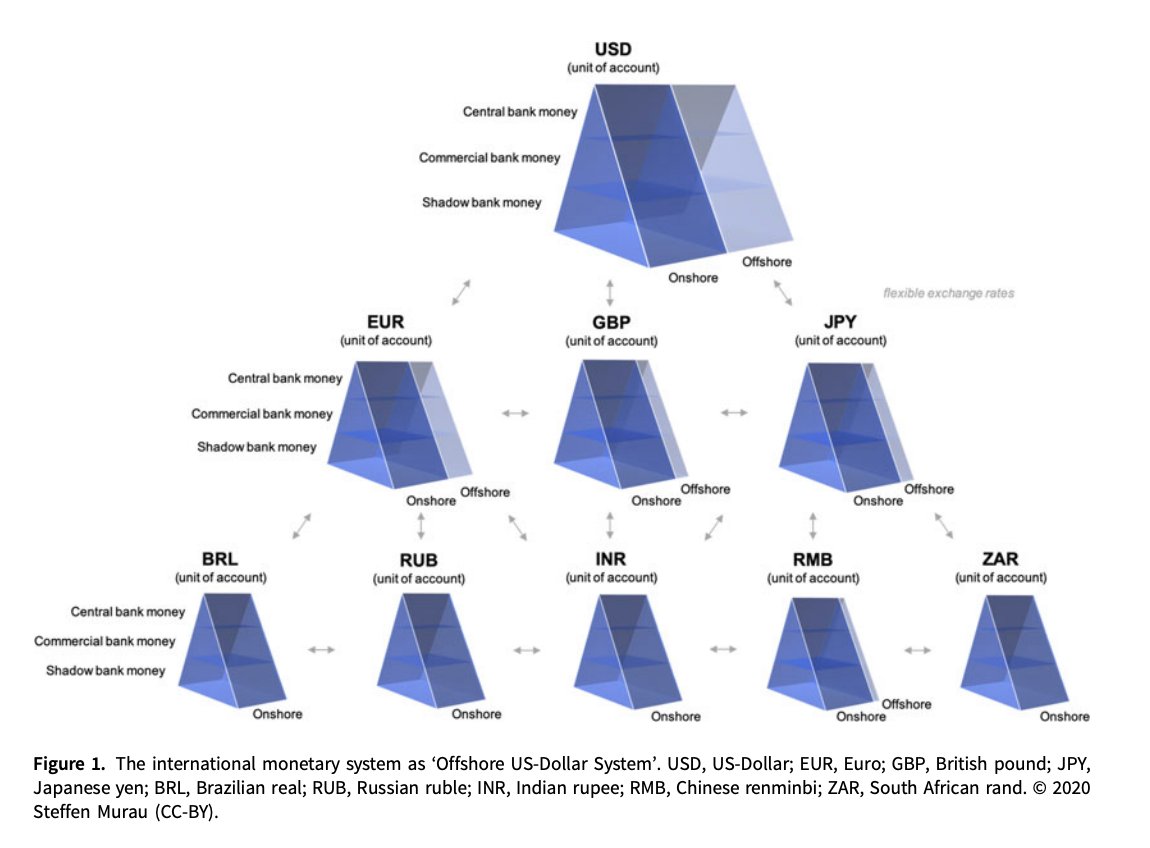
Offers some GREAT graphics on the dollar system and its future.
https://t.co/avYHDZiGrI
@nntaleb@GrantSSC 2/2 lifts in competitions.
Simple heuristic: for 'max' lifts, maximize power (85%-90% true max) at a smooth speed. You should feel like you could max your vert jump right after.
Why sprinters & NFL players never touch 1 RM but can still move huge weight.
@JoeRini6 unblock ;)
Meanwhile...
1) The EU has de facto broken up
2) India, Taiwan, Estonia, even Guatemala have banned visitors, including Americans
3) The left in general has dropped opposition to strict border controls
4) The right in general has dropped opposition to enormous welfare spending
Great approach to use CAS thinking to frame Cryptoeconomics by @sherminvo at @crypto3conomics.
Looking forward to the book!
The approach chimes in with my recent critique of econ and complexity economics: https://t.co/2sZH9EXtHq
& our work with @SimPolProject@IASS_DOLFINS
@normonics@clairlemon@normonics@nntaleb Please check out the EU Horizon 2020 project @RECIPESproject, which is looking at the precautionary principle and innovation in the EU, incorporating a complexity-uncertainty view. We have case studies on GMOs, crispr, glyphosate, neonics, nanotech, AI.
Complexity science is in large part about understanding what can and cannot be gleaned from looking at things in isolation, and recognizing that properties and behaviors of systems often depend on their interactions (i.e. their non-isolated behavior)
Aligning #Precaution and #Innovation: The RECIPES project plans an analysis of #legal and #policy initiatives on the #precautionaryprinciple and an examination of the application of the principle based on eight case studies. Further information: https://t.co/AW0rDYNO4Y