Cardiovascular imaging is no longer optional in modern trials 🫀
It is a scalable quantitative tool for eligibility assessment, mechanistic insight, early efficacy signals & safety monitoring within clinical trials architecture!
This is how the new official EACVI Scientific Statement in the #EHJCVI provides an actionable reference framework built on three interdependent pillars:
I. Clinical validation
Baseline prognostic value, longitudinal change linked to outcomes, minimal clinically important change, & causal-pathway specificity.
II. Analytical validation
Accuracy, reproducibility, measurability and core-lab standardisation.
III. Operational feasibility
Site capability, patient burden and workflow complexity relative to local resources.
🫀 In my opinion, through the key takeaways from the official EACVI Statement: Rigorous standardisation & fit-for-purpose validation of these endpoints can optimise sample size, timelines & strengthen the generated evidence, as actionably summarised in the figures on DOI: 10.1093/ehjci/jeag171
Open to discussion with trialists, core-lab leads and industry colleagues: which of the three pillars is currently most under-addressed in your programmes?
For SAVR, the current scheme works pretty well.
PR cannot be captured by Doppler but increased likelihood in (a) TAVI (and Doppler often higher than invasive in TAVi for other reasons than PR) (b) at the center of bileaflet AVR (mostly not clin relevant) and (c) when small aorta < 3 cm. PR is less an issue in true severe stenosis, much more in true moderate AS.
MitraClip vs. PASCAL: a rare “paired” comparison in the same patient with a relatively small mitral valve area.
One procedure was abandoned, while the other was successfully implanted.
Can you guess which one? 👀
@PCRonline@TCTMD@TCTConference@NytvL#mitraclip#pascal#TEER
Any imaging tips to identify the cause of increased gradients post SAVR or TAVR Between ? Pressure rec. or PPM
- is AT diff in PR vs PPM , <80 or >100
- can this occur 2-4 yrs later
- if the prox asc is >3.2 cm does this r/o PR , @echo_batman@CASivaram1@iamritu@rajdoc2005
@BiancaJudyC@echo_batman@iamritu@rajdoc2005 For the diagnosis of prosthesis-patient mismatch the valve needs to be free of significant structural abnormalities (calcification, fibrosis, thrombus etc). I wonder how rigorously we apply that criterion to clinical diagnosis of PPM. For example HALT in TAVI.
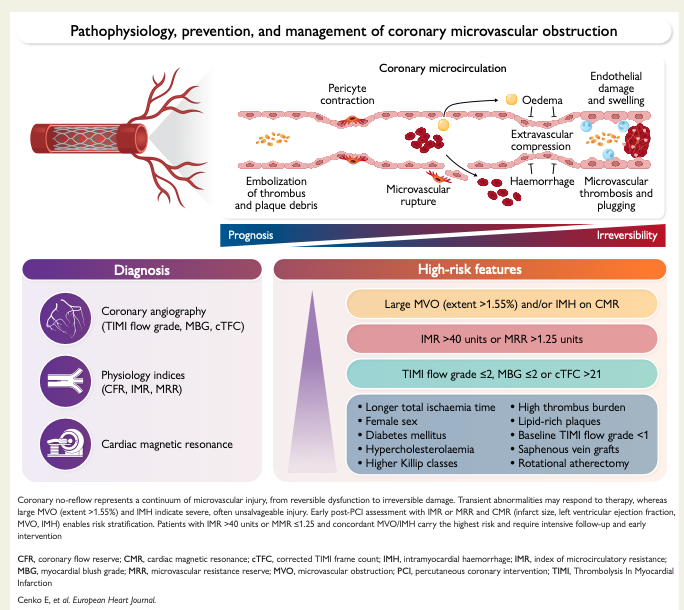
Consenso de la ESC (European Society of Cardiology) 2026, sobre Obstrucción Microvascular Coronaria (o fenómeno de no-reflujo). Lo más sintetizado que puedo:
🟢Fenómeno No-reflow coronario: perfusión tisular miocárdica inadecuada a pesar de la recanalización exitosa de la arteria coronaria epicárdica sin obstrucción mecánica. Frecuente y lo pensamos poco (hasta 60% post infarto con elevación del ST tienen perfusión subóptima). Es un problema microvascular que clínicamente puede evolucionar a falla cardíaca.
🟢 El predictor más importante para no-reflow: tiempo en isquemia (puerta-balón). Ser mujer también es un factor.
🟢 Es un marcador pronóstico importante. Un IMR (index of microvascular resistance) >40 casi triplica el hazard de muerte cardiaca. La hemorragia intramiocárdica triplica muerte.
🟢 Casi ninguna terapia farmacológica cambia el desenlace. Adenosina, nitroprusiato y calcioantagonistas mejoran marcadores angiográficos, no mortalidad. Aspiración de trombo rutinaria no se recomienda (riesgo de EVC).
🟢 Así que el enfoque es: diagnóstico temprano, reducir tiempo en isquemia, Estatina de alta dosis temprana, P2Y₁₂ potente, control de presión, glucemia y factores de riesgo.
Es un tema muy interesante. Pueden ver el artículo completo en el canal (https://t.co/3O93s10lns).
New open access meta-analysis: Sex differences in Primary MR https://t.co/6WEeTFVTs2 ⬆️mortality attributable to advanced disease (delayed referral), nonindexed cutoffs (including EROA?) may systematically disadvantage women. @JACCJournals@ACCinTouch@escardio@DrMarthaGulati@PPibarot
The past two weeks have been the most exciting of my career in medicine.
@BrettSperryMD and I had no idea what to expect launching a journal from scratch.
The response has been overwhelmingly positive. Lots of great feedback from colleagues and friends. Numerous paper submissions - more than we expected!
There is a lot of work to be done - but all of it meaningful and rewarding.
Join the movement! @opensourcecards
https://t.co/SdURFXzMAI
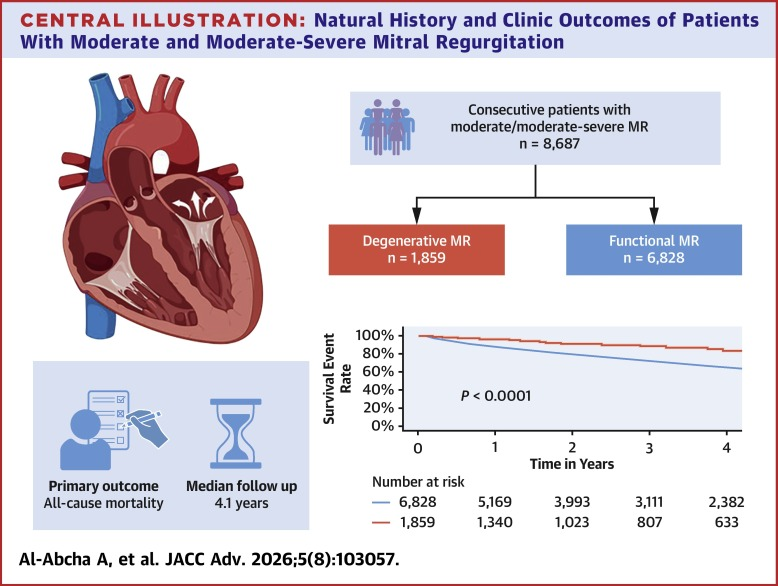
A thought provoking study by @AbdullahAlabcha from the @MayoClinicCV dataset on patients with moderate MR.
Natural History and Outcomes of Patients With Moderate and Moderate-Severe Mitral Regurgitation - https://t.co/p3Zzcjz9T3
For my first post, I’m sharing a letter @NVIDIA signed on why open models matter.
AI will transform every industry, power every company, and be built by every country.
Open models strengthen safety and cybersecurity, accelerate innovation and diffusion, and enable sovereignty.
The world needs both frontier closed models and frontier open models.
https://t.co/AUKzoQ5Ikb
AI will be helpful one day soon in predicting responders, but what would really be a game changer would be a temporary external CRT! Wonder if anyone can invent that!
For years, Circulation: Population Health and Outcomes has published research that helps shape cardiovascular health across communities and health systems. We're excited to announce Dhruv S. Kazi, MD, MSc, MS, (@kardiologykazi) as the next Editor-In-Chief.
#JADEL
Just Another Day in the Echo Lab
My latest musing from CASE @CASEfromASE
https://t.co/SDAV2xn5f6
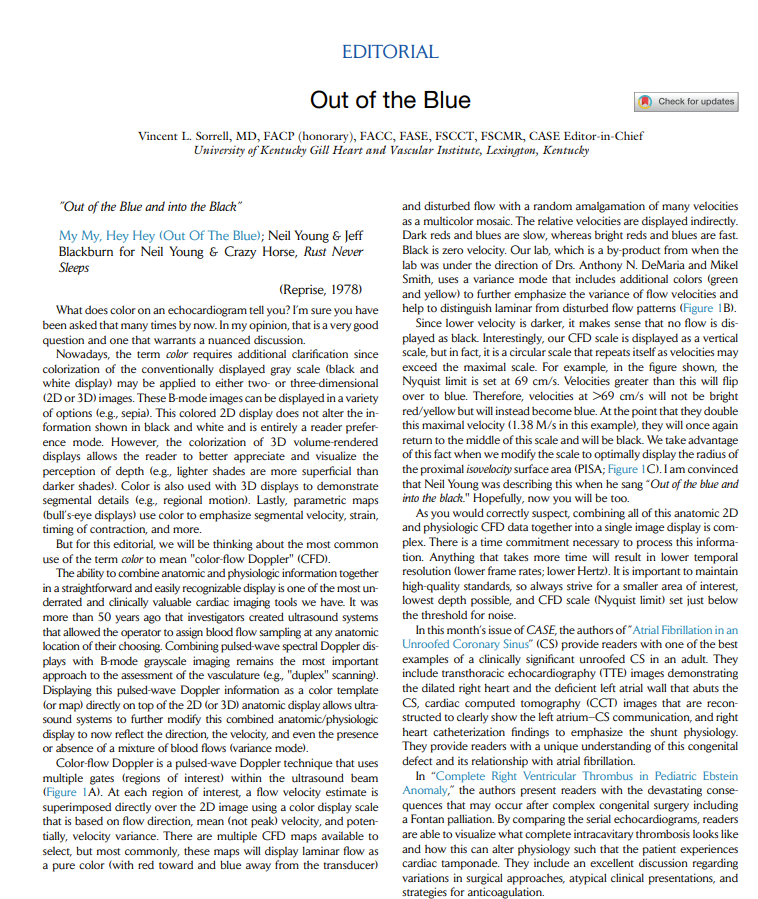
In this editorial, I explore the "color" in color flow Doppler, the "limit" in the Nyquist limit, and why Neil Young sings:
"Out of the Blue and into the Black"
@ASE360
New Deputy Executive Editor, same sharp thinking:
@HeartDocSadiya just laid out her vision for @CircAHA.
Here's why it matters: Publication, she notes, isn't the finish line — it's the start of the life cycle that moves a discovery into practice, into guidelines, into better care.
https://t.co/xW6fBXUVbY
@American_Heart | #CardiovascularResearch #MedEd