Grandfather of 9=Joy+Laughter not irony not cynicism | Hot yoga=health insurance | Mantra=Ora et labora | Healing urban creeks | Gratitude=Domine non sum dignus
Christopher Olah, a Canadian billionaire businessman and researcher who co-founded AI giant Anthropic, sitting in the Synodal Hall and speaking next to Pope Leo said, closing his speech:
"I'd like to close with a request.
We need more of the world - religious communities, civil society, scholars, governments - to do what His Holiness has done here: to take this seriously, to look closely, and to push events in a better direction.
We need informed critics who will tell the labs when
we are failing. We need moral voices that the incentives cannot bend.
Today is just the beginning - the start of a long collaboration between those of us who are building this and those who can see what we, from inside, cannot.
Today is a powerful illustration of the form this global project of good will might take.
Let it also be a decisive first step toward a hopeful future for magnificent humanity."
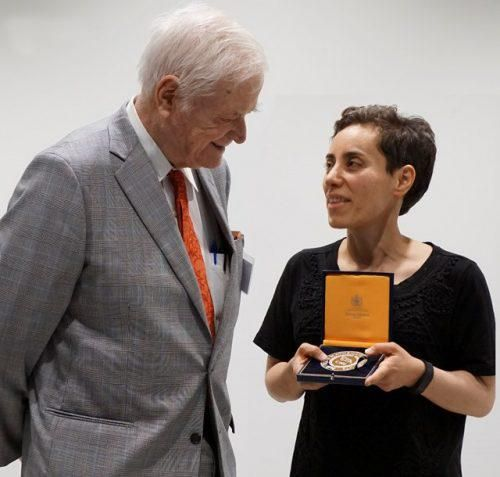
Maryam Mirzakhani was the first woman in history to win the Fields Medal — the highest honor in mathematics. For decades, it seemed unreachable for women. For generations, it remained a closed door. And then, she opened it.
Maryam did not just solve equations. She changed what people believed was possible.
Her work in complex geometry and dynamical systems may sound distant to many of us. But at its heart, it was about understanding patterns, movement, and the hidden structure of the universe. She explored worlds that could not be seen, only imagined — curved spaces, abstract surfaces, invisible connections. And somehow, she made sense of them.
That takes more than intelligence. That takes courage.
Because every time she stepped forward, she stepped into a space where very few women had stood before. She proved that brilliance has no gender. That curiosity has no limits. That perseverance can rewrite history.
And yet, her story is not just about awards or recognition. It is about resilience.
Even as she battled cancer, even as time grew shorter, her impact grew larger. She became a symbol — not just for mathematicians, but for dreamers everywhere.
Her life reminds us of something powerful:
You do not need to see the whole path to begin.
You do not need permission to pursue greatness.
And you do not need to fit into expectations to change the world.
Some of you may feel that your field is too hard.
Some of you may feel that you do not belong.
Some of you may feel that the odds are stacked against you.
So were hers.
And yet, she moved forward — step by step, idea by idea, proof by proof — until the world had no choice but to recognize her.
Let her story be your reminder:
Greatness often begins in quiet persistence.
Breakthroughs come from those who dare to keep going.
And barriers exist only until someone decides to cross them.
Maryam Mirzakhani did not just reach the pinnacle of mathematics. She lifted the ceiling for everyone who comes after her. Now the question is not whether the path exists.
The question is — will you walk it?
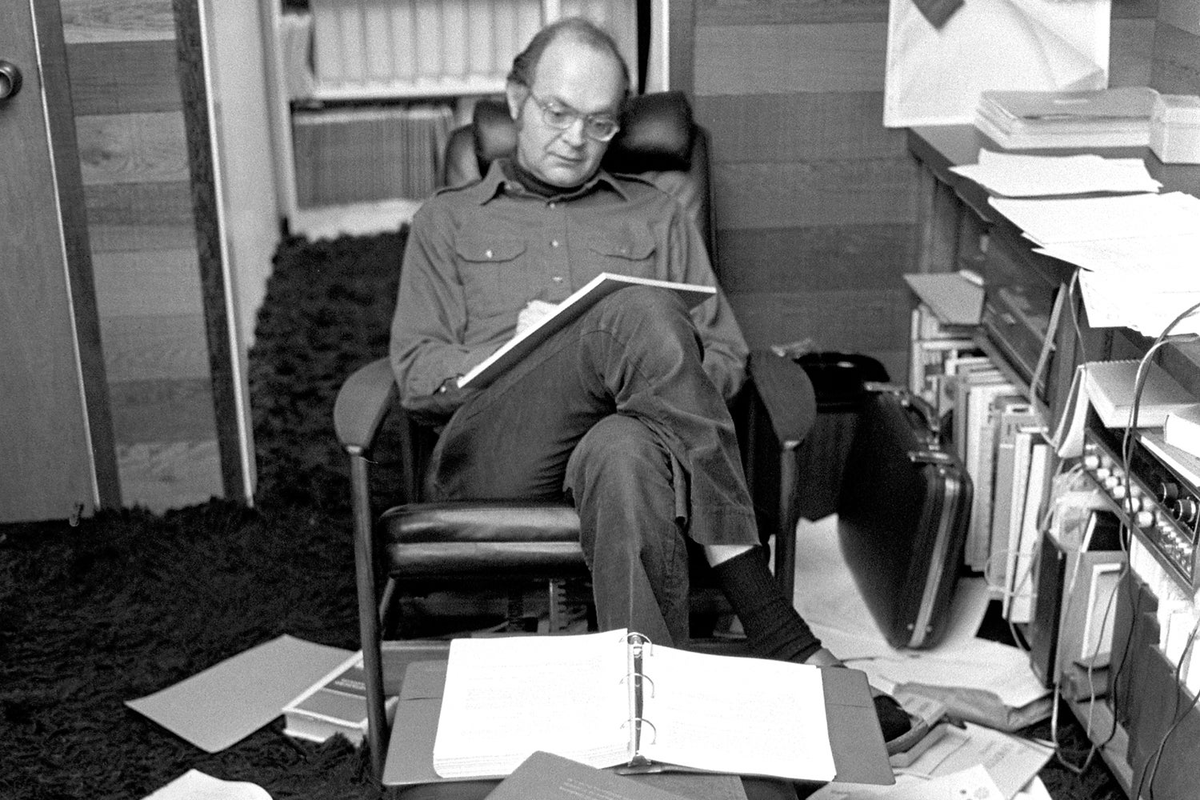
Knuth’s work came out just as I started computer science in 1969. His journey has been an amazing one and so unlike so much else that comes out of academia. What a story👀
A computer scientist won the Turing Award at 36 and then walked away from almost every other project for the next 50 years to write one book that he has still not finished at age 88, and it may be the most important book in his field.
His name is Donald Knuth. He won the Turing Award in 1974, which is the closest thing computer science has to a Nobel Prize.
He was 36 years old. He had already written volumes one, two, and three of a book series called The Art of Computer Programming. He was the youngest person ever to receive the award at that point in its history.
Almost anyone else would have ridden that moment for the rest of their career. Founded a company. Sat on boards. Gone on speaking tours. Knuth did the opposite. He went back to his desk and kept writing.
He started the book in 1962. He was 24 years old. His publisher had asked him to write a short paperback on compilers. He sat down to outline it and discovered that to explain compilers properly he would have to explain the deeper algorithms underneath them first.
The short paperback became a draft outline of 12 chapters. The 12 chapters became a planned 7-volume series. The 7-volume series became the project he is still working on 63 years later.
Volume 1 came out in 1968. Volume 2 in 1969. Volume 3 in 1973. He was producing books faster than most academics produce papers. Then everything stopped.
In 1977 he received the printed proofs of the second edition of Volume 2. He looked at the pages and was so disgusted by how the publisher had typeset his mathematical notation that he could not bring himself to release the book.
The equations looked ugly. The fonts looked wrong. The spacing was off. He decided he could not in good conscience publish another volume of TAOCP until the typesetting problem was solved.
So he paused the book.
He stopped writing TAOCP and spent the next 8 years inventing TeX from scratch.
TeX is the typesetting system that every academic paper, every math textbook, every physics journal on earth now uses. Every PhD thesis in the sciences is set in TeX. Every paper on arxiv. Every equation in every paper Anthropic, OpenAI, and DeepMind have ever published. The system that the entire scientific publishing world runs on exists because one man refused to compromise on how the second edition of Volume 2 looked.
He gave the entire TeX system away for free. He never tried to commercialize it. He went back to writing TAOCP.
In 1992 he retired from Stanford at the age of 54. Most professors retire to slow down. Knuth retired to speed up. He explicitly said he was leaving teaching because he needed every remaining hour of his life to keep writing the book. He stopped using email on January 1, 1990.
He answers no calls. He takes paper mail only. He is on a personal mission to finish a multi-volume series that nobody is forcing him to write, on a deadline that only exists in his own head.
Volume 4A came out in 2011. Volume 4B in 2022. He is currently working on Volume 4C. Volumes 4D, 4E, 4F, 5, 6, and 7 are still ahead of him. He is 88 years old. He will almost certainly die before he finishes.
The thing that should haunt anyone reading this is the math of his choice.
Every modern incentive structure tells you to optimize for speed. Ship the imperfect version. Get it out the door. Iterate later. Move on to the next thing.
Knuth has spent 63 years doing the exact opposite. He pays a $2.56 reward in hexadecimal dollars to anyone who finds an error in his published books. Real checks, until check fraud made him switch to certificates of deposit. He treats every single error in every single volume as a personal failure. He revises. He rewrites. He goes back to fix issues that nobody else could have spotted.
He could have written 30 books in 63 years. He chose to write one.
The reason is the one almost nobody understands the first time they hear it. There is a category of work that loses all its value when it is done quickly.
A reference book that engineers will rely on for the next 200 years is not the same kind of object as a blog post that has to ship today. The slow project and the fast project look like the same activity from the outside. They are completely different games.
Bill Gates once said in an interview that if you can read the whole of TAOCP, you should send him your resume. He meant it. He was not joking. The man who founded Microsoft was telling the world that the rarest skill on earth is being able to finish a book that one man has spent his entire adult life writing for an audience that mostly does not have the patience to read it.
The book may never be finished.
The man writing it knows this and keeps writing anyway.
The work outlives the worker. That is the entire point.
"Bien sûr tu pris quelques amants
Il fallait bien passer le temps
Il faut bien que le corps exulte
Finalement, finalement
Il nous fallut bien du talent
Pour être vieux sans être adultes."
Jacques Brel
Églises vandalisées, cimetières profanés, croix détruites : cette réalité ne peut plus être minimisée.
Protéger notre patrimoine religieux, c’est protéger une part de l’âme de la France.
Au @Senat, je poursuis ce combat avec détermination
https://t.co/Y6Ac4eTknU
Full credit to the @nationalpost for having courageously told the truth about the Kamloops “mass grave” story at the height of the hysteria.
Journalists and outlets who continue to lie or shade the truth about this only bring disrepute on themselves and their profession.
Removing internal trade barriers that create unnecessary costs and limit opportunities for Canadian businesses and consumers is critical to building one Canadian economy.
When it comes to direct-to-consumer alcohol sales, the federal government has done its part by removing all federal barriers to interprovincial alcohol trade.
Today, I expressed my concern regarding delays by certain provinces and territories in implementing a direct-to-consumer alcohol sales framework by May 2026. Now is the time for action.
Read my statement: https://t.co/Exw93oQFeb
Here are my three takeaways from tonight’s 6-1 Montreal Canadiens loss to the Carolina Hurricanes in Game 5 of the Eastern Conference Final brought to you by Snap Bar Sportif in Rigaud.
1- Montreal goes out with a whimper
On one hand, it’s unfortunate that the lasting image of the Montreal Canadiens’ season will be an elimination game where they went down without much of a fight. On the other hand, maybe that’s not the worst thing.
For the players, this is a game they should sit with all summer. They’ll know that while they were only seven wins away from the Stanley Cup, they weren’t particularly competitive against the Carolina Hurricanes in the Eastern Conference Final. Sometimes that’s the reminder young players need. There’s always another level to reach.
Game 5 was a carbon copy of Game 4. Carolina pounced early and never looked back. Mike Matheson getting pickpocketed seconds into the game leading to a quality scoring chance felt like foreshadowing for what was about to happen. The goals came early, the Hurricanes took control and before anyone could settle in, the game was out of reach.
The playoffs are a grind and the Canadiens looked like a team that had nothing left in the tank. That's not an excuse, it's reality. Their path to the Eastern Conference Final went through two long, emotional series against excellent teams. Meanwhile, Carolina earned the right to face weaker opponents by finishing first in the Eastern Conference.
The Hurricanes are also simply the better and more experienced team.
Sticking with the status quo made sense. There wasn't a lineup change that was suddenly going to bridge the gap. Brendan Gallagher and Arber Xhekaj are fan favourites, but a fourth-line forward or sixth defenseman isn't the difference when you're getting dominated territorially the way Montreal was.
People want answers. They want accountability and someone to blame.
Sometimes the answer is simple.
It's just not your time yet.
2- It was a wonderful season for the Canadiens
This season was an overwhelming success for the Canadiens.
At the start of the year, most people would have considered a playoff berth and looking competitive in the postseason a major step forward. Instead, Montreal beat two higher-seeded teams and finished as one of the final three teams standing.
Individually, there was significant growth throughout the roster.
Cole Caufield scored 50 goals. Nick Suzuki reached 100 points. Ivan Demidov was a Calder Trophy finalist. Jakub Dobes showed he can handle the spotlight when the games matter most. Lane Hutson built on his Calder-winning rookie season and rounded out his game even further.
And that's only scratching the surface.
As a team, they took major strides under Martin St. Louis. They played more connected hockey, improved defensively, increased their point total and won multiple playoff rounds for the first time since 2021.
All while remaining one of the youngest teams in the league.
But the biggest takeaway isn't the individual milestones or playoff wins.
For the first time in more than 30 years, the Canadiens look like they're being built the right way.
This wasn't a run fueled by a superstar goalie standing on his head. It wasn't a veteran group sneaking into the playoffs hoping lightning would strike.
Their best players are young. Their core is intact. And many of them are still years away from their peak.
Montreal isn't going anywhere.
3- What now?
If there's one thing Carolina showed, it's that building a contender takes time.
The Canadiens are clearly not a finished product and internal improvement alone won't be enough. Kent Hughes has work to do this summer.
Oliver Kapanen had an excellent rookie season, scoring more than 20 goals and developing chemistry with Ivan Demidov. But his game fell off in the playoffs and he's probably better suited to a complementary role.
The same can be said for Jake Evans. He battled hard and filled the role of 2C as best he could, but he's not the long-term answer.
Montreal still needs a legitimate top-six center to play alongside Demidov. They need someone who can think the game at the same level and finish some of the elite plays the young winger creates.
Hughes admitted he was close to making a significant move at the trade deadline before a deal fell through. He also hinted it could be revisited in the summer.
One would assume it has to be that missing piece in the top-6.
The Canadiens should also be looking to add some sandpaper to the fourth line, preferably someone with playoff experience, while continuing to add size and physicality on the blue line.
The Canadiens made enormous progress this season and are ahead of schedule.
Now comes the hard part.
Turning a promising young team into an eventual Stanley Cup winner.
@tsn690
Noether’s ongoing positive impacts on science’s breakthroughs and epistemology more generally will ever remain breathtaking. Unfortunately but only to the mathematically skilled.
Noether’s theorem is one of the deepest bridges ever built between pure mathematics and physical reality.
Her theorem says that every continuous symmetry gives a conservation law.
If the laws of physics do not change with time, energy is conserved.
If they do not change from place to place, momentum is conserved.
If they do not change under rotation, angular momentum is conserved.
After Noether’s death, Albert Einstein wrote:
“In the judgment of the most competent living mathematicians, Fräulein Noether was the most significant creative mathematical genius thus far produced since the higher education of women began.”
This was published in The New York Times in 1935.
(📷Kate LaVoie/ Alamy)
Finnish scientists trucked in real forest dirt and grass and laid it over the gravel at four daycare yards. They let the kids dig around in it for a month. The blood tests came back with changes the researchers hadn’t expected to see so fast or so clear.
The study ran at ten daycares in two Finnish cities with 75 kids aged three to five. Four of the yards got the forest treatment: about a tennis court worth of soil and grass laid over the gravel, plus planters and peat blocks the kids could dig and climb on. Three others stuck with their normal gravel yards. The last three were daycares where the kids were already visiting real forests every day.
After one month, the variety of bacteria living on the kids’ skin shot up, and the kind that helps train the skin’s immune defenses jumped the most. Their gut bacteria started to look like the gut bacteria of the forest-visiting kids. Their blood showed more of the immune cells whose job is to keep the body from freaking out at harmless stuff like pollen and peanuts, and overall inflammation dropped. The kids on the plain gravel yards showed none of this.
Childhood asthma in the US doubled between 1980 and 1995. Food allergies in kids jumped 50 percent between 1997 and 2011, then jumped another 50 percent between 2007 and 2021. And peanut allergies in one-year-olds tripled between 2001 and 2017.
The Finnish researchers think one of the reasons is simple: kids today don’t get dirty enough. 37 percent of American preschoolers now spend an hour or less outside on a normal weekday. Their immune systems are getting trained in environments stripped of the bacteria humans have always lived around.
Aki Sinkkonen, who led the study, put it in plain words: “It would be best if children could play in puddles and everyone could dig organic soil.” The Finnish government is now helping pay for daycares across the country to make the same changes.
An under appreciated gem: «This is the Central Limit Theorem.
It says - take any random variable — it doesn't matter what distribution it follows and add together a large number of independent samples from it. The distribution of that sum will always approach a normal distribution.
Always. Regardless of the original shape.»
Why does the bell curve show up everywhere? Whether in heights, test scores, stock returns, and measurement errors?
If you Roll a single die. You get 1 through 6 with equal probability.
That's a flat, uniform distribution — nothing special.
Now roll two dice and add them. Suddenly 7 is more likely than 2 or 12, because there are more ways to make 7. The distribution starts forming a triangle shape.
Roll 5 dice and add them. It starts looking like a hill.
Roll 10 dice and add them. It looks almost exactly like a bell curve.
You never changed the die. Each die is still perfectly uniform. But something remarkable happened when you started adding them together.
This is the Central Limit Theorem.
It says - take any random variable — it doesn't matter what distribution it follows and add together a large number of independent samples from it. The distribution of that sum will always approach a normal distribution.
Always. Regardless of the original shape.
Whenever a quantity is the result of many small independent effects piling on top of each other, the CLT kicks in and forces a normal distribution to emerge.
CLT is one of the most beautiful results in all of mathematics. And it's hiding behind almost everything.
«It is not a costume, nor nostalgia, nor a political statement. It is identity carried through time, through exile, through Babylon and beyond. It is woven into history, culture, memory, and continuity. Anyone who takes a DNA test in the Middle East understands this instinctively. The connection is not theoretical. It is embodied.» Such insights from those much younger than me make X a candle, nay laser, in so much darkness.
A secular Jew asked me why I was converting to Judaism.
Why would a rational, educated woman choose to join an ancient people and embrace traditions that seem to belong to another age? Did I truly believe those traditions were still relevant?
My answer is simple: Judaism survived because of its traditions, not despite them.
What modernity often dismisses as outdated ritual is precisely what preserved Judaism when empires collapsed, borders shifted, and entire civilizations vanished. Judaism did not endure by accident. It endured because it anchored human life to meaning, discipline, and moral responsibility. Where others dissolved into myth or memory, Judaism remained a living system.
Long before these ideas became fashionable, Judaism introduced principles we now take for granted. It insisted that no human being stands above moral accountability. That power does not grant impunity. That compassion must extend beyond convenience, to the vulnerable, the weak, even to animals. That rest is not a luxury reserved for the privileged but a commandment binding all. And that time itself must be structured, sanctified, and directed.
Judaism brought order into human existence. It introduced a calendar, a rhythm, a weekly reset, a moral framework, and a sense of mission. It taught that freedom without discipline becomes chaos, and that meaning does not emerge spontaneously. Meaning must be cultivated, practiced, and renewed.
Is this irrelevant in the 21st century?
People still lie to escape responsibility. They still seek shortcuts in moments of pressure. They are still cruel to others and to themselves. And they still need to be reminded that life is not arbitrary, that human beings are accountable to something higher than appetite, ego, or ideology.
Judaism insists that above us is a source, a Creator, from which both our unity and our diversity emerge. Humanity may number billions today, but the Torah begins with one. With origins. With Bereshit. Because to understand where we are going, we must understand where we come from.
The Torah does not offer abstract philosophy detached from lived reality. It tells stories, human, flawed, and timeless stories, that illuminate the world as it is, not as we wish it to be. It speaks of jealousy, power, failure, responsibility, repentance, and moral struggle. That is precisely why those stories endure. They are not frozen in time. They speak to every generation anew.
Judaism, then, is not a relic. It is a system of moral memory. It is a civilizational framework that trains human beings to pause, reflect, restrain themselves, and choose responsibility over impulse. In an age obsessed with speed, gratification, and self-expression, Judaism insists on restraint, reflection, and continuity.
That is why the question of relevance misses the point.
If Judaism were merely symbolic, merely cultural, merely metaphorical, it would not have survived. And if it were irrelevant, Zionism itself would be unintelligible. What is Zionism without Judaism, without the original story, the language, the laws, the calendar, and the covenant that bind a people to a specific land and history? Why should Israel exist precisely where it does if Judaism is nothing more than an abstract faith detached from place, memory, and obligation?
Strip Judaism of its traditions, and what remains is not enlightenment, but erosion. Without obligation, there is no continuity. Without practice, there is no identity. Without memory, there is no people.
For me, Judaism is not an abstraction. It is not a costume, nor nostalgia, nor a political statement. It is identity carried through time, through exile, through Babylon and beyond. It is woven into history, culture, memory, and continuity. Anyone who takes a DNA test in the Middle East understands this instinctively. The connection is not theoretical. It is embodied.
That is why tradition in Judaism is not only relevant today.
It is indispensable.
#israel #judaism #zionism
This is Peter Steinberger, and his story is just insane 😳
- Sells his first company for $100M+
- Spends 3 years in existential crisis
- Becomes jacked
- Comes back from retirement
- Vibe-codes 43 failed projects
- Project 44 is ClawdBot
- Goes viral
- Anthropic sends you trademark lawsuits
- Renames to MoltBot
- Crypto scammers hijack your accounts in seconds
- Secret rebrand to OpenClaw
- Hits 180K GitHub stars
- Gets acquired by OpenAI
No VC funding.
No 100+ person team.
Just a solo founder + shipping.
Probably one of the wildest tech and AI stories of all time.
Legend.
What part of this feels most unbelievable to you?
#ArtificialIntelligence #AI #Startups #SoloFounder #Technology #Innovation
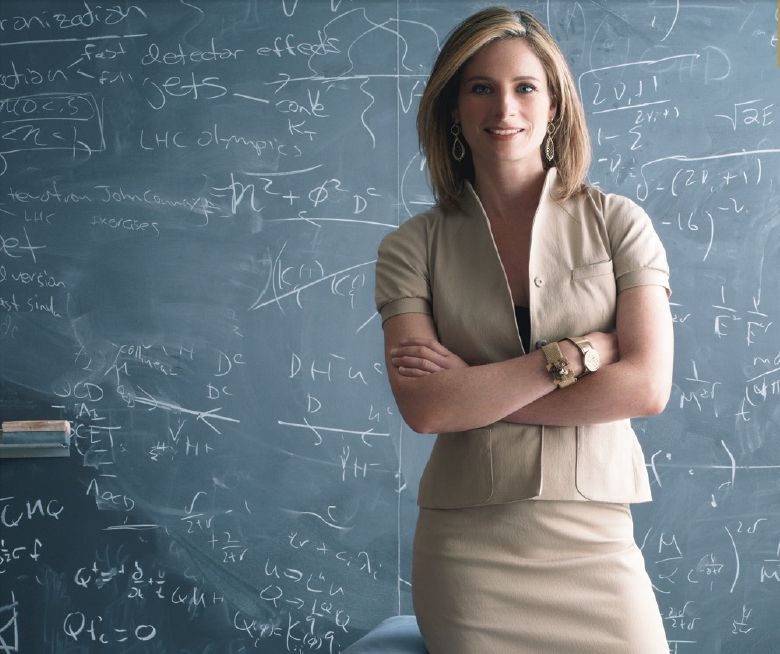
Lisa Randall is a world-renowned American theoretical physicist and the Frank B. Baird, Jr. Professor of Science at Harvard University.
She is best known for co-developing the Randall, Sundrum model (with Raman Sundrum), groundbreaking work on warped extra dimensions that offers a solution to the hierarchy problem. Her research spans particle physics, supersymmetry, dark matter, cosmological inflation, and LHC phenomenology.
A highly cited theorist and bestselling author (Warped Passages, Knocking on Heaven’s Door, Dark Matter and the Dinosaurs), she broke barriers as the first tenured woman in physics at Princeton and first tenured female theorist at Harvard.