@ATinyGreenCell Ok. Very helpful as this will help me think about what kind of questions to ask in an interview for fit, if I go the industry route. Thank you!
@ATinyGreenCell You mention leading from the trenches, so is flat team structure and/or more egalitarian vibes more common in biotech? It seems like that could help the pace as long as a decision maker can still make decisions (entirely consensus-based teams can be slower)?
@ATinyGreenCell@dipyphos TIL I might be cut out for biotech industry after all. These seem like skills I have, except maybe less so the whole sector-level problem solving (I just haven't thought that big yet, but I think I could).
I'm hospitalized currently for Long COVID induced Heart failure and severe microvascular disease.
This week, Doctors exposed me to a tuberculosis patient for 3 days without warning me, after I told them that my doctors warned me that even the mildest infection could kill me in my current state.
doctors also refused to treat my ear infection for 5 days and it spread.
now I'm in the most pain I've ever felt. I have taken so many different pain killers but nothing helps.
I am sending an open letter to Thermo Fisher. Their response to my response to their manipulated western blot is bullying and petty. Yes, this western blot really is manipulated, it is unfair on me to say otherwise. I don't make those accusations lightly. #ThermoFishy
Today I'm posting a new blog about an astonishing scientific own goal. Hundreds of papers have reported using a completely wrong antibody to investigate the tumor suppressor p16. This mistake has happened because scientists have muddled the names of two proteins 🧵
Agree 100%.
I'd add that in 1989, a Lancet study found hope-focused group therapy was associated with 18 months longer survival in metastatic breast cancer. It's largely viewed as discredited or an aberration today. But it spawned all that toxic "hope culture" in cancer.
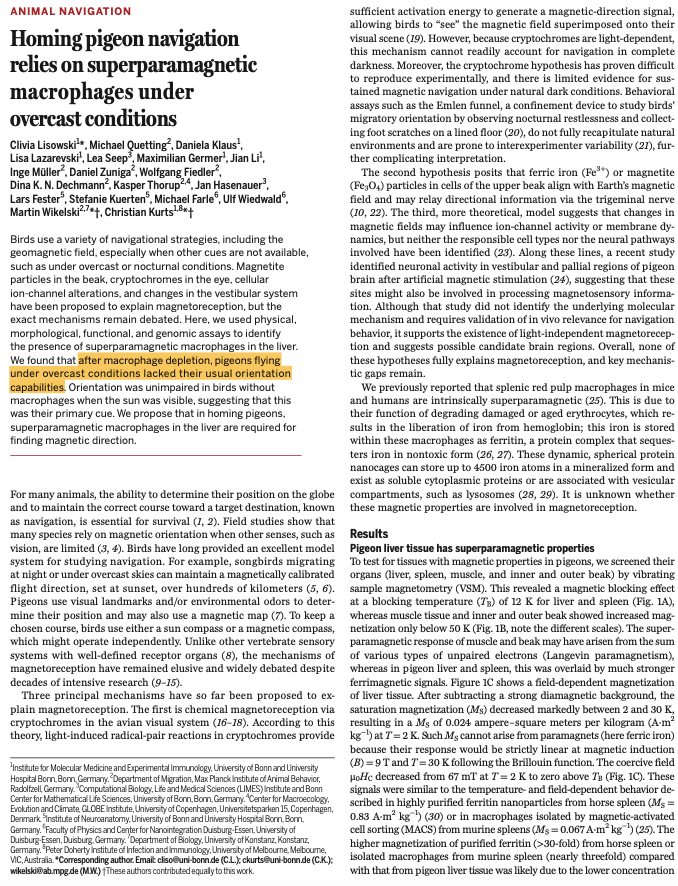
There is a new paper in Science proposing a mechanism for how homing pigeons navigate on cloudy days. (Hint: It's magnetic fields.)
As with many magnetobiology papers, though, I'm skeptical of their proposed mechanism.
These researchers, from Germany, found that pigeons have macrophages in their liver that accumulate lots of iron. They confirmed this with staining and other analyses. These macrophages also tend to cluster near nerve fibers in the liver (this is important for later).
Then they did a really interesting experiment:
- Train 34 pigeons to fly a particular 19-kilometer route. Ensure they all do this well.
- Split the pigeons into two groups: treatment and control.
- Inject the treatment group pigeons with liposomes loaded with clodronate. The macrophages eat these liposomes, and then clodronate kills the cells and scatters the iron.
- Release the pigeons, from both groups, on an overcast day (it's thought that pigeons use magnetic fields to navigate when there is no sun).
- All of the control pigeons reached their destination within 70 minutes, but the treated pigeons scattered in random directions.
- (Important control experiment: The treated pigeons, released on a sunny day, flew like normal and reached their destination.)
- This is taken as evidence that ??? macrophages --> iron --> navigation ??? via magnetic fields. But the mechanism is fuzzy.
This experiment is super interesting, and it's clear that the treated pigeons really are unable to home to their destination using a magnetic field. But I'm not entirely convinced by the mechanism these authors propose.
The main claim is that these iron-loaded macrophages "align" in a magnetic field, and that they shift according to the bird's orientation so that it can fix its direction. These macrophages (somehow) send signals to the nerve fibers in the liver, which then pass the messages to the brain, which allows the bird to navigate.
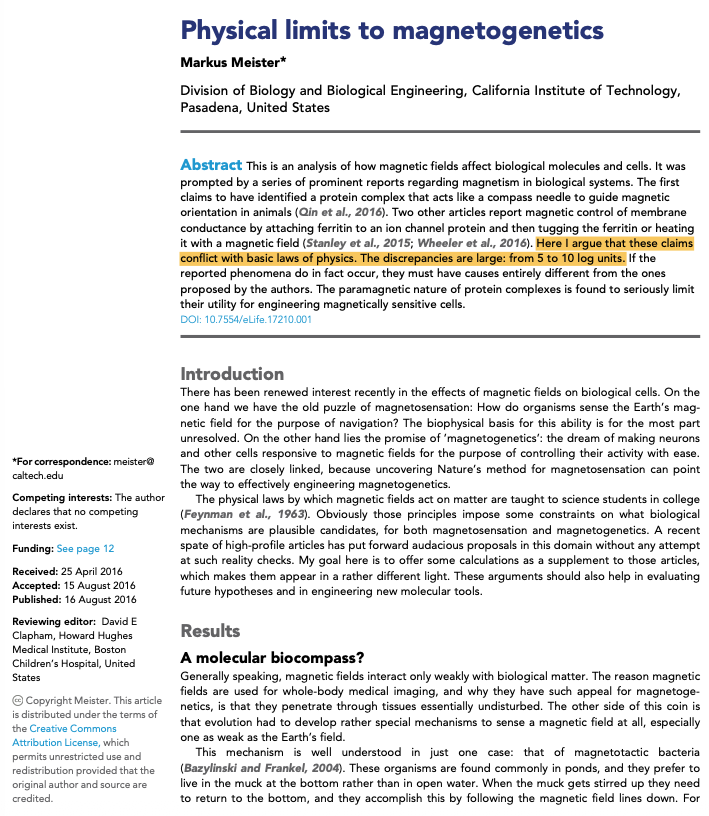
The news coverage for this story suggests how this might happen: "One idea is that as the bird shifts its position relative to Earth’s magnetic field lines, the ferritin changes orientation and tugs on the web of fibers within a macrophage, possibly triggering the release of signaling molecules." (All you need to do is read the 2016 Meister paper, from the images below, to understand why such a mechanism is physically dubious.)
The problem, though, is that the authors show (in their own study) that the iron in these pigeons' livers only act as a stable magnet at super low temperatures, below about 12 degrees Kelvin (or -260 degrees Celsius). At normal, physiological temperatures, the iron would be scrambled by the thermal motions of the tissue. Every measurement in the paper is taken at cryogenic temperatures, but a bird's body temperature is much higher, which means heat would likely destroy any magnetic alignment.
The authors claim that MILLIONS of iron particles in the liver are all acting together to escape this effect, but they don't demonstrate the mechanism convincingly at all. If this claim is true, why not take homing pigeons (control vs. macrophage-depleted) and then rotate a magnetic field around them? You could record their neurons to see if there is some kind of signal coming from the liver.
Here are the results.
By far the most prevalent was cocaine, followed by the cocaine metabolite (Benzoylecgonine).
I assume the high amount has much to do with how cocaine is consumed.
Snort -> touch nose -> touch money.
1/
First plate is done. No Hanta, no Ebola.
Flu season is over, and COVID is 100-times lower than it has been.
The only respiratory viruses on the rise are Rhinoviruses and Parainfluenzavirus 3, but they always surge in late Spring and I have no idea why.
Ensitrelvir succeeded where Paxlovid had failed to show efficacy, in post exposure prophylaxis. It’s also been known for years that it prevents severe late disease in those already symptomatic as well as Paxlovid.
Ensitrelvir should have been approved long ago. If it were from an American rather than Japanese pharma, it would have been.
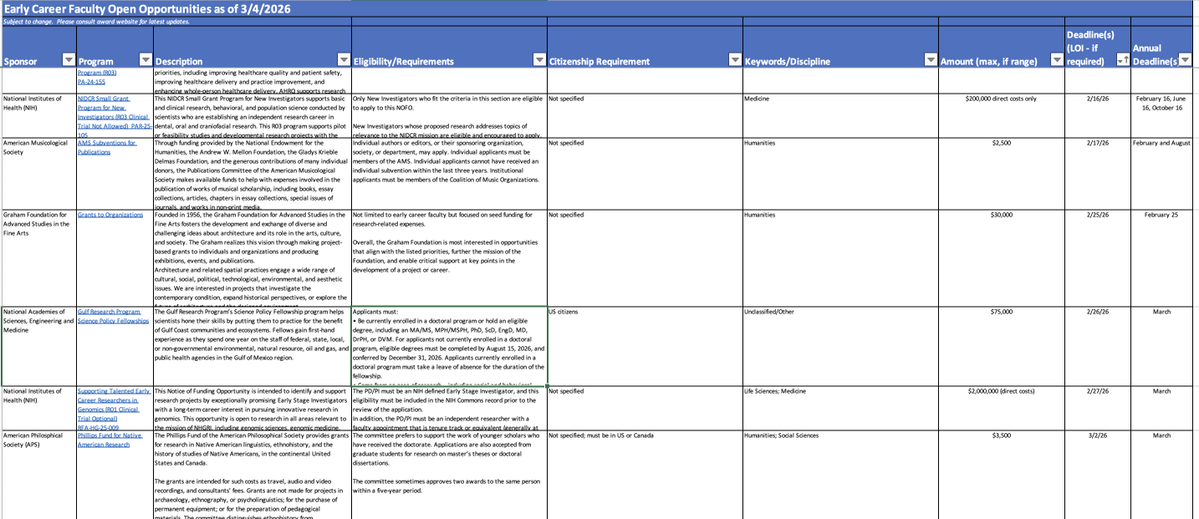
Here is our updated database of grants for early careers researchers in all fields.
It goes way beyond traditional NIH and NSF funding opportunities. We list 428 types of grants.
Download it here: https://t.co/RGXGrdp2uf