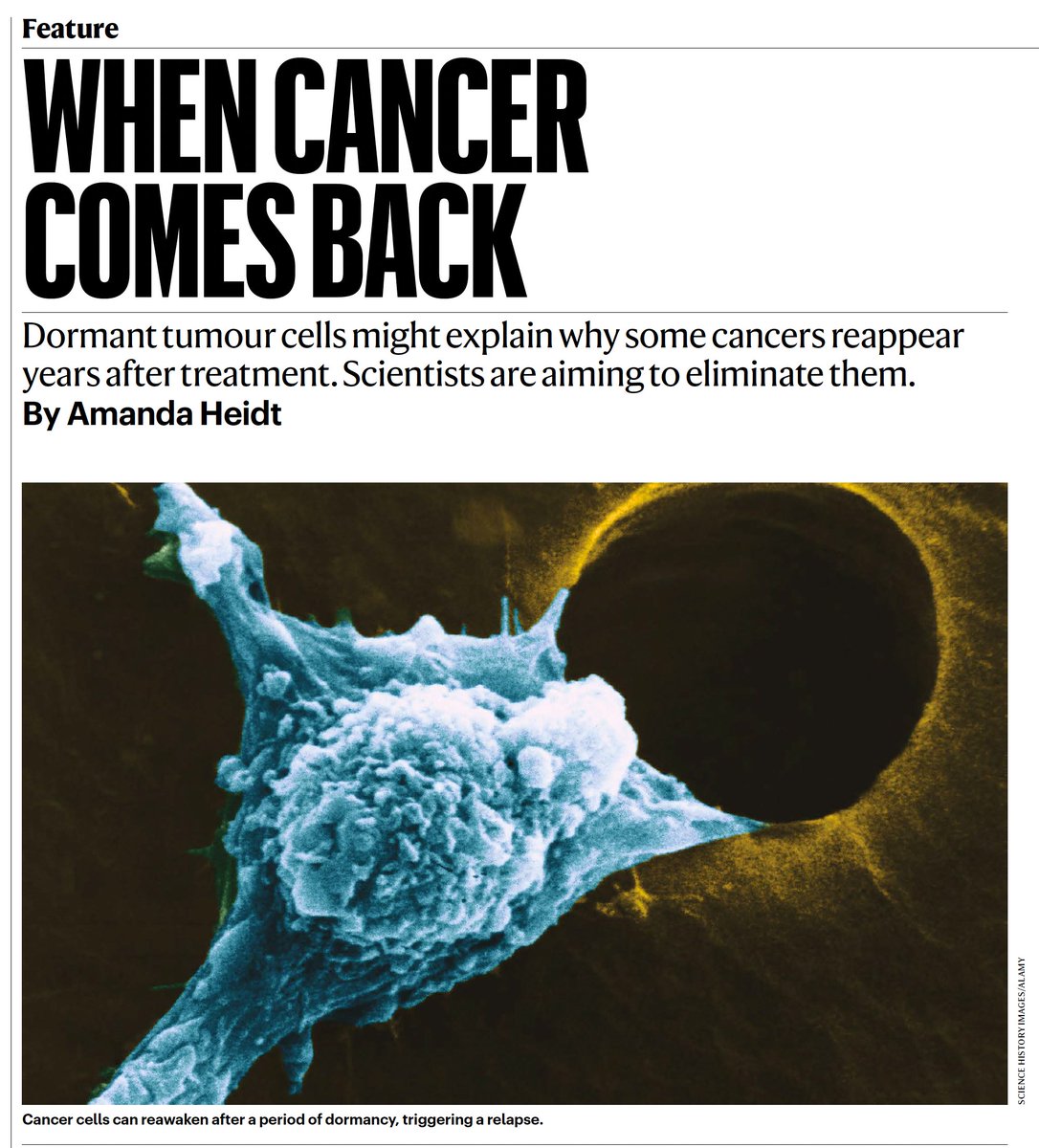
"I was late learning about science … For much of my scientific training I feared I was behind my peers. But I have been able to close the gap—and that is something to be proud of." #NationalHigherEducationDay
Read more: https://t.co/UXNLE5wYse
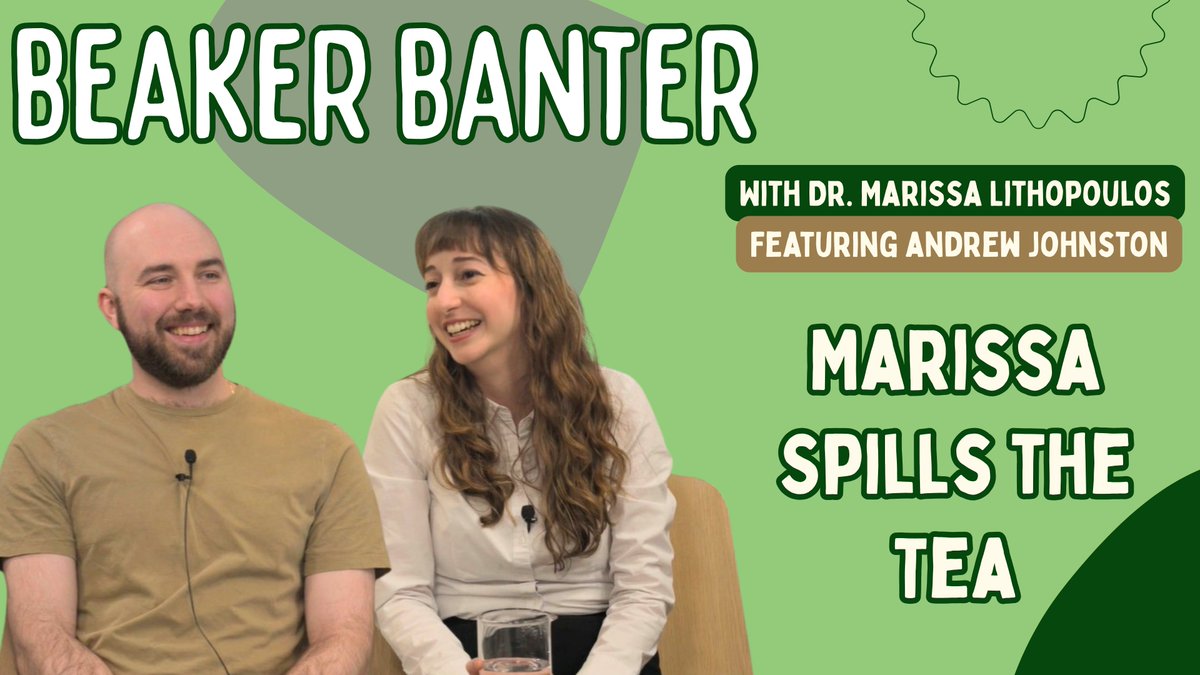
🚨First episode of Beaker Banter is out now!
In this special episode, the tables are turned as I sit down with my husband, Andrew Johnston, for a fun, lively conversation about my personal journey.
https://t.co/NZ24ggAkwI
#podcast#scicomm#science#comedy
A 17 year-old Lion survived for five years after going blind because her daughters stayed by her side and refused to abandon her.
Researchers observed the lionesses helping the elderly matriarch by allowing her to feed first and staying close to guide and defend her, showing an extraordinary level of social bonding rarely seen so clearly in wild predators.
For years, the gold standard for spotting early Alzheimer’s was the amyloid PET scan, which could detect brain plaques 10 to 20 years before symptoms appeared. However, a groundbreaking study has identified a “pre-early” warning sign.
Researchers found that a blood test for pTau217 (phosphorylated tau 217) can predict amyloid buildup and cognitive decline even when initial brain scans appear perfectly normal. This discovery could shift Alzheimer’s screening from expensive, invasive scans to a simple, scalable blood test during routine checkups.
https://t.co/gdpoNNutKY
#Alzheimers #neuroscience #health (1/3)
For decades, “neuroinflammaging”, the slow-burning inflammation that causes brain fog and memory decline, was considered an unavoidable part of getting older. However, a landmark study suggests the clock can be turned back.
Researchers developed a non-invasive nasal spray that uses microscopic “delivery parcels” to travel directly into the brain. With just two doses, the therapy dramatically reduced chronic inflammation, recharged cellular “power plants” (mitochondria), and restored memory and cognitive sharpness in aging models.
https://t.co/XytygWNNZ2
#neuroscience #brain #science (1/3)
Of the many impressive acrobatic qualities of cats, perhaps their most spectacular is their ability to right themselves midair so they always seem to land on their feet.
The trick, according to a new study, lies in a hyperflexible region of their backbone known as the thoracic spine, which runs from the base of their shoulder blades to the end of their rib cage.
Learn more: https://t.co/Bm0Vg7z2Vc
This new satellite will measure sea levels for almost all of Earth’s ocean 🌊
Sentinel-6B adds to a sea level data record spanning over 30 years—information that helps improve weather forecasts, keep ships safe, and ensure astronauts splash down safely. https://t.co/kGBBCQoKeM
We are all agreed that your theory is crazy. The question that divides us is whether it is crazy enough to have a chance of being correct.
-- Niels Bohr
🎤 Get ready for a night of laughs, music, and science! 🧪
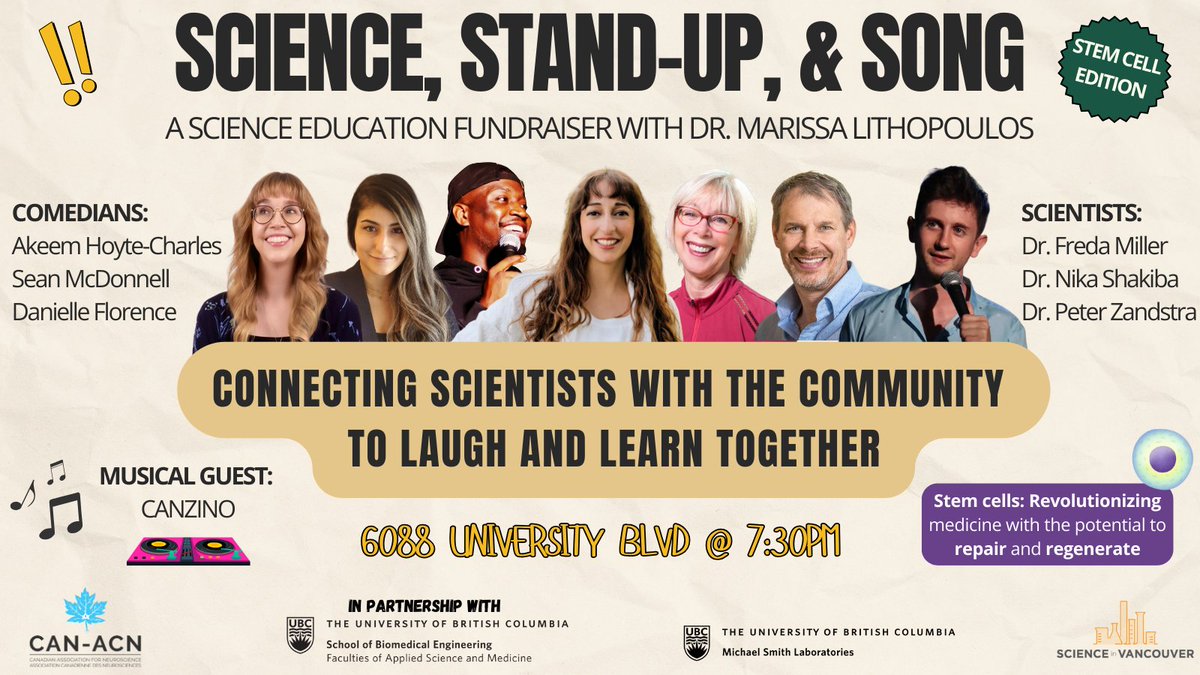
Join Science, Stand-Up & Song with Dr. @MLithopoulos for a one-of-a-kind show that is perfect for curious minds and science lovers alike!
🎟️ Get your ticket for the Oct. 16 show at @UBC! https://t.co/I2A1BU3FFY
Join us for Science, Stand-Up, & Song on Oct 16th @UBC !🙌 This one-of-a-kind variety show includes expert stem cell scientists, amazing comedians, and music throughout! 👩🔬🎤🎵 🎟 https://t.co/BbMyAH4kGw
🚨Science, Stand-Up, & Song is back for an exciting stem cell edition! Presented in partnership with @SBME_UBC 🙌
The amazing panel includes: Dr. Freda Miller, Dr. Nika Shakiba, & Dr. Peter Zandstra 🔬
More info & tickets: https://t.co/ogDSCI3lqY
@nika_shakiba@PZandstra