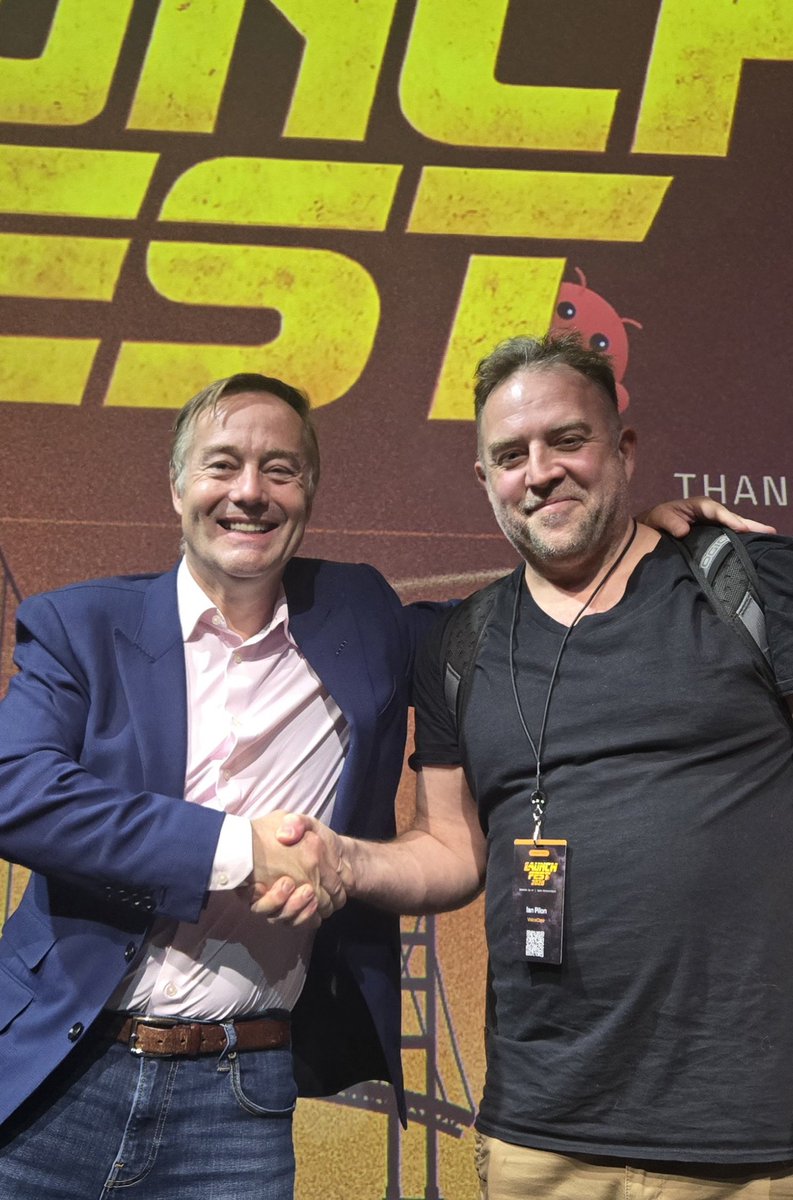
We are truly standing on the shoulders of Giants today!
@drmichaellevin together with @MillerLabMIT
"Physicalism has been dead since the time of Pythagoras, and probably long before that."
"The basement of all this, I don't think, is math. I think this is behavioral science. I think math is a behavioural science of a certain kind of pattern."
"It's a bioelectric code, because the network instructs the patterns of gene expression and cell behaviour and morphogenesis. If you want the system to make an eye on a tadpole's tail, or a flatworm that has two heads… you have a chance to do that."
Scientists working at the bleeding edge of bioelectricity at very different scales. They agree stuff, they disagree on stuff. Watch now ⬇️
We sat down with @drmichaellevin, developmental biologist at @TuftsUniversity, about the emerging field of developmental bioelectricity: how electrical signals help control how organisms build and regenerate themselves.
Levin explains how voltage gradients, ion channels, and gap junctions guide embryonic development and encode large-scale anatomical information that cells use to determine what structures to build.
We also discuss two-headed planarian worms, ectopic eye formation, regenerative medicine, morphogenesis, and why bioelectricity may represent a layer of biological control that exists beyond genes alone.
Full episode is here on X and at the links below (see comment).
Timestamps:
00:00 - Intro
01:40 - Early Interest in Bioelectricity
05:22 - External Electric Stimulation
19:54 - Two-Headed Planarians
31:40 - Designing Bioelectric Experimental Methods
56:37 - Different Model Organisms
1:07:34 - TAME Theory
1:24:16 - Xenobots and Advice for Young Scientists
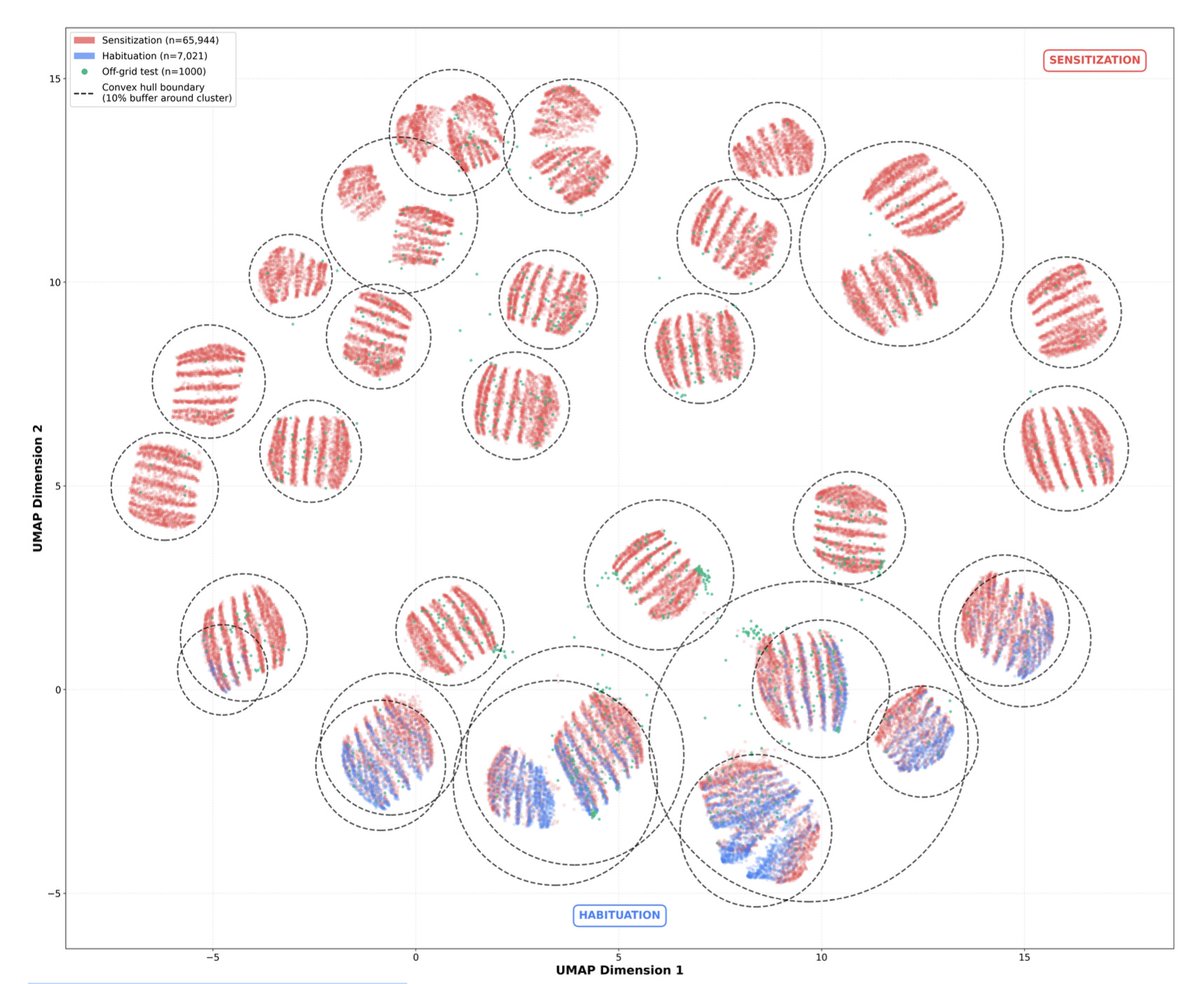
A lot of people have suggested over the centuries that ecosystems might have some degree of cognition. What would that look like? Could there be recognizable memory phenomena on the scale of population dynamics? Here's a #preprint where amazing high-school student @asamanta42, @HananelHazan, and I use a model system - in silico predator-prey dynamics - and analyze the possibility of several kinds of learning:
https://t.co/JqmiakAJPM
(the basics are kind of like https://t.co/PH1ZKUxXqS, but some very cool new stuff here, including the interesting and unique pattern of learning-compatible values in the parameter space).
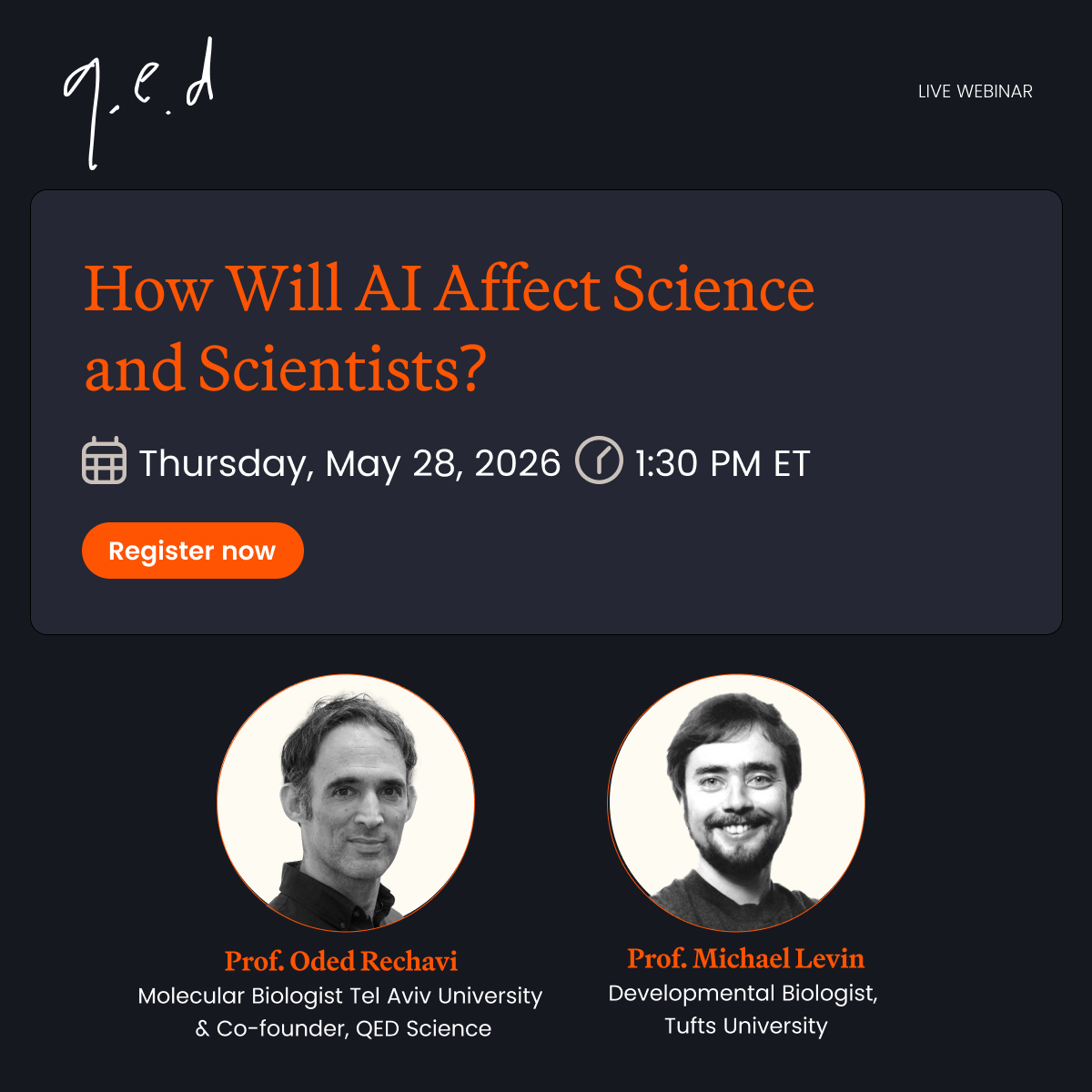
What happens to science when machines start participating in it?
May 28 @drmichaellevin + @OdedRechavi . Live, unscripted!
1:30 PM ET → https://t.co/yfSHJejPkl
Two speech-to-speech papers from our team accepted at ICML, including one spotlight: Hibiki-zero and Moshi-RAG.
First, Hibiki-zero: speech-to-speech translation that jointly optimizes translation quality and latency with RL.
Congrats @inworld_ai on the Realtime TTS-2 launch.
The model takes the actual audio of prior turns as input, not just text, so your agents mirror your users’ tone, pacing, and emotional range. It’s voice realism that lasts longer than the first turn.
Try it on LiveKit Inference: https://t.co/s8nJBQnLdC
looking to hire a contractor for customer discovery research.
If you're in my network please send me a DM, if not please leave a comment and I'll contact you.
This is where we are right now. And i’m not gonna lie it feels pretty magical 🧚♀️
Qwen3.6 27B running inside of Pi coding agent via Llama.cpp on the MacBook Pro
For non-trivial tasks on the @huggingface codebases, this feels very, very close to hitting the latest Opus in Claude Code, or whatever shiny monopolistic closed source API of the day is.
In full airplane mode.
Most people haven’t realized this yet.
If you have, it means you have a huge headstart to what I call the second revolution of AI.
Powerful local models for efficiency, security, privacy, sovereignty 🔥
Embarrassment is the most underpriced asset class in your 20s. The neuroscience on cringe tolerance is genuinely wild.
Dopamine releases on pursuit under uncertainty. The peak fires the moment you commit to acting when you could fail in public. The actual outcome adds surprisingly little on top of that initial spike. This is why the person who just starts beats the person who plans every single time.
Every cringe thing you do dampens the anterior cingulate circuit that flags social risk and amplifies the ventral striatum circuit that rewards agency. You are literally rewiring your brain around the last hard, public action you took.
Failure in public trains you for more action. Comfort trains you for less. The person who tweets a bad take, posts a bad video, ships a bad product, and asks the dumb question in the meeting is on a completely different developmental trajectory than the person protecting their image. Compounding starts day one.
The "are ya winning son / yes" meme is also real. Identity-based habit research is unambiguous: self-concept precedes behavior change. You declare you're a doer. The brain recruits confirming evidence. Actions follow identity. Results follow actions. Roughly a 2-3 year lag between each step.
Every person I know who built something has run some version of this loop. They decided they were the kind of person who wins before there was any proof. The proof showed up later.
The empty target in this video is the only real failure mode. Zero arrows in it. Everything else is just the bow being drawn back.