1/ 🚨 Hot off the press in @NatImmunol: CD4⁺ T cells can license Kupffer cells to rescue dysfunctional CD8⁺ T cells in the liver. Hepatitis B virus (HBV) infection is just the proving ground—this is a paradigm shift in tissue immunity. https://t.co/C6CzH3s34y 🧵(1/11)
2/ Chronic HBV infection was the perfect stress test: intrahepatic CD8⁺ T cells are primed yet quickly stall. How to reignite them has been a major interest of our lab. (2/11)
3/ Pre‑activated helper CD4⁺ T cells solve the puzzle. They skip lymph nodes and head straight to the liver, where they form intimate triads with Kupffer cells (KCs), the resident macrophages patrolling sinusoids. (3/11)
4/ Through CD40L‑CD40 contact, those helpers re‑program KCs—turning tolerant scavengers into potent APC‑like cytokine factories. It’s on‑site immune engineering, not remote coaching. (4/11)
5/ Licensed KCs release a two‑part cocktail:
• IL‑12 expands the helper pool
• IL‑27 wakes up dysfunctional CD8⁺ T cells, restoring effector molecules and metabolic vigor. (5/11)
6/ Dendritic cells? Dispensable. Secondary lymphoid organs? Surgically removed or pharmacologically blocked—help still flows. Immunity can be fabricated in situright inside the parenchyma. (6/11)
7/ Remove KCs and the circuit collapses; block CD40L or IL‑27 and CD8⁺ T cells relapse into lethargy. The essential loop is:
CD4 T cell ➜ KC ➜ IL‑27 ➜CD8 T cell. (7/11)
8/ IL‑27 isn’t just necessary—it’s sufficient. Recombinant IL‑27 revived antiviral CD8⁺ activity in mice and super‑charged HBV‑specific T cells from patients. (8/11)
9/ Why care beyond HBV? Tapping a CD4–IL‑27 axis could be a universal key to re‑arming liver‑resident CD8⁺ T cells against infections and cancer (9/11)
10/ The work reframes “CD4 help”: not a lymph‑node pep talk but an on‑site renovation that overrides local tolerance. Therapeutics that mimic KC licensing could deliver potency where it’s needed and spare the rest of the body. (10/11)
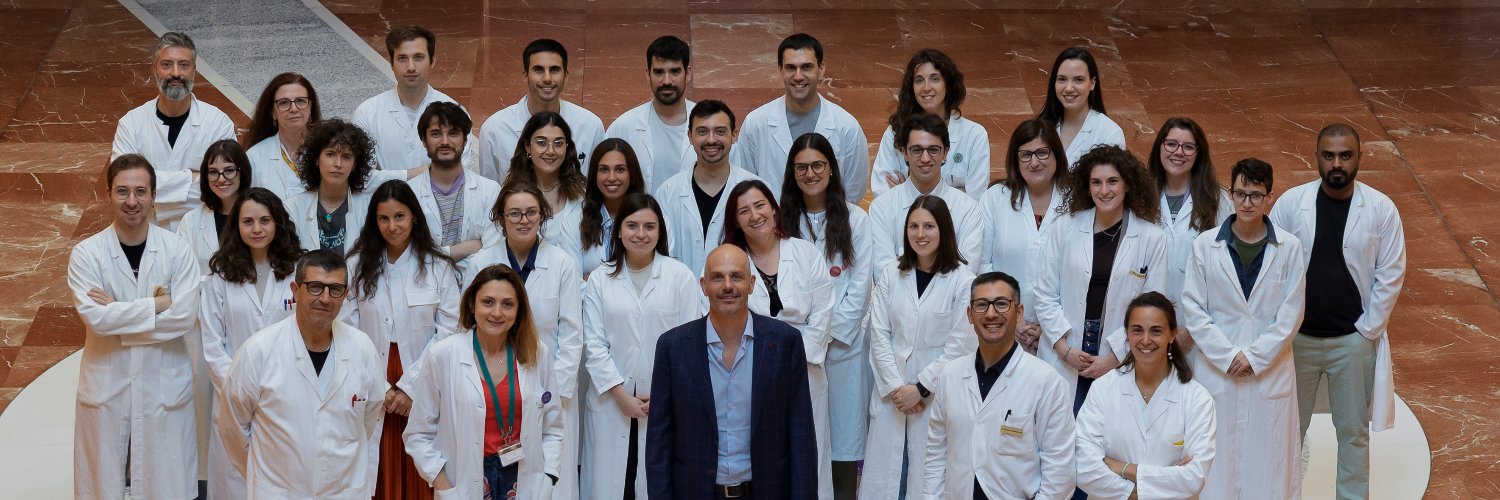
11/ Kudos to Valentina Venzin, Cristian Beccaria, all members of the @IannaconeLab & collaborators for charting this intrahepatic circuit. Expect Kupffer‑cell licensing and IL‑27 to enter conversations on cancer immunotherapy, vaccines and beyond. Thoughts welcome! 🙌
@ImmunoPodcast@profvrr@ERC_Research@EMBO@EMBO_YIP@ArmeniseHarvard@AIRC_it@MyUniSR@SanRaffaeleMI
(11/11)
Pleased to have contributed to this new @ScienceMagazine paper on how lymphoid tissue chemokines limit CD8⁺ T cell priming duration to preserve T cell functionality. Congrats to @LukasAltenburg2 and Jens Stein! https://t.co/K9Cmt8yO9C
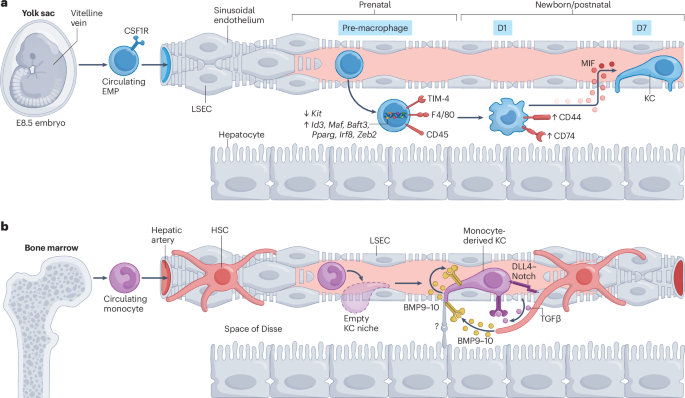
Great fun to write this review on Kupffer cells with @FGinhoux and @Kubes_Lab, covering origin, diversity and roles in immunity and metabolism, now out @NatRevImmunol. Huge credit to Bruna Araujo David, @frarro1 and Camille Blériot for driving this work. https://t.co/rGpmTMRddV
This calls for a shift in vaccine design:
• target early, conserved viral proteins
• build tissue-resident immunity
• combine antibodies and T cells
Great collaboration with Leo Swadling, @ValeFuma91 and @maini_lab
Neutralizing antibodies are not the whole story. In @NatRevImmunol, we highlight an alternative mode of protection: T cells can eliminate infection at its earliest stage, before it becomes detectable. We term this “abortive infection”
https://t.co/omOjotwLxZ
Thread 1/4
Implications:
• T cells can act at inception, not just during clearance
• Standard readouts (serology/PCR) miss these events
• True exposure and immunity are likely underestimated
→ We need to measure what T cells actually do
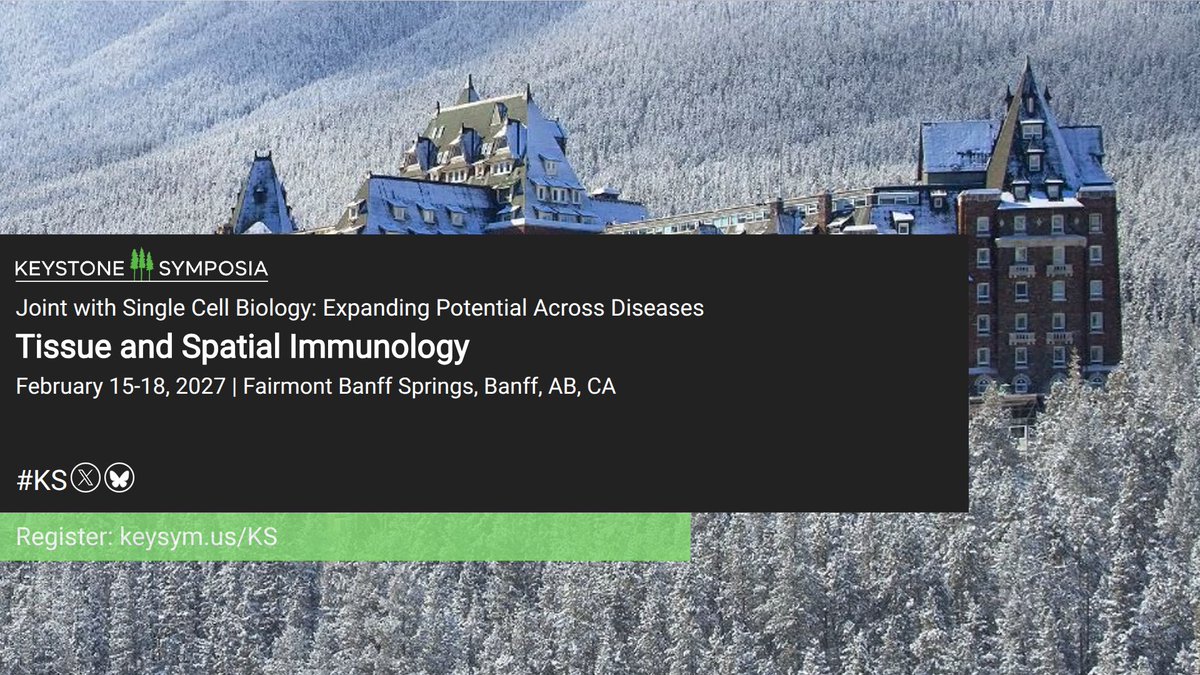
Excited to organize @KeystoneSymp Tissue and Spatial Immunology with @LeilaAkkari1 and Hai Qi in February 2027! Join us to explore emerging research in Banff! https://t.co/7wklrzGtnA #KSSpatialImmune27 https://t.co/rLHonGzMXT
Join us for the 2026 GRC Immunochemistry and Immunonbiology "Immune Circuitry and Molecular Pathways in Tissue Homeostasis, Infection, and Disease" in beautiful Barcelona. June 28 - July 3, 2026. Great lineup of speakers! https://t.co/Sg3VZTFAXR
Great story from the @NieswandtLab in @ScienceMagazine: uncovering a non-classical platelet mechanism that drives inflammation via integrin- and tetraspanin-rich tethers. A fresh angle on thrombo-inflammation. Happy to be part of this work!
https://t.co/3ydOAzAJtt
What if we could turn the tumor’s deadliest tricks against it?
New @Cancer_Cell: Tumor-antigen-independent targeting of solid tumors by armored macrophage-directed anti-TREM2 CAR T cells. Led by @GalYagel, @D_Rimini & @MVLocquenghien (1/15)
https://t.co/dzBILa2o26
1/ New from our lab 🧪
ARTC2 blockade is widely used to protect tissue Tregs — but when is it truly essential, and for which subsets?
2/ In this @EurJImmunol update, we dissect the subset-specific and context-dependent effects of ARTC2 blockade on hepatic Treg recovery.
3/ At steady state, ARTC2 blockade has a selective benefit: it markedly improves recovery and preserves phenotype of CD44^mid (less-activated) Tregs, while having minimal impact on effector-like eTregs.
4/ During liver inflammation, ARTC2 blockade becomes critical: it boosts overall Treg yield and prevents phenotypic distortion — again with the strongest effect on CD44^mid Tregs.
5/ Key insight: hepatic Treg subsets are not equally sensitive to ARTC2–P2RX7 activation.
Less-activated, tissue-resident Tregs are preferentially lost or skewed without protection.
6/ Practical takeaway ���
• Studying activated/eTregs at steady state? ARTC2 blockade may be optional.
• Profiling CD44^mid Tregs or working in inflammatory settings? ARTC2 blockade is essential.
7/ Bottom line: this work reframes ARTC2 blockade from a default reagent to a rational, cost-effective experimental choice.
8/ Proud of the team — led by @CaitlinAAbbott, with @VioletteMouro and colleagues — for turning a technical challenge into actionable guidance for the field.
9/ Read the paper here 👉 https://t.co/RSX7jBno7N
And stay tuned — exciting new discoveries on liver Tregs are coming soon 👀🧬
Thrilled to contribute to this landmark consensus effort led by @Masopust_Vezys and @rafiahmed_lab. A major step toward clearer, shared T cell nomenclature for the field.
Honoured to see our @NatImmunol study highlighted in a thoughtful @JHepatology commentary on the IL-27/Kupffer cell axis in chronic HBV. A great summary of why local tissue immunity matters — and wonderful to see the field engaging with our work.
Paper: https://t.co/C6CzH3s34y
Commentary: https://t.co/GQyR4NF9wm