With all due respect to this report, I would treat it with a very high degree of skepticism.
The idea that Taeb, who at the time was not in a position to authorize such a decision, could have ordered the launch of missiles without the knowledge of the IRGC commander is extremely difficult to believe.
My assessment is that this report may be intended, at least in part, to amplify the perception of internal divisions within the Iranian leadership rather than accurately reflect the decision-making process in Tehran.
This also does not fit with the broader pattern we are seeing inside Iran, particularly the apparent convergence among senior decision-makers on the question of escalation with the United States.
Bottom line: internal disagreements certainly exist in Tehran, but I would take this specific report with a very large grain of salt.
#iran
'Kamchatka is unbelievable... there's so much we can do with this part of the world' — Faisal Niaz Tirmizi, Ambassador of Pakistan to Russia, at the Eastern Economic Forum
'I want Pakistani music, movies, AI to work with the Eastern part of Russia'
نعم،هو بلا شك محور مهم في المنطقة،وأعتقد أن قوته في هذه المرحلة تحديداً تكمن في أن يظل واضحاً ومتماسكاً،وأن يركز على الأهداف التي قام من أجلها.
وشخصياً،أتمنى ألا يتوسع الانضمام إليه في الوقت الراهن،وأن يظل مقتصراً على الدول الثلاث.
فليس بالضرورة أن زيادة عدد الأعضاء تعني مزيداً من القوة؛بل قد يحدث العكس،فتتعدد الحسابات وتتباين المواقف، وتتشتت الأولويات،ويصبح الوصول إلى موقف مشترك أكثر صعوبة.
برأيي،قوة هذا المحور اليوم في تماسكه وقدرته على التحرك بوضوح ومرونة،وأي توسع غير محسوب قد يفقده جزءاً كبيراً من هذه الميزة، ويفتح الباب أمام حسابات وتأثيرات قد تضعف جدواه وتشتت أهدافه.
Just published a deep dive (in Russian) on the new Mecca Defense Pact between Pakistan, Saudi Arabia, and Turkey.
My key takeaways:
It's a bid for Sunni subjectivity—moving from objects to subjects of geopolitics.
https://t.co/IRmXYM8E3y
The Syrian Army has been restructuring at the division and corps levels, marking a shift from absorbing factions to dismantling their internal power structures.
Damascus initially brought roughly 130 armed formations into the Defence Ministry while allowing many commanders to retain their fighters and networks. It is now separating faction leaders from those forces and placing them inside wider corps and institutional commands.
Reports differ over whether the final structure will contain five or six corps, but the direction is consistent. Divisions are being reduced, reorganised or placed under wider regional commands, and faction leaders transferred away from direct control of formations built around their personal networks.
The treatment of Abu Amsha, Saif Abu Bakr and other former SNA commanders illustrates the method. Commanders can receive equal or higher-ranking positions while losing direct control over the fighters, weapons, bases and subordinate officers that gave them independent power. Once salaries, logistics, ammunition, appointments and deployments are controlled centrally, their authority derives from the state rather than their faction.
This fits al-Sharaa's established pattern of centralisation. In Idlib, he repeatedly accommodated armed groups first, incorporated their leaders into a broader system and then gradually dismantled the structures that allowed them to operate autonomously. The current process is more institutional and nationwide, but the logic is the same: integration first, dilution afterwards.
The SDF has clear reasons to welcome the weakening of Abu Amsha and similar commanders. Their forces were involved in Afrin and other areas where Kurdish civilians in reported displacement, property seizures and serious abuses. Both Abu Amsha and Saif Abu Bakr have been under US sanctions since 2023 over their factions' conduct there. Removing them from direct command addresses a genuine Kurdish concern. However, it serves Al-Sharaa much more.
The SDF's apparent plan to enter the state while retaining a concentrated military and political bloc is unlikely to survive al-Sharaa's centralising strategy.
The timing serves al-Sharaa in three ways. He reduces the power of former National Army commanders while making integration look safer to Kurdish officers and fighters, who watch commanders associated with abuses lose control and may conclude they are joining a genuinely national army. That confidence makes the SDF more willing to dissolve its separate command, register its personnel and accept deeper integration. Once that process is complete, the same centralised hierarchy can be turned on the SDF's own autonomous power. And by sidelining sanctioned commanders, he simultaneously addresses a Western demand without appearing to act on external pressure.
For the SDF, the restructuring is useful in the short term. It weakens former enemies, offers senior positions to Kurdish commanders and helps its leadership justify integration to fighters and supporters. Its longer-term effect runs against what the SDF is trying to preserve.
More details: https://t.co/eHeptzURMW
Latakia City has largely calm since last year's protests. But beneath this peace are deep, unresolved wounds between the city's Alawi and Sunni communities.
My latest looks at the decades of crimes against the city's Sunnis & their impact on civil peace today.
https://t.co/vq75o7d74D
Saudi Arabia diplomatic Masterstroke
While the UAE is in crisis, Saudi Arabia is masterfully riding the wave with calculated diplomatic skill.
The Emirates’ military alliance with Israel is not welcomed by the Saudis, as I wrote days ago. However, a resumption of war with Iran is also not viewed favorably by Riyadh, and the response is quite simple.
The Saudis were diplomatically skillful in weaving an agreement with the Houthis, transforming what was once a lethal threat into a shield for their facilities and vessels. This includes their ships transiting near the coast of Somalia, which used to be an area of immense risk for Saudi shipping.
On another front, the Saudis reached an agreement with Iran that safeguarded their pipeline to Yanbu. This ensures they can export over 50% of their output via the Red Sea; however, with rising oil prices, the Saudis have offset part of these losses by selling less, the masterstroke of Saudi strategy since the founding of OPEC.
The bet on the US and Israel provides the Emirates with military cover, but Saudi Arabia holds the strategic depth. The trend points toward a rift in the Gulf: a Saudi-led axis favoring regional diplomacy, and an Emirati-led axis betting on external military force. You don't need to be a geopolitical expert to see that Israeli troops in the Emirates will only deepen their isolation from their neighbors.
The Saudis are making a hidden and ambitious bet, that this rapprochement between the Emirates and Israel is temporary and will weaken both internal and external support for the UAE, eventually forcing MBZ to come and beg for Saudi assistance.
Riyadh has fulfilled its agreement to grant land and airspace to the Americans, kept most of its infrastructure intact by negotiating with Iran, struck an excellent deal with the Houthis, and is now betting against the Emirates without firing a single shot.
Full article:
https://t.co/daEqD6FeXw
“The Arab Gulf and Israel Have Different Visions for a New Middle East” my latest for @ForeignAffairs Magazine
https://t.co/8lV2ivqZR8
The article argues that assumptions of a U.S.-backed regional order centred on Israeli dominance (what I call paramountcy) have broken down, particularly in the aftermath of the 2026 Iran war. It outlines how Gulf states are shifting toward a more diversified, “polycentric” strategy—balancing U.S. ties with new partnerships, but still requiring stronger intra-Gulf coordination.
Saudi Arabia has come to view Israel and its actions as a threat to regional security and sees the UAE’s alignment with Israel in a poor light.
https://t.co/1BbrnzVlX3
عكس العام الأول بعد سقوط النظام مرحلة خ��يرة في طبيعة التدخل الإسرائيلي ضمن سورية، لم يعد من الممكن خلالها فهمهُ كامتدادٍ تقليديّ لأنماط "ردع" حكمت مراحل سابقة، بل بوصفه جزءاً من مقاربة أوسع تجاه سورية عامة وتشكيل مجالها الأمني الجنوبي خاصة، بما يتجاوز التعامل مع التهديدات المحتملة؛ نحو التأثير في الشروط والبيئة التي تنتجها، وإعادة تعريف حدود الفعل داخلها. عبر توظيف مزيج من الأدوات العسكرية والأمنية-الميدانية، ضمن مرحلة انتقالية هشة وسياق إقليمي معقّد بعد تراجع "محور إيران"، وخروج سورية من نطاق نفوذه.
تطرح الدراسة إشكالية مركزية تتعدى توصيف النشاط الإسرائيلي أو قياس كثافته، إلى تحليل التحوّل في طبيعته ووظيفته ودلالاته الاستراتيجية. وتعتمد في هذا السياق؛ منهجية تجمع بين الرصد الكمي والتحليل النوعي، عبر تتبع 416 عملية إسرائيلية استهدفت الأراضي السورية خلال 2025، وربطها وسياقاتها السياسية بقاعدة بيانات وخرائط ميدانية تفاعلية، بما يتيح قراءة مركّبة لأنماط التدخل وأهدافه ووظائفه، على نحو يتجاوز إحصاء الضربات إلى فهم المقاربة الإسرائيلية وتفكيك نموذجها التشغيلي كما تجلى ميدانياً في سورية الجديدة.
دراسة تحليلية بعنوان: ما بعد المحور: المقاربة الإسرائيلية في سورية من إدارة التهديد إلى تشكيل المجال الأمني
إعداد: ساشا العلو، صبا عبد اللطيف @seba_abdullatif ، محسن المصطفى @MuhsenAlmustafa
للمزيد: https://t.co/7mGi5jgBhT
#المنتدى_السوري #سورية #دمشق #عمران_للدراسات_الاستراتيجية
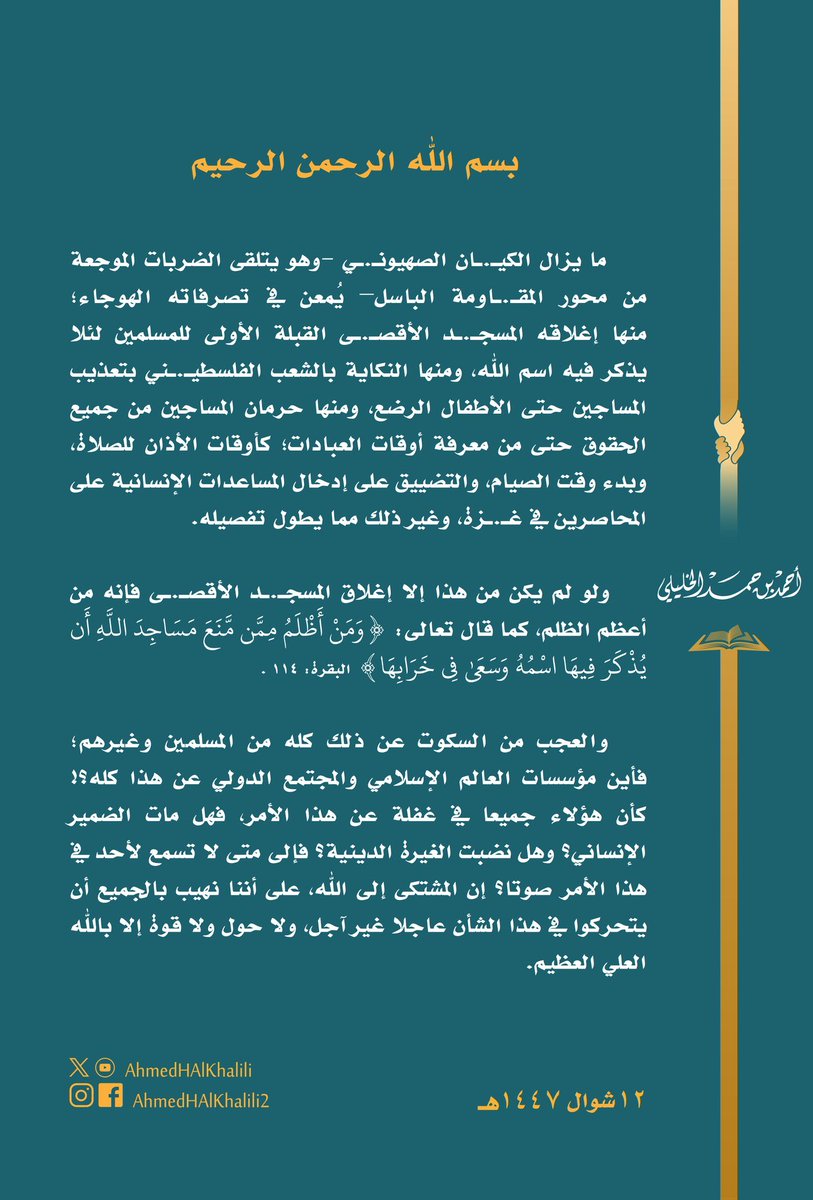
شيخنا الخليلي @AhmedHAlKhalili حفظه الله، يدعو إلى وحدة المسلمين، بكافة مذاهبهم، بالرجوع إلى أصول الإسلام التي يتفق عليها الجميع، التزاما بقوله تعالى (واعتصموا بحبل الله جميعا ولا تفرقوا) من أجل رص الصفوف أمام أعداء الإسلام، ومن أجل نصرة المظلومين من المسلمين وتحرير مقدساتهم، وترك الاختلافات الطائفية في هذه الفترة العصيبة، ولست أدري ماذا ينقم الطائفيون على مثل هذه الدعوة الجامعة؟ وما الذي يغيظهم في ذلك فتظهر أقلام بعضهم بالبذاءة تجاهه؟ نحن نعلم أن شتائمهم لا تقلل من مكانة الشيخ ولا تؤثر في دعوته، فقد قيل لرسول الله صلى الله عليه وسلم الكثير مما سجله القرآن الكريم من افتراءات واتهامات أهل الكفر في حقه وهو خير خلق الله، فقال له الله (فاصبر حتى يحكم الله وهو خير الحاكمين) فليشفق هؤلاء الآثمون على أنفسهم قبل أن يقفوا أمام رب العالمين، فيؤاخذهم بما قالوا وافتروا، وليتذكروا قول الله تعالى (ما يلفظ من قول إلا لديه رقيب عتيد)
“Alawite Politics After Assad”
The sect was once fused to the state. Now its members find themselves struggling to invent a politics of survival
By an insider, Kamal Shahin for @newlinesmag. https://t.co/mMoKRJHqIX
مآلات الحرب الأمريكية ـــ الإسرائيلية على إيران
حدود القوة العسكرية وإشكالية إنهاء الصراع في
الشرق الأوسط.
ورقة تحليلية استراتيجية نشرها مركز الخليج للأبحاث من إعداد: يوسف كامل خطاب باحث أول في المركز.
📃اقرأ المقال: https://t.co/Ie3zuZ8RL5
يمكن فهم الحرب الأمريكية ـــ الإسرائيلية على #إيران بوصفها حلقة في صراع طويل الأمد حول شكل النظام الإقليمي في الشرق الأوسط؛ حيث تسعى إسرائيل إلى الهيمنة على المنطقة، وقد عبر عن ذلك رئيس الوزراء الإسرائيلي في أحد تصريحاته بقوله إنه يسعى إلى "تغيير الشرق الأوسط"؛ فيما تسعى إيران إلى ترسيخ دورها كقوة إقليمية كبرى تمتلك القدرة على التأثير في معادلات الأمن الإقليمي.
One year after Syria’s coastal massacres, justice remains elusive
As Alawites mark one year since the massacres in Syria’s coastal regions, residents of Baniyas say fear persists, wounds remain unhealed and political demands unmet
https://t.co/W7PXVVBui5
🔴 Red Cell Notes
War as Opportunity
How jihadist networks could exploit the US–Iran war and the Afghanistan–Pakistan conflict.
This assessment examines how militant actors may interpret interstate war as a strategic opening, exploiting distraction, instability and narrative opportunities across the Middle East, South Asia and Africa. 🌍
A Red Cell perspective on propaganda, operational windows, external operations risk and militant competition.
https://t.co/4nS019M9Am
Significantly, the Russian Foreign Ministry's statement referred to Israel as "Tel Aviv" rather than "Western Jerusalem," as it had previously.
This subtle shift in diplomatic language signals a potential change in Moscow's position.
#Russia#Israel#Iran#TelAviv#Jerusalem
The Russian Foreign Ministry stated that Israel misled #Russia by claiming it did not intend to attack #Iran. Moscow had been attempting to establish a deconfliction channel between Tehran and Tel-Aviv.
#Russia#Israel#Iran#MiddleEastCrisis