Lesrning how to learn
Di salah satu fakultas kedokteran saya pernah temukan suatu modul metode belajar yg diberikan di semester 1, modul ini berusaha melengkapi mahasiswa baru dengan kemampuan, skill untuk belajar di level universitas
Fisiologi belajar dan memori, pentingnya repetisi, tidur, olahraga dalam belajar, manajemen waktu, skill presentasi, diskusi kelompok, journal & textbook reading dll
Untuk profesi yg gunakan jargon belajar sepanjang hayat, selayaknya learning how to learn adalah hal yg amat penting
A woman who flunked her way through every math and science course in high school enlisted in the United States Army the day after graduation because she had no other options.
She learned Russian. She translated on Soviet trawlers in the Bering Sea. She worked at the South Pole Station in Antarctica. Then in her mid-twenties she decided to go back and learn the exact subject that had defeated her. She earned a degree in electrical engineering, then a master's, then a PhD in systems engineering. She became a professor of engineering. Then she built the most enrolled online course in the history of the internet.
It is a course about how to learn.
Her name is Barbara Oakley.
Here is the story, because the person who taught more humans how to learn than anyone alive is someone who spent the first half of her life believing she could not.
Barbara was born on November 24, 1955 in Lodi, California. Her father Alfred was a bomber pilot in the US Army Air Corps during World War II. She grew up convinced she was not wired for math. She did not just struggle with it. She flunked it. She flunked her way through high school math and science courses and saw no path forward that required either.
She enlisted in the Army immediately after graduation. She rose from the rank of Private to Captain. She was recognized as a Distinguished Military Scholar. She leaned into the one thing she was good at, languages, and became fluent in Russian.
The Army sent her to places most people never see. She worked as a Russian translator on board Soviet trawlers on the Bering Sea during the final years of the Cold War. She worked as a communications expert at the South Pole Station in Antarctica. She thrived in extreme environments. But a thought kept following her. The world seemed to reward people who could do things she could not. Calculations. Technical reasoning. Systems design.
She began to wonder whether her problem with math was permanent or whether it was a problem with how she had tried to learn it.
In her mid-twenties she did something most people would never attempt. She went back to school to study the subjects she had failed at. She enrolled in mathematics and engineering courses and committed to learning them from the ground up. She was starting over at an age when most engineers were finishing their degrees.
She earned a bachelor's degree in electrical engineering. Then a master's degree. Then a PhD in systems engineering. She became a Professor of Engineering at Oakland University in Rochester, Michigan. The woman who had flunked high school math was now standing at a whiteboard teaching engineering to hundreds of students.
Then she asked a question nobody else in her position was asking. Why had she failed the first time, and what had changed the second time?
She spent years studying neuroscience and learning science. She collaborated with Terrence Sejnowski, the Francis Crick Professor at the Salk Institute, one of the most respected neuroscientists in the world. Together they built a free online course on Coursera called Learning How to Learn.
The course exploded. It became the most popular massive open online course ever created. Over two million students registered in the early years. The number has continued to grow. It teaches the mental tools experts use to master difficult subjects, chunking, spaced repetition, focused and diffuse thinking, and it is grounded in neuroscience rather than productivity hacks.
She wrote A Mind for Numbers, subtitled How to Excel at Math and Science Even If You Flunked Algebra. She wrote Mindshift. She wrote Uncommon Sense Teaching. She won the McGraw Prize, often called the Nobel Prize for Education. She won the Chester F. Carlson Award from the American Society of Engineering Education. She became a Fellow of IEEE. Her research was described as revolutionary by the Wall Street Journal. She published in the Proceedings of the National Academy of Sciences.
A woman who flunked high school math built the most enrolled course in the history of the internet about the thing she was worst at.
She did not overcome a limitation.
She studied the limitation itself, and turned it into a curriculum the entire world now learns from.
15 tahun remisi dari penyakit autoimun dengan terapi alogenik sel punca hemopoetik single dose. Ini artinya sel punca donor diambil dengan mesin aferesis
Tidak dikultur, namun karena alogenik ada resiko penolakan jadi resipen terima pengobatan untuk prevensi GvHD, dan sepertinya obat untuk matikan sel B, jadi semaxa reset antibodi yg beredar
Terapi sel punca bukan obat dewa, penggunaannya sering kali membutuhkan terapi adjuvan konvensional sebagai pelengkap
A man and a woman with a rare and devastating autoimmune disease have been in remission for more than 15 years after receiving a stem-cell transplant
https://t.co/ldcbcR7xDf
Saya merekomendasikan para peneliti untuk berusaha ikuti konfrensi internasional yg di organisir oleh Gordon Conference seperti dibawah ini
Setiap tahunnya ada puluhan Gordon Conference untuk topik2 yg berbeda dan ama niche yg dilaksanakan diberbagai belahan dunia
Keunikan GRC adalah paper yg dibawakan disana seringkali masih hangat dari dalam lab, belum dipublikaskan sehingga ada embargo, ga ada tuh print pptx yg dibagikan juga tidak ada foto dan video yg dirilis
GRC juga seringkali berlansung lama >2 hari upto 5 hari yg bersifat seperti liburan/retret untuk para peneliti, juga diorganisir kegiatan networking, sosial, sport di sela2 acara
Kadang mengambil tempat yg remote, bukan dikota besar hingga menyulitkan bagi yg sibuk untuknhadir full, tapi ini dsengaja karena niatnya untuk mengisolasi peserta agar fokus pada acara conference
Saya belum temukam konfrensi ilmiah yg mirip seperti ini di dalam negeri
Sejak dulu kita bisa menilai seseorang dari matanya, atau medapat kesan dari matanya. Kejujuran, ketulusan, keseriusan dalam kita persepsikan dengan melihat kedalaman matanya
Bila buku ada jendela dunia
Maka mata adalah jendela jiwa
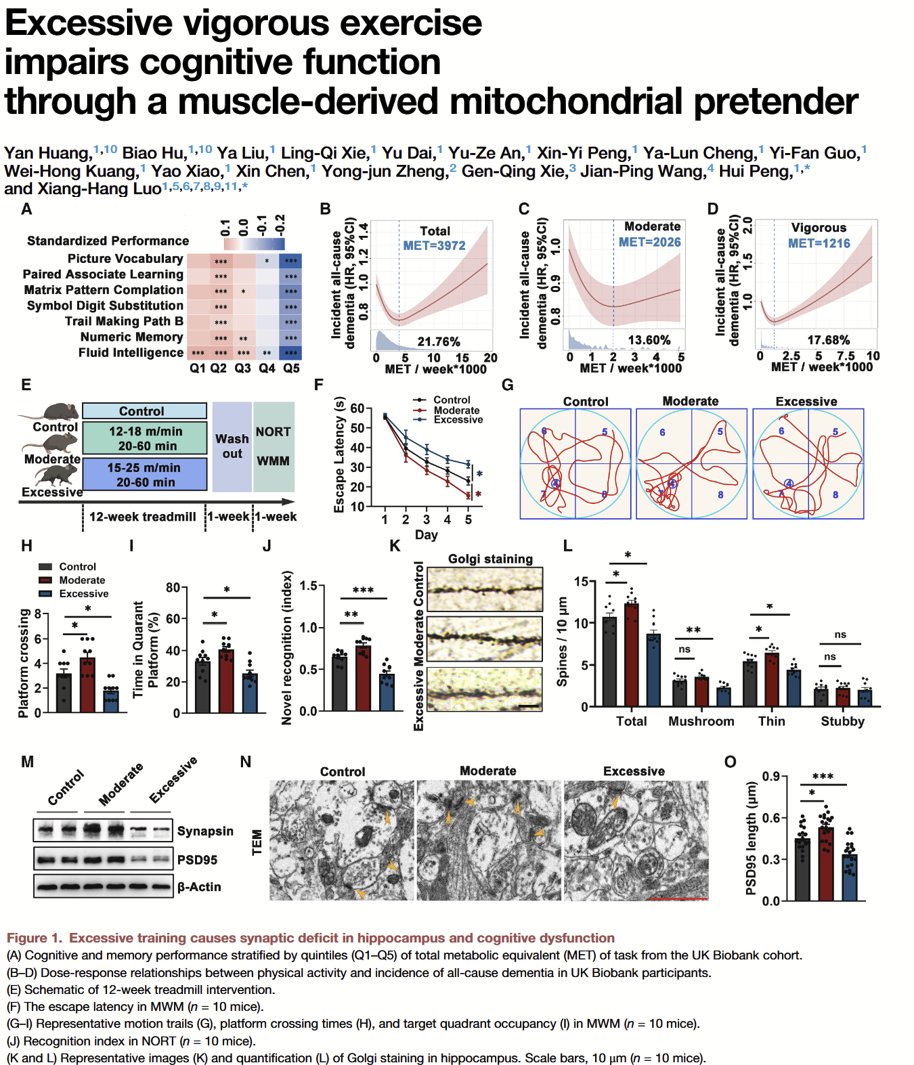
Can too much exercise harm the brain?
This study suggests that excessive vigorous exercise triggers muscle-derived mitochondrial vesicles that travel to the hippocampus, disrupt synaptic energy supply, and impair cognition.
The findings reveal a surprising muscle-to-brain pathway linking overtraining to memory and cognitive decline—and suggest that more exercise isn't always better. #Overtraining #Mitochondria #Cognition @WuTsaiAlliance
https://t.co/u6wnOCDT5g
Apakah ini artinya seluruh rumah sakit harus memiliki clinical reasearch unit (CRU) ?
Kalau benar, ini akan memudahkan fasilitasi pengembangan obat baru pada fase uji klinis
Suatu CRU di RS artinya ada dokter umum, perawat studi dan apoteker studi yg berpengalaman sebagai site uji klinis, syukur2 kalau punya wing perawatan tersendiri dan dalam rekam medis elektronik sudah terpisah dari pasien umum
Dalam melakukan penelitian anggarkan sumber daya, waktu anda untuk melakukan kesalahan, selalau beli 3 karena 1 untuk belajar, 1 untuk salah dan yg terakhir untuk berhasil
Seiring waktu anda akan semakin efisien, namun setiap hal baru dicanangkan bersiaplah untuk gagal, bahkan segerakanlah untuk gagal
Karena dalam kehidupan kita punya kuota gagal yg harus dilampaui
“Being wrong is part of being a scientist. We’re wrong all the time. One of the jokes that I use all the time, but it’s not a joke, it’s really true, is when we got to the point of trying to identify this gene, we had 20 possible genes it could be. I prioritised those genes. The gene that was responsible was the last gene, which means I could not have been more wrong in my prioritisation. It’s absolutely the most wrong thing I could have done. We got it eventually, so it was still there, but it was because there was nothing left. It’s not because I was smart or had any foresight.”
In our official interview with medicine laureate Fred Ramsdell, he told us about the importance of handling failures and being persistent.
Watch the full interview: https://t.co/F0U2k5CXSI
Stem cell and cancer research - SCCR
Ini pemain baru di industri sel punca dalam negri, dan yg terbaru peroleh sertifikasi CPOB
Aktor utamanya Prof Agung, beliau dosen di Univ Islam Sultan Agung Semarang, meski ada juga univ baru menggunakan namanya Univ Agung Putra
Lokasi SCCR tentu di Semarang, dan tampaknya tahun ini ekspansi ke jakarta dengan buka kantor perwakilan
Yang menarik dari poster ini adalah adanya dukungan dari politisi pak Zulkifli Hasan Menko Pangan. Ini hal yg lumrah untuk bisnis yg price listnya selangit, dan kliennya HNWI tentu dari kalangan pejabat
Produk: masih UC derived MSC dan turunannya, menurut info SCCR akan purifikasi jadi single protein dari produk turunan (sekretom). Umumnya ini menggunakan AKTA dari Cytiva
Barusan dapat email undangan abstrak dari ISSCR untuk acara ulang tahun ke 20 iPSC 20-22 Oktober 2026 ini di Kyoto
Industri kedokteran regeneratif dalam negri terlalu dominan MSC, sudah waktunya masuk ke iPSC doong
Abstrak deadline 29 juli, masih ada waktu kawan2 untuk selesaikan ambil data, terutama yg risetnya terkait iPSC ya
Terjemahan: Jangan FOMO, fikirkan sendiri, belajar, lalu jalan2, temui orang2 dan diskusilah
Saya mendapati ngobrol santai dengan orang2 yg berbeda2 bidang itu bisa memunculkan ide baru, dan kerjasama baru
“Just one thing; don’t follow the existing research. Think for yourself. That’s very important. Another thing I have to say is, if you want to be a great scientist, you have to see others, discuss. Recognise that this is a great scientist. This is my advice.”
Some pieces of advice from Susumu Kitagawa to all young students aspiring for a career in science.
Discover more: https://t.co/nRdMYGiQeB
Uji klinis ini bertujuan mengaktifkan beberapa gen pada sel ganglion retina mata dengan tujuan terjadinya regenerasi neuron dan perbaikan fungsi penglihatan pada pasien glaukoma
Aktivasi gen target ini nampaknya dapat disebut sebagai upaya pemrograman ulang parsial dengan transfeksi berbasi virus(?) dan aktivasi dengam konsumsi antibiotik doxycyclin
Upaya ini adalah terpai gen in vivo langsung pada manusia
The first participant has been treated in a landmark clinical trial of cellular reprogramming, which aims to rejuvenate aging cells
https://t.co/HyaNwFVp7f
Isu penyakit langka memang bukan hal yang populer di negara berkembanga seperti indonesia, namun seiring berkembangnya berbagai pengujian genetik dan peralatan pendukungnya diagnosis dapat dilakukan dengan akurat
Nampak dokter @dokterapin sebagai dokter anak menjadi salah satu narasumber acara tersebut
Presented at #ESHG2026:
In 832 patients with rare genetic disease, a conclusive diagnosis was made for 160 patients (19.2%) with long-read genome sequencing and for 137 patients (16.5%) with standard-of-care testing. Full study results: https://t.co/jpLXw5gxqJ
@eshgsociety
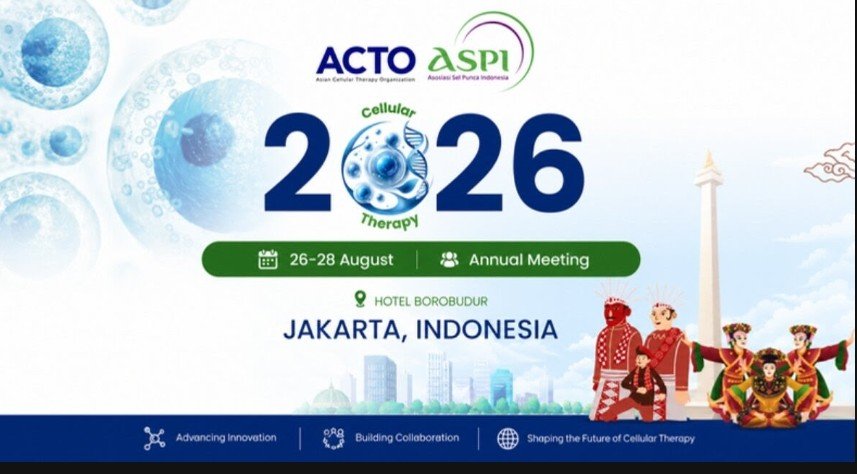
Hari ini hari terakhir early bird untuk ikut serta kegiatan ACTO-ASPI 2026, di Hotel Borobudur tgl 26-28 Agustus
Kita akan hadir untuk melaporkan sejauh mana perkembangan sel punca berjalan di Indonesia