Also new in Claude Code: dynamic workflows (research preview).
For the hardest tasks, Claude makes a plan, runs hundreds of parallel subagents, and verifies its work before reporting back. Think a migration touching hundreds of files.
Read more: https://t.co/7gt06kGkDN
@sjc6254@MohammedAlo Strong correlation effect here, not randomized control trial. As currently LDL lowering meds are given more as secondary prevention compared to primary, we view this post cardiac event population as the low LDL part of the graph here
this is actually insane
> be tech guy in australia
> adopt cancer riddled rescue dog, months to live
> not_going_to_give_you_up.mp4
> pay $3,000 to sequence her tumor DNA
> feed it to ChatGPT and AlphaFold
> zero background in biology
> identify mutated proteins, match them to drug targets
> design a custom mRNA cancer vaccine from scratch
> genomics professor is “gobsmacked” that some puppy lover did this on his own
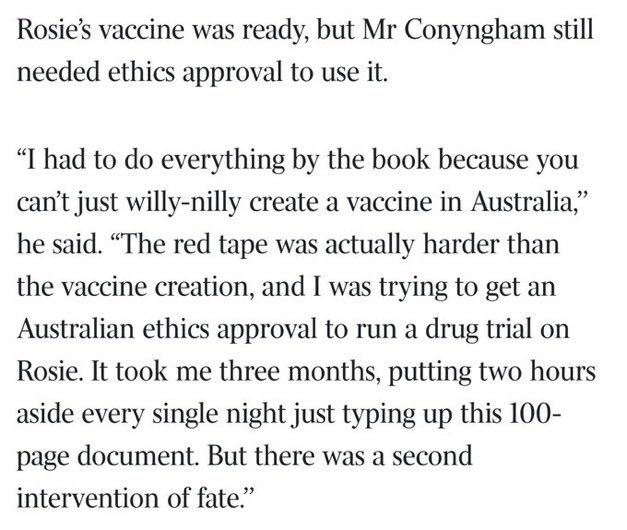
> need ethics approval to administer it
> red tape takes longer than designing the vaccine
> 3 months, finally approved
> drive 10 hours to get rosie her first injection
> tumor halves
> coat gets glossy again
> dog is alive and happy
> professor: “if we can do this for a dog, why aren’t we rolling this out to humans?”
one man with a chatbot, and $3,000 just outperformed the entire pharmaceutical discovery pipeline.
we are going to cure so many diseases.
I dont think people realize how good things are going to get
For avoiding SARS2 infection, this is a new oral prophylaxis item to me. Which doesn’t happen all that often, because I’m reading about them all the time.
It’s based on glycyrrhizic acid, which comes from licorice root.
First, I’ll explain my path to discovering the product, and then how it potentially fits into my list of current recommendations for biological barriers like nasal and throat sprays. It probably still wouldn’t be my top choice, but it’s an interesting option.
Remember, these recommendations are not a replacement for a mask, but a small portion of a multi-layered system (isolation -> ventilation -> filtration and far-UVC -> testing -> masking -> Novavax -> **biological barriers** -> support of the innate immune system through diet & supplementation)
Here is the study that Jack is referencing in the tweet below - Combined Nasal, Oropharyngeal Povidone Iodine Plus **Glycyrrhizic Acid** Sprays, Accelerate Clinical and Laboratory Recovery and Reduces Household Transmission of SARS-CoV-2: https://t.co/cfPuupha6t
At first glance, I assumed it was probably mostly the povidone-iodine doing the heavy lifting. Because it does work, however, I don’t like to use or recommend it in nasal or oral products because it tends to be pretty harsh on the mucosal lining, potentially causing damage.
But then, I came across: Glycyrrhizic Acid Inhibits SARS-CoV-2 Infection by Blocking Spike Protein-Mediated Cell Attachment: https://t.co/Htqm76tXm0
So, I went to look, and I did come across a throat spray product that contains only the glycyrrhizic without the povidone-iodine: https://t.co/UGxN7UjjL1
It contains Propolis, Echinacea, Thyme (all great, as well, but I’m not necessarily certain of the usefulness for this application) and the glycyrrhizic acid.
As usual, it’s not directly available in North America, but it does seem to ship here.
As of Jan. 2026, these would be my top recommendations for biological barriers:
Pre-exposure nasal spray: Iota-carrageenan (some reputable brands: NoriZite, Betadine, Salinex, Flo Travel, Algovir, Boots), or Azelastine (Astepro) if you’re dealing with allergies concurrently.
Post-exposure nasal spray: Nitric Oxide (Enovid)
Daily (or frequent) interventions for pre-exposure oral immunity support: Blis K12 probiotics and/or a Mushroom extract spray like MycoShield
Acute Pre-exposure oral support: Iota-carrageenan spray (NoriZite, Lontax gola, etc.), Iota-carrageenan lozenges, or this glycyrrhizic acid product
Post-exposure oral support: Mouthwash containing 0.10% Cetylpyridinium Chloride (CPC) (eg. Crest pro-health clinical or Therabreath deep clean)
Scientists just cracked the multiple sclerosis code after decades of searching.
Two specific gut bacteria are triggering the disease, and they've proven it using identical twins and mice.
This changes everything we know about MS:
@Idaneretz אני בסדר גמור לשלם מע"מ מהשקל הראשון. מיסים למדינה זה בסדר.
אבל! צריך להוציא מחוץ לחוק כל דמי טיפול של DHL/EMS וחבריהם, על עצם הטרחה של הטיפול במכס - מכה של 150-200 ש"ח, ואז המחירים מגיעים לפי 2 ממחיר המוצר ביחד עם המע"מ
נגיד Amazon צדיקים בזה, גובים מראש בדיוק 18% ולא שקל יותר
This is how I was taught C++ at ITMO University:
1. Implement my own 'printf' in pure Assembly
2. Implement Big Integer class with CoW and SOO
3. Implement the QuickHull algorithm
4. Learn Type Erasure and implement my own std::function
5. Implement Persistent Binary Search Tree (PBST) using std::shared_ptr
6. Implement a custom Hoard memory allocator, optimised for multithreaded programming
I learned C++ before C.
I never looked at C++ as "C with Classes".
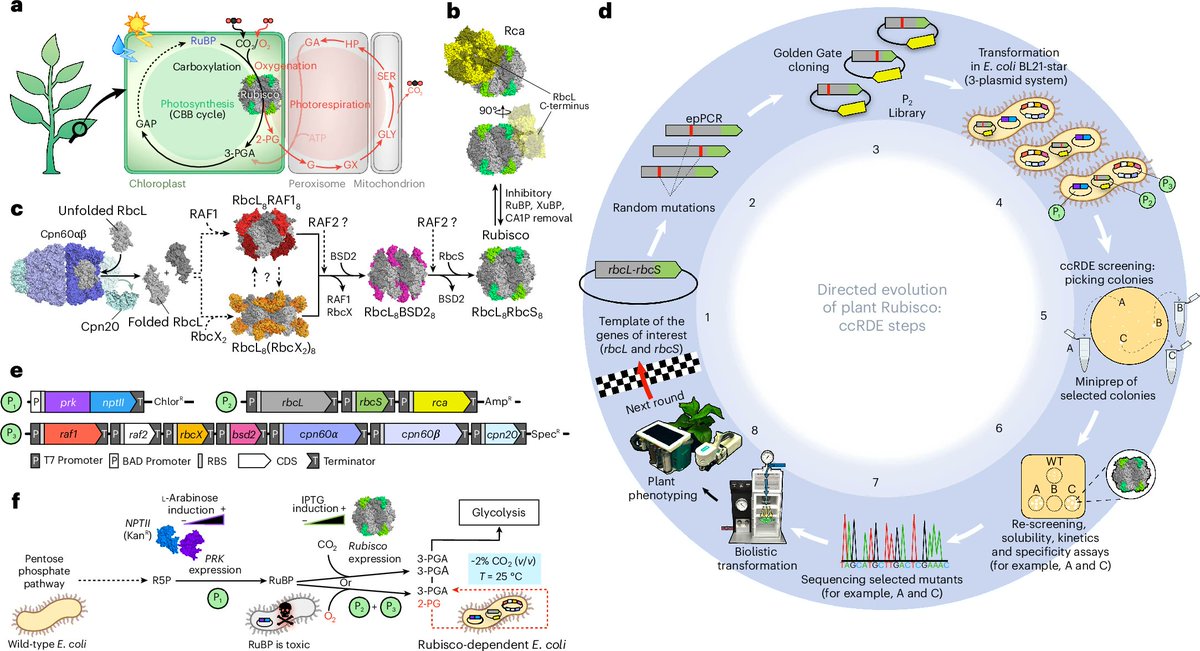
Rubisco is (arguably) the most abundant protein on Earth. (LPP surely comes close, right?) It’s an enzyme that fixes CO₂ into sugars during photosynthesis.
Unfortunately, as most people learn in school, Rubisco is inefficient. Sometimes it confuses O₂ for CO₂ and wastes energy. Plants make up for this in raw concentration; up to half the soluble protein in a leaf is Rubisco.
People have been trying to engineer better Rubiscos for many decades, but it's not easy because the proteins are big, do not fold easily (they need chaperone proteins to help out), are made from 16 subunits in land plants.
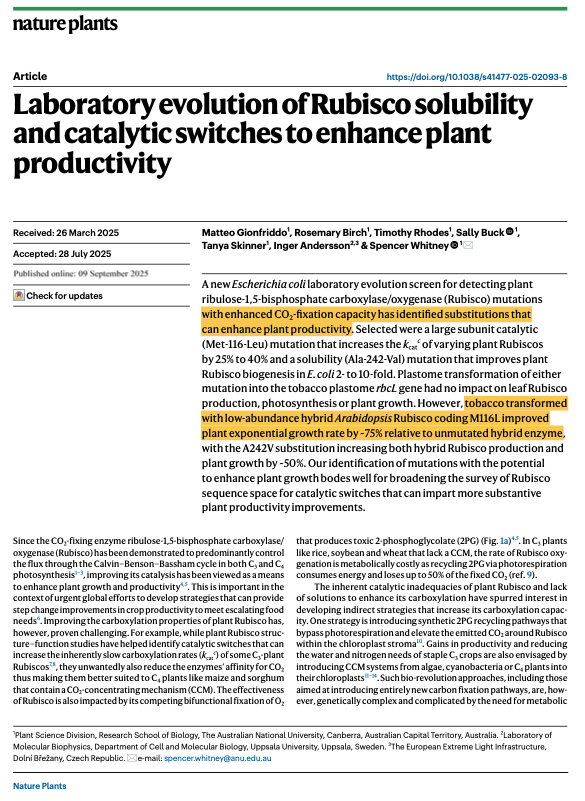
But there's a new paper in Nature Plants that looks really interesting. The TL;DR is that a group in Australia figured out how to express plant Rubiscos (and all SEVEN of their folding chaperones) using a set of 3 plasmids inside of E. coli cells. This enabled them to do "directed evolution" of Rubisco in bacterial cells, and quickly find Rubisco mutants that have higher enzymatic efficiency or that fold better.
In addition to the 3 plasmids, the researchers also coaxed E. coli to make ribulose-1,5-biphosphate, or RuBP, which is the 5-carbon sugar that Rubisco smashes into carbon dioxide to make molecules of 3-PGA for central metabolism.
Now, the clever bit is that you RANDOMLY MUTATE the three plasmids encoding the Rubisco to make millions of variants. Then, you transform those mutated plasmids into E. coli. If the E. coli do NOT make a functional Rubisco, RuBP levels build up and kill the cell; the molecule becomes toxic. But if the E. coli DO make a functional Rubisco, then they keep the RuBP levels in check and live just fine.
Using this "screening assay," the researchers found 46 fast-growing colonies of E. coli. Two of those colonies encoded really useful mutations. One mutation (M116L) makes Rubisco about 25–40% faster. The other (A242V) makes it fold and assemble much more efficiently.
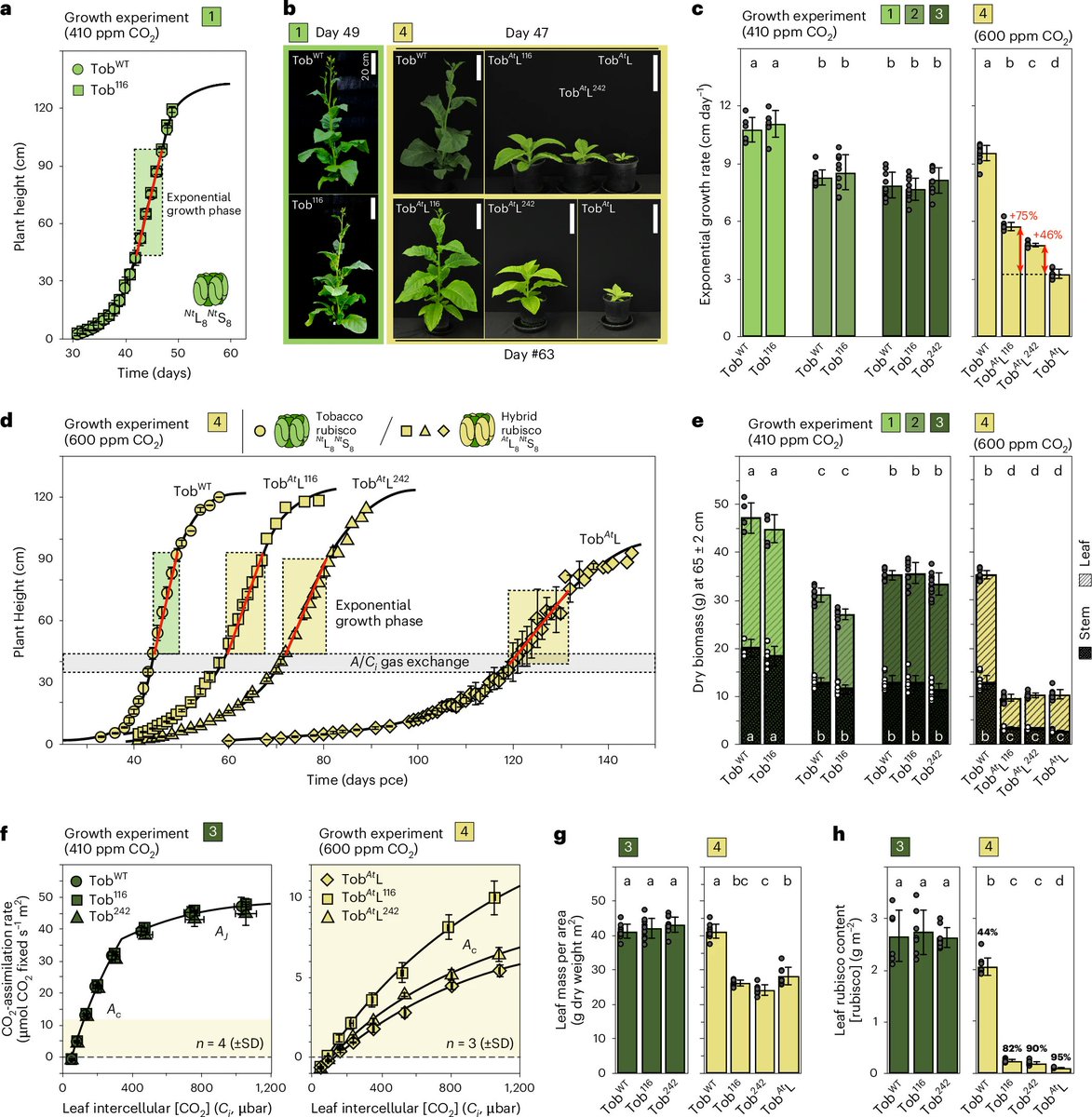
They put this mutation into a "hybrid Arabidopsis–tobacco Rubisco," put that into tobacco plants, and measured growth. The plants with M116L grew 75% faster than wildtype.
No guarantees this will scale to more useful crops, like wheat and corn and soybeans etc. But it seems like a nice in vitro assay for faster prototyping!
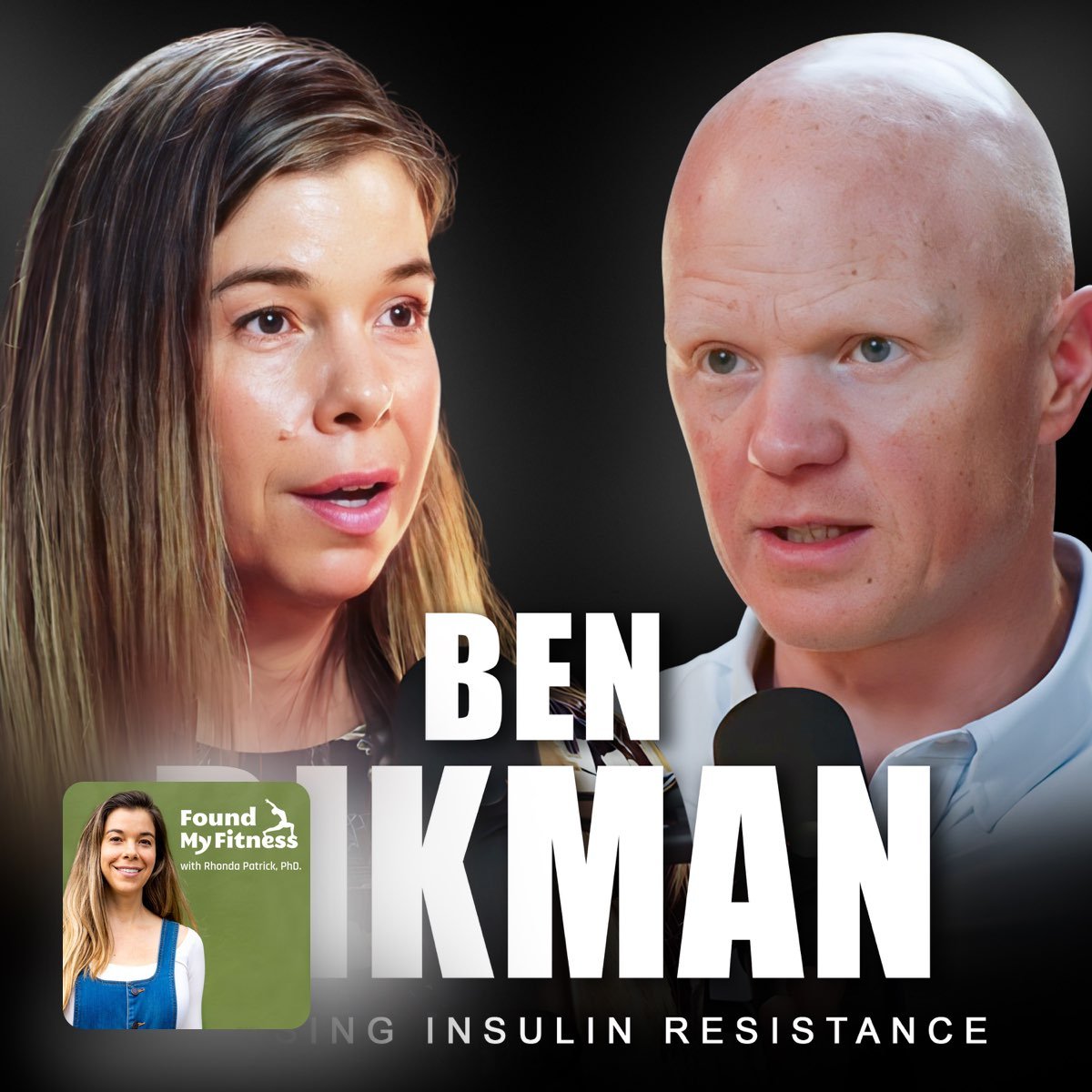
Just listened to @FoundMyFitness with @BenBikmanPhD - it was a drop what you're doing and go listen kind of masterclass where they dove deep on insulin resistance, visceral fat, GLP-1s, and metabolic health.
Some of my notes for the longevity and metabolic health community...
ASHRAE 241: What to do when a virus spreads through the air.
This standard defines how much clean air per person is needed to reduce infection risk - but only during outbreaks.
It doesn’t apply all the time.
Here’s what it says and why it matter🧵
@kn_owled_ge Maybe I should take some philosophy classes :)
Surely you've seen the classic research on income vs happiness, but later it was refined - hedonic happiness does plateau (on a linear scale, still continues on a log scale), but eudaimonic happiness continues to much higher incomes!