A new Science #Immunology study in mice shows that #GobletCells in the gut trigger Notch signaling in group 2 innate lymphoid cells (#ILC2s), which dictates tissue-specific identity and function. @nkg2d1
https://t.co/y5AX2Jiy7N
Mitochondrial dysfunction underlies a wide spectrum of diseases—from neurodegeneration to heart failure. Yet, targeted delivery of healthy mitochondria has remained a major bottleneck.
This Nature study introduces MitoCatch, a programmable system that enables cell-type-specific mitochondrial transplantation using engineered protein binders. �
Nature
Three modular strategies:
MitoCatch-C: binders expressed on target cell surfaces
MitoCatch-M: binders displayed on mitochondria
MitoCatch-Bi: bispecific linkers bridging both �
Nature
Key outcomes:
Efficient mitochondrial internalization
Integration into cellular dynamics (fusion/fission)
Functional rescue of degenerating cells
This work defines a new paradigm:
👉 Precision organelle therapy
👉 Potential applications in heart failure, neurodegeneration, and aging biology
📚 Reference
Cell-type-specific mitochondrial transplantation by programmable protein engineering
Nature, 2026
DOI: 10.1038/s41586-026-10391-0
Designing programmable RNA translation elements with language models and diffusion
Internal ribosome entry sites (IRESs) are RNA elements that let ribosomes start translation without the canonical 5' cap. They are central to mRNA and circRNA therapeutics, enabling cap-independent protein output under cellular stress, viral infection, and especially in engineered circRNA vaccines where no cap exists. But IRES function emerges from a tangled interplay of sequence and structure, validated examples are scarce, and traditional k-mer or SVM predictors generalize poorly across families and barely work for circRNAs.
Yanyi Chu and coauthors build a three-module framework. IRES-LM is an ensemble of two RNA foundation models (UTR-LM and RNA-FM) fine-tuned on 46,774 labeled sequences, improving AUC and F1 by about 15% over IRESfinder, IRESpy and DeepCIP. Despite training only on linear mRNA IRESs, it correctly flags all 21 experimentally validated circRNA IRESs, while DeepCIP recovers only 15. Without explicit supervision, the embeddings also capture minimum free energy and splicing signals.
IRES-EA wraps IRES-LM in an evolutionary algorithm that mutates non-IRES sequences into functional ones. In a massively parallel reporter assay of 12,000 mutants, 98.4% gained detectable IRES activity, with high-activity variants preserving wild-type-like secondary structure.
IRES-DM is a denoising diffusion model that generates IRES sequences from noise. Of 12,000 generated sequences, 99.3% showed measurable activity. It can produce sequences sharing only 27.6% identity with natural BiP IRES while preserving a comparable fold, and motif analysis reveals high-activity k-mers rare in natural IRESs, pointing to sequence space evolution has not explored.
For RNA therapeutics and vaccine R&D, this points to computationally designed IRES libraries with near-perfect functional yield, tunable protein output for circRNA and mRNA payloads beyond the small natural catalog, and cap-independent expression as a tunable design parameter. A meaningful shift for circRNA vaccine pipelines and synthetic biology workflows needing precise translation control.
Paper: Chu et al., Nature Machine Intelligence (2026) — journal license | https://t.co/GBueZEByZV
You and Kim et al. identified discrete mitochondrial states in intratumoral cDC1s, wherein cDC1s with polarized mitochondria more effectively primed CD8+ T cells than depolarized cDC1s. OPA1 regulated mitochondrial fusion and membrane potential, sustaining NRF1 expression, OXPHOS, and NAD+/NADH balance to support cDC1 functional fitness. The OPA1-NRF1 axis suppressed autophagy- and lysosome-mediated degradation of MHC-I and antigens to support cDC1 immunogenic function. OPA1 loss impaired antigen presentation and promoted tumor growth, while whole-tumor-cell-pulsed polarized cDC1 administration synergized with ICB in solid tumor models. https://t.co/ZpHucQuh7R
@StJudeResearch
Immune cells continually detect, engulf, and destroy invasive microbes and cancer cells.
This process, called phagocytosis, is carried out by macrophages that must distinguish between proengulfment signals and inhibitory (“don’t-eat-me”) warnings. Cluster of differentiation 47 (CD47), a cell-surface receptor, is the archetypal don’t-eat-me signal. Many cancers upregulate CD47 expression to escape phagocytosis, and CD47 blockade promotes phagocytosis of cancer cells in mice.
However, CD47 blockers have not shown clinical benefits in patients with acute myeloid leukemia (AML), an aggressive cancer of blood immune cells. This discrepancy has raised the possibility that the molecular programs that inhibit phagocytosis differ between mice and humans.
In a new Science study, researchers report that the mechanisms that control macrophage function in human and mouse cells are indeed different. They also identify cluster of differentiation 43 (CD43) as a potential target for human AML treatment.
Learn more in a new #SciencePerspective: https://t.co/3wfJd4CFgC
Researchers have uncovered a pathway that keeps bone resorption in check by dampening the activation of #inflammasomes in osteoclasts—identifying an important restraint and helping to answer a paradox in the field of bone biology. @SciSignal https://t.co/tq48ePjxNK
Realizing the promise of CAR-T cell therapies for autoimmune diseases
https://t.co/L7nvlvOFAW
CAR-T cell therapies could change the treatment paradigm in B cell-driven autoimmune diseases. This article discusses key considerations in realizing their potential
Li et al. engineered an oncolytic vaccinia virus that expressed truncated CD19 and EGFRvIII on GBM cells (OVDual) and a bispecific CD19/EGFRvIII CAR-T (BiCAR-T). BiCAR-T cells effectively targeted OVDual-infected GBM cells in vitro, and intratumoral OVDual plus BiCAR-T reduced tumor burden in the xenograft model of GBM. Oncolytic vaccinia virus encoding mIL-15 and mIL-21 (OVmIL15/21) further enhanced CAR expansion, persistence, and cytotoxicity. Human pluripotent stem cell-derived (off-the-shelf) BiCAR-NK cells combined with OVDual and OVmIL15/21 showed similar antigen-specific cytotoxicity and in vivo efficacy, limiting immune escape. https://t.co/pVxlidQzM1 @cityofhope
For readers interested in the promise and challenges for CAR-T cell therapies for autoimmune diseases, here's a comprehensive review from our April issue
https://t.co/RNbKBGRrgm
A T cell differentiation program analogous to that in chronic infections and cancer is found in lupus; however, CD8+ T cells in systemic autoimmunity retain effector function despite terminal differentiation @ImmunityCP@Yale
https://t.co/sR0Cg4gv7C
A new Science #Immunology study in mice shows that persistent inflammatory stress and type I #interferon signaling generates splenic #neutrophils with specialized antibacterial functions, helping clear bladder infections. https://t.co/g8ETCV3d0r
Somatic mutations in microglia brain cells (the same mutations as seen in cancer) are enriched in and may drive the neuroinflammation of Alzheimer's disease
@CellCellPress
https://t.co/PS7pIBFW4H
Biologic degraders push forward in the clinic
https://t.co/aOTx11x35y
Antibody-based extracellular targeted protein degraders are advancing in the clinic, highlighting emerging opportunities to destroy disease-linked proteins in cancer and autoimmunity
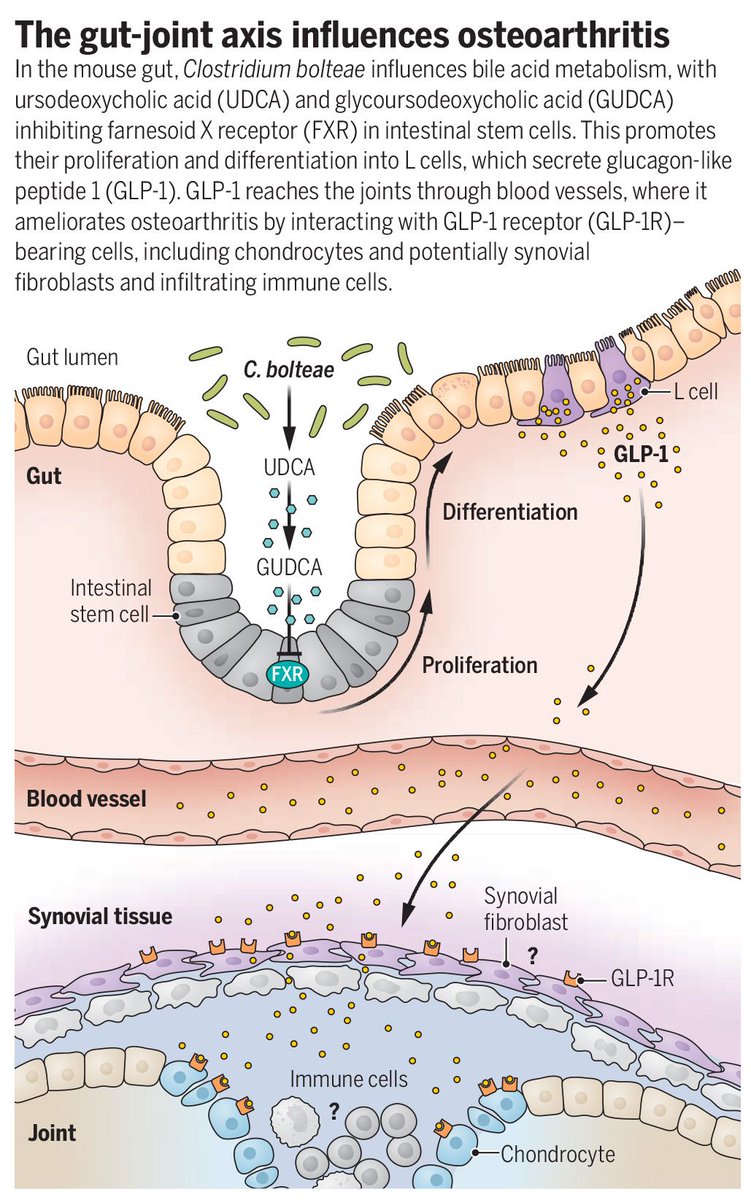
In a 2025 Science study, researchers reported compelling evidence for a gut-joint axis involving bile acid metabolism and GLP-1 signaling in osteoarthritis development, advancing the understanding of osteoarthritis pathogenesis and opening new avenues for therapy.
Learn more in this #SciencePerspective: https://t.co/CW3xWagpBE #ScienceMagArchives
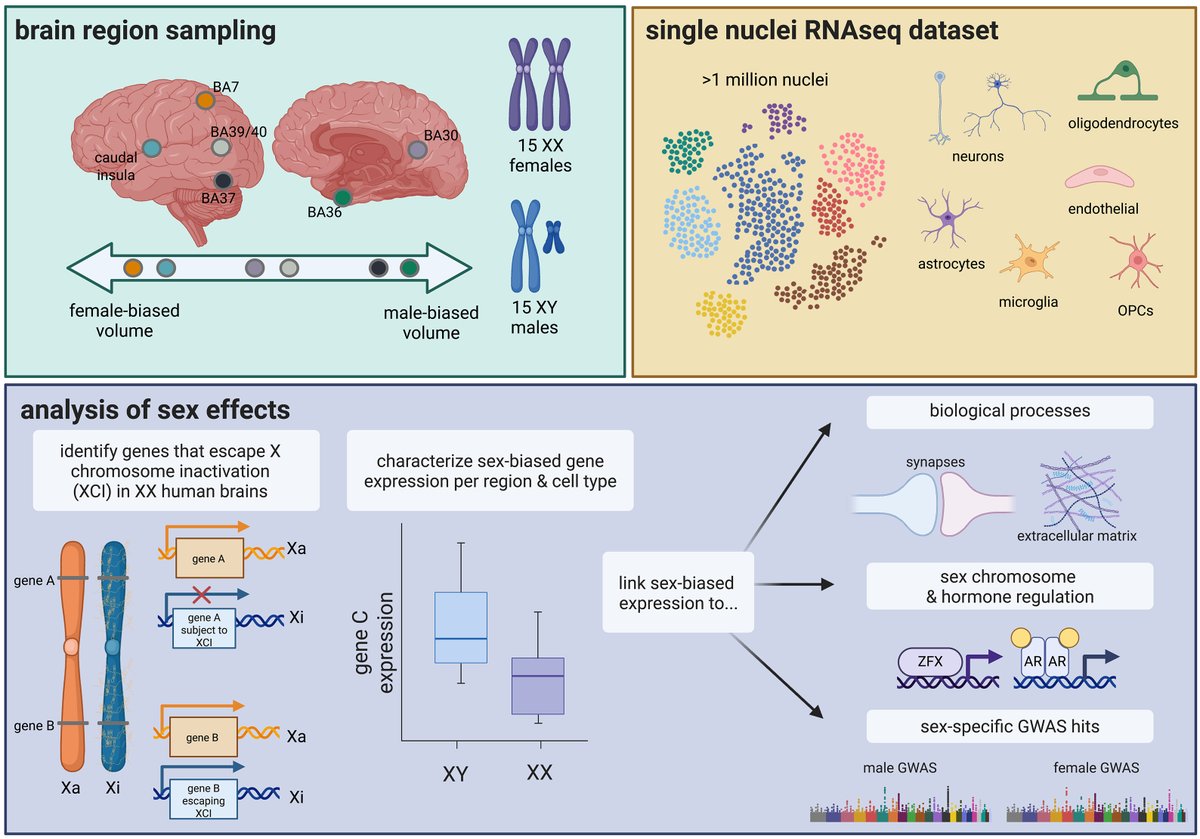
A new analysis in Science of individual brain cells across several human brain regions reveals subtle but widespread differences in gene activity between male and female brains.
This may help explain why some psychiatric and neurological disorders appear to affect the biological sexes differently, researchers report. https://t.co/0UyPE6Sz9d