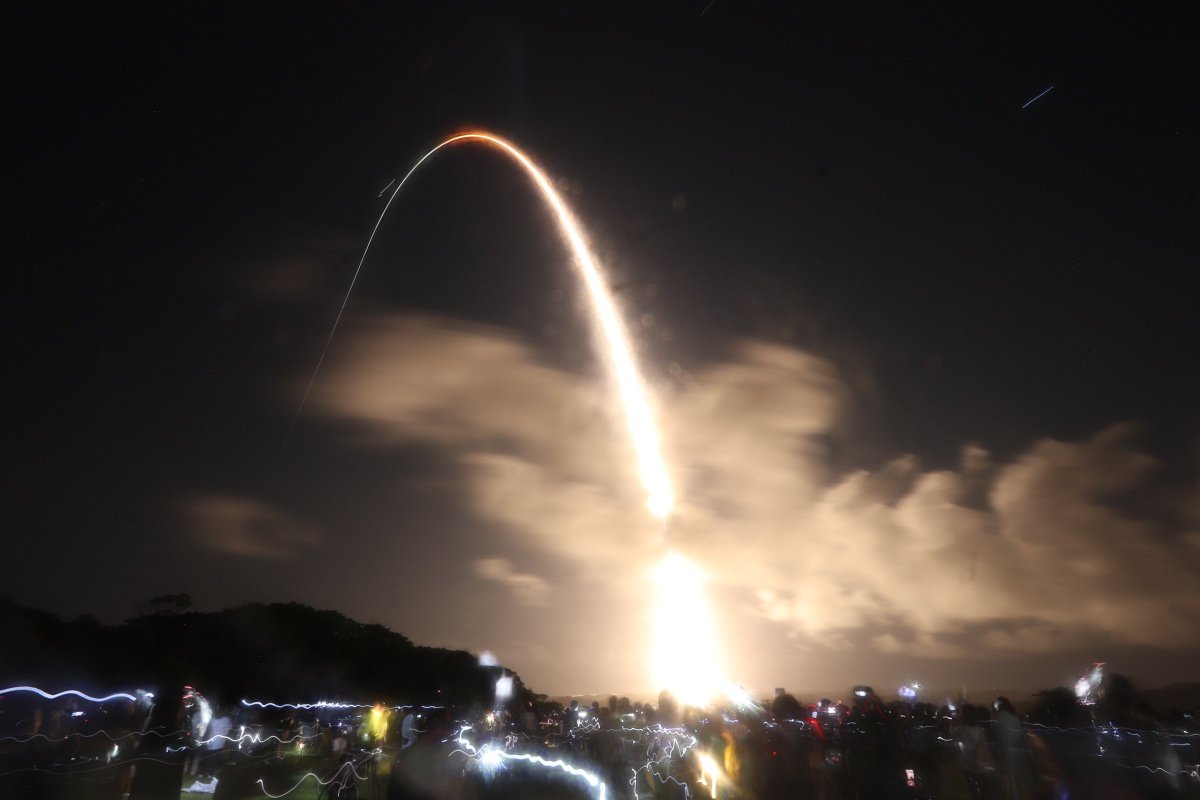
A massive fireball engulfs Launch Complex 36 at Cape Canaveral Space Force Station on Thursday, May 29, 2026, as Blue Origin's New Glenn rocket explodes during a planned static fire test.
After nearly two decades, NASA's next-generation spacesuits remain incomplete. Today, the Agency continues to face delays and is reliant on Axiom Space to develop both the Artemis lunar suits and updated ISS suits. Read our new report to learn more: https://t.co/2fo1LZZmYc
I am hesitant to get ahead of a proper data review, but I understand the space community’s curiosity, especially when imagery can give the impression of a problem.
As you would expect, engineers were eager to inspect the heat shield, starting with diver imagery shortly after splashdown and continuing with the review aboard the ship. No unexpected conditions were observed. I suspect when the images are released, it will be pretty obvious the stark difference between Artemis I and Artemis II head shield performance.
As to the question specifically, the discoloration was not liberated material. The white color observed corresponds to the compression pad area and is consistent with the local geometry, AVCOAT byproducts, and transitional heating environments. We observed this behavior in arc jet testing and expected it in this compression pad area.
We will complete a full data review across all systems, including the thermal protection system, and make the results publicly available.
Anyone else remember when NASA was staffed by competent people focused on mission, not on “owning the libs?”
Hopefully one day adults will staff the Federal Government again.
I’m stepping back from posting here.
Watching the Artemis program be dismantled, combined with the current US political climate, has made space Twitter pretty draining and I’m not enjoying engaging with it anymore.
I’ll still be on YouTube, just won’t be active here.
HEO (@heospace) has imaged @AST_SpaceMobile 's Bluebird 6 satellite in orbit. It looks significantly different from the illustrations on AST Space Mobile's website.
https://t.co/K5apf48CoX
Sharing a couple photos of our GS2s in build and getting their final touches inside our Rocket Park Factory. It's getting a little crowded, but that's exactly the point, manufacturing rate matters.
We hot fired New Glenn’s GS2 serial number five last night, with the BE-3U engines ramping up to 175K of thrust. Love seeing the continuous flow of GS2s on the Space Coast!
Introducing our latest X-Plane, the X-76! ⚡
Part of a joint effort with @USSOCOM on the SPRINT program, this experimental aircraft is being built by @BellFlight to demonstrate runway-independent, high-speed flight.
Having an impact on the effort to protect Earth: In 2022, NASA's DART mission tested a technique for deflecting a hazardous asteroid by impacting tiny Dimorphos. Now, new research reveals that DART also changed the orbit of its larger companion, Didymos. https://t.co/ykuNEtL98V
NASA contract confirms selection of ULA’s Centaur 5 as new upper stage for the SLS rocket
Full story: https://t.co/jGYZ81deC6
Image: United Launch Alliance (2023)
INNOSPACE Expands Launch Footprint into North America!
INNOSPACE has signed a Letter of Intent (LOI) with Maritime Launch Services Ltd.(@maritimelaunch) to assess the feasibility of operating the HANBIT launch vehicle at Spaceport Nova Scotia, a commercial orbital launch facility in Canada.
🌎 Why North America?
• A core market for global small satellite demand
• Strategic location along the Atlantic corridor
• Expanded access to international customers
Following launch site agreements in Brazil, Australia, and Europe, this expansion into North America further strengthens INNOSPACE’s geographically diversified launch network and enhances its competitiveness in the global commercial launch market.
🔗 Learn more: https://t.co/FJFixxratN
#LaunchServices #SmallSatellite #SmallSat #CommercialLaunch #NorthAmerica