Bill Gates on AGI and its future is a bit conservative but basically rational and clear-thinking.... He also notes that one potential solution to AGI-ethics issues is a different/better foundational AI architecture which as he says "a few are working on" [raising my hand here ;p ...] ... https://t.co/rTE89eYMgX
However he thinks the tumultuous transition between here and ASI will likely take 20 yrs or so ... I suspect it will go a bunch faster...
The headline is rubbish ofc, he does not think AI will make us live like the Amish ... he thinks that a certain percent of the human population will have an Amish-like attitude of "we don't have to use these new technologies" toward AGI/ASI.... I personally think this will be a rapidly decreasing percentage as the incredible value of AGI/ASI to improve life becomes clear... but it's a valid point for sure... this is what Hugo DeGaris called the Terrans as opposed to the Cosmists...
7 billion data points from one F1 car in a race weekend. Volume alone does not win races.
Mercedes-AMG PETRONAS F1 CIO Michael Taylor and @HPE Chief technologist Max Walker explain why engineers need trusted data in milliseconds.
#HPEPartner
The line between trad enterprise software and crypto rails continues to blur. Ramp’s push for a national trust charter to offer native crypto custody and automated treasury management is a huge signal for corporate finance evolution. #Fintech#Tokenization
https://t.co/d3egMHDP2I
Customer context can easily get lost in the handoff. PwC’s "common brain" approach could make it much easier to carry that context from one interaction to the next.
@TMobileBusiness Partner
China isn’t just building humanoid robots. It’s scaling production faster than the rest of the world.
The H1 2026 shipment estimates tell a striking story: Agibot at ~8,600 units, Unitree at ~5,000, while US-based Figure AI shipped only a few dozen.
The real race isn’t just about who builds the smartest robot. It’s about who can manufacture, deploy, and improve them at scale.
AI may create the intelligence, but manufacturing scale could determine who wins the robotics revolution.
The next industrial powerhouses may not look like traditional factories. They may look like fleets of humanoid robots.
The new ADIPEC Global Energy Report 2026 caught my attention: 22% of oil and gas insiders name AI-driven efficiency as a top commercial opportunity today, versus 27% in ten years.
A signal of changing business priorities.
Join > https://t.co/w9vnyE9fl5
@ADIPECOfficial Partner.
Another finding adds context: 81% of energy insiders expect AI-driven electricity demand to exceed current forecasts.
This creates a closer relationship between the energy and technology industries.
Energy companies need to understand how computing demand will evolve, and technology companies must understand the capacity and operating requirements of energy systems.
I find this mutual dependency particularly interesting because investment decisions in one industry will increasingly affect the other.
ADIPEC 2026, taking place from 2-5 November in Abu Dhabi, offers an opportunity to examine how these developments will shape the energy business.
Energy. Intelligence. Impact.
#ADIPEC2026 #ADIPEC #Energy #AI
Proximate causes are typically the actions (or lack of actions) that lead to problems, so they are described with verbs (I missed the train because I didn't check the train schedule).
Root causes run much deeper and they are typically described with adjectives (I didn't check the train schedule because I am forgetful).
You can only truly solve your problems by removing their root causes, and to do that, you must distinguish the symptoms from the disease. #principleoftheday
The creator economy is becoming a major pillar of the global digital economy. Goldman Sachs projected it could grow from $250 billion in 2023 to nearly $480 billion by 2027. The question is who will capture that value: creators, platforms or the companies building the AI infrastructure behind them?
𝐖𝐡𝐚𝐭 𝐌𝐚𝐤𝐞𝐬 𝐓𝐡𝐞 𝐀𝐈 𝐌𝐞𝐝𝐢𝐚 𝐂𝐫𝐞𝐚𝐭𝐨𝐫 𝐄𝐜𝐨𝐬𝐲𝐬𝐭𝐞𝐦?
“When social becomes an enterprise spend, it crosses the threshold of 𝟏𝟎 𝐦𝐢𝐥𝐥𝐢𝐨𝐧 𝐚𝐧𝐝 𝐚𝐛𝐨𝐯𝐞. Everything that that system entails breaks and then these big brands get stuck because they don't have the right partners and technology in place. Creators are the mechanism that moves commerce.” - Joe Gagliese @joeyviral
Joe Gagliese is the co-founder and Co-CEO of @viralnationinc , a Toronto-founded company operating across social-first marketing, creator representation, technology, data and social media intelligence.
“Viral Nation is a solutions an AI company that has delivery. The company is helping the biggest brands in the world by bringing social and its entire operating process to an enterprise grade level so that it can be run like a channel like media like communications.”
With representation in eight countries and the world’s largest managed influencer network, Viral Nation fuels growth for the world's leading brands including but not limited to: @Disney , @AnheuserBusch, Baidu, @thecampbellsco , @CocaColaCo, @Intuit , @Logitech , @Match , @Meta Platforms, @Microsoft , Tencent, @Uber , and Vivid Seats.
“The most successful creators are the ones who look at their data and their insights. They're the ones who make an effort to grow their business and to be different. They take their business seriously. We let data and AI lead what the decisions are being made based off a data framework.”
During my discussion, we spoke about how AI is transforming the economics of social media and digital content, the rise of Social AI and enterprise creator intelligence.
“𝐂𝐫𝐞𝐚𝐭𝐨𝐫𝐬 𝐚𝐫𝐞 𝐠𝐚𝐭𝐞𝐤𝐞𝐞𝐩𝐢𝐧𝐠 𝐢𝐧𝐝𝐮𝐬𝐭𝐫𝐢𝐞𝐬 𝐧𝐨𝐰. AI is going to be fundamentally running a lot of the things even if you don't see it right this might be truly one of the only remaining worlds left where it is human to human interaction. 𝐈'𝐦 𝐡𝐨𝐩𝐢𝐧𝐠 𝐭𝐡𝐚𝐭 𝐜𝐫𝐞𝐚𝐭𝐨𝐫𝐬 𝐚𝐬 𝐚 𝐜𝐨𝐚𝐥𝐢𝐭𝐢𝐨𝐧 𝐚𝐫𝐞 𝐠𝐨𝐢𝐧𝐠 𝐭𝐨 𝐫𝐞𝐦𝐚𝐢𝐧 𝐟𝐨𝐫 𝐭𝐡𝐞 𝐧𝐞𝐱𝐭 𝟏𝟎 𝐲𝐞𝐚𝐫𝐬, 𝟐𝟎 𝐲𝐞𝐚𝐫𝐬 𝐚𝐬 𝐭𝐡𝐞 𝐩𝐞𝐨𝐩𝐥𝐞'𝐬 𝐦𝐞𝐝𝐢𝐚.”
Full interview live in my Youtube channel: https://t.co/vARRfsUmH1
#aicontentcreation #humanvsai #syntheticinfluencers #influencereconomy #socialmediamarketing #creatormarketing #digitalcreators
cc @YuHelenYu@efipm@enilev@JagersbergKnut@TysonLester@CurieuxExplorer@GlenGilmore@FrRonconii@chidambara09@jeancayeux@mvollmer1@Nicochan33@RLDI_Lamy@pchamard@mikeflache@Fabriziobustama@ipfconline1@PawlowskiMario@drsharwood@kalydeoo@baski_LA@AnthonyRochand@smaksked@Eli_Krumova@andresvilarino@gvalan@AI_4_Healthcare@bimedotcom@arlenenewbigg@NewsNeus@domingonarvaez1@bamitav@jornalistavitor@jblefevre60@FmFrancoise@MHcommunicate@Corix_JC@c4trends
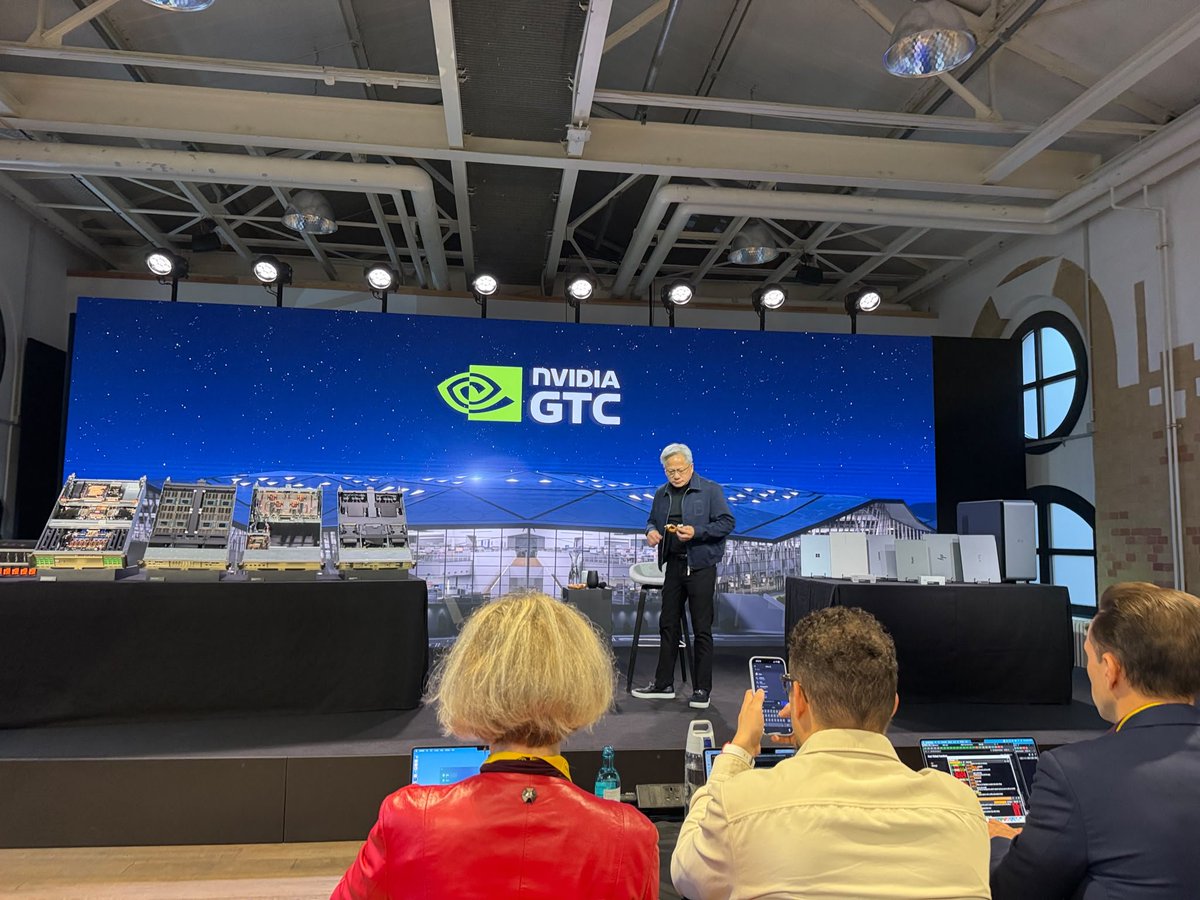
One of Jensen's strongest messages: Europe must move from consuming AI to producing it. With NVIDIA working with over 12,000 partners across Europe, the foundations are growing. But how do we translate this into lasting economic value?
NVIDIA is no longer just building GPUs. It is building the infrastructure for an AI-driven economy.
At #GTCBerlin 2026, Jensen Huang outlined a major shift towards AI factories, autonomous agents and the systems needed to put intelligence to work.
From DSX POD reducing deployment times to OpenShell securing AI agents and new technologies connecting enterprise data with AI, the focus is moving beyond computing power towards real business value.
The bigger question: How quickly can enterprises turn these technologies into measurable productivity and economic growth?
https://t.co/WKdKg3le2F
#NVIDIA #JensenHuang #AIFactory #AgenticAI
It is a common mistake to move in a nanosecond from identifying a tough problem to proposing a solution for it.
Strategic thinking requires both diagnosis and design. A good diagnosis typically takes between fifteen minutes and an hour, depending on how well it's done and how complex the issue is.
It involves speaking with the relevant people and looking at the evidence together to determine the root causes. #principleoftheday