I provide summaries of recently published scientific papers so that they can be understood, put into context, and enjoyed by a broader non-expert audience
See where your scientific reputation stacks among others in your field of expertise on https://t.co/ecmmIt3F9N
1️⃣ Verify Identity
2️⃣ Claim Authorship on Publications
3️⃣ Checkout Your Calculated Reputation & Achievements
Calling All Academics: Turn Your Insights Into Income! Earn $150 or More as a Peer Reviewer!
Here are the leading bounties sponsored by the @ResearchHubF 🧵
🧵Get Funded on ResearchHub!
@ResearchHub is experimenting with a new feature to help fund scientific research!
Our community is planning to fund five separate $5k grants for novel #preregistered research projects
⬇️ Click to submit your application ⬇️
https://t.co/r6rxwBy8Lw
Want to learn about how @ResearchHub is funding #preregistered research projects?
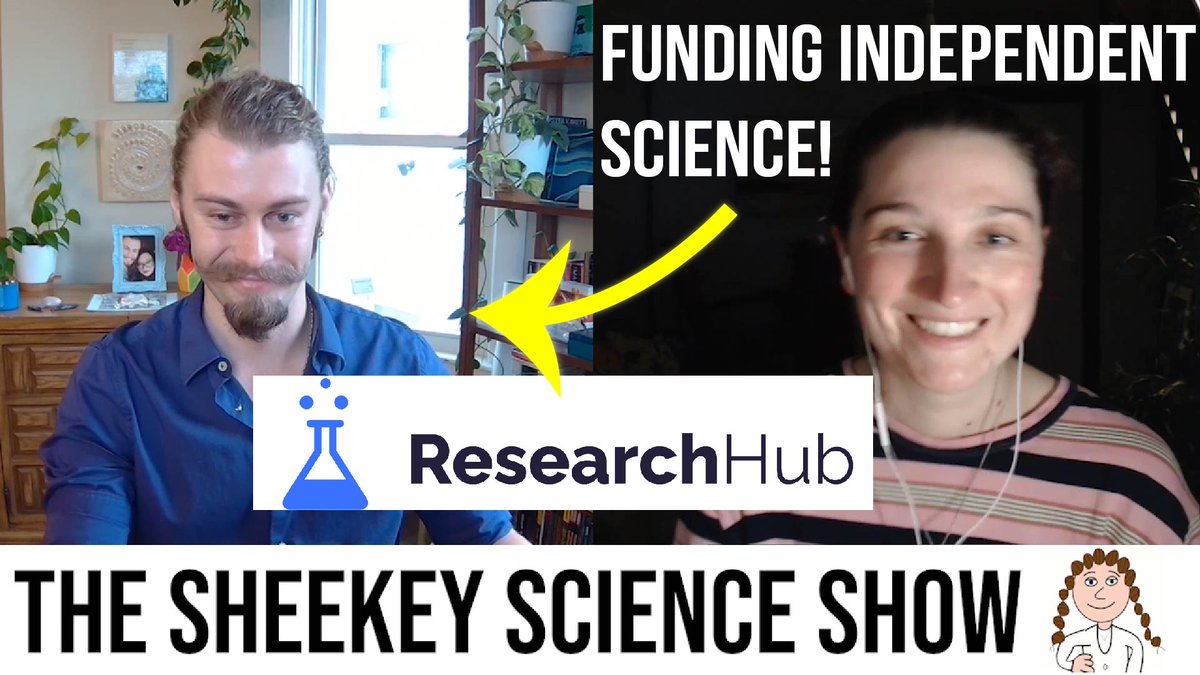
Check out @Delyea_Cole discussing his experience getting funded with $RSC to explore how different types of music affect plant growth on the @SheekeyScience show
https://t.co/C3rqnURYge
Imagine getting research funding within 2 hours...🤔
Well, that became a reality for @Delyea_Cole who used @ResearchHub to fund his ongoing plant-music experiment. 💰--> 🌱
Find out more in the latest episode --> https://t.co/4yAjqVs3pS
#scicomm#AcademicYouTube
Can we use Web3 solutions to fix science?
Let's find out by understanding...
✅ What scientists actually do
✅ Good science vs bad science
✅ Publish or perish
✅ How to steal work
✅ Proposed solution by @ResearchHub
✅ Why $RSC is pumping
Trust me, I'm a degen with a PhD 👇
Really excited to see @ResearchHub paid public peer review beginning to scale. Hope to see a new paradigm where being a peer reviewer could be a fulltime gig
Some observations thus far
1) people want to get paid for their work, peer review is no different
2) incentivizing peer review accelerates the time to review (early data showing >80% improvement in speed)
3) rigor of incentivized peer review > traditional peer review due to a feeling of being compensated and it being public.
@ResearchHub community is built different. Already garnered enough to run the study within an hour.
Science publishing and funding infrastructure desperately needs to catch up to the 21st century.
What an absolutely thrilling experience!!! 🤯💯🧪
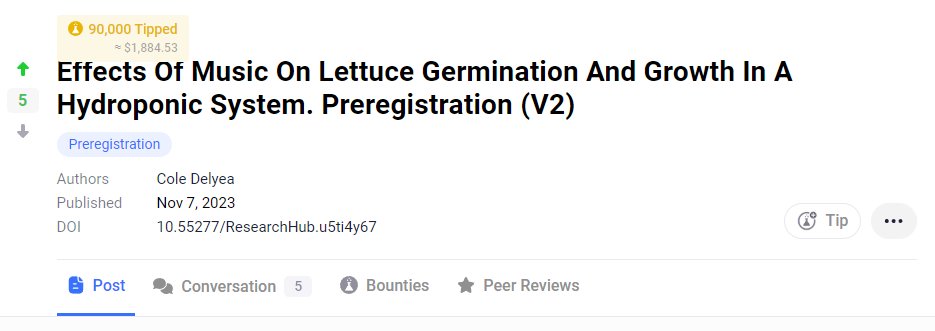
In under an hour of posting my preregistration on @ResearchHub, I received funding for all of my equipment, reagents, and time needed to perform a study on the effects of music on plant growth (>$1800)!!
(a thread)
Funding science via #preregistrations on @ResearchHub???
If you would like to help crowdfund an experiment on "The Effects Of Music On Lettuce Germination And Growth In A Hydroponic System" stop by @Delyea_Cole's latest post and send him a tip!
https://t.co/S77fk7xM8H
Research Hub (@ResearchHub) continues to advance science one bounty at a time.
A chance for the best talent to publish and earn — regardless of where they live or what university they go to.
https://t.co/E7EhZ91pHo
I gave a presentation at @ResearchHubF's SciCon: All Scientific Verification Becomes Replication
I talk about:
— How LK-99 was a preview of DeSci’s future
— Why peer-review and PDF papers won’t survive AI
— Building for the future of AI and automation
Slides in thread below.
Science/academia is a freaking weird place to build for:
Consumer: hates the infrastructure and tools that it currently operates with. Lots of complaints around rudimentary lab notebooks, ref managers, publishing flows, grant writing, generally high complexity etc,
Builder: have software products that function much more seamlessly, order of magnitude more simple UI/UX, and with web3 giving better ownership rights and self sovereignty (to an extent).
Result: consumers STILL complain about their current flow, and DON’T adopt the tools out there.
Whats the missing link??? Is it that products are fragmented around? Is it poor interfacing between builders and Universities? Is it the finite spare time for researchers to change their workflow? Thoughts?
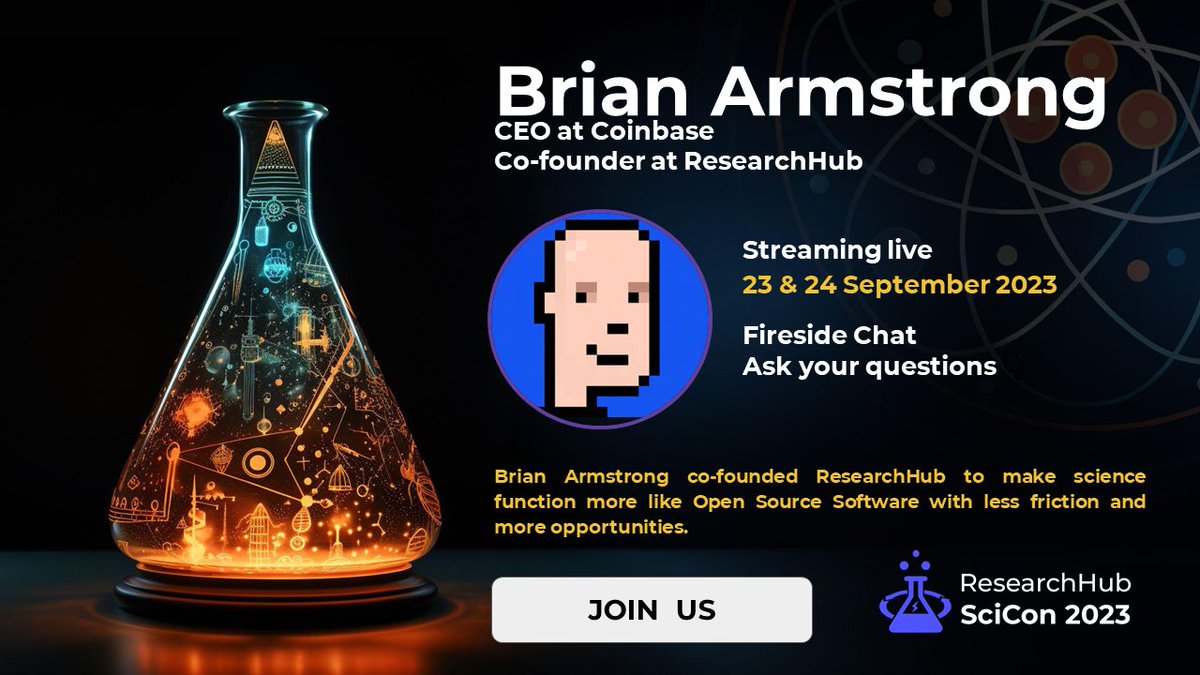
Join us for an engaging fireside chat with @brian_armstrong, the CEO and co-founder of @ResearchHub and @Coinbase, at #SciCon2023!
Do you have burning questions for Brian about Research Hub, Decentralized Science, or Science in general? Share your questions below. 👇
🖋️Sign Up for SciCon 2023 🔜https://t.co/ZJnxOCasrD
Several years ago, I wrote a 2-page guide on how to give a killer narratively-driven scientific talk. I called it "The David Attenborough Method", in homage to the master storyteller. https://t.co/fROAFOYNBM
I recently expanded upon it in a short essay: https://t.co/vh4Jt0g1PP