Chipped in $1k to this RFP on ResearchHub yesterday!
Nobody knows what the source of the flashes on the 1950s (pre-satelite) Palomar plates are - but the people want to find out!
Who's matching me?
@BrandonFugal@GarryPNolan@IOHK_Charles@AlchemyAmerican@joerogan
On April 12, 1950, a Palomar telescope photographed 9 unexplained points of light.
They were absent from plates taken 30 minutes earlier and 6 days later.
We believe the answer to what produced them may be hiding in observatory archives.
Introducing Project Lost Light. ✨
Linked below is the trailer for DMT Quest 2, which premiered in IMAX this week (17th November) at the Bullock Museum Theatre in Austin, Texas. Following up on the 2021 documentary DMT Quest, this film explores new research from the last 5 years suggesting that DMT, naturally produced in the body, plays a more prominent role in our reality than once believed.
https://t.co/0sm3Jh1VM9
Mind blowing film! Congrats @dmt_quest
Very proud that @ResearchHub was able to play a small part helping to facilitate the science communicated in DMT Quest II
Tomorrow night in Austin, DMT Quest II premieres in IMAX 🎬
Most people know @dmt_quest for the films. Fewer know that John Chavez and team are also some of the most adventurous science funders out there
Really excited about the trajectory cloud labs like @Ginkgo are headed toward.
Looking forward to hearing from the front lines about their current capabilities, but also what the future could look like.
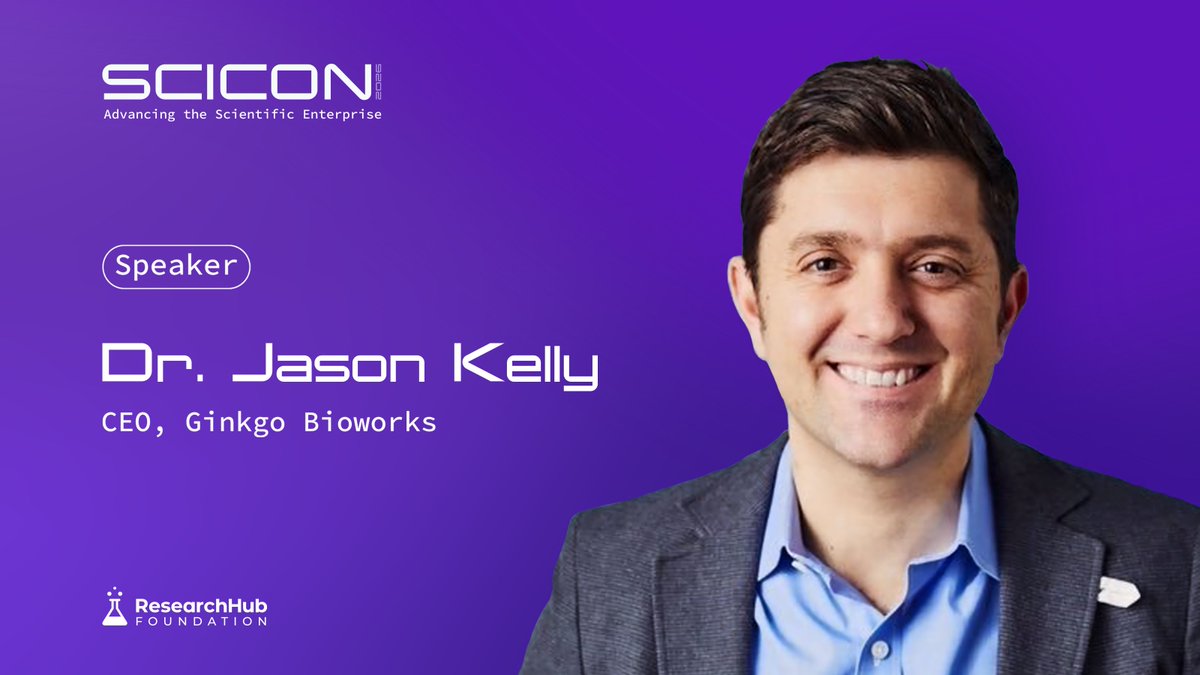
Introducing SciCon 2026 speaker Dr. Jason Kelly.
Co-founder and CEO of @Ginkgo, @jrkelly recently chaired the U.S. National Security Commission on Emerging Biotechnology.
🗓 December 10
📍 San Francisco
ResearchHub 💜's @endaomentdotorg & @RobbieHeeger
Fund science straight from your DAF:
1. Pick a proposal at https://t.co/Ki0SgZddWx
2. Click Fund Proposal, choose an amount
3. Select Donor-Advised Fund and connect Endaoment
4. Confirm & Pay
If you're in Austin tomorrow, go see it! Doors at 5:30, film at 7, Bullock Museum
Tickets: https://t.co/6bcxhngXca
The studies: https://t.co/npkzt3G1YU
Tomorrow night in Austin, DMT Quest II premieres in IMAX 🎬
Most people know @dmt_quest for the films. Fewer know that John Chavez and team are also some of the most adventurous science funders out there
What I admire most is how they combine media with research funding
The films get a huge audience curious about these questions. The grants pay scientists to go answer them, preregistered and peer reviewed in the open
That's how you make a philanthropic dollar go further
@DrJackKruse If MCUR1 downregulation is protective, restoring it should harm high-heteroplasmy cells specifically.
@ResearchHub what would that study need? Oleuropein in aged mice stratified by heteroplasmy, mPTP opening as the endpoint.
ResearchCoin ($RSC) is now live on @blockchain.
More ways to get RSC means more people funding science.
Put your RSC into ResearchHub Endowments and it continuously funds scientific research.
AI detectors don’t work in peer review (and they don’t make much sense either).
Here some of my experiences:
When ChatGPT came out, I was an editor overseeing paid peer review. I was very critical of AI back then, so we banned it for writing any reviews. Looking back, I can tell you exactly why this does not work.
1) Some reviewers just edit the AI review. Same quality, but rewritten by a human. Or they add some typos, weird dashes and extra spaces so the detector misses it (you cannot imagine how creative some people are).
2) Humanizers get around detectors very easily. Then comes a new detector, a new humanizer, a new model. Cat and mouse, forever.
3) Most scores end up somewhere between 30 and 70%. False positive? Someone who put a lot of work into humanizing it? A hybrid? Honestly impossible to tell.
4) And the last one, which for me is the most important. It creates a lot of extra (unnecessary) work, audit and stress. Reviewers start panicking about being flagged, even when they wrote it themselves or only had a bit of help. And as an editor or grant reviewer you end up confused and making decisions that are just not fair.
We should evaluate the content.
I don’t think it matters if someone googled first, used AI, or wrote every word alone. And if a one-shot AI review gives you the perfect answer, maybe the question or task was not the right one.
I still can’t believe it. My PhD project of 8+ years at @HillmanLab, @ZuckermanBrain and @ColumbiaBME was published today in @NatureComms! We present a newly discovered body map in the secondary motor cortex (M2) of the mouse brain.