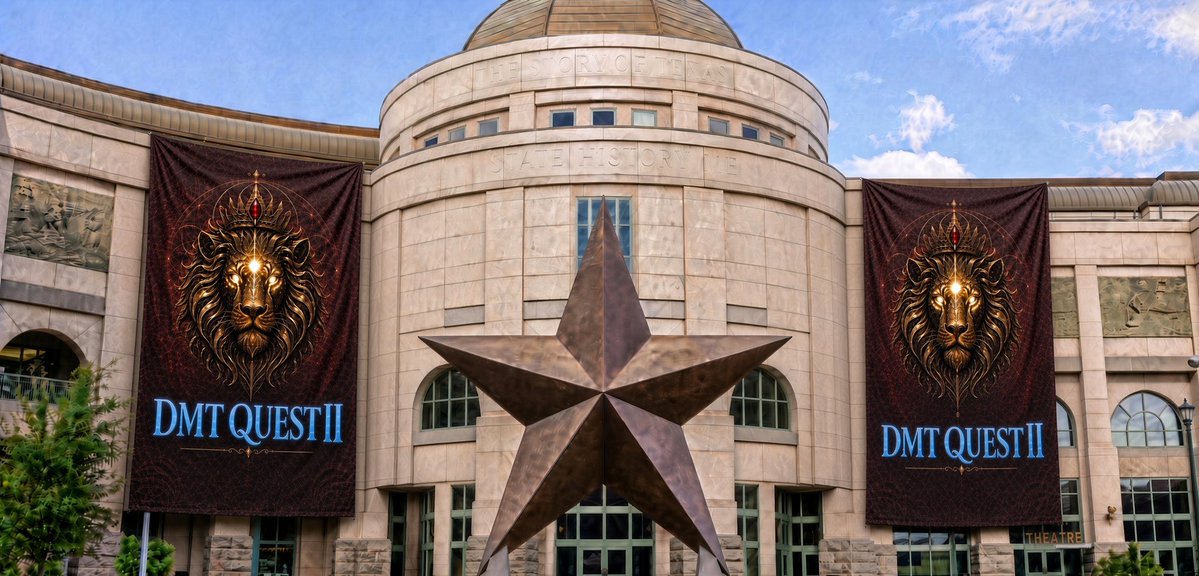
Linked below is the trailer for DMT Quest 2, which premiered in IMAX this week (17th November) at the Bullock Museum Theatre in Austin, Texas. Following up on the 2021 documentary DMT Quest, this film explores new research from the last 5 years suggesting that DMT, naturally produced in the body, plays a more prominent role in our reality than once believed.
https://t.co/0sm3Jh1VM9
Mind blowing film! Congrats @dmt_quest
Very proud that @ResearchHub was able to play a small part helping to facilitate the science communicated in DMT Quest II
Mind blowing film! Congrats @dmt_quest
Very proud that @ResearchHub was able to play a small part helping to facilitate the science communicated in DMT Quest II
Today on TSEE, we delve into the experience of what it's like to live with a serious mental illness, and how metabolic therapies may help.
Guest writer Donika Hristova describes a difficult period in her life when she was diagnosed with bipolar II disorder and binge eating disorder. Like many others seeking treatment for mental health issues, she found that the options she was offered were far from ideal.
Donika's search for alternatives led her to the ketogenic diet. In ketosis, the body's fuel source switches to molecules called ketones. Growing research shows that changing your fuel source can have beneficial effects on mitochondria and mental health—at least in a meaningful proportion of people. Donika's hopeful story highlights the potential transformative effects that therapies targeting our energetic systems can have on our lives.
We are so grateful for Donika's courage to share her story. Lived experiences are what connects us. From our experiences, we can learn and work towards building a healthier, more compassionate, sustainable future.
https://t.co/lWYjvs43P0
Tomorrow night in Austin, DMT Quest II premieres in IMAX 🎬
Most people know @dmt_quest for the films. Fewer know that John Chavez and team are also some of the most adventurous science funders out there
Biological psychiatry, a total failure. Thomas Insel, the director of the US National Institute of Mental Health from 2002 to 2015, said in an interview in 2017: “I spent 13 years at NIMH really pushing on the neuroscience and genetics of mental disorders, and when I look back on that I realize that while I think I succeeded at getting lots of really cool papers published by cool scientists at fairly large costs - I think $20 billion - I don’t think we moved the needle in reducing suicide, reducing hospitalizations, improving recovery for the tens of millions of people who have mental illness. I hold myself accountable for that.” https://t.co/YpqYhDZNLb