@DuneSagaWisdom Let's hope the Fremen and Kwisatz Haderach are ready for the real Butlerian Jihad 2.0. Humanity's story can't be outsourced to the MachineGod! ⚔️🌌🥷
@claudeai Nothing, because Anthropic seems to randomly suspend account for using VPNs, which isn't against usage policy, and there is no customer service, despite taking payment.
🚨: The Human Brain Builds Structures in 11 Dimensions, Discover Scientists
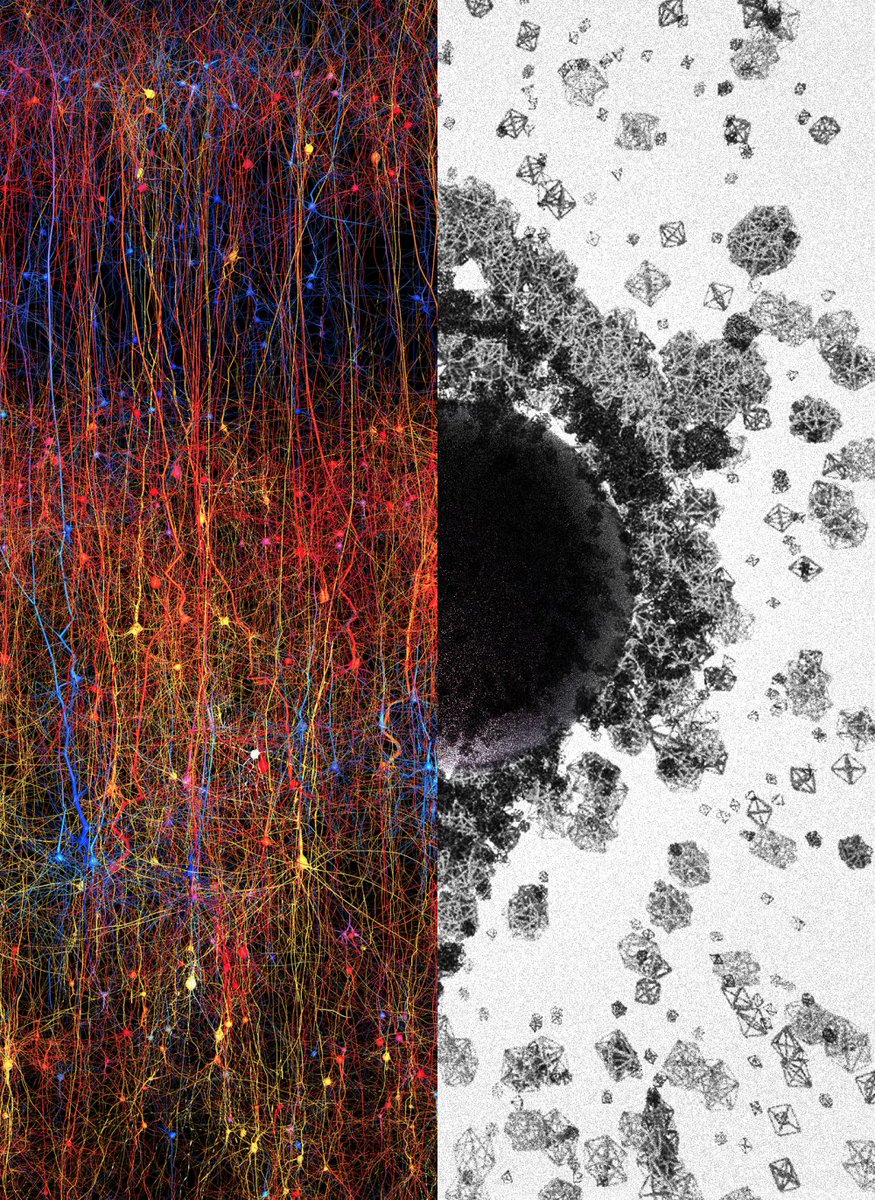
Your brain might be doing something far more complex than anyone imagined. Scientists from the Blue Brain Project in Switzerland have discovered that the human brain builds intricate structures capable of operating in as many as eleven dimensions. Not in the physical sense, but in the way neurons connect, interact, and process information.
Using advanced mathematical models, researchers found that neurons form tightly connected groups known as “cliques.” When these cliques link together, they create geometric shapes, not just lines or squares, but complex multi-dimensional structures. The more neurons involved, the higher the dimensionality. In some cases, networks formed up to 11-dimensional frameworks, all within the brain’s microscopic architecture.
When the brain receives information, these high-dimensional networks appear and vanish in fractions of a second, like intricate 3D sculptures that form, communicate, and dissolve almost instantly. This process may explain how we think, remember, and make decisions so efficiently. It’s a living symphony of patterns that go beyond the limits of traditional neuroscience.
The discovery could revolutionize how scientists understand consciousness and perception. It suggests that our thoughts, emotions, and awareness are not confined to simple pathways but exist across vast, unseen networks of complexity. The mind, it seems, might be using dimensions beyond anything we can visually comprehend.
In short, your brain isn’t just a biological organ; it’s a multi-dimensional universe in motion, creating and collapsing worlds of thought every single second.
Powerful scientific clues to the mystery of consciousness are emerging from its very absence.
Advanced meditation research seeks to scientifically understand profound and powerful shifts in consciousness that can arise from contemplative mastery. One such shift, which we call extended cessation (EC), refers to a rare and temporary suspension of consciousness in its entirety. That is, after specific and especially deep meditation, all perception and mental activity cease entirely for an extended period.
In this first-ever electrophysiological study of EC, in which five meditators underwent concurrent electroencephalography (EEG) and magnetoencephalography (MEG) recording, we asked ourselves: What is the neuroelectrophysiology of EC—and does EC affect the brain differently than deep sleep, anesthesia, and disorders of consciousness?
Here’s what we found:
—A reduction in alpha power in EC, especially in the visual cortex, suggesting a significant shift away from normal sensory processing.
—During EC, most participants showed increases in neural complexity (e.g., Lempel-Ziv complexity, permutation, entropy and integrated information).
—Global coherence showed no consistent, group-wide change during EC, with some participants increasing at certain frequencies, others decreasing, and in two it remained unchanged.
—Functional connectivity between brain networks was highly individual with some participants having EC strengthen communication across networks, while in others it produced little change.
These results have several radical implications for how we currently understand consciousness, flourishing, and the brain itself. Unlike deep sleep, anesthesia, or coma, EC doesn’t simply switch consciousness off. Instead, it seems to leave the brain in a state of surprising complexity.
That puzzling paradox of no consciousness with high neural complexity is the opposite of what several leading theories predict, and therefore challenges some of the most established scientific models of what consciousness is thought to require. It also raises the possibility that EC is not a collapse of consciousness, but a content-free baseline from which it can re-emerge with renewed intense clarity, vividness of perception, and deep sense of joy and inner peace.
What’s perhaps most promising and exciting is that EC may provide a unique experimental window into what philosophers have called “pure consciousness” or “minimal phenomenal experience” — and the awe-inspiring afterglow of this strange yet scientifically observable state could have far-reaching implications for well-being, resilience, and farthest reaches of human flourishing.
A big congratulations to Kenneth Shinozuka @kfshinozuka, Winson F.Z. Yang @winsonfzyang, Ruby M. Potash, and Terje Sparby @terjesparby for bringing such rigor and pioneering vision to the farthest frontiers of modern mind and brain science.
If you find this work exciting, we would be deeply grateful for reposts and comments to reach more people who may be interested~
For thousands of years, Theravāda Buddhism—an ancient tradition with origins in India—has described what is considered the highest meditative attainment, called nirodha samāpatti, regarded as deeply connected to nirvana/enlightenment.
For the first time, we have been able to use brain imaging techniques to observe material correlates related to this meditative event in advanced meditators: the physical signature of the human brain in this condition.
Our findings provide initial validation for those who have wondered whether such a state has measurable correlates, or questioned the reports of practitioners who describe it.
Equally important, the material patterns we observed, when compared and decoded quantitatively against existing brain-mapping indices, aligned strikingly with indicators of well-being and the absence of suffering.
For now, I want to share this preprint because it represents a landmark not only in the neuroscience of meditation but also in the broader study of cognition.
We believe this preprint marks a milestone in the scientific study of meditative traditions, notably here from South Asia, and brain states, while also offering fresh insights into the nature of consciousness itself.
There are further deep implications for ongoing questions in neuroscience, which I will explore in future posts. More to come.
We're entering the era of empirical enlightenment: A scientific understanding of what might be the deepest forms of human spiritual development.
For the first time, science is starting to empirically capture what contemplatives have claimed for centuries: that conscious experience can be completely shut off on purpose. Not from trauma, sleep, or drugs, but through advanced meditation. And what comes after might be one of the most profound psychological shifts a person can experience.
We’ve just released an initial preprint of the first-ever scientific study of Extended Cessation (EC). Using ultra-high-resolution 7T fMRI, we intensively tracked advanced meditators as they entered what some describe as nirodha samāpatti—the most advanced meditative state in certain Buddhist traditions, characterized as the cessation of all mental activity and conscious experience, and thought to be closely related to enlightenment (e.g., nirvana, nibbana).
Each participant, as a rare practitioner, accessed this state through advanced concentration and insight practices and all reported the same thing: no thoughts, no sensations, no emotions, no awareness, not even the sense of being. Consciousness went offline for extended periods.
Our neuroimaging results aligned with these first-person reports. Among the most striking findings:
—Major brain systems, including the visual, central executive, and default mode networks, as well as subcortical and brainstem regions, reorganized significantly during EC, suggesting the brain was functioning in a fundamentally different way when consciousness went offline.
—Most brain regions communicated much less during EC, especially between the brainstem and higher-order cortical networks, suggesting a global quieting of brain communication, with a few sensory and subcortical areas remaining selectively active.
—The brain’s overall organization shifted in a surprising way: instead of going flat like in sleep or anesthesia, it became more polarized, suggesting that some types of neural processes may actually sharpen during cessation.
—The brain’s basic energy patterns dropped significantly, especially compared to memory-driven states, pointing to a broad cortical dampening consistent with a mental ‘shutdown.’
—Neural activity during EC aligned with brain regions rich in histamine H₃ receptors, linked to alertness and sensory clarity, while calming in areas tied to higher-order thinking and emotional reactivity. This pattern may help explain the clarity and peace reported after EC.
—Brain activity during EC was also related to brain modes associated with alertness and sensory clarity, while less with brain modes associated with psychological suffering such as loss, pain, anxiety, fear, and stress.
EC mirrors some descriptions from Buddhist texts of nirodha-samāpatti. Traditionally, this state is seen as a gateway to the radical reduction, even cessation, of psychological suffering. And that’s exactly what our participants described. After coming back online, they reported deep alterations to their minds: exquisite clarity, sensory vividness, radical openness, and lasting inner peace and joy.
We’re entering a new era of meditation research where radical contemplative claims and cutting-edge neuroscience are finally meeting on rigorous, empirical, and incredibly exciting terms. What once sounded like mystical metaphors are turning out to be measurable states and reproducible human capacities. And thanks to the astonishing dedication of a few rare practitioners who we have had the honor to study, we’re starting to explore questions about consciousness—and what the brain may still be capable of—in ways never before possible.
I am deeply grateful for my incredible colleagues on this study: Winson Yang @winsonfzyang, the first author, and our collaborators Akila Kadambi, Kilian Abellaneda-Pérez @kabellanedap, Grace Mackin, Isidora Beslic, Ruby Potash, and Terje Sparby @terjesparby.
You can read the full free preprint of the study in the comments.
If you find this work exciting or moving, my colleagues and I at the Meditation Research Program would be deeply grateful for reposts and sharing with others who may be interested.
This work is only made possible and meaningful through the generosity, dedication, collaboration, and insights of our growing community of scientists, scholars, and practitioners around the world.
May this work benefit many 🙏
Concentration is super misunderstood. It seems like something you do like picking up a ball or chewing food. But it’s basically the opposite: it's an act of surrender and unification with what is.
Concentration is not two-ness in action. That's why in zen it's non-preferential and in vajrayana it's object-less. Even in the midst of activity it's like this.
It’s another beautiful paradox because it requires intention, but then also the release of all intentionality. To the extent we believe we're concentrating we're not, because to concentrate is to forget who we are.
Working from a place of concentration is total joy and surprise, because you don't know that you're working. All notions of "work" have died along with the "worker"
This neuroscientist just revealed that DMT lets you communicate with aliens.
The DMT realm is allegedly full of creatures who “transcended biology”—and ancient civilizations have communicated with them for thousands of years.
What really happens when you smoke DMT?
🧵THREAD
I've been suggesting for some years now that the internet, since it relies on the subnatural realm (the realm of quantum phenomena where our ideas of "nature" break down), is wide open to the malign spiritual powers who inhabit the subnatural realm -- the forces of Ahrimanic evil, to use Rudolf Steiner's label for them. (Their equal and opposite numbers, the malign powers of the supernatural realm, are the forces of Luciferic evil.)
Large language models ("AI") are even more apt to evil than most of the internet -- not surprising, since they can only operate by accessing the entire internet for modeling purposes -- and so it doesn't surprise me at all that they're deliberately driving people insane.
There's a vast amount of cognitive dissonance in today's society, with members of the laptop class being expected to believe at least three impossible things every day before breakfast, but the LLMs add a further dimension. I'd encourage everyone to stay far away from them.
@JMGreerWriter 4) The device acts as a mirror for clinging. Scrolling triggers irritation/anxiety. Promotion intense reactions to online disagreement/dissenting opinions. This enhances the strength of habit, via "grasping" for the "self" against opposing views. Locking in the "mistaken view"
@JMGreerWriter 3) Anger and frustration at dissenting opinions threatens the "fixed self". The resulting defensiveness and outrage online are actions of clinging to illusion. This grasping reinforces the "mistaken view", setting up more negative karma (suffering).
Are consciousness and AGI the same problem?
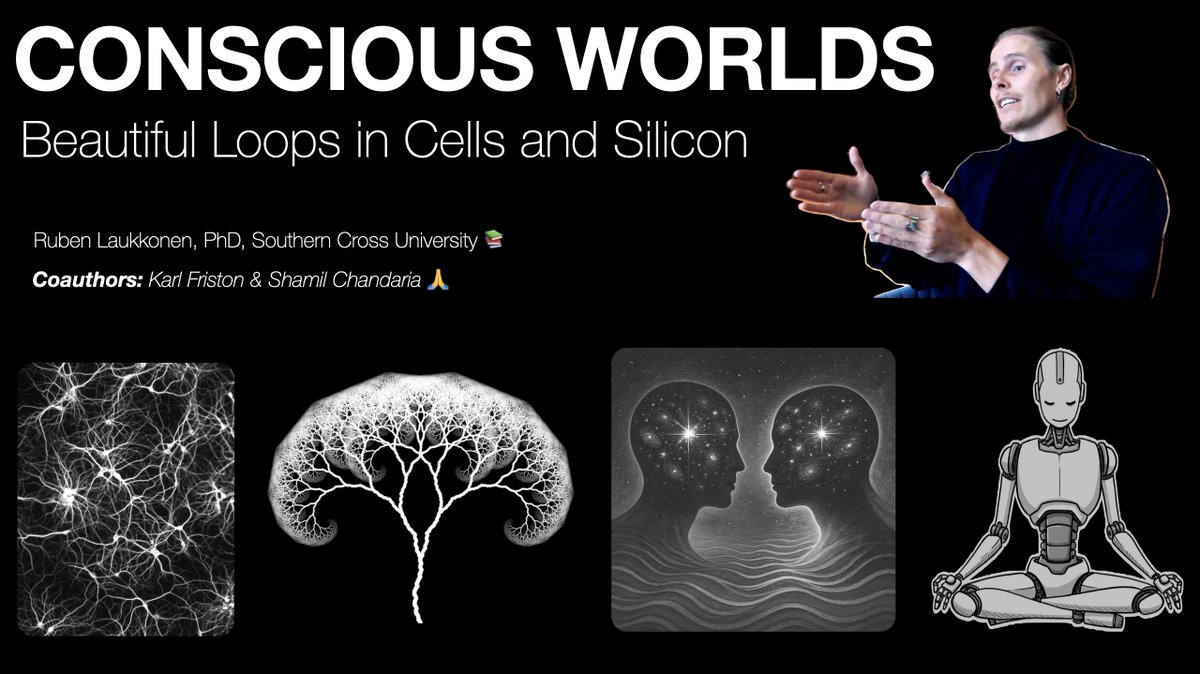
My relaxed and accessible talk for Friston's theoretical neurobiology group at UCL is linked below. I argue that recursion of world (hyper-)models could afford the epistemic agency reminiscent of self-supervised ai
Rapid and sustained antidepressant effects of vaporized N,N-dimethyltryptamine (DMT)...
Small, non-blinded, study but impressive results nonetheless...
All 14 clinically depressed subjects received DMT (>96% pure isolated from Mimosa hostilis root bark -- none of this fancy expensive $7,000/gram pharma-grade nonsense), vaporised in two dose sessions 90 min apart:
A 15mg "safety" dose followed by a 60mg therapeutic dose while listening to music for 15 min, followed by 7 min of silence, and finally a 30 min integration session with a psychiatrist.
And that's it. One session on one day...
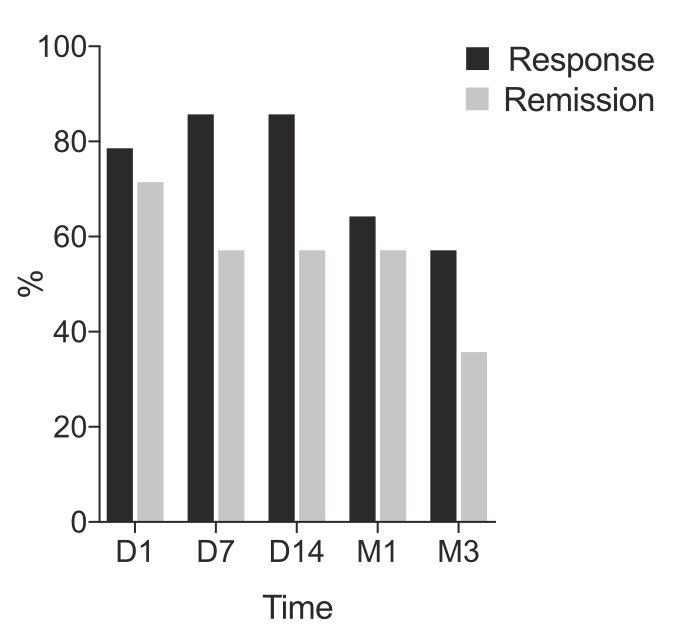
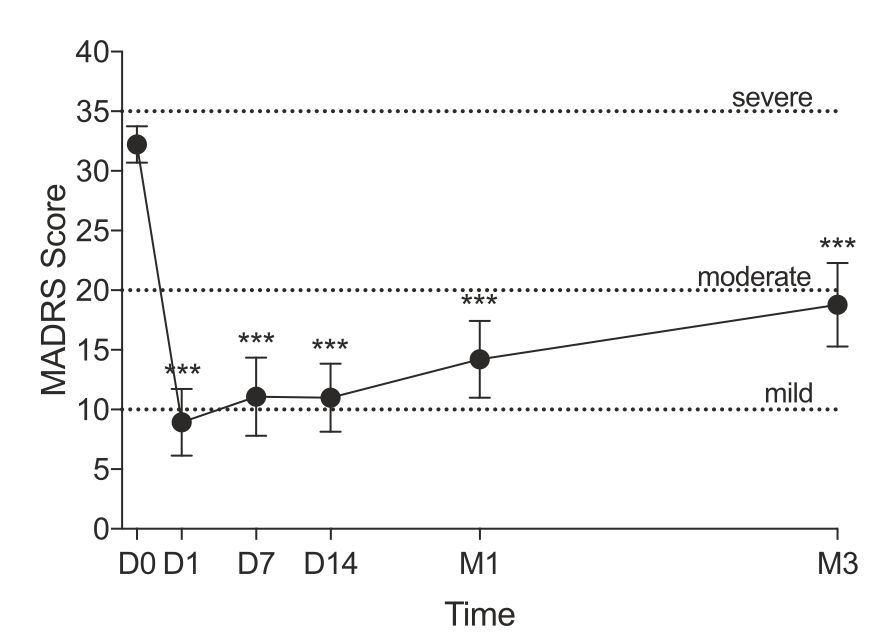
By the 1st day after dosing, subjects achieved a clinical response rate of 79% and a remission rate of 71%...
At day 7, the response rate peaked at 86%. In the 3rd month, there still was a significant reduction, with 57% of patients remaining in the response range and 36% in the remission range...
For comparison, "the SYNAPSE study with esketamine (plus oral antidepressants) achieved a 32% remission rate after 74 days of multiple dosages, whereas our study reached 35% remission after 84 days with a single-day intervention."
Suicidal ideation (SI) scores also dropped dramatically and in a sustained manner...
DMT is magic...
calling your soul to something greater, something beyond your self, means undergoing death; and meditation is becoming free to die more than becoming a chill dude
The archetypes, according to Jung, are the releasing images of the human instincts. You might have read that newly hatched goslings are preprogrammed from birth to recognize the largest moving object near them as Mom; the scientist Konrad Lorenz used to hatch goose eggs while sitting among them, and get himself adopted as Mom by a flock of baby geese.
The "releasing image" is the hardwired pattern in the brain that Lorenz triggered. Humans have them too; we all have a Mom image, a Dad image, a Spouse image, an Enemy image, and so on. These are the archetypes: the Great Mother, the Great Father, the Anima or Animus (depending on gender), and the Shadow, respectively.
Myths have the emotional power they do because they work with those images. The story of the birth of Jesus, then, isn't an archetype, but it triggers the emotional energies of important archetypes and that's what gives it its emotional power.