Methane emissions accelerate the climate clock & slow global recovery. ⏰
🔥 Methane traps 80x the heat as CO₂ short term, driving more intense heatwaves, droughts, wildfires & food-system stress.
🔧 But cost-effective solutions exist ➡️ https://t.co/ddI1eYdXJ7 #GAR2025
How have humans reshaped the world’s land over the last 12,000 years?
Over thousands of years, humans have gradually transformed the Earth’s surface — clearing land for agriculture (crops and grazing animals) and building settlements.
For most of that history, agriculture used little land from a global perspective. Today, cropland and grazing land together cover around 4.8 billion hectares — almost half of the world’s habitable land. Built-up area is comparatively tiny, at 86 million hectares. You can see this in the chart.
This insight comes from the History Database of the Global Environment (HYDE), the primary window we have into humanity’s land use and population over the very long run.
It’s built and maintained by researchers in the Netherlands, at the government’s Environmental Assessment Agency (PBL) and Utrecht University. The dataset covers 213 countries and regions and reaches back to 10,000 BCE.
Because it stretches so far into the past, its earliest figures are necessarily modeled reconstructions rather than direct measurements, so the uncertainty grows the further back in time you look.
Our colleague @lucasrodesg recently updated our charts with the latest release, HYDE 3.5, which extends the data to 2025.
Mapped: How climate change affects extreme weather around the world | @rtmcswee@ayeshatandon#CBarchive
🎨 @KerryAnnCleaver Tom Pearson @tomoprater
Read here: https://t.co/E8iv7IqXl3
Extreme weather is devastating communities & taking lives.
Unprecedented heatwaves, wildfires & storms — all intensified by the climate crisis — are affecting people around the world.
We urgently need more ambitious #ClimateAction.
https://t.co/OL6G9vQDV6
A sharp swing from wet to dry weather, a signature of climate change, helped fuel the devastating wildfires in France and Spain, scientists say.
https://t.co/r5PNoMfZP0
The #ClimateCrisis is a global challenge that no nation can tackle in isolation.
#ClimateAction is urgently needed.
It’s time for countries to step up their efforts to curb the looming climate emergency: https://t.co/cnIcKWdoi5
As China looks to export more clean energy, the U.S. is trying to force its trade partners to buy more oil and gas.
Of the two approaches, global trends favor China, writes Isabel Hilton.
Read more: https://t.co/h8WiNApYDm
"Over half of new car sales in China are electric," data scientist Hannah Ritchie says in a new interview. "In 2020, it was 6 percent."
Looking at the numbers, Ritchie sees a world making unheralded progress in the fight to stem warming.
Read more: https://t.co/J5iJnPLsJy
In her last interview before she died, Jane Goodall issued an urgent call to safeguard the Earth, warning that "humans are not exempt from extinction.”
https://t.co/1kPRMDV8eG
As forests disappear wild animal populations decline.
“We have so far to go to realize our human potential for compassion, altruism, and love of all living things.” – Jane Goodall
They were here before us. Let’s make room for them:
• Secure ropes and nets.
@CapitalDailyVic
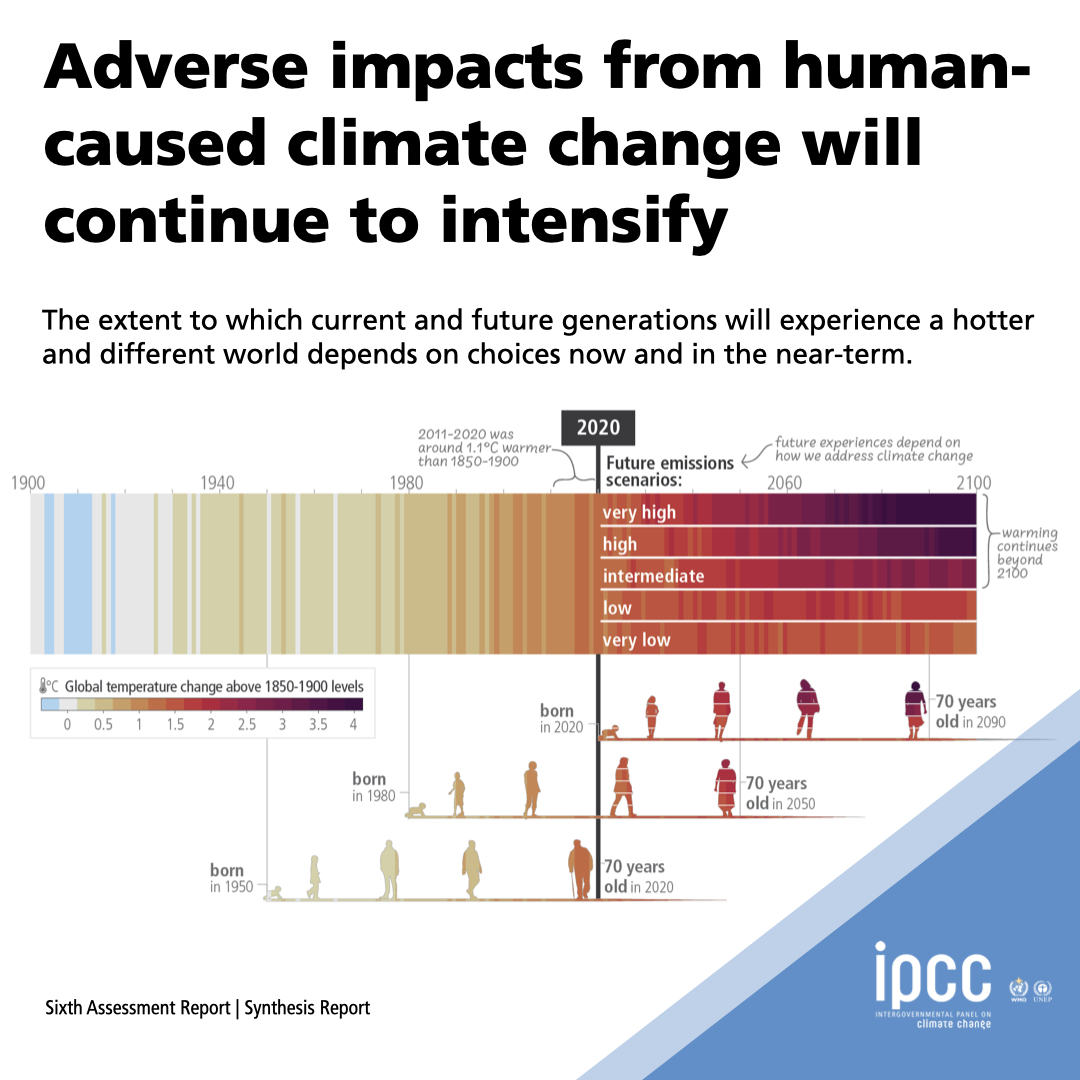
Ahead of Wednesday's #UNGA80 Climate Summit revisit the main findings from #IPCC’s Climate Change 2023: Synthesis Report.
Human activities, principally through emissions of greenhouse gases, have unequivocally caused global warming.
https://t.co/sp4Sk0XJmT
Secretary-General @antonioguterres is calling for action to turbocharge the shift to renewable energy.
#ClimateAction is not only the best choice for the environment, but for a country’s security, economy, and health: https://t.co/xIdTyZh1Qx
The world's biggest companies have caused $28 trillion in climate damage, a new study estimates: https://t.co/3clxDDZCym
Read that again.
Time for the people that are fueling this crisis to pay for the damage they're causing.
#ActOnClimate