A lot of people commenting on this tweet I wrote miss the point. Loans are funded by cheap deposits, and the bigger you want your loan book to become, the bigger your deposit base becomes. That is where the fight starts. This is NOT about lending but the funding of the lending.
I will write a deeper article about it. The real competition is on the deposit side of the equation, which will fund profitable lending. Banks have had a monopoly on this. Large fintechs won't be borrowing expensive money to lend; they also won't be depending solely on float.
FairMoney, PalmPay, OPay, Flutterwave, and even Piggyvest and Paystack won't sit idle and watch Moniepoint. The market is going to change in a way we have never dreamed of. There may also be a few new mega funding rounds or even IPOs to initially back this.
76% of West Africa’s $67 billion gold reserves are correspondent deposits in European banks, highlighting reliance on foreign banking networks for settlement and liquidity
https://t.co/u8kS7nP2bN
“Users don't want to "use" stablecoins for a transaction and convert back to local currency. They want to hold dollars. The transaction is the side effect. … And it's why the next phase of LATAM fintech is going to be won by whoever owns the daily balance, not the transfer.”
Africa's dollars are fragmented offshore and this discussion between @SamoraKariuki and April Long of @HelloWaka_ is about stablecoins replacing geographic hubs by aggregating offshore USD liquidity onto public rails. The promise is more efficient recycling of USD.
"Africa doesn't have a dollar problem. It has a plumbing problem."
The dollars exist. They're scattered across correspondent accounts in Frankfurt, Paris, and London, invisible to traders who need them in Lagos and Nairobi.
New episode with April Long on how stablecoins are fixing the triangular trade flow Africa never had a hub to process.
When banks have vulnerabilities in their AML systems, there’s a framework in place to address even the smallest compliance lapses. With crypto firms, there’s no framework, there’s a free-for-all: terrorist groups get financed, drugs cross borders, criminals get paid. There’s so little transparency, we don’t even know how deep the problem is.
@EconWithNick@CatoCMFA@ecb The spend transparency complaint is fair, but thin. The ECB has €1.3B in dev costs and €320M/yr operating expanded says their public FAQ. The real critiques — privacy, holding limits, democratic legitimacy — deserve debate.
Sophisticated fraud ring busted via collaboratijon between @DCI_Kenya@INTERPOL_HQ, and @FBI https://t.co/MJsosEow9g Fraudsters allegedly fooled US state and local government employees to reroute payments to accounts they controlled, 'money mules' repatriated funds.
"We must be willing to say that the hedge fund managers have no clothes and their parading about is an unpleasant sight for us all." https://t.co/VvtagMUlGQ
Congress laid the groundwork for debanking and got us into this mess.
But Congress also has the power to bring transparency, stop reputational risk regulation, and reform the Bank Secrecy Act to finally end debanking.
@EconWithNick https://t.co/uWilw2nOJp
Fast food fraud.
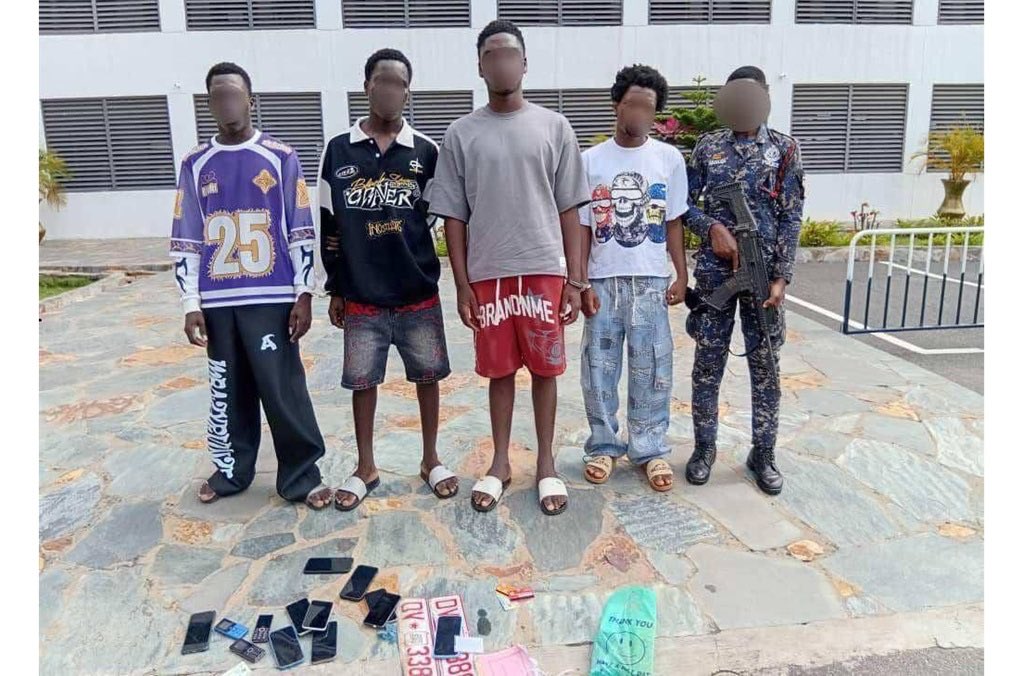
Ghanaian authorities dismantled a cyber-fraud network operating across Ghana and Nigeria that defrauded 200+ victims. Using professionally designed websites and apps, the scammers mimicked fast-food brands, collecting payments but never delivering orders.
📢 Operation Sentinel delivers results
🔒 574 arrests across 19 African countries & USD 3M recovered in an INTERPOL-led crackdown on BEC, digital extortion & ransomware. Together, we’re disrupting cybercriminal networks & protecting communities. 🌍💻
#INTERPOL#AFJOC#GLACYE
“It turns out that there is no ‘double bottom line’. It’s called the bottom line because there’s only one of them.”
Starr, K. (2025). There Is No Such Thing as Impact Investing. Stanford Social Innovation Review. https://t.co/uD12oGKhJX
https://t.co/DFbYbYMwKe
NZ Trailblazes Open Banking. Free access to regulated APIs allows lower-cost account-to-account payments. And with banking data flowing directly into accounting platforms, businesses get real-time visibility of cashflow, faster reconciliation, and fewer manual processes.
Open Banking is now live in New Zealand, bringing faster, safer payments and real-time cashflow visibility for Kiwi small businesses, helping them manage finances and plan ahead with greater certainty. #OpenBanking#NZBusiness#SmallBusinessNZ https://t.co/8s334zgEZA
When I put the keychain on the ticket turnstile, it blasted out a loud, unmistakably vintage rotary phone ring, startling me so much that I burst out laughing as the gate opened.
https://t.co/kHLAEhbB7x via @wired by @lmatsakis and @ZeyiYang
To test just how easily crypto can slip between the cracks of banking controls, @Aaron_Krolik found a crypto A.T.M. in Weehawken, N.J., to convert cash into stablecoins.
https://t.co/cTHVXkn6x8
Nigeria Standoff betw MNOs & MVNOs. 46 NCC licenses and not one operating business.
Packed @Yozzo podcast tells how status quo billion dollar entities used influence to erect regulatory hurdles, and kill research. Change afoot -- @MTNNG w/new allies will launch MVNOs