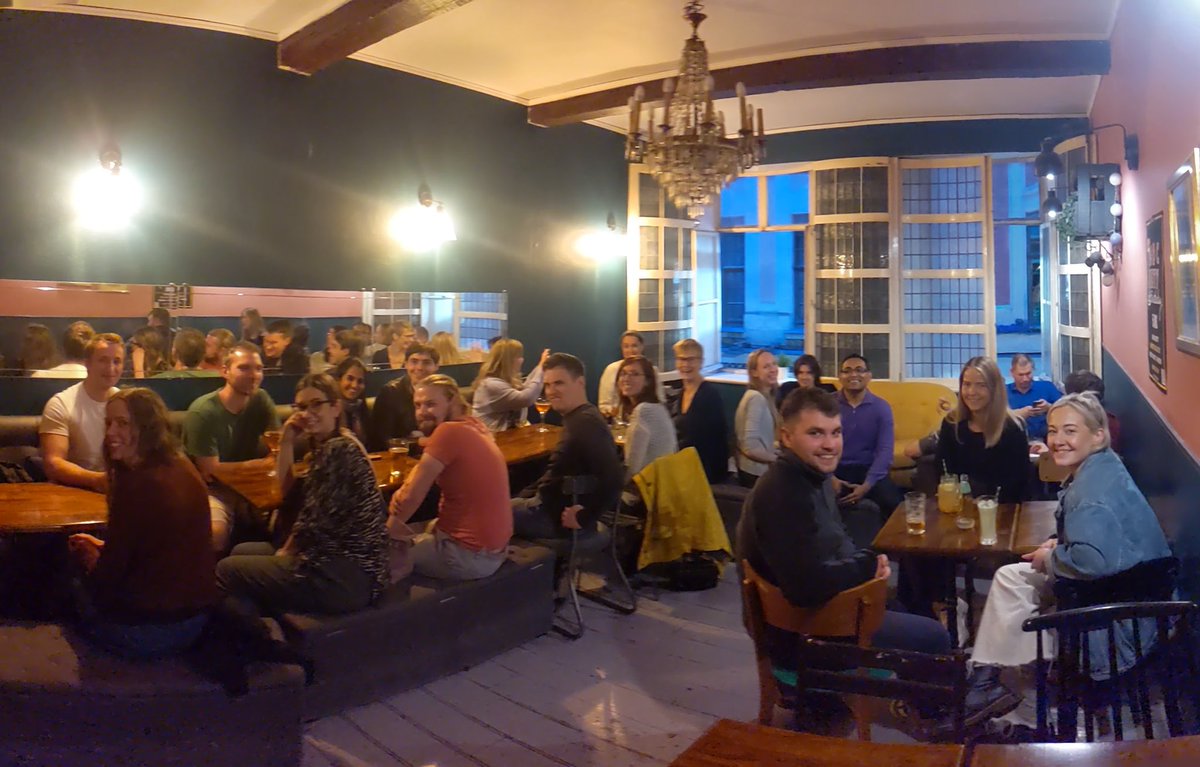
Excited to announce that I passed my viva! 🎉
A huge thank you to my examiners @IndiBanerjee Emma Baple, and chair @SarahIBEx
A special thanks also goes to my supervisors @TomLaver@flanagan_se @mbjohnson_
So happy to be continuing my research in #hyperinsulinism as a postdoc 🧬
Comparing the predictive power of the in-silico tool #REVEL on loss of function vs gain of function variants, pre-print now available on @medrxivpreprint
While I’m here, check out our paper published in #JCEM
A systematic screen of individuals diagnosed with #congenitalhyperinsulinism outside of infancy, showing that HI diagnosed in childhood can be #monogenic
https://t.co/Gi2dOoyudW
Excited to be presenting our findings on one of the first examples of a genotype-phenotype association for a monogenic disorder in the non-coding genome at the @eshgsociety conference in Glasgow #ESHG2023#hyperinsulinism
After years of searching, we have finally found it – a new, common genetic cause of #congenitalhyperinsulinism Until now these disease-causing variants have remained frustrating elusive, they had been hiding deep in the non-coding genome @uniofexeHLS@UniofExeter@Exeter_Diabetes
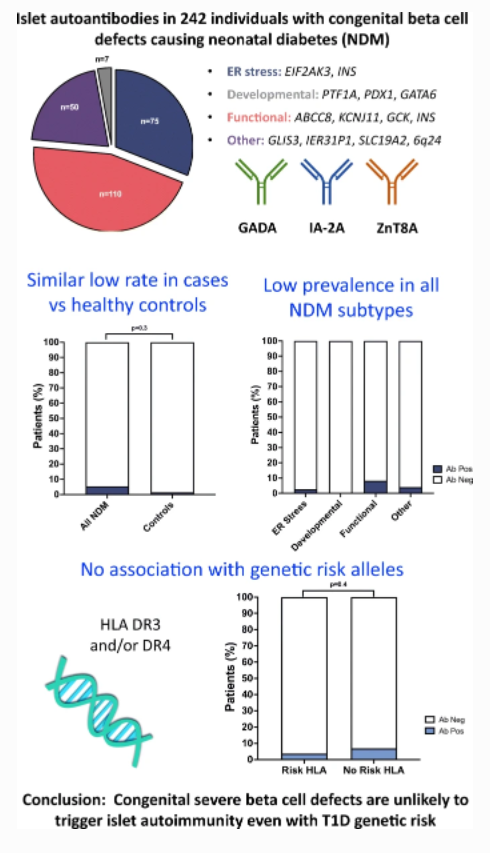
.@BeccaClare90 et al show islet autoantibodies very rare in monogenic neonatal diabetes, even with HLA risk or in cases with extreme beta cell ER stress @ExeterMed@diabetesgenes@RAOram @mbjohnson_ #ExeterDiabetes https://t.co/VbSgNr4Hm7🔓
I am excited to share the latest genetic findings from the Exeter @HIgenes team; non-coding mutations affecting the regulation of the pancreatic beta-cell disallowed gene HK1, are a common cause of #congenitalhyperinsulinism https://t.co/RgGbFb677c
@congenitalhi@ExeterMed (1/3)
Really exciting work to have been a part of in the @HIgenes team, showing that non-coding mutations affecting a regulatory region cause aberrant expression of a gene normally disallowed in the beta cell, HK1, leading to #hyperinsulinism
An exciting new genetic discovery 🧬 Non-coding mutations cause aberrant expression of a beta-cell disallowed gene and #congenitalhyperinsulinism. Pre-print accessible via the link below @HIgenes https://t.co/BJH9r1J07Q
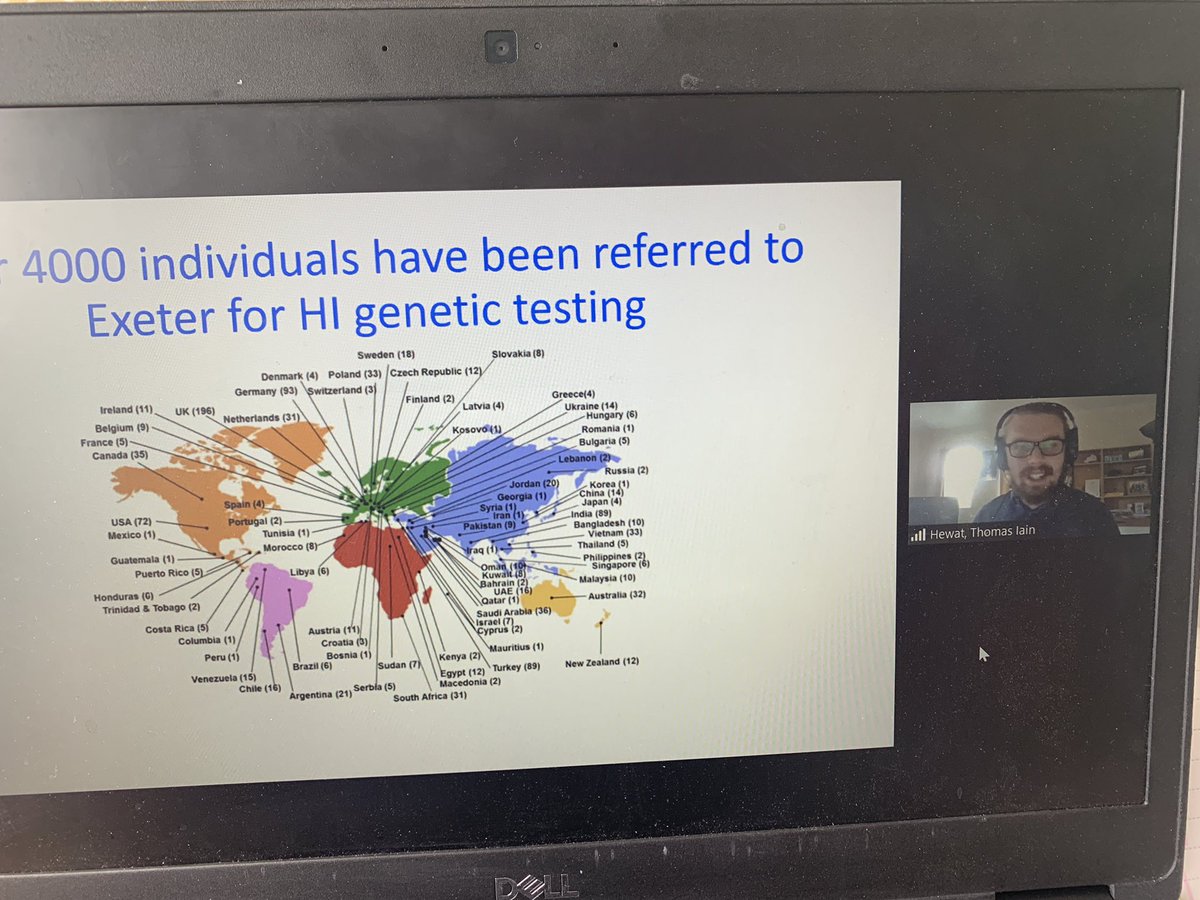
Delighted to report that Exeter’s partnership with @congenitalhi has enabled >550 individuals with #hyperinsulinism from 54 countries worldwide to gain access to genetic testing #nobarriers See our poster at #ESPE2021Online
It was great to have the opportunity to present a poster at #ESPE2021Online, highlighting our recent work on monogenic hyperinsulinism diagnosed in childhood 🧬
Fantastic poster presentation from @HIgenes very own @JJ_Hopkins_ Monogenic hyperinsulinism accounts for 24% of diagnoses in those presenting after 12 months who were referred for genetic testing. #ESPE2021Online
And for more from the @HIgenes team, @JJ_Hopkins_ is presenting on childhood-presenting HI in a simultaneous poster session, and @flanagan_se is talking shortly after in Symposium 7: both are really interesting talks!
If you're attending #espe2021online, I'll be presenting work from the @HIgenes team on how we can use the clinical features of patients with HI to work out the likelihood of a KATP channel mutation - I'm part of the Diabetes B poster tour that starts in just under 20 minutes.
Learn about our unique partnership with @ExeterMed that has enabled over 500 patients from dozens of countries to receive a genetic diagnosis of congenital hyperinsulinism free of charge in the Poster Hall # P2-244 at #ESPEOnline2021#PedEndo#EndoTwitter