Proud to sponsor New Space by @Jasonjoyride & @StoryAndScience. 20+ interviews, 90 minutes, and the story of space today. As @JOBrienSF says, “We want to help companies communicate, raise money, and get further along in their journey.”
We’re thrilled to lead Lassie’s Series A.
Most small businesses are run by reluctant operators. Owners set out to serve their customers and communities but end up buried in back-office work.
Dental practices are a perfect example. Dentists train to care for patients, but much of their time is consumed by insurance claims, payment reconciliation, staffing, and cash flow.
Lassie is building AI that runs small businesses, starting with dental practices.
Before writing a line of code, Cofounders Steijn Pelle and Frédéric Renken spent months working inside a dental office, processing payments by hand to deeply understand the workflow.
Lassie is not a copilot that creates more work for the practice to review. It does the work.
We’re excited to partner with @steijnpelle, @fredericrenken, and the @lassieai team as they build toward the small business that runs itself.
By @arampell and @omooretweets
EXCLUSIVE: Lassie's AI agent helps dentists save hours of busywork. Now it's raised $35M from a16z.
It started when CEO @steijnpelle heard his own dentist complain about a sea of paperwork -- then embedded in his practice to learn first-hand.
My @UpstartsMediaCo exclusive 👀
I'm proud to share that @Glean has surpassed $300M ARR, just five months after crossing $200M and growing ~3x over the past 15 months. This is an exciting milestone for Glean, and it's a signal about where the enterprise AI market is heading.
We’ve long believed the real challenge in enterprise AI is not access to models. It is grounding AI in how a company actually works: its people, knowledge, workflows, permissions, and systems.
That’s even clearer now. The companies creating real value with AI are not just adopting better models. They are building systems that understand their business well enough to deliver reliable outcomes at scale. That is the real moat, and it is what we’ve been building at Glean: an unrivaled context layer for enterprise AI.
That context has to work across the business, not just inside a single team or use case. We see that in how customers adopt Glean: more than 85% use it across five or more job functions.
It also has to meet the security and governance demands of complex enterprises. We see that in who is choosing Glean: our Fortune 500 customer count nearly doubled year over year.
And it has to make economic sense as usage grows. In our recent benchmark with Claude Cowork, Glean was preferred roughly 2.5x as often as off-the-shelf MCP tools and used 30% fewer tokens on average. Better context improves both quality and efficiency.
I enjoyed talking with @CNBC's @dee_bosa about this broader shift. In enterprise AI, the winners will not be defined by better models alone. They will be defined by who builds the strongest foundation for enterprise context.
Thank you to our customers, partners, and team for helping us build the future of enterprise AI.
Introducing the Cursor Developer Habits Report.
We’re sharing some of our findings on how software development is changing.
It’s based on the most comprehensive dataset on AI coding in the world, across all model families.
He’s typing in a search bar, quick show him the search option he’s looking for.
Perfect. He typed the next letter that is also the next letter in the option we just showed him so take that option away and show him an option that doesn’t match at all
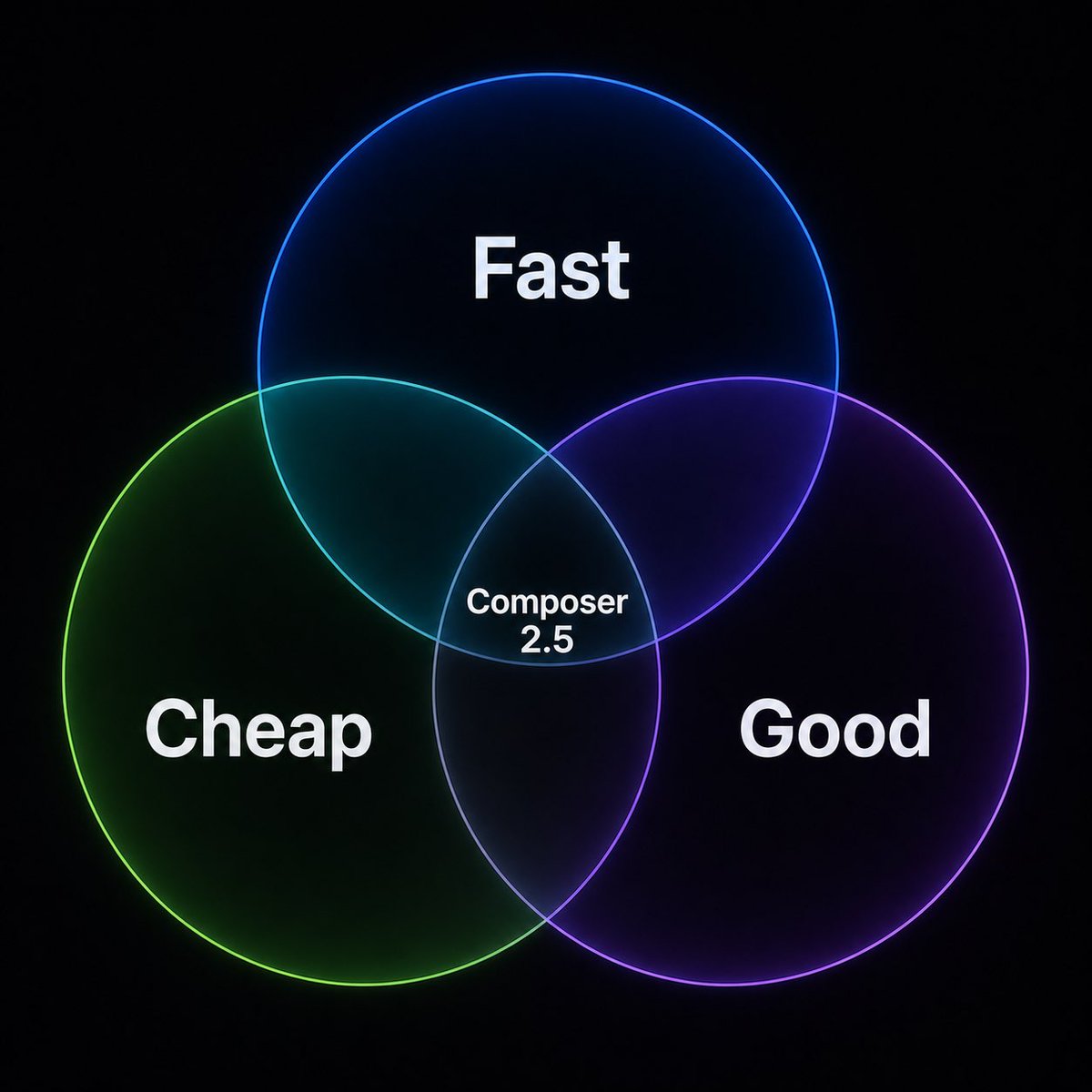
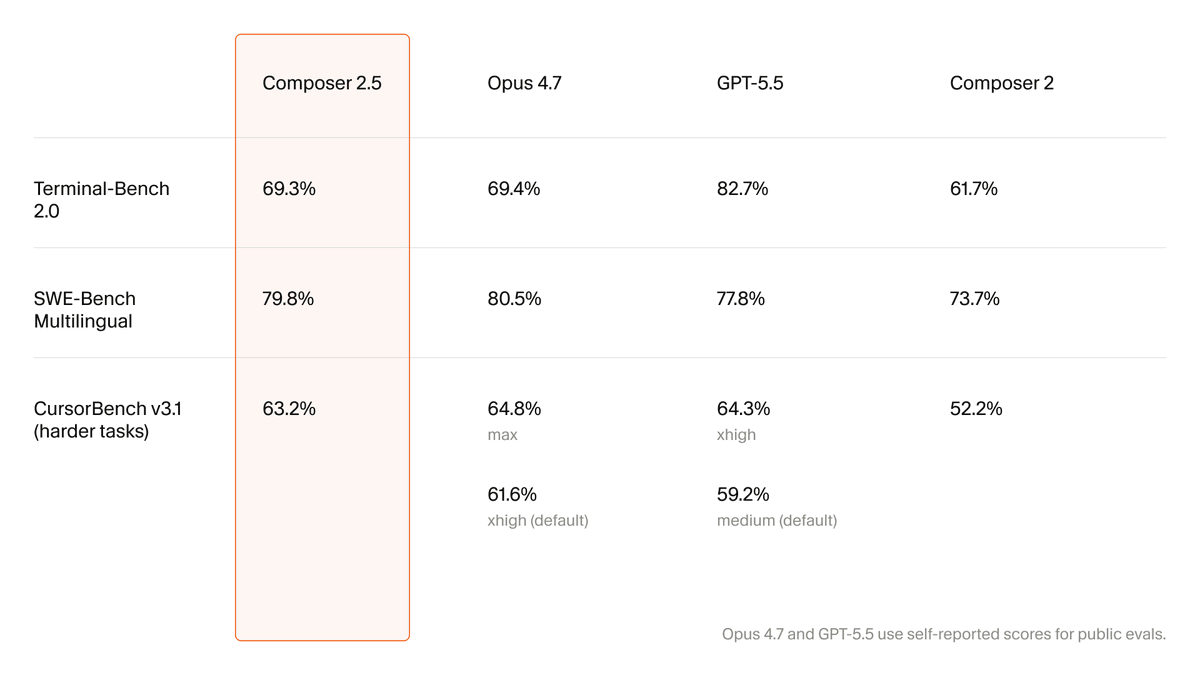
Introducing Composer 2.5, our most powerful model yet.
It's more intelligent, better at sustained work on long-running tasks, and more reliable at following complex instructions.
For the next week, we’re doubling the included usage of the model.
A conversation with @sirupsen on scaling Shopify, building turbopuffer, and the future of databases.
0:00 - Scaling Shopify through flash sales and outages
8:13 - How top infrastructure teams collaborated in the 2010s
10:35 - Engineering principles from Logrus and on-call
17:38 - The story behind Simon’s famous-ish blog, Napkin Math
23:05 - Why new database companies keep winning
32:21 - How Simon became a fan of databases
35:45 - AI coding, and where agents still fail
42:10 - Hiring P99 engineers in the AI era
48:45 - What’s next for databases
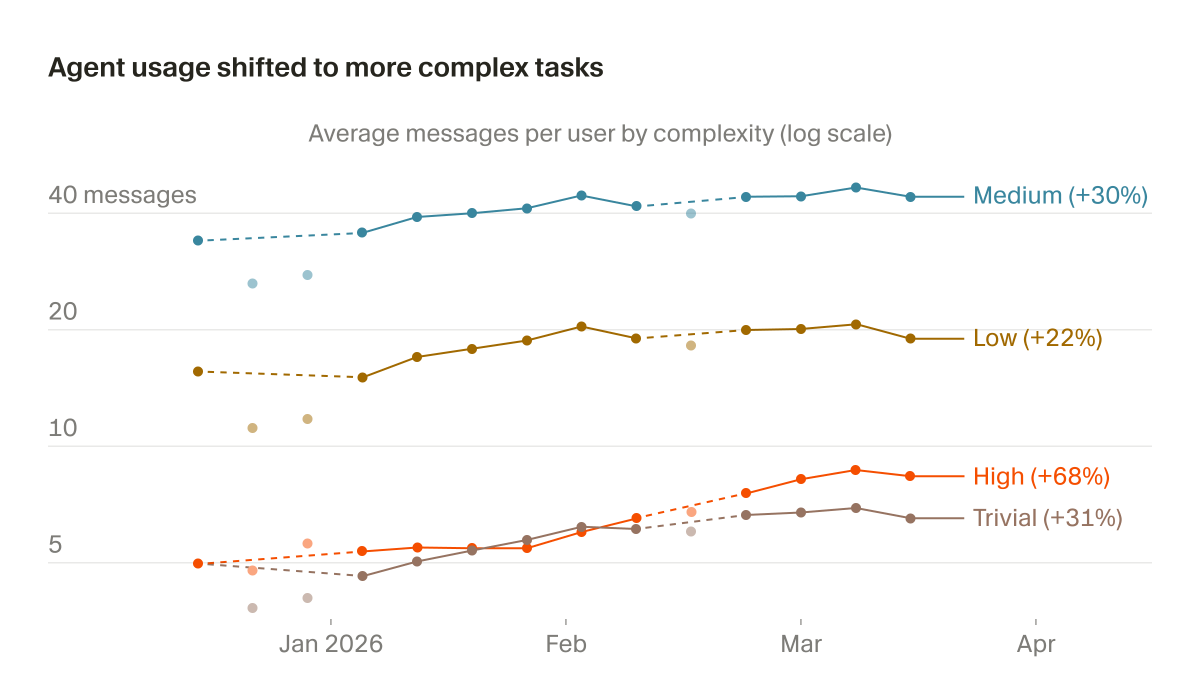
We partnered with University of Chicago economist @SuproteemSarkar to study how more capable models have changed the way people use Cursor.
Across 500 teams, we find that developers are tackling more ambitious work with AI, with a 68% increase in high-complexity tasks this year.
Q1, in headlines. 💥 Top-tier placements, broadcast hits, and a few 'did that really just happen?' moments for our clients. More where that came from. 👀
We’re introducing Cursor 3. It is simpler, more powerful, and built for a world where all code is written by agents, while keeping the depth of a development environment.
Cursor cloud agents produced over a million commits over the past two weeks.
These commits were essentially all AI. Since they have their own computer, cloud agents run the code themselves and little human intervention is required.
Pretty cool!
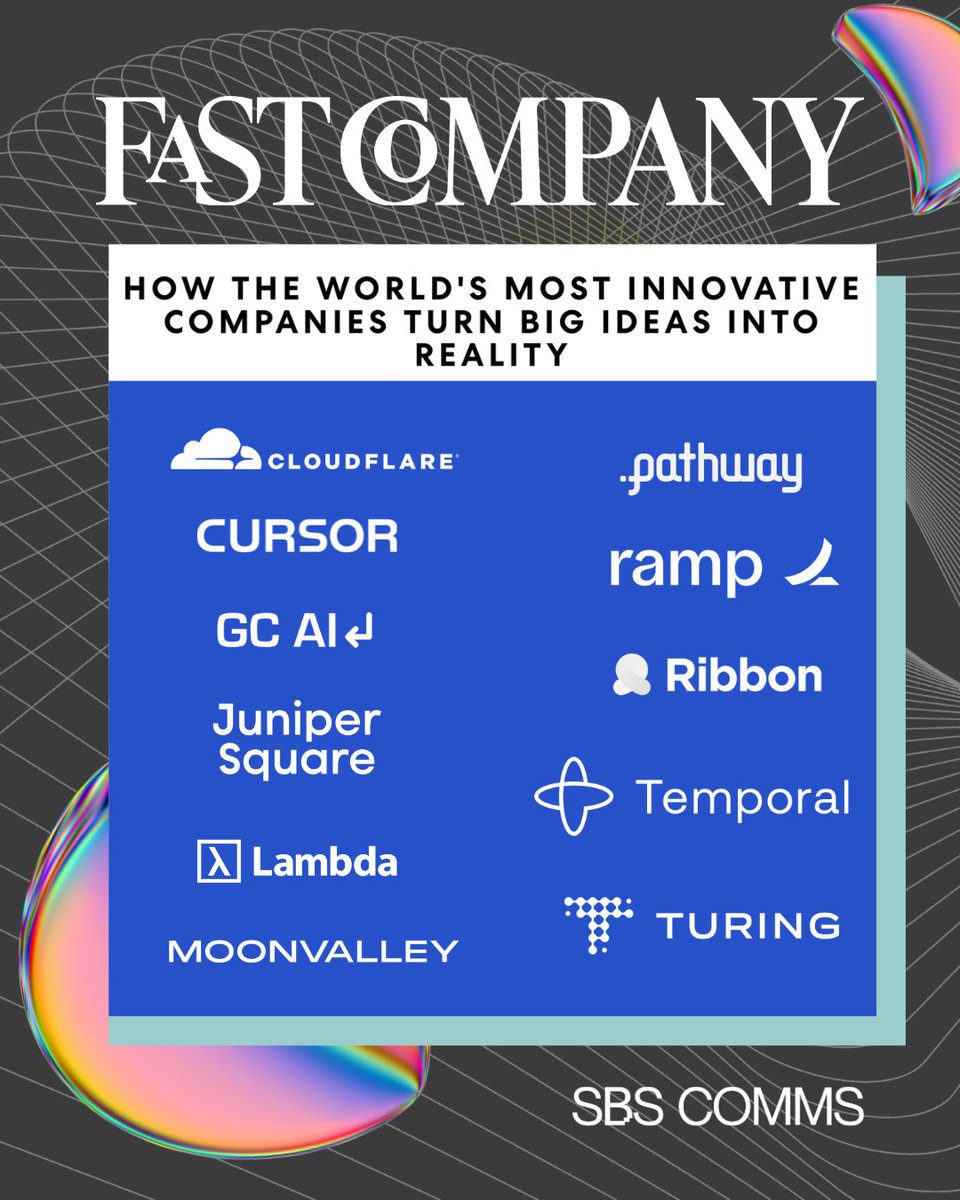
11 SBS clients just landed on @FastCompany’s 2026 Most Innovative Companies list 🚀
Our biggest showing ever – from AI to finance to media, our clients are building what’s next. Big congrats to all 👏
This is a much bigger deal than most people realize. If you don't know why, let me explain.
Agents perform "work" right now by calling "tools". These are just pieces of context shoved into the context window saying "if you think you the next thing you should do falls into one of these categories, then respond with this format" — that format is the "tool" a JSONSchema response which a harness then uses to call a function.
MCP, is best thought of as a way to shove more tools and context into your context window (it has a lot of shortcomings imo). The agent then has to pick which tool out of all the available tools it should call. So the more tools you have, the worse it selects the tools.
@threepointone and @KentonVarda have an excellent article (https://t.co/brec28Wsmm) where they introduced the idea of exposing the MCP tools as an SDK, so to call tools and compose them, the AI just does what it is ALREADY good at: write some code.
The question, as always, is where do you run that code safely. Many have proposed sandboxes and containers as a possible solution, but these are hella slow and make the experience untenable.
Thats what makes this announcement SO important, it allows you to run agent-written code in a matter of milliseconds with the explicit execution environment you specify pulled in (like a database, kv store, etc. Cloudflare calls these "bindings" btw).
In practice, this means people can start building MUCH more effective agents that can *do* a lot more, because they can be exposed to more tools.
Anyway, huge deal. Congrats to the CF team.