Stop Optimizing Everything. Focus on What Actually Matters.
A recent realization about self-improvement, priorities, and the illusion of progress.
Lately, I've been questioning something:
Do we really need hundreds of rules to live a better life?
Spend enough time online, and you'll encounter an endless stream of advice.
Build lean muscle. Optimize your calcium intake. Perfect your sleep routine. Follow the ideal workout split. Control your heart rate before bed.
And the list goes on.
Here's the interesting part:
Most of this advice isn't necessarily wrong.
In fact, some of it is genuinely valuable. There is real science behind many of these recommendations, and some are absolutely worth adopting.
But that's precisely where the trap begins.
Because when every piece of advice seems reasonable, it's tempting to treat every recommendation as equally important.
Suddenly, you're following hundreds of little rules.
You're tracking everything, optimizing everything, and constantly adjusting your routine.
You feel disciplined. You feel productive. You feel like you're making progress.
But are you actually moving toward anything that matters?
That's the question I've started asking myself.
And it leads to a distinction I think more people should understand:
Optimization is not the same as progress.
You can spend hours perfecting your daily routine while neglecting the one project that could meaningfully change your future.
You can memorize every productivity framework while avoiding the difficult decisions that actually determine your direction.
You can become incredibly efficient at doing things that barely matter.
And perhaps the most dangerous part?
All that optimization can give you the illusion of moving forward.
I've also noticed that people sometimes turn personal routines into universal rules.
What began as a useful suggestion gradually becomes something everyone is expected to follow.
Anyone who doesn't follow the same routine is considered undisciplined, uninformed, or simply wrong.
But why?
Different people have different goals, constraints, and priorities.
A professional athlete might need to optimize details that are almost irrelevant to a student, entrepreneur, or developer.
The real question shouldn't be:
Am I following every good piece of advice?
It should be:
Is this actually important for what I'm trying to achieve?
That distinction changes everything.
People who create significant results aren't necessarily the ones who do the most things correctly.
They're often the ones who identify what matters most—and have the discipline to ignore much of the rest.
That doesn't mean neglecting your health, relationships, or basic responsibilities.
It means understanding the difference between fundamentals and marginal improvements.
Get enough sleep. Take care of your health. Develop useful skills. Think critically about your direction.
These are fundamentals.
But spending excessive time fine-tuning dozens of minor variables, especially when your main goals remain untouched?
That's often just procrastination disguised as self-improvement.
My current philosophy is becoming increasingly simple:
Until you've achieved meaningful results, prioritize the few things that have the greatest impact.
Get the big decisions right.
Choose a direction worth pursuing.
Focus on work that compounds over time.
Protect your physical and mental health.
And stop treating every minor optimization as an obligation.
Because ultimately, the goal isn't to build a perfectly optimized routine.
The goal is to build a life in which that routine actually serves a purpose.
Get the direction right.
Do the work that matters.
Sleep enough.
Ignore the noise.
That's it.
聊聊最近一个重要升级的认知:那么多“版本答案”,必要吗?
相信大家都有看过很多关于“版本答案”的乱七八糟的一堆东西——什么薄肌、补钙、睡眠等等理论……
这些不对吗,错❌——这些东西太tm有道理了(不是反话),甚至说很多都有极其价值、需要借鉴的点。什么硬拉要做多少组、睡前要静下心率等……(省略)。似乎每条都值得参考,且一些“有上进心的person”还真就那么按照几百条规则执行下去
可能这就是穷人的穷根所在。
在没有拿到大结果之前,Just focus on the sh**t most significant thing(只关注最重要的事情),富人在意某些事情会用钱而不是时间完成,而穷人却总想着亲力亲为,并把这些琐碎、无用之事发展为“民俗”‘、“习俗”,而且还会组团有意无意或多或少抨击不这么执行的Alien【异类】
那最重要的是什么?
「战略」「大方向」保持正确航向,不要内耗,保持相对充足睡眠
That's it.
I built a dream logger.
For all those dreams I forget five minutes after waking up.
This little @M5Stack CoreS3-SE turns dreams into images using the @OpenAIDevs image-gen API. 🧵
Full of emotions 的一段时间
- 一统考完
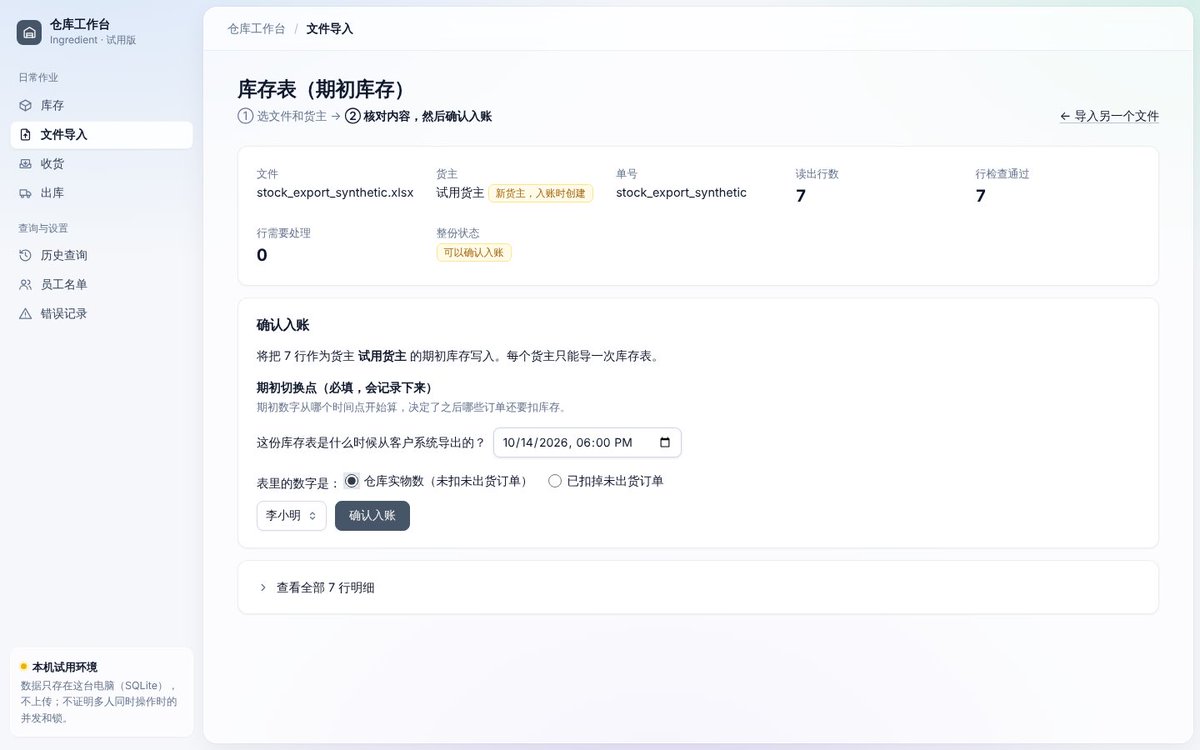
- 交付了第一个企业级软件,还需不断优化
- 试用了GLM(受Justien sun的启发),确实是国内最顶级model—萌生许多ideas
- 开始认真经营X account & #buildinpublic
Starting building in public!
Hope connect with you
Becoming AI native together Haha
Build in public Day 2
- finished the first version ingredient system
- make my boss to know how software works
- ask Claude to code online
Hope I can connect with you, I am 14 developer,running my uncle’s business in Hong Kong
AI reverse engineering, Now you can now pair an Apple Watch Ultra-2 with Android.
This open-source tool connect an Apple Watch to Android devices instead of being locked to iPhone.
- and manage parts of the watch from a non-Apple phone.
- Android version currently requires Root Magisk.
- Full feature parity isn’t here yet, but pairing, basic management, and interface control already work.
- https://t.co/O8Fu85PgfB
AI reverse engineering, Now you can now pair an Apple Watch Ultra-2 with Android.
This open-source tool connect an Apple Watch to Android devices instead of being locked to iPhone.
- and manage parts of the watch from a non-Apple phone.
- Android version currently requires Root Magisk.
- Full feature parity isn’t here yet, but pairing, basic management, and interface control already work.
- https://t.co/O8Fu85PgfB