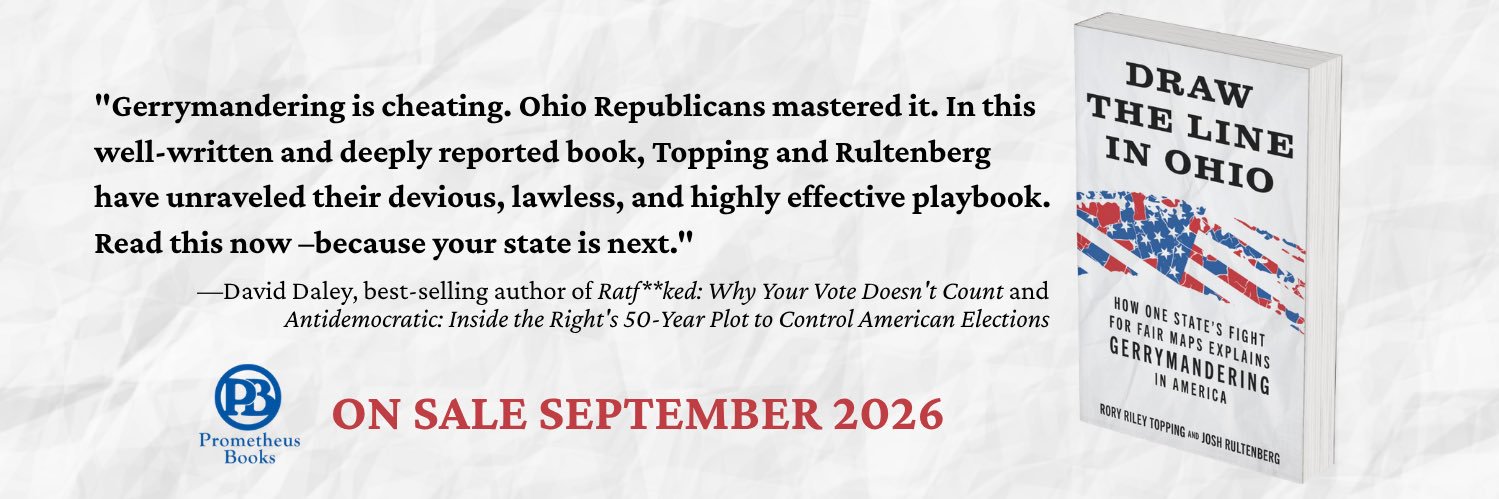
📕 Co-author, Draw The Line In Ohio: How One State’s Fight For Fair Maps Explains Gerrymandering In America, out 9/15 @prometheusbks @GlobePequot @simonschuster
BIG NEWS! 🚨
The launch event for Draw the Line in Ohio is set!
Join @RileyTopping and me on September 30 at @PoliticsProse at The Wharf in Washington, D.C., for a conversation moderated by @politico’s @DashaBurns.
Hope to see you there!
NEW: A White House source tells me there is no immediate replacement for WH Press Sec. Karoline Leavitt and that cabinet members will 'handle briefings as necessary.'
#BREAKING: Missouri Supreme Court Chief Justice Powell has written a letter requesting a trial court to fast-track the lawsuit that will decide whether the congressional redistricting referendum reaches the Nov. 3 ballot.
State law bars any additions to the ballot after Sept. 8, so the courts have only weeks to resolve it. https://t.co/LYu55qhANe
During Ohio's 2020 redistricting cycle, the state Supreme Court quietly weighed transferring the Redistricting Commission's duties down the line of succession, but ultimately declined to take that path.
In @RileyTopping and I’s upcoming #DrawTheLineInOhio, sources dish on all sides of the state’s redistricting saga. Here’s an inside scoop at the Ohio Supreme Court on possible contempt for the Ohio Redistricting Commission + comment from the former chief justice. #gerrymandering
Me for @PragPapers: “In the 2003 book Moneyball, Michael Lewis wrote, “If you challenge the conventional wisdom, you will find ways to do things much better than they are currently done … partisan gerrymandering is not simply a problem of bad actors. It is a structural problem created by the incentives built into our representative institutions, and it therefore requires a solution that extends beyond the conventional wisdom.” https://t.co/3t8Usy4OG1
Received this gift from my friend @AllieRaffa yesterday. Grateful for everyone who is celebrating me today. Not just my birthday, but what this book means to me. Your support through this whole journey has been everything. Thank you for believing in this dream. #DrawTheLineInOhio
Ohio politics is a perfect case study in why gerrymandering matters.
When districts are drawn to be “safe,” politicians can start to think the seat belongs to them or their party. When that happens, you get problematic candidates like Max Miller. In this type of scenario, it’s the voters who ultimately lose, not the party who was supposed to win a fixed race.
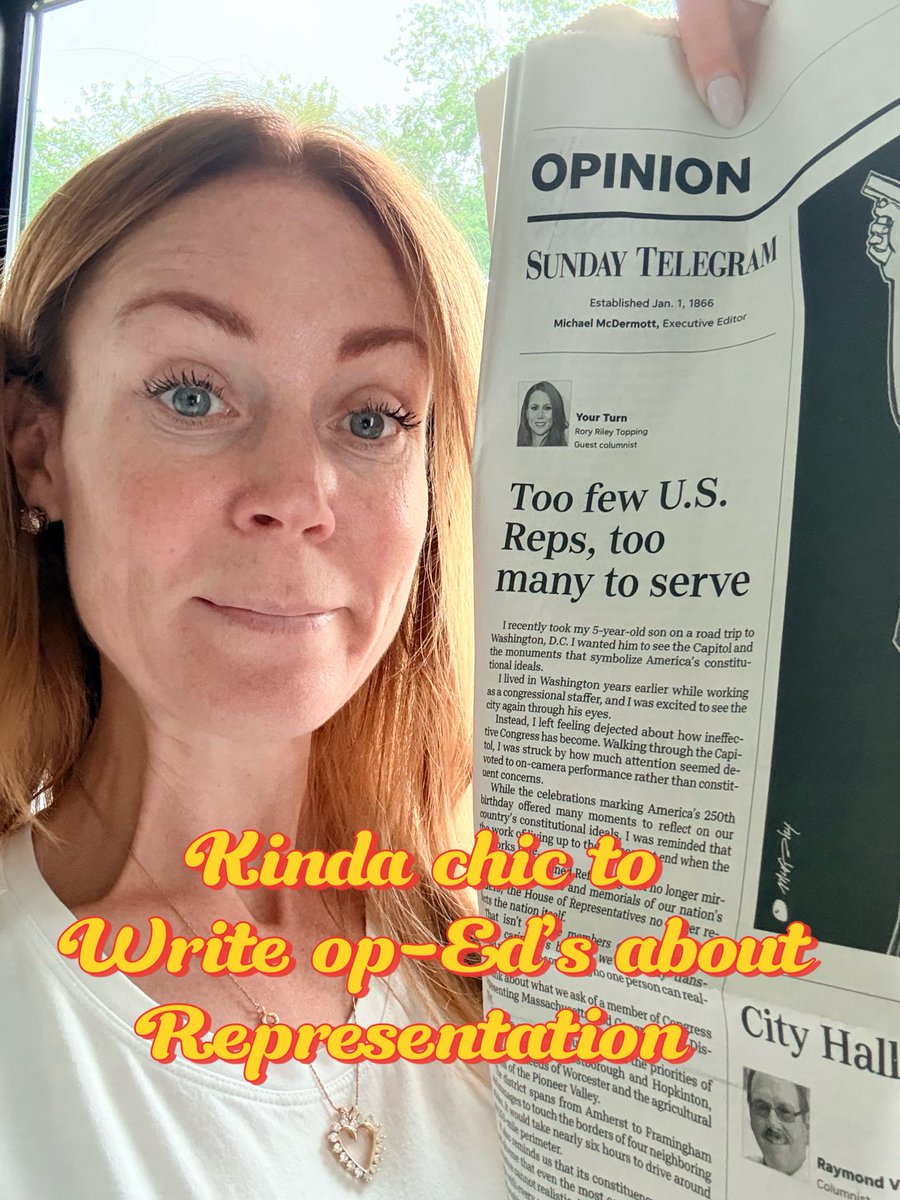
It’s kinda chic to care whether your representative actually represents you.
If you want to understand how politicians learned to choose their voters, Draw the Line in Ohio is for you.
Because being informed is always in style.
📕 🔗 Pre-order link in bio.
Electing the right leaders is hard to do in a state that has gerrymandered the shit out of its state legislature and congressional districts. While it’s true that statewide offices aren’t gerrymandered, executive branch officials will take more extreme views without a legislature to effectively check their power. See, eg, Trump/Congress.
Once again, Ohio offers a cautionary tale here. In #DrawTheLineInOhio, we discuss how making judicial elections more overtly partisan changed not just campaigns, but public perceptions of the courts and judges too. Judicial independence is an important pillar to the Rule of Law and confidence in courts/judges ability to be independent rather than partisan is difficult to rebuild once it's been eroded.
When politicians can't win on the merits, they try to change the rules. Ballot measures have become one of the few remaining checks on entrenched power, which is why we've seen repeated efforts to make them harder to pass. @JoshRultNews and I explore Ohio's failed attempt to do exactly that in #DrawTheLineInOhio - the more insulated politicians become from competitive elections, the more threatening they perceive ballot initiatives and the true will of the people to be.
So much great stuff in here from @Redistrict! Including this stat: “In 1999, there were 101 hyper-competitive seats. In 2027, there will be only 43, the lowest on record.”
A reminder that many states were able to pass extreme restrictions that were out of touch with public opinion due to how gerrymandered many state legislatures are.
"When congressional seats become scarcer, they become more valuable. And when they become more valuable, politicians fight harder to control them." Me via @theEdwi for @Project_No_Cap: https://t.co/ivs1W5cJxL