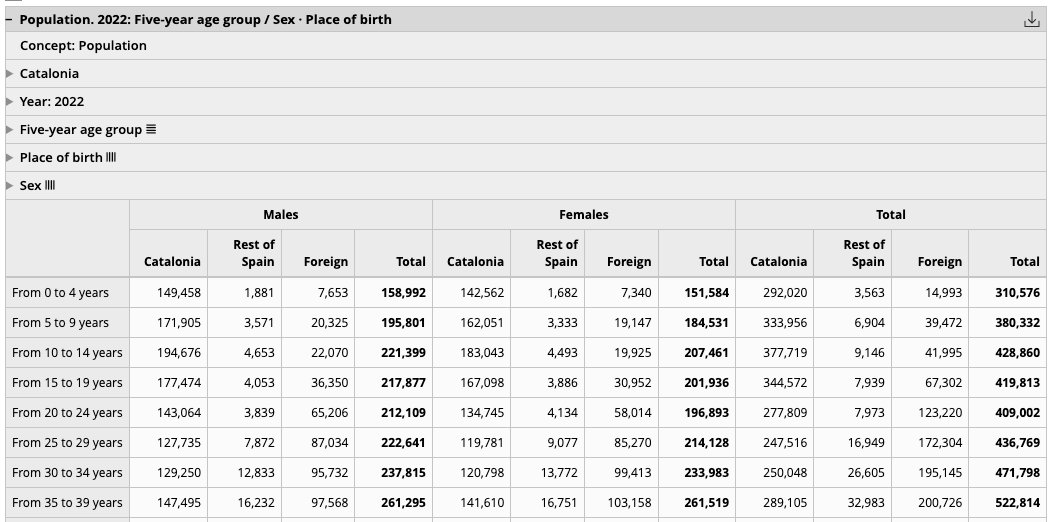
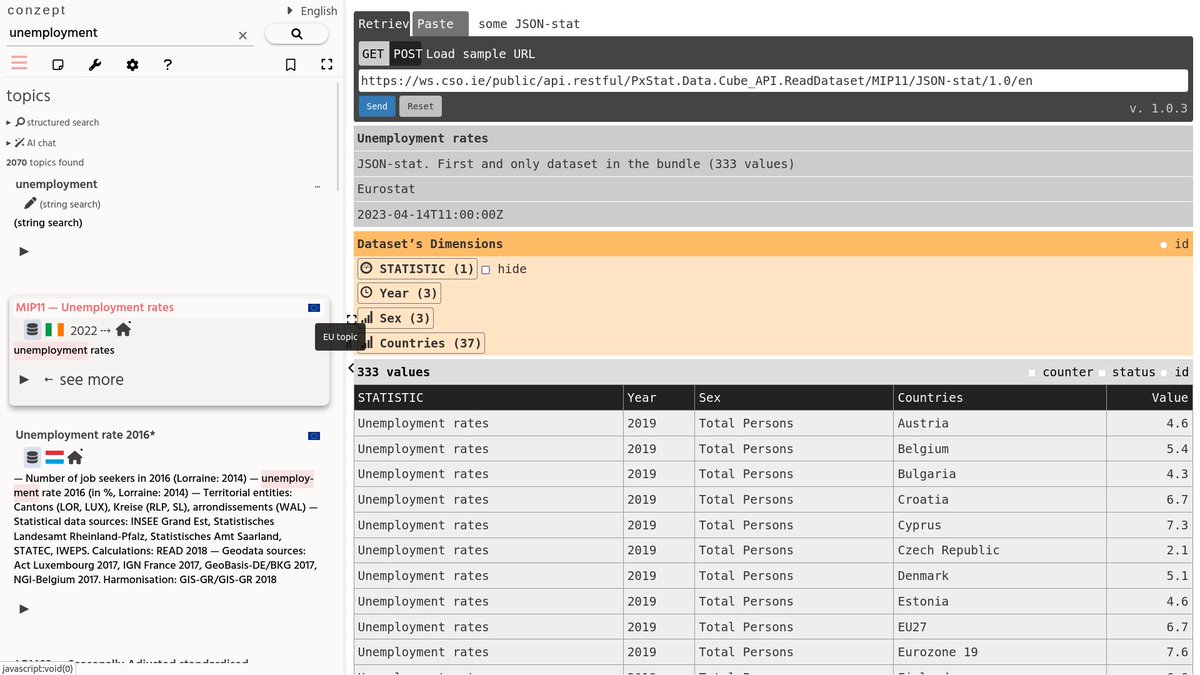
The initial release of an LLM-maintainable knowledge base for the JSON-stat format is now available.
https://t.co/cw2I8zdsnZ
This repository adheres to the LLM Wiki pattern (as popularized by #Karpathy) to ensure seamless integration with modern AI workflows. #llm#wiki#stats
A new data explorer for JSON-stat has been released: the JSON-stat WebMCP Explorer. The defining feature of this viewer is its support for the emerging #WebMCP standard (currently under development).
https://t.co/jziygMSfXV
https://t.co/szLBSUYO9W
🚨Anthropic recently showed a 24-minute workshop on how to actually do prompts for Claude.
Taught by the people who built it.
Free. No registration. No paywall.
I've seen $300 courses that don't cover what they teach in the first 8 minutes.
Watch it and bookmark it now.
Today we are launching my favorite feature of ChatGPT so far, called Pulse. It is initially available to Pro subscribers.
Pulse works for you overnight, and keeps thinking about your interests, your connected data, your recent chats, and more. Every morning, you get a custom-generated set of stuff you might be interested in.
It performs super well if you tell ChatGPT more about what's important to you. In regular chat, you could mention “I’d like to go visit Bora Bora someday” or “My kid is 6 months old and I’m interested in developmental milestones” and in the future you might get useful updates.
Think of treating ChatGPT like a super-competent personal assistant: sometimes you ask for things you need in the moment, but if you share general preferences, it will do a good job for you proactively.
This also points to what I believe is the future of ChatGPT: a shift from being all reactive to being significantly proactive, and extremely personalized.
This is an early look, and right now only available to Pro subscribers. We will work hard to improve the quality over time and to find a way to bring it to Plus subscribers too.
Huge congrats to @ChristinaHartW, @_samirism, and the team for building this.
From JSON-stat to Excel, now with more options:
Fetch data from a JSON-stat-compatible API or use a local JSON-stat dataset file & convert it into into an #Excel workbook with several sheets (tabs) & the necessary joins.
https://t.co/rg8hUTPz7O
#data#opendata#stats#cube
The JSON-stat JavaScript Toolkit version 2 is out. The Toolkit has been rewritten to adapt to make more efficient.
#opendata#stats#library#cub#jsonstat#json#data
https://t.co/m4KvUWUJom
Making some progress on the @JSONstat --> @rawgraphs workflow.
#CSV data is now stored in session-storage and overwritten each time.
TODO:
- Automate the click needed to trigger CSV parsing in rawgraphs.
- Currently no way to link the rawgraphs-view
https://t.co/Kkmc45BUmT
Integration with the #EU#Eurostats#statistics dataset app (7000+ datasets!)
Available from: Topic card -> science -> datasets -> general.
This will likely become a two-pane view (@jsonstat Eurostat --> @rawgraphs), once the data can be bridged.
Link: https://t.co/3szuJX3Zfs
Looking into creating an automated workflow for rendering and custom graphing #CSV and #JSONstat data, from datasources like the EU.
Planning to make https://t.co/pbVXEjW9k1 and the tools accept data URLs and run:
- https://t.co/B9tw3exZ6U @jsonstat
- https://t.co/mK6xBDpQug
JSON-stat is a lightweight data interchange format that allows for the transmission and sharing of statistical data in a simple and efficient manner. It is based on the JSON format, which is commonly used for transmitting data over the web, and is designed specifically for...
international organizations, and other data providers as a standard for sharing statistical data. It is also supported by a number of data visualization tools, making it easy to create interactive visualizations of statistical data.